Tongue and Groove Flooring Lifespan and Durability Analysis
Analyze the durability and lifespan of tongue and groove flooring. Discover how material, installation, and moisture impact long-term performance.
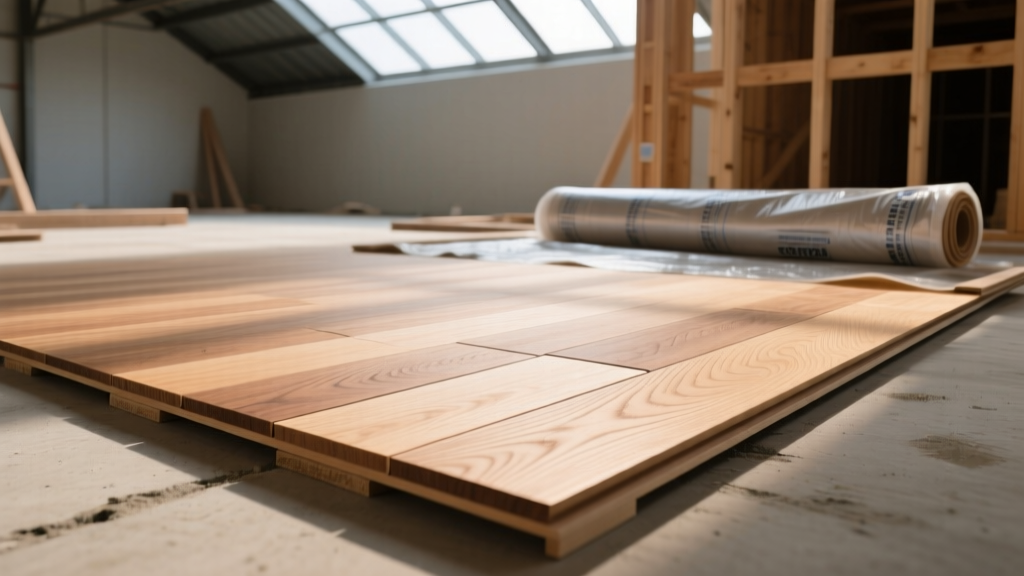
The Structural Mechanics of Tongue and Groove Durability
The defining characteristic of tongue and groove flooring is its interlocking profile, which fundamentally alters how the floor distributes mechanical loads. Unlike click-lock floating systems that rely on fragile MDF or HDF locking lips, traditional tongue and groove (T&G) profiles are milled directly into the solid or engineered wood wear layer. When a downward force is applied to the edge of a T&G board, the interlocking joint transfers a portion of that shear stress to the adjacent board, mitigating vertical deflection. This structural load-sharing is why properly installed T&G floors routinely outlast the buildings they inhabit, provided the subfloor meets strict rigidity standards.
The durability of the joint itself depends heavily on the milling precision. High-grade T&G flooring features a 'micro-bevel' or 'eased edge' on the top surface. This is not merely aesthetic; it prevents the sharp edges from splintering under foot traffic and hides minor seasonal expansion gaps that inevitably occur as wood hygroscopically reacts to ambient humidity changes.
Material Lifespan and Wear Layer Matrix
The ultimate lifespan of tongue and groove flooring is dictated by the thickness of its sandable wear layer and the Janka hardness rating of the species. Below is a comparative analysis of common T&G materials and their projected service life under standard residential traffic (approx. 10,000 footfalls per day).
| Material Type | Wear Layer Thickness | Avg. Janka Hardness (lbf) | Max Refinish Cycles | Projected Lifespan |
|---|---|---|---|---|
| 3/4" Solid Red Oak | ~5/16" (above tongue) | 1,290 | 6 - 8 | 75 - 100+ Years |
| 3/4" Solid Brazilian Walnut (Ipe) | ~5/16" (above tongue) | 3,680 | 6 - 8 | 100+ Years |
| 5/8" Engineered Oak (Premium) | 4.0 mm (sawn veneer) | 1,290 | 3 - 4 | 40 - 60 Years |
| 5/8" Engineered Oak (Budget) | 1.2 mm (rotary peeled) | 1,290 | 0 - 1 | 15 - 25 Years |
| 3/4" Solid Eastern White Pine | ~5/16" (above tongue) | 380 | 8 - 10 | 50 - 80 Years |
When purchasing engineered tongue and groove flooring, always verify that the top veneer is sliced or sawn, not rotary peeled. Rotary peeled veneers are typically under 1.5mm thick and cannot withstand the aggressive grit of a commercial drum sander without cutting through to the plywood core, instantly destroying the floor.
Primary Failure Modes and Edge Cases
While the wood itself may last a century, the T&G system usually fails due to environmental or structural mismanagement. Understanding these failure modes is critical for ensuring long-term durability.
The most common cause of tongue shear in solid hardwood T&G floors is excessive subfloor deflection. According to the USDA Forest Products Laboratory, wood structural panels used as subfloors must meet an L/360 deflection limit under a 300-pound concentrated load. If the joist spacing is too wide or the subfloor is too thin, the floor will bounce. Over thousands of cycles, this vertical movement snaps the 5/16" tongue off the board, resulting in permanent squeaks and lipped joints that cannot be sanded out.
Moisture-Induced Cupping and Crown Shear
Wood is hygroscopic. If the moisture content (MC) of the subfloor exceeds the MC of the T&G flooring by more than 2% (for 3-inch wide boards) or 4% (for narrow strip flooring), the bottom of the boards will absorb moisture and expand faster than the top. This causes 'cupping' (edges raised higher than the center). If the floor is sanded flat while cupped, it will inevitably 'crown' (center raised higher than edges) once winter heating dries the home out, ruining the finish and exposing the raw tongue profile.
Fastener Fatigue and Squeak Generation
Using the wrong pneumatic fastener compromises the joint's holding power. For 3/4" solid T&G flooring, 15.5-gauge flooring cleats are structurally superior to 16-gauge staples. Cleats have a wider head and barbed shank that resist withdrawal as the wood undergoes seasonal shrinkage and swelling. Staples tend to split the tongue upon insertion, reducing holding power by up to 30% and leading to early-onset squeaking.
T&G vs. Click-Lock: A Structural Longevity Comparison
Click-lock (uniclic) systems dominate the DIY market due to ease of installation, but they sacrifice long-term durability for convenience. Click-lock joints rely on high-density fiberboard (HDF) cores that are highly susceptible to hydrolysis. If water penetrates a click-lock joint, the HDF swells, the locking mechanism shatters, and the boards permanently separate.
Conversely, traditional tongue and groove flooring is blind-nailed or glued directly to the subfloor. This mechanical fastening prevents the lateral movement that causes click-lock joints to degrade over time. In high-traffic commercial zones or kitchens where micro-spills are inevitable, a glued-and-nailed T&G engineered wood floor will easily outlast a floating click-lock alternative by a factor of three.
Installation Specifications for Maximum Lifespan
To extract the maximum lifespan from tongue and groove flooring, installation must adhere to strict empirical tolerances. Follow this actionable checklist prior to and during installation:
- Acclimation Protocol: Do not rely on arbitrary '7-day' acclimation rules. Use a pin-type moisture meter. The flooring must be within 2% of the subfloor's MC and within 4% of the home's year-round equilibrium moisture content (EMC).
- Subfloor Prep: The subfloor must be flat to within 3/16" over a 10-foot radius. Use a self-leveling compound or feather-edge patch to correct dips. Installing T&G over an uneven subfloor guarantees joint failure.
- Vapor Retarders: For installations over crawl spaces or concrete slabs (using engineered T&G), install a Class I or Class II vapor retarder. The EPA emphasizes that controlling bulk moisture and vapor drive is essential to prevent subfloor rot and subsequent flooring failure.
- Fastening Schedule: Pneumatically nail every 8 to 10 inches along the board length, and ensure a fastener is placed within 3 inches of every board end. Missing end-fasteners allow the board tips to lever upward, breaking the adjacent groove.
- Expansion Margins: Leave a strict 3/4" expansion gap at all vertical obstructions (walls, cabinets, pipes). Wood expands primarily across its width; a 20-foot wide oak floor can expand laterally by up to 3/8" between winter and summer. Without a perimeter gap, the floor will compress against the walls and buckle in the center of the room.
Maintaining the Interlocking Integrity
Once installed, the longevity of the T&G joint relies entirely on maintaining a stable indoor climate. The National Wood Flooring Association recommends keeping indoor relative humidity between 35% and 55% year-round. In arid winter climates, whole-home humidifiers tied to the HVAC system are not a luxury; they are a structural necessity to prevent the wood from shrinking, which pulls the tongue out of the groove and creates permanent, dust-catching gaps. By combining precision milling, rigorous subfloor preparation, and strict climate control, tongue and groove flooring remains the most durable, longest-lasting wood floor system available on the market.