Best Vinyl Floor Tiles Underlay Brands Deep-Dive 2026
Compare top vinyl floor tiles underlay brands for 2026. Deep-dive into thickness limits, moisture ratings, and acoustic performance for LVT and LVP.
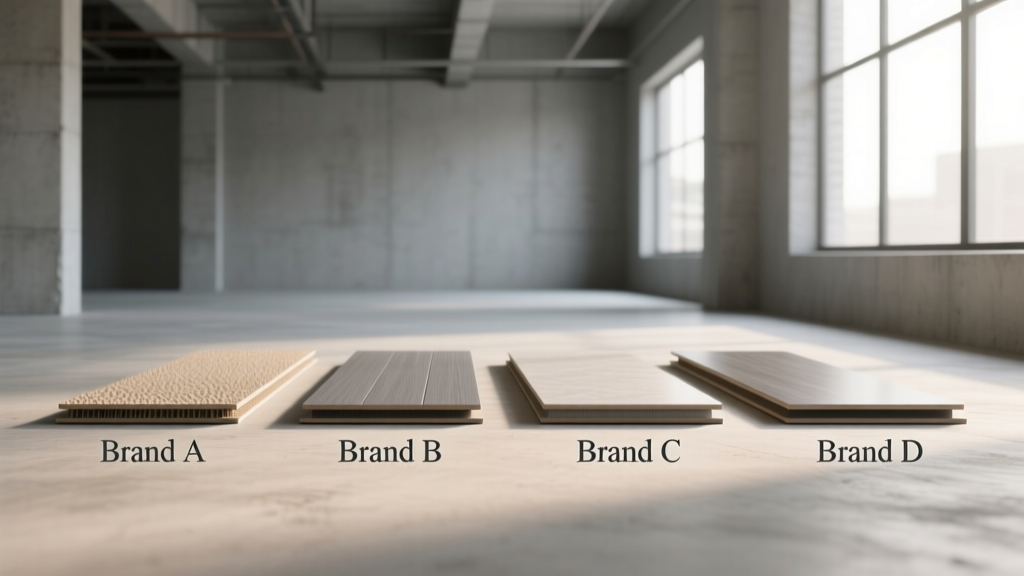
Selecting the correct underlayment for luxury vinyl tile (LVT) and luxury vinyl plank (LVP) is a high-stakes decision. Unlike hardwood or laminate, vinyl flooring relies on extremely fragile micro-bevel locking mechanisms—often less than 2mm thick. Choosing an underlayment that is too thick, too soft, or lacking the proper moisture vapor retarder will result in joint shearing, telegraphing, and immediate warranty voids. This deep-dive analyzes the leading vinyl floor tiles underlay product lines on the market in 2026, evaluating their material composition, acoustic ratings, and strict subfloor compatibility.
The Golden Rule of LVT Underlayment in 2026
Over 80% of premium LVT and LVP products manufactured today feature a pre-attached acoustic pad (usually 1mm of cork or IXPE foam). If your vinyl flooring has an attached pad, do not add a separate underlayment. Adding a secondary layer introduces vertical deflection that will snap the locking joints under foot traffic. The only exception is a 6-mil polyethylene vapor barrier over concrete, which does not add structural cushioning. Always consult the specific manufacturer's installation guidelines via the Resilient Floor Covering Institute (RFCI) before proceeding.
If your vinyl floor tiles do not have an attached pad, or if you are floating a rigid core product over a highly irregular subfloor requiring minor smoothing, a separate underlay is mandatory. However, the industry standard maximum thickness for a separate vinyl floor tiles underlay is 1.5mm. Anything thicker compromises the structural integrity of the floor.
Brand Deep-Dive: MP Global QuietWalk Luxury Vinyl
MP Global's QuietWalk Luxury Vinyl line remains the benchmark for multi-family residential and commercial LVT installations. Engineered specifically to meet the strict thickness tolerances of rigid core vinyl, this product utilizes a dense, recycled synthetic fiber matrix rather than traditional expanded polyethylene foam.
- Thickness: 1.4mm (Optimal for preserving locking mechanism integrity)
- Material: Post-consumer recycled synthetic fibers with an attached 6-mil vapor retarder.
- Acoustic Ratings: STC 66 / IIC 68 (Tested per ASTM E492 standards over an 8-inch concrete slab with a suspended ceiling).
- Moisture Tolerance: Blocks moisture vapor emissions up to 4 lbs per 1,000 sq. ft. per 24 hours.
- 2026 Retail Price: $0.48 - $0.55 per square foot.
Expert Insight: The fiber matrix of QuietWalk provides superior compressive strength compared to closed-cell foams. When heavy furniture (like a 400-lb kitchen island) is placed on LVT, softer foams compress permanently, causing the floor to dip and the joints to separate. QuietWalk's high compressive rating (18 kPa at 10% deflection) prevents this micro-movement.
Brand Deep-Dive: FloorMuffler UltraSeal
FloorMuffler UltraSeal targets the high-end acoustic market, specifically designed for condominiums and HOAs with stringent sound transmission bylaws. It is manufactured using a proprietary cross-linked polypropylene (XPP) foam.
- Thickness: 1.2mm (Ultra-thin profile for maximum joint stability).
- Material: Cross-linked polypropylene foam with an integrated film moisture barrier.
- Acoustic Ratings: STC 74 / IIC 73 (Exceptional impact noise reduction).
- Moisture Tolerance: Blocks moisture vapor emissions up to 5 lbs per 1,000 sq. ft. per 24 hours.
- 2026 Retail Price: $0.65 - $0.75 per square foot.
Expert Insight: The 1.2mm profile of FloorMuffler makes it the safest choice for click-lock LVT products with notoriously brittle fiberglass-reinforced cores. Because XPP foam does not off-gas or degrade into dust over time, it is highly recommended for indoor air quality, though the premium price point makes it less ideal for large-scale commercial builds where budget is the primary constraint.
Brand Deep-Dive: Roberts First Step 6300
Roberts First Step 6300 is a high-volume, budget-friendly option frequently used in single-family residential flips and DIY renovations. It is a standard polyethylene foam with a textured surface to promote air flow.
- Thickness: 1.5mm (The absolute maximum recommended for most LVT warranties).
- Material: Expanded polyethylene (EPE) foam.
- Acoustic Ratings: STC 67 / IIC 68.
- Moisture Tolerance: None. Requires a separate 6-mil poly film if installed over concrete.
- 2026 Retail Price: $0.32 - $0.38 per square foot.
Expert Insight: While cost-effective, EPE foam is highly susceptible to permanent compression under static loads. If using Roberts First Step under LVT, avoid placing concentrated heavy loads (like piano legs or heavy appliance feet) directly on the floor without wide load-distributing coasters. Furthermore, because it lacks an integrated vapor barrier, installers must meticulously tape the seams of a separate poly-film to prevent moisture-related mold growth under the flooring.
Comparative Matrix: Performance & Pricing
| Brand / Product Line | Thickness | Core Material | Vapor Barrier | Avg. Cost / Sq Ft |
|---|---|---|---|---|
| MP Global QuietWalk LVT | 1.4mm | Recycled Synthetic Fiber | Integrated (4 lbs) | $0.52 |
| FloorMuffler UltraSeal | 1.2mm | Cross-Linked Polypropylene | Integrated (5 lbs) | $0.70 |
| Roberts First Step 6300 | 1.5mm | Expanded Polyethylene | None (Requires add-on) | $0.35 |
Subfloor-Specific Decision Framework
The 'best' vinyl floor tiles underlay is entirely dictated by the substrate beneath it. Use this framework to select the correct product line for your specific job site conditions.
1. Over Pour Concrete (Below-Grade or On-Grade)
Concrete is essentially a hard sponge that constantly wicks moisture from the earth. You must use an underlayment with an integrated Class I vapor retarder (like FloorMuffler UltraSeal or QuietWalk). Never use a breathable fiber pad without a film backing over concrete, as the alkaline moisture will degrade the LVT backing and promote black mold. Always perform a calcium chloride test or relative humidity (RH) probe test before installation.
2. Over Plywood / OSB (Above-Grade)
Wood subfloors need to breathe. Trapping moisture between the plywood and an impermeable vapor barrier will cause the wood to rot and cup, eventually telegraphing through the vinyl. For plywood, use a breathable underlayment. If you must use a product with an attached vapor barrier, slit the film between the seams to allow the wood subfloor to off-gas moisture into the room.
3. Over Existing Ceramic Tile
The primary challenge here is not moisture or acoustics, but smoothing. Grout lines will telegraph through thin LVT, creating visible ridges and causing wear-layer degradation. While a 1.5mm foam underlay can mask minor 1/16-inch grout depressions, deep grout lines require a skim coat of Portland-based leveling compound before any underlayment is laid.
Failure Mode Analysis: Why Vinyl Floors Fail Post-Installation
Even with premium materials, improper underlayment application leads to catastrophic failures. Here are the three most common edge cases we see in the field:
- Telegraphing via Debris: Because LVT is highly flexible, a single dropped staple, a pebble, or a hardened drop of drywall mud trapped beneath a 1.2mm underlayment will push upward, creating a permanent, visible bump on the floor surface. The subfloor must be vacuumed with a HEPA-filter shop-vac prior to rolling out the underlay.
- Joint Shearing from Vertical Deflection: If an installer ignores the 1.5mm maximum rule and uses a 3mm cork underlayment to 'make the floor feel softer', the vertical travel of the floor under foot traffic will exceed the shear strength of the LVT locking mechanism. Within six months, the longitudinal joints will separate, creating gaps that trap dirt and water.
- Perimeter Pinching: Underlayment must be trimmed exactly 1/4-inch from the wall. If the underlayment is run up the wall and pinched under the baseboard, it creates a fulcrum point. When the floor expands in high summer humidity, it will push against this rigid perimeter, causing the center of the room to buckle or 'tent' upward.
Frequently Asked Questions
Can I use cork underlayment for vinyl floor tiles?
While 2mm or 3mm cork is excellent for hardwood, it is generally too thick and too compressible for modern click-lock LVT. Unless the LVT manufacturer explicitly approves a specific density of cork in their warranty documentation, avoid it to prevent joint failure.
Does underlayment make vinyl flooring waterproof?
No. While the vinyl wear layer is waterproof, the seams are not. An underlayment with a vapor barrier only protects the floor from moisture coming up from the subfloor. It does not protect the subfloor from water spilling on top of the floor and seeping through the seams.