Average Foundation Repair Cost in Austin, Texas (2026 Data)
Discover the average foundation repair cost in Austin, Texas for 2026. Compare steel vs. concrete piers, soil factors, and exact pricing breakdowns.

The True Average Foundation Repair Cost in Austin, Texas
Homeowners researching the average foundation repair cost in Austin, Texas often encounter outdated 2024 estimates that fail to reflect current material, labor, and permitting rates. As of 2026, the typical cost to repair a slab-on-grade foundation in the Austin metro area ranges from $4,800 to $9,500 for a standard 2,000-square-foot home requiring 15 to 25 piers. However, severe structural settlements requiring deep steel piers, plumbing tunneling, and extensive masonry restoration can push total project costs between $14,000 and $22,000.
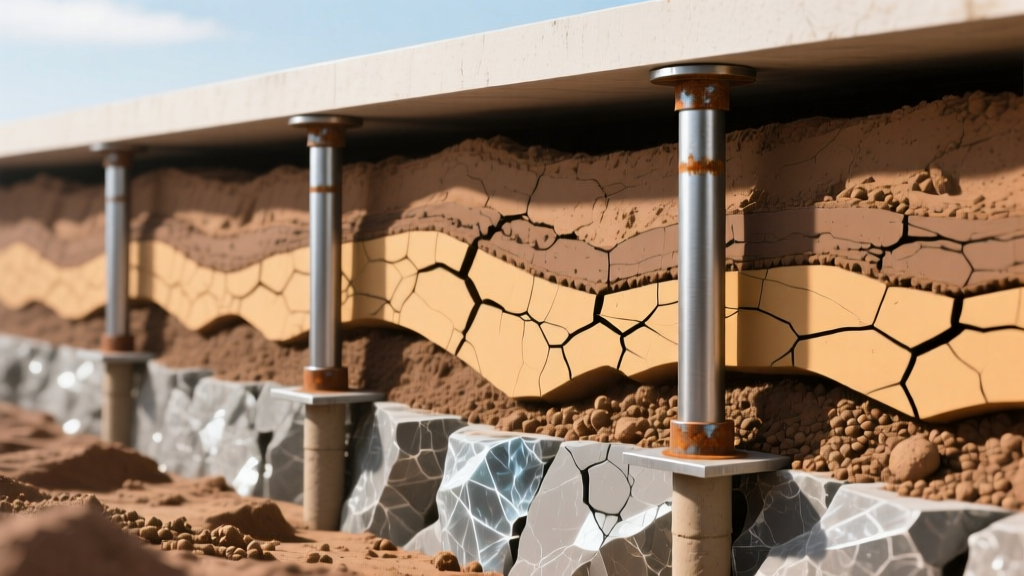
Austin's unique geological split—where the expansive clays of the Blackland Prairie in the east meet the shallow limestone and caliche of the Hill Country in the west—dictates not only the failure mode of your foundation but also the specific underpinning method required to fix it. Understanding these localized variables is critical to budgeting accurately and avoiding predatory contractor estimates.
2026 Pricing Breakdown by Repair Method
The foundation repair industry relies on three primary structural underpinning and lifting techniques in Central Texas. The choice between them depends entirely on soil depth, load-bearing requirements, and the presence of bedrock.
| Repair Method | Cost per Pier / Unit | Average Total Project | Target Depth | Best Application |
|---|---|---|---|---|
| Pressed Concrete Piers | $160 - $240 | $4,800 - $7,500 | 12 - 18 feet (Refusal) | Standard clay soil settlement; budget-conscious lifts. |
| Steel Push Piers | $280 - $420 | $8,500 - $16,000 | 25 - 50+ feet (Bedrock) | Severe settlement; reaching Austin Chalk bedrock; heavy masonry loads. |
| Polyurethane Foam (Deep Injection) | $12 - $18 per sq. ft. | $3,500 - $6,000 | 3 - 7 feet | Void filling; minor slab leveling; non-structural cosmetic lifts. |
Method 1: Pressed Concrete Piers (The Austin Standard)
For homes situated on the deep clay soils east of I-35, pressed concrete piers are the most common solution. Contractors excavate a 2x2 foot working hole beneath the grade beam, then use a 20-ton to 40-ton hydraulic cylinder to press 6-inch diameter, 8-inch tall cylindrical concrete segments into the earth. The friction of the clay against the concrete provides the load-bearing capacity. Once 'refusal' is reached (the point where the hydraulic pressure indicates the pier can no longer be pushed without lifting the house), the contractor shims the gap between the top cylinder and the foundation with steel and hardwood blocks, then caps it with a non-shrink grout mixture.
Method 2: Steel Push Piers (The Bedrock Anchor)
In West Austin, or in areas where the clay layer is exceptionally deep and unstable, friction piers are insufficient. Steel push piers utilize 2-7/8 inch outer diameter (OD) galvanized steel pipe sections, hydraulically driven until they seat firmly into the Austin Chalk or Edwards Limestone formations. Because they anchor to load-bearing bedrock rather than relying on soil friction, steel piers offer a permanent, lifetime-guaranteed solution. The Foundation Performance Association frequently recommends steel piers for multi-story residential builds or homes with heavy exterior masonry veneers that exceed the friction limits of concrete cylinders.
Method 3: Polyurethane Deep Injection
Polyurethane foam jacking is not a substitute for deep piers when structural grade beams have failed. However, for interior slab depressions, patio sinks, or minor voids caused by plumbing leaks, high-density structural foam (typically 4 to 6 lbs per cubic foot) is injected through 5/8-inch drilled holes. The foam expands, compacting loose soils and lifting the slab. It cures in 15 minutes and is completely impervious to water, making it ideal for damp crawl spaces or pool decks.
Hidden Costs: Engineering, Permits, and Plumbing
Contractor quotes rarely represent the final invoice. To accurately budget for foundation repair in Austin, you must account for the ancillary services required by the City of Austin Development Services Department and standard structural engineering practices.
- Independent Structural Engineer (PE) Report: $600 - $950. Never rely solely on a contractor's free inspection. Hire a licensed Professional Engineer to conduct an initial elevation survey and prescribe an exact piering plan. This prevents contractors from overselling piers you do not need.
- City of Austin Permits: $220 - $450. The city requires permits for structural foundation repair. The contractor usually pulls this, but the fee is passed to the homeowner.
- Plumbing Hydrostatic Testing: $350 - $600. Lifting a slab can snap cast-iron or PVC drain lines. A master plumber must test the under-slab plumbing before and after the lift.
- Under-Slab Tunneling: $160 - $250 per linear foot. If a plumbing line breaks during the lift, contractors must dig a physical tunnel under the foundation to access and repair the pipe, then backfill it with flowable fill or compacted sand.
- Root Barriers: $65 - $85 per linear foot. Austin's heritage Live Oaks and Pecan trees extract massive amounts of moisture from the soil, causing localized subsidence. Installing 24-inch deep HDPE plastic root barriers is often mandated by the engineer's repair plan.
Decision Matrix: Which Pier System Do You Need?
Use this framework to determine the most likely repair method for your specific property profile before soliciting bids.
- Assess the Soil & Location: Are you in East Austin (Pflugerville, Manor, Del Valle)? You likely have deep expansive clay. Lean toward Pressed Concrete Piers. Are you in West Austin (Lakeway, Bee Cave, Dripping Springs)? You likely have shallow limestone with pockets of clay. Lean toward Steel Piers.
- Evaluate the Structure: Is it a single-story home with lightweight siding? Concrete friction piers are generally adequate. Is it a two-story home with heavy brick or stone masonry veneer? The dead load requires the end-bearing capacity of Steel Piers.
- Measure the Settlement: Is the differential settlement (the difference between the highest and lowest point of the slab) less than 1.5 inches? Polyurethane foam or spot concrete piers may suffice. Is the settlement greater than 2 inches, accompanied by drywall tears and sticking doors? You need a full perimeter or comprehensive interior piering plan.
'Proper foundation repair is not about making a house perfectly level; it is about restoring structural integrity and arresting seasonal movement. Attempting to lift an older Austin home to absolute zero-deflection will almost certainly result in sheared drywall, broken windows, and ruptured plumbing.' — Standard practice guidelines referenced by the Texas A&M AgriLife Extension regarding expansive soil management.
Frequently Asked Questions
Does homeowners insurance cover foundation repair in Austin?
Standard HO3 policies explicitly exclude earth movement, settling, and shrinking soils. Insurance will only cover foundation damage if it is the direct, sudden result of a covered peril, such as a burst under-slab plumbing line. Even then, the policy typically covers the cost to access the leak (tunneling) and repair the pipe, but rarely covers the underpinning required to stabilize the slab afterward.
How long does a typical Austin foundation repair take?
The physical installation of 20 to 30 pressed concrete or steel piers takes 2 to 4 days for a professional crew. However, the total project timeline is usually 3 to 5 weeks when you factor in the structural engineer's initial report, city permit approval, the actual lifting, and the subsequent masonry and drywall repairs, which should only be performed 30 to 60 days after the lift to allow the house to acclimate to its new elevation.
Do I need to water my foundation after it is repaired?
Yes. The Texas A&M AgriLife Extension strongly recommends maintaining a consistent moisture level around the perimeter of your foundation using soaker hoses or an automated drip irrigation system. During Central Texas summers, you should apply approximately 1 inch of water per week around the perimeter to prevent the clay from desiccating and shrinking away from the newly installed piers, which would cause a secondary settlement event.
Written by
Priya KapoorPriya Kapoor is a real estate market analyst and construction economics researcher with expertise in housing affordability, development feasibility, and infrastructure investment. She holds a Master of Regional Planning from Cornell University and previously worked as a senior analyst at CBRE's Investment Properties group, where she modeled returns for $4B in mixed-use development pipelines. Priya now runs an independent research practice advising developers, municipalities, and REITs on construction cost forecasting and market timing. She publishes the quarterly "BuildMat Market Pulse" report tracking material price indices across 12 commodity categories. Based in Austin, TX, Priya serves on the board of Habitat for Humanity Austin and is a marathon runner.
More from Priya Kapoor
View all
Construction Cost
Cost to Build a 1600 Sq Ft Home in 2026: Full Breakdown
Accurate 2026 cost to build a 1600 sq ft home—material, labor, and regional pricing breakdowns included. Plan your budget with real-time estimates.
Aug 11, 2026

Wood & Lumber
Name the Types of Wood for Pressure Treatment and Preservation
Learn how to name the types of wood best suited for pressure treatment. Compare species treatability, chemical retention levels, and 2026 preservation costs.
Aug 4, 2026

Stone & Masonry
Stone Veneer Suppliers Lindenhurst: 2026 Cost Analysis
Analyze 2026 stone veneer costs in Lindenhurst, NY. Compare local supplier pricing, delivery fees, and Suffolk County installation labor rates.
Aug 4, 2026