Foundation Repair San Antonio Cost Breakdown: 2026 Pricing Guide
Analyze the 2026 foundation repair San Antonio cost landscape. Compare drilled concrete piers, steel push piers, and foam injection pricing.

The San Antonio Soil Factor: Why Foundations Fail in Bexar County
Understanding the foundation repair San Antonio cost landscape requires first understanding the geology beneath the city. San Antonio sits atop a complex geological transition zone, primarily characterized by the Taylor Marl and Beaumont formations. These soils possess an exceptionally high Plasticity Index (PI), frequently ranging between 35 and 55. According to soil mechanics data published by Texas A&M AgriLife Extension, expansive clays with a PI above 30 can exert upward swelling pressures exceeding 15,000 pounds per square foot when saturated, and shrink dramatically during the intense South Texas summer droughts.
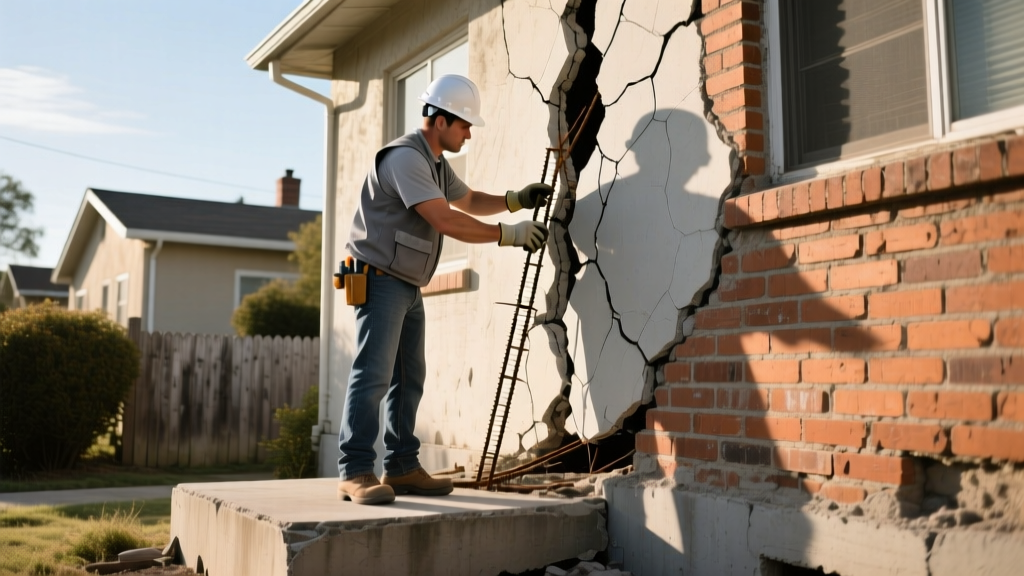
This cyclical swelling and shrinking causes differential settlement in slab-on-grade foundations. When one section of a concrete slab drops relative to another, the resulting tensile stress exceeds the concrete's capacity, leading to diagonal drywall cracks, sticking doors, and compromised masonry veneers. Because the soil mechanics are so aggressive, superficial cosmetic repairs are insufficient; permanent stabilization requires bypassing the active clay layer entirely.
2026 Foundation Repair San Antonio Cost Breakdown by Method
Pricing for foundation stabilization in South Texas has stabilized following the supply chain disruptions of the early 2020s, but labor and material costs remain elevated. The total project cost is rarely determined by a flat fee; it is calculated based on the linear footage of the affected perimeter and the number of piers required. A typical 2,500-square-foot home experiencing moderate perimeter settlement will require between 15 and 25 piers.
| Repair Method | Unit Cost (2026) | Average Total Project | Best Application |
|---|---|---|---|
| Drilled Concrete Piers (Bell-Bottom) | $750 - $950 / pier | $12,000 - $22,000 | Standard residential slab-on-grade in stable load-bearing strata. |
| Steel Push Piers | $1,300 - $1,800 / pier | $20,000 - $38,000 | Heavier masonry homes, deep bedrock, or severe structural loads. |
| Helical Piers | $1,600 - $2,200 / pier | $25,000 - $45,000 | New construction retrofits, lighter structures, or high water tables. |
| Polyurethane Foam Injection | $12 - $25 / sq ft | $3,500 - $8,000 | Interior slab voids, garage floors, and minor non-structural settling. |
The Dominance of Drilled Bell-Bottom Piers
In San Antonio, drilled concrete bell-bottom piers remain the industry standard for approximately 75% of residential repairs. Contractors use truck-mounted augers to drill shafts 15 to 25 feet deep, terminating in a load-bearing stratum (often the Austin Chalk layer). The bottom of the shaft is belled out to 12 to 15 inches in diameter to increase the friction and bearing surface, then filled with high-strength concrete and reinforced with a steel rebar cage. This method provides an excellent balance of load capacity and cost-effectiveness for the region's specific soil profile.
Hidden Cost Variables in South Texas
The per-pier pricing only tells half the story. When budgeting for foundation repair, homeowners must account for auxiliary services that are often mandatory to ensure the longevity of the repair and to keep the contractor's warranty valid.
Permitting and Independent Engineering
The City of San Antonio Development Services Department (DSD) requires permits for structural foundation repairs. Permit fees typically range from $250 to $600 depending on the valuation of the work. More importantly, reputable contractors will require an independent Structural Engineer's Report both before the repair (to dictate the pier placement plan) and after the repair (to verify the slab has been lifted to acceptable tolerances). Budget $600 to $950 for each of these engineering evaluations. Never accept a repair plan based solely on a contractor's salesperson's assessment.
Root Barriers and Drainage Correction
If large trees (such as Live Oaks or Pecans) are located within 15 feet of the foundation, their root systems will extract massive amounts of moisture from the expansive clay, causing localized settlement. Installing a high-density polyethylene (HDPE) root barrier costs between $45 and $65 per linear foot. Furthermore, if the site grading directs water toward the foundation, contractors will mandate the installation of French drains or surface swales, adding $2,500 to $7,000 to the total project cost.
Decision Framework: Drilled Concrete vs. Steel Push Piers
Choosing between the two primary deep foundation systems requires analyzing the specific structural load of your home and the depth to the load-bearing strata.
Drilled Concrete Piers
- Pros: Lower cost per pier; utilizes the mass of the concrete for friction; highly effective in the standard 15-20 foot depth range common in Bexar County; minimal vibration during installation.
- Cons: Requires heavy truck-mounted drilling rigs that can damage driveways and landscaping; installation is weather-dependent (rain can collapse the drilled shaft before concrete is poured); curing time required before lifting the slab.
Steel Push Piers
- Pros: Can be driven to extreme depths (50+ feet) to reach solid bedrock if the chalk layer is fractured; installation is not affected by rain or groundwater; uses the actual weight of the house to drive the piers, ensuring immediate load transfer.
- Cons: Significantly higher material cost; requires hydraulic rams that exert immense pressure, which can occasionally damage fragile or heavily deteriorated grade beams during the driving process.
Steel push piers are generally reserved for homes where the load-bearing strata is deeper than 25 feet, or for heavy masonry and multi-story structures where the friction of a concrete bell-bottom pier is insufficient to arrest long-term settlement.
Navigating Warranties and Contractor Selection
The foundation repair industry in Texas is not strictly regulated regarding engineering standards, which makes vetting contractors critical. When evaluating bids, ensure the contractor is a member in good standing with the Foundation Performance Association (FPA). The FPA establishes the benchmark guidelines for slab-on-ground foundation evaluation and repair in Texas.
A legitimate warranty should be a 'lifetime transferable' warranty, but you must read the fine print. Many disreputable companies issue warranties that only cover the steel or concrete materials, not the labor required to re-lift the slab if it moves again. Ensure the warranty explicitly covers 're-adjustment labor' for a minimum of 10 years. Additionally, verify that the contractor carries both general liability insurance and workers' compensation; a structural repair involving hydraulic jacking and deep excavation carries significant risk, and an uninsured crew working on your property exposes you to severe liability.
Ultimately, the foundation repair San Antonio cost you pay should be viewed as an investment in structural preservation. Attempting to save $3,000 by choosing an under-piered, non-engineered repair plan will inevitably result in recurring drywall cracks, compromised plumbing lines beneath the slab, and a drastically reduced resale value when the home undergoes a buyer's structural inspection.
Written by
Sarah WhitfieldSarah Whitfield is a chartered quantity surveyor (MRICS) and construction cost analyst with 15 years of experience in material pricing, procurement strategy, and project budgeting. She earned her degree in Construction Management from the University of Reading (UK) and has worked on projects ranging from $2M custom homes to $180M mixed-use developments across North America and Europe. Sarah currently leads cost estimating for BuildMat Insight, maintaining a proprietary database of 4,000+ material price points updated quarterly. She is a frequent contributor to RSMeans cost data panels and has presented at the International Cost Engineering Council (ICEC) congress. Based in Denver, CO, Sarah is an avid trail runner and volunteer mentor for Women in Construction.
More from Sarah Whitfield
View all
Wood & Lumber
What Are the Different Types of Wood? A Builder's Guide
Compare structural softwoods, finish hardwoods, and engineered lumber. Analyze Janka ratings, MOE values, and 2026 pricing for construction.
Aug 4, 2026

Walls & Panels
Steel Framing vs Wood Framing: Corrosion and Moisture Defense
Compare steel framing vs wood framing for moisture resistance. Learn about galvanized coatings, condensation risks, and corrosion protection strategies.
Jul 21, 2026

Stone & Masonry
How to Cut Stone Veneer: Wet Saw vs Grinder Comparison
Compare the best tools for cutting stone veneer. We review wet saws, angle grinders, and chop saws to help you achieve clean, chip-free cuts.
Jul 21, 2026