Average Cost of Foundation Repair: 2026 Price Breakdown
Analyze the average cost of foundation repair in 2026. Compare pricing for slabjacking, helical piers, and carbon fiber with expert diagnostic frameworks.

The True Average Cost of Foundation Repair in 2026
When structural distress manifests as drywall fissures, sticking doors, or sloping floors, homeowners immediately seek the average cost of foundation repair. In 2026, the national average for residential foundation stabilization sits between $4,800 and $8,500. However, this median masks a massive variance based on the failure mechanism. Minor epoxy crack sealing can cost as little as $350, while severe differential settlement requiring deep underpinning can easily exceed $35,000.
2026 Cost Snapshot
- Minor Crack Repair (Epoxy/Polyurethane): $300 – $900
- Slab Lifting (Mudjacking/Poly-foam): $1,200 – $4,500
- Structural Underpinning (Piers): $12,000 – $35,000+
- Bowed Wall Stabilization (Carbon Fiber): $4,000 – $10,000
According to Angi's foundation cost database, material inflation and specialized labor shortages have pushed underpinning costs up by 14% since 2024. Understanding the specific engineering intervention required for your soil profile is the only way to accurately forecast your project budget.
Method-by-Method Cost Matrix
Foundation repair is not a monolith; it is a spectrum of geotechnical interventions. The table below breaks down the 2026 market rates for the most common repair methodologies, including material specifications and typical use cases.
| Repair Method | Average Cost Range | Unit Pricing | Primary Application |
|---|---|---|---|
| Epoxy Crack Injection | $350 – $900 | $15 – $25 per linear ft | Non-moving, structural shrinkage cracks in poured concrete. |
| Polyurethane Foam Lifting | $1,500 – $5,500 | $5 – $25 per sq ft | Sunken concrete slabs, driveway aprons, and interior slab-on-grade floors. |
| Steel Push Piers | $12,000 – $28,000 | $1,800 – $3,200 per pier | Heavy structural loads; driven to bedrock or load-bearing strata. |
| Helical Piers | $10,000 – $25,000 | $1,500 – $2,800 per pier | Lighter loads, new construction tie-backs, or areas with high water tables. |
| Carbon Fiber Straps | $4,000 – $9,500 | $450 – $800 per strap | Bowing or inward-leaning basement block walls (less than 2 inches of deflection). |
Deep Dive: Underpinning Systems (Piers)
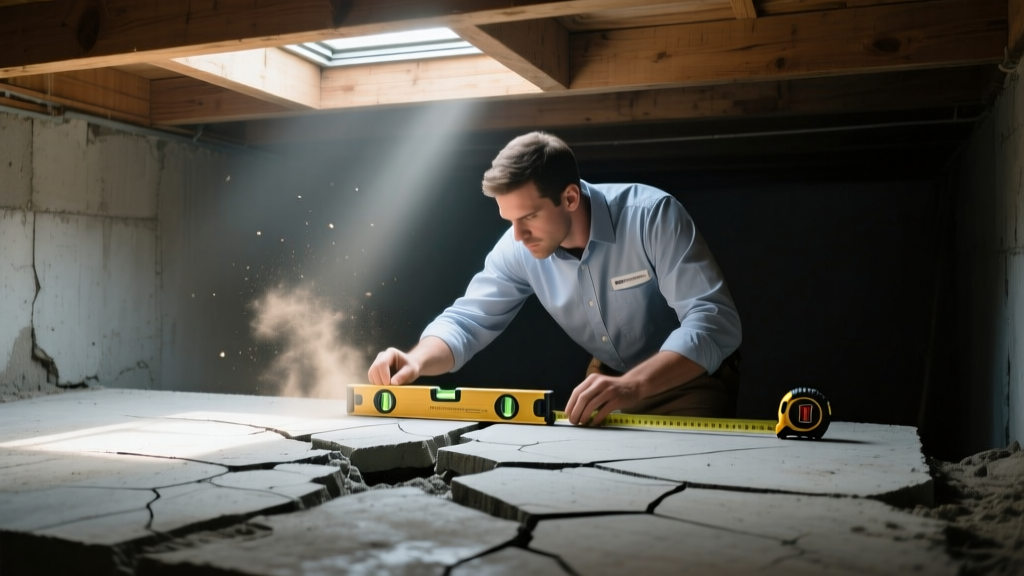
When a foundation experiences differential settlement due to failing load-bearing soils, surface-level repairs are merely cosmetic. The structure must be transferred to stable strata via underpinning. The two dominant systems in 2026 are push piers and helical piers, but their cost structures differ based on installation physics.
Steel Push Piers (Friction and End-Bearing)
Push piers (such as the ECP Model 280 system) utilize the weight of the structure itself as resistance to hydraulically drive steel pipe sections deep into the ground. Because they rely on the building's mass, they are ideal for heavy, multi-story masonry homes. The cost is heavily driven by depth. If load-bearing bedrock is 30 feet down, you will pay for 30 feet of steel per pier. A typical 40-linear-foot exterior wall requiring 8 piers driven to 35 feet will cost approximately $19,500 to $24,000.
Helical Piers (Torque-Based Capacity)
Helical piers feature steel shafts with helical bearing plates, screwed into the ground like a massive wood screw. Installation torque directly correlates to load capacity, meaning engineers can verify the pier's strength in real-time. These are often slightly cheaper than push piers for lighter structures (like single-story additions or porches) because they do not require the mass of the building for resistance, and they can be installed in low-headroom crawlspaces using hydraulic torque motors.
The Soil-Structure Interaction Multiplier
The InterNACHI foundation inspection standards emphasize that soil composition is the primary catalyst for foundation failure. Your local geology directly dictates your repair costs.
- Expansive Smectite Clays: Common in Texas, Colorado, and the Carolinas, these soils swell when wet and shrink when dry, exerting up to 10,000 pounds per square foot (psf) of uplift pressure. Repairing slab heave in these regions often requires deep moisture barriers and root barriers ($80 - $120 per linear foot) in addition to structural piers.
- Organic Peat and Fill Soils: Prevalent in Florida and coastal regions, these soils compress over time. Helical piers with multi-helix lead sections are mandatory here to distribute the load across a wider area of weak soil, increasing material costs by 15-20%.
- Karst Topography (Limestone): In areas prone to sinkholes or subterranean voids, push piers may punch through the limestone caprock. Contractors must use specialized grouting techniques alongside piers, which can add $5,000 to $12,000 to the project baseline.
Diagnostic Framework: When to Lift vs. When to Pier
Homeowners frequently overpay by authorizing underpinning when slabjacking would suffice, or underpay by attempting to foam-lift a structurally compromised footing. Use this diagnostic framework to align your symptoms with the correct engineering solution.
Decision Matrix: Slab Lifting vs. Underpinning
Choose Polyurethane Foam Lifting IF:
- The settlement is isolated to the interior concrete slab (not the exterior footings).
- The maximum vertical deflection is less than 1.5 inches.
- The structural walls above are plumb, with no diagonal drywall cracking at the corners of doors/windows.
- The void beneath the slab was caused by soil washout from a plumbing leak, not systemic soil failure.
Choose Steel/Helical Piers IF:
- The exterior grade beam or footing has dropped, pulling the entire structural envelope with it.
- Diagonal stair-step cracking is visible in exterior brick veneer or interior masonry.
- Doors and windows on the exterior envelope are racking and binding in their frames.
- A geotechnical engineer has confirmed active subsidence of the load-bearing strata.
Material Science Spotlight: Polyurethane vs. Traditional Mudjacking
While traditional mudjacking (pumping a slurry of cement, topsoil, and water) costs roughly $3 to $6 per square foot, it is rapidly being replaced by high-density polyurethane foam ($5 to $25 per square foot). According to technical guidelines referenced by the American Concrete Institute (ACI), the physical properties of the lifting medium dictate long-term viability.
Mudjacking slurry weighs approximately 100 to 120 pounds per cubic foot. By injecting this heavy material beneath an already failing slab, contractors inadvertently add massive dead load to the compromised subgrade, often leading to secondary settlement within 3 to 5 years. Conversely, structural polyurethane foam (such as Alchemy-Spetec AP Lift 430) weighs less than 4 pounds per cubic foot when cured, yet boasts a compressive strength of 80+ psi. It adds virtually no weight to the subgrade while completely waterproofing the void, making it the superior, albeit more expensive, choice for 2026 slab stabilization.
Warranty and Contract Red Flags
The foundation repair industry is plagued by aggressive sales tactics and misleading warranty structures. When evaluating bids totaling $20,000 or more, scrutinize the warranty language for the following exclusions:
- The "Hydrostatic Pressure" Loophole: Many contractors warranty their carbon fiber straps against wall movement, but explicitly void the warranty if hydrostatic pressure exceeds a certain threshold. If your exterior grading and French drains are not maintained to their exact specifications, your $8,000 carbon fiber warranty becomes worthless.
- Cosmetic vs. Structural Definitions: Ensure the contract guarantees the structural elevation of the footing, not the cosmetic closure of drywall cracks. Lifting a settled foundation often opens new drywall cracks as the house re-racks into its new position. Drywall repair is rarely covered by foundation warranties.
- Transferability Fees: If you plan to sell the home, verify the warranty transfer process. Some companies charge exorbitant "administrative fees" ($500 - $1,000) to transfer a lifetime warranty to a new buyer, while others render the warranty null upon property sale.
Frequently Asked Questions
Does homeowners insurance cover foundation repair?
Standard HO-3 policies almost universally exclude foundation repair caused by soil expansion, contraction, or natural settling. Insurance will only cover foundation damage if it is the direct result of a covered peril, such as a sudden, accidental plumbing leak beneath the slab, or damage from a falling tree. You must secure a plumber's leak detection report to prove the proximate cause for an insurance claim.
How many helical piers do I need for a 2,000 sq ft house?
Piers are not calculated by square footage; they are calculated by linear footage of the failing footing and the structural load of the building above. A 2,000 sq ft home with settlement restricted to one 30-foot exterior wall might only require 5 to 7 piers, whereas a home with perimeter-wide settlement could require 25+ piers. A licensed structural engineer must calculate the dead and live loads to determine exact pier spacing (typically 6 to 8 feet on center).
Is it safe to live in a house during foundation underpinning?
Yes, in most cases. Interior pier installations require breaking through the concrete slab, which generates significant dust and noise, but the structural integrity of the home is maintained via temporary shoring. However, if the repair involves lifting a severely compromised load-bearing beam, the contractor may require the home to be vacated for 48 to 72 hours during the active hydraulic lifting phase to prevent sudden shifts in utility lines (gas/water).
Written by
James ThorntonJames Thornton is a construction industry veteran with 25 years of hands-on experience in wood framing, lumber grading, and residential building codes. He started as a framing carpenter in rural Oregon, earned his ICC Residential Building Inspector certification, and eventually became a senior plan reviewer for the City of Portland Bureau of Development Services. James holds a B.S. in Wood Science & Technology from Oregon State University and is a certified lumber grader through the West Coast Lumber Inspection Bureau (WCLIB). He has inspected over 3,000 residential construction sites and authored the city's internal guide on advanced framing techniques (2x6 at 24" O.C.). James lives in Bend, OR, where he builds custom timber-frame cabins and competes in lumberjack sports.
More from James Thornton
View all
Insulation
Best Home Insulation Materials: Complete 2026 Guide
Compare top home insulation materials for 2026. Find R-values, installed costs per square foot, and best uses for fiberglass, spray foam, and mineral wool.
Aug 4, 2026

Sustainable Building
Certify Your Green Building Material for LEED and WELL
Step-by-step guide to certifying a green building material for LEED v5 and WELL v2. Master EPDs, HPDs, and VOC limits for 2026 project specifications.
Aug 4, 2026

Stone & Masonry
Veneer Stacked Stone Panels: Interior Design & Style Showcase
Discover how veneer stacked stone panels transform interiors. Explore modern design profiles, material pairings, and technical installation specs.
Aug 4, 2026