How Much Does It Cost to Repair a House Foundation? Regional Guide
Discover exactly how much it costs to repair a house foundation in 2026. Explore regional pricing, soil-specific repair methods, and hidden cost drivers.
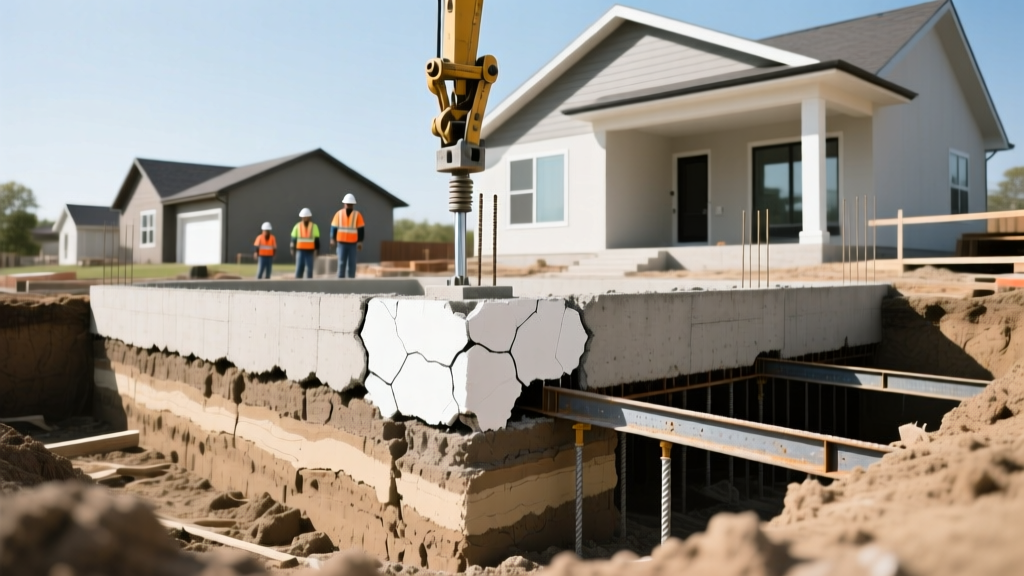
The Geography of Foundation Failure: Why National Averages Mislead
When homeowners ask how much does it cost to repair a house foundation, they are often met with a national average of $4,500 to $12,000. In 2026, this aggregate figure is virtually useless for accurate budgeting. Foundation failure is an inherently local phenomenon driven by regional soil mechanics, climate cycles, and municipal building codes. A settling slab in the expansive clay of Texas requires a fundamentally different engineering intervention—and price tag—than a bowing basement wall in the frost-prone Northeast.
- Minor Crack Repair (Epoxy/Polyurethane): $500 - $1,500
- Moderate Slab Lifting (Mudjacking/Foam): $3,000 - $8,000
- Severe Structural Underpinning (Piers): $10,000 - $30,000+
To accurately budget for foundation restoration, you must evaluate costs through a regional lens. Below is a detailed breakdown of foundation repair costs, failure modes, and primary remediation techniques across major U.S. climate and soil zones.
Regional Cost Breakdown & Soil Mechanics
South & Southwest (TX, OK, CO): Expansive Clay Soils
The South and Southwest are dominated by smectite-rich expansive clay soils. These soils swell significantly when wet and shrink during droughts, causing severe differential settlement. According to structural defect guidelines published by the International Association of Certified Home Inspectors (InterNACHI), this constant heaving and shrinking is the leading cause of slab-on-grade failure in the United States.
- Primary Failure Mode: Differential settlement, stair-step cracking in brick veneers, and slab heaving.
- Standard Repair Method: Steel push piers or helical piers driven to bedrock or load-bearing strata.
- 2026 Regional Cost: $1,500 to $3,000 per steel push pier; $2,000 to $3,500 per helical pier. A typical 10-pier job ranges from $15,000 to $30,000.
- Preventative Add-ons: Root barriers ($15-$25 per linear foot) and automated foundation drip irrigation systems ($2,500-$4,000) to maintain consistent soil moisture.
Northeast & Midwest (NY, OH, IL): Frost Heave & Hydrostatic Pressure
Homes in these regions predominantly feature full basements or crawl spaces. The primary enemy is the freeze-thaw cycle, which causes frost heave, combined with poorly draining glacial till soils that generate immense hydrostatic pressure against foundation walls.
- Primary Failure Mode: Horizontal cracking, inward bowing of poured concrete or CMU (cinder block) walls, and basement water intrusion.
- Standard Repair Method: Carbon fiber straps for walls bowing less than 2 inches; steel I-beam braces or exterior wall anchors for severe deflection.
- 2026 Regional Cost: Carbon fiber straps cost $300 to $500 each (average job: $3,000-$6,000). Steel I-beams cost $400 to $600 each. Exterior excavation and waterproofing membrane installation runs $50 to $100 per linear foot, pushing major basement restorations to $8,000 - $18,000.
West Coast (CA, WA, OR): Seismic Risks & Drought Subsidence
Foundation repair on the West Coast is heavily regulated by seismic building codes. Furthermore, prolonged multi-year droughts in California have caused widespread subsidence as deep soil layers desiccate and lose structural volume.
- Primary Failure Mode: Cripple wall collapse during seismic events, and localized slab sinking due to drought-induced soil consolidation.
- Standard Repair Method: Seismic retrofitting (foundation bolting, cripple wall bracing) and polyurethane deep-injection compaction grouting.
- 2026 Regional Cost: Foundation bolting costs $25 to $40 per linear foot. Cripple wall bracing ranges from $3,000 to $8,000. For seismic and environmental retrofitting standards, the FEMA Building Science Division recommends specialized shear wall installations, which can elevate total retrofit costs to $10,000 - $25,000 for older, unretrofitted pre-1980 homes.
Southeast (FL, GA, SC): High Water Tables & Karst Topography
The coastal Southeast features sandy, poorly cohesive soils and high water tables. Florida and parts of Georgia also sit on karst topography (limestone bedrock), making them susceptible to sudden sinkhole activity and localized washouts.
- Primary Failure Mode: Slab settling due to soil washout, sinkhole subsidence, and moisture wicking through porous concrete block stem walls.
- Standard Repair Method: Compaction grouting (injecting a low-slump mortar to densify sandy soils) and polyurethane slab lifting.
- 2026 Regional Cost: Compaction grouting costs $250 to $400 per cubic yard of soil treated. Polyurethane foam slab lifting averages $5 to $15 per square foot. Comprehensive soil stabilization projects typically range from $6,000 to $14,000.
2026 Foundation Repair Method Pricing Matrix
The table below isolates unit costs for specific repair technologies, independent of regional labor variances. Use this matrix to evaluate contractor bids against current market rates.
| Repair Technology | Primary Application | 2026 Unit Cost | Expected Lifespan |
|---|---|---|---|
| Steel Push Piers | Heavy structural underpinning | $1,500 - $3,000 / pier | 50+ Years |
| Helical Piers | Light-to-medium loads, new construction | $2,000 - $3,500 / pier | 75+ Years |
| Polyurethane Foam | Slab lifting, void filling | $10 - $20 / lb (or $5-$15/sq ft) | 20 - 50 Years |
| Carbon Fiber Straps | Bowing basement walls (<2 inches) | $300 - $500 / strap | Permanent (if no further movement) |
| Compaction Grouting | Sandy soil densification, sinkholes | $250 - $400 / cubic yard | Permanent |
Hidden Cost Drivers: The 'Soft Costs' of Foundation Repair
Contractor bids typically cover materials, heavy equipment, and direct labor. However, homeowners frequently encounter unbudgeted 'soft costs' that can inflate the final invoice by 15% to 30%.
- Geotechnical Engineering Reports ($800 - $2,500): For severe settlement or suspected sinkholes, municipalities require a licensed geotechnical engineer to perform soil borings and dictate the exact pier depth and spacing. Do not rely solely on a contractor's free inspection for complex structural failures.
- Municipal Permits ($200 - $800): Structural underpinning and seismic retrofits require building department sign-offs. In highly regulated areas like Los Angeles or Chicago, permit fees and plan review costs are substantial.
- Landscaping & Hardscape Restoration ($1,500 - $8,000): Installing exterior piers or French drains requires excavating around the perimeter. This destroys shrubs, sprinkler lines, and concrete walkways. Replacing a stamped concrete patio or mature landscaping after foundation work is entirely out-of-pocket.
- Plumbing Leak Testing ($300 - $600): In slab-on-grade homes, foundation settlement is often caused by a leaking under-slab sewer or water line. Most reputable contractors will mandate a hydrostatic plumbing test before lifting the slab to ensure they aren't lifting a foundation that will immediately settle again due to an active leak.
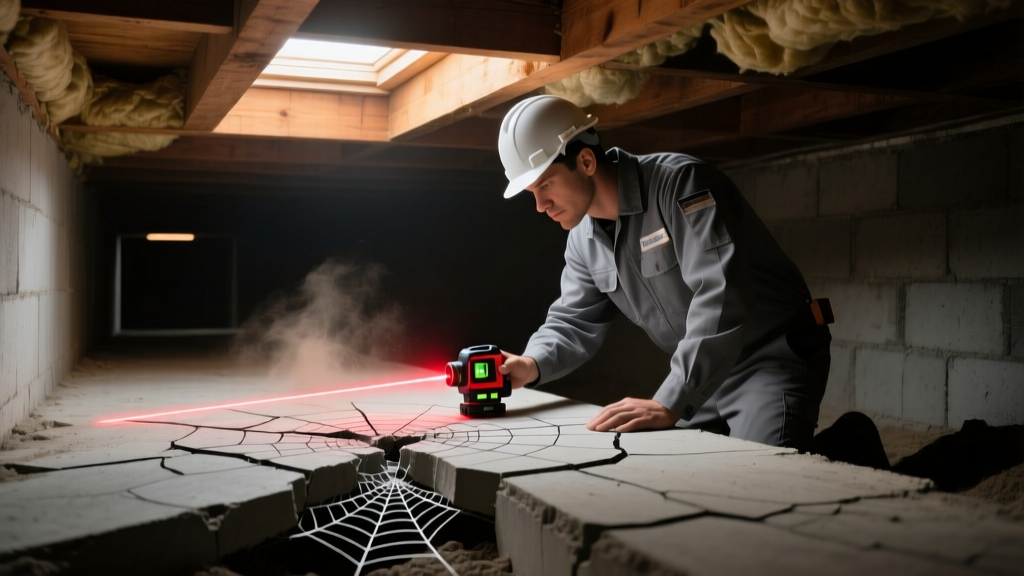
Decision Framework: When to Repair vs. When to Walk Away
Not all foundation damage warrants a $20,000 investment. Use this diagnostic framework to determine the severity of your foundation issues:
- Horizontal cracks in basement walls (indicates imminent hydrostatic failure).
- Diagonal stair-step cracks in masonry wider than 1/4 inch.
- Doors and windows that no longer close, combined with visible floor sloping (a variance of more than 1 inch over 20 feet).
- Vertical hairline cracks in poured concrete (typically shrinkage cracks from the original curing process).
- Minor drywall cracking at door corners without corresponding exterior masonry damage.
Frequently Asked Questions
Does homeowner's insurance cover foundation repair?
Standard HO-3 policies explicitly exclude foundation repair caused by soil expansion, contraction, settling, or frost heave. Insurance will only cover foundation damage if it is the direct result of a covered peril, such as a sudden plumbing leak under the slab, a vehicle striking the home, or a localized sinkhole (if specific sinkhole endorsement coverage is active in states like Florida).
Can I finance a foundation repair?
Yes. Because foundation repair is a structural necessity rather than a cosmetic upgrade, most major contractors partner with specialized lending institutions offering unsecured home improvement loans. In 2026, interest rates for these specialized contractor loans typically range from 7.9% to 14.9% APR depending on creditworthiness. Alternatively, an FHA 203(k) rehabilitation loan or a Fannie Mae HomeStyle Renovation mortgage can wrap foundation repair costs into a primary home purchase or refinance.
How long does a typical underpinning project take?
Residential steel push pier or helical pier installations generally take 3 to 7 days for a standard 10-to-15 pier job. However, interior flooring restoration, drywall repair, and exterior landscaping replacement can add several weeks to the overall project timeline.
Written by
James ThorntonJames Thornton is a construction industry veteran with 25 years of hands-on experience in wood framing, lumber grading, and residential building codes. He started as a framing carpenter in rural Oregon, earned his ICC Residential Building Inspector certification, and eventually became a senior plan reviewer for the City of Portland Bureau of Development Services. James holds a B.S. in Wood Science & Technology from Oregon State University and is a certified lumber grader through the West Coast Lumber Inspection Bureau (WCLIB). He has inspected over 3,000 residential construction sites and authored the city's internal guide on advanced framing techniques (2x6 at 24" O.C.). James lives in Bend, OR, where he builds custom timber-frame cabins and competes in lumberjack sports.
More from James Thornton
View all
Insulation
Best Home Insulation Materials: Complete 2026 Guide
Compare top home insulation materials for 2026. Find R-values, installed costs per square foot, and best uses for fiberglass, spray foam, and mineral wool.
Aug 4, 2026

Sustainable Building
Certify Your Green Building Material for LEED and WELL
Step-by-step guide to certifying a green building material for LEED v5 and WELL v2. Master EPDs, HPDs, and VOC limits for 2026 project specifications.
Aug 4, 2026

Stone & Masonry
Veneer Stacked Stone Panels: Interior Design & Style Showcase
Discover how veneer stacked stone panels transform interiors. Explore modern design profiles, material pairings, and technical installation specs.
Aug 4, 2026