Average Cost for Foundation Repair: 2026 Pricing Guide & Breakdown
Discover the true average cost for foundation repair in 2026. Get detailed pricing breakdowns by repair type, foundation style, and severity level.

The Financial Reality of Foundation Stabilization
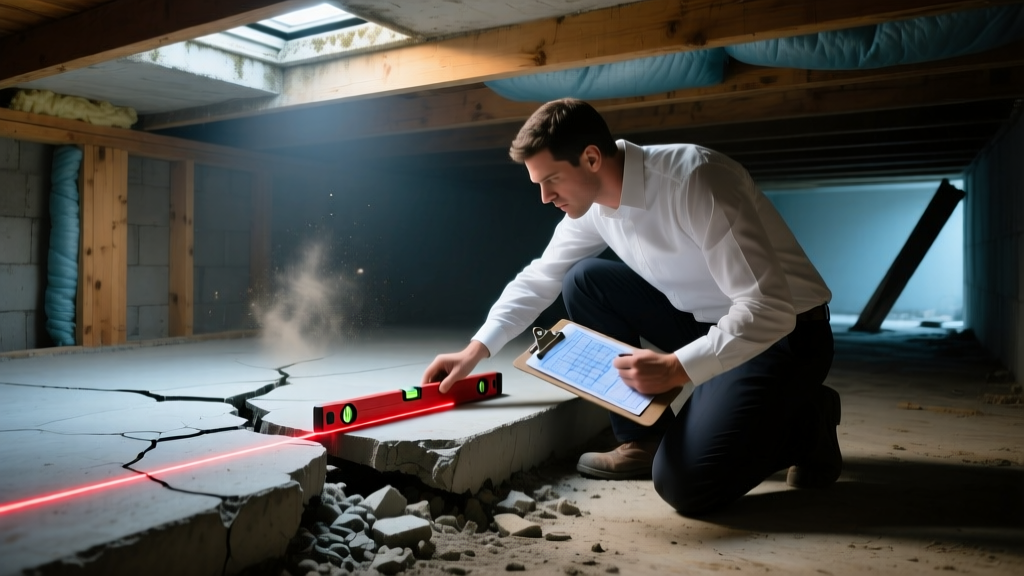
The national average cost for foundation repair spans a massive spectrum, typically ranging from $4,500 to $12,000 in 2026. However, relying on a median figure is a critical mistake for homeowners and property investors. Foundation repair is not a standardized commodity; it is a highly engineered response to specific soil mechanics, structural loads, and hydrostatic pressures. A minor epoxy injection to seal a shrinkage crack may cost $400, while stabilizing a two-story home built on expansive smectite clay using deep-driven steel piers can easily exceed $35,000.
2026 National Cost Snapshot
Minor Crack Sealing (Epoxy/Polyurethane): $250 – $800
Slab Jacking (Polyurethane Foam): $800 – $2,500
Structural Piering (Push/Helical): $10,000 – $35,000+
Basement Wall Stabilization (Carbon Fiber/Steel): $3,000 – $12,000
Full Foundation Rebuild/Replacement: $25,000 – $60,000+
Cost Breakdown by Repair Method and Material
The technique required to arrest foundation settlement dictates the bulk of your project budget. In 2026, the industry has largely shifted away from traditional cementitious mudjacking in favor of high-density polyurethane foam for slab lifting, and deep-driven steel piers for structural underpinning. According to comprehensive market analyses by Forbes Home Improvement, material innovations have stabilized per-unit costs despite broader inflation, though labor rates for specialized geotechnical crews continue to climb.
| Repair Technique | Primary Application | 2026 Cost Range | Pricing Metric |
|---|---|---|---|
| Epoxy / Polyurethane Injection | Non-structural crack sealing, water stopping | $300 – $800 | Per linear foot |
| Polyurethane Foam Jacking (e.g., PolyLevel) | Lifting sunken concrete slabs, driveway aprons | $10 – $20 | Per square foot |
| Steel Push Piers (e.g., ECP) | Heavy structural underpinning to bedrock | $1,500 – $2,500 | Per pier installed |
| Helical Piers (e.g., Chance Helical Piles) | Light-to-medium loads, new construction, tiebacks | $1,800 – $3,000 | Per pier installed |
| Carbon Fiber Straps (e.g., StablWall, Fortress) | Bowing basement walls (minor deflection < 2 inches) | $400 – $700 | Per strip |
| Steel I-Beam Bracing (e.g., PowerBrace) | Severe basement wall bowing or shearing | $800 – $1,200 | Per beam |
The Soil Mechanics Multiplier: Why Your Neighbor Paid Less
One of the most misunderstood variables in foundation repair pricing is subsurface soil composition. The average cost for foundation repair in a region with stable, granular soils will be drastically lower than in areas dominated by expansive clays. Soils with a high Plasticity Index (PI > 25), such as montmorillonite or smectite clays, undergo massive volumetric changes during wet and dry cycles.
Depth to Stable Strata
If your home is built on expansive clay, surface-level friction piers will fail. Engineers must specify deep-driven piers that bypass the active soil zone and bear directly on load-bearing bedrock or highly compacted glacial till (verified via ASTM D1557 testing standards). Driving a steel push pier 15 feet costs significantly less than driving it 45 feet. For every additional 5-foot section of steel piping required to reach stable strata, expect to pay an additional $150 to $250 per pier. A home requiring 15 piers driven to 40 feet will incur thousands in extra material and hydraulic labor costs compared to a home requiring only 20-foot depths.
How Foundation Type Dictates the Repair Bill
The architectural footprint of your foundation determines the accessibility and demolition requirements of the repair process.
- Concrete Slab-on-Grade: Repairing perimeter settlement is straightforward, but repairing interior settlement requires cutting through the concrete slab, excavating the soil, installing interior piers, and patching the concrete. Expect to add $2.50 to $4.50 per square foot for concrete demolition, soil removal, and repouring.
- Crawl Space Foundations: While crawlspace access eliminates the need for concrete demolition, it introduces wood rot and structural timber issues. If the perimeter foundation is stable but the interior support piers are sinking, installing adjustable steel lally columns (e.g., SmartJacks) costs $800 to $1,200 per column. If the main wooden girder beam is compromised by moisture or termites, sistering the joists or replacing the sill plate will add $1,500 to $4,000 in carpentry labor.
- Full Basements: Basement repairs rarely involve just structural lifting; they almost always require hydrostatic pressure management. If water infiltration is causing soil erosion or wall bowing, you must pair structural repairs with interior French drains and a sump pump system (adding $4,000 to $8,000) or exterior waterproofing membranes like Tremco Paraseal (adding $80 to $120 per linear foot of exterior excavation).
Warning: The Hidden Cost of Utility Relocation
Before any excavation or piercing begins, you must call 811 to mark public utility lines. However, 811 does not mark private lines. If a private gas line, water main, or sewer lateral runs directly beneath the footing where a pier must be installed, you will need to hire a private utility locator ($300–$600) and potentially pay a licensed plumber or gas fitter to temporarily reroute the line. This edge case can add $1,500 to $3,500 to your project timeline and budget.
Geotechnical Reports and Engineering Fees
Reputable foundation repair contractors will not guess at the cause of your structural failure. For severe differential settlement, a licensed Structural Engineer (PE) or Geotechnical Engineer must draft a repair specification. As highlighted in property maintenance data from Bankrate, bypassing an independent engineering assessment to save money often results in over-engineered, unnecessarily expensive repair proposals from biased contractors.
Independent Structural Engineer
Cost: $500 – $1,500
Deliverable: A formal letter detailing the exact cause of failure, the required number and depth of piers, and the acceptable tolerance for slab elevation recovery. This document allows you to solicit apples-to-apples bids from three different repair contractors.
Geotechnical Soil Boring Report
Cost: $1,500 – $3,500
Deliverable: Physical soil borings taken at the site to determine the exact depth to bedrock, the soil's bearing capacity, and the water table level. Mandatory for new construction or massive structural rebuilds, but often overkill for minor single-corner settlement.
Decision Framework: Repair vs. Replace
At what point does the average cost for foundation repair cross the threshold into full foundation replacement territory? The industry standard rule of thumb is the 50% rule. If the cost to stabilize, lift, and patch your existing foundation exceeds 50% of the cost to completely demolish and pour a new foundation (which typically ranges from $25,000 to $60,000 for an average 1,500 sq. ft. footprint), replacement becomes the mathematically sound decision.
Furthermore, consider the secondary damage costs. Lifting a severely settled home will inevitably cause drywall cracking, door frame racking, and plumbing stress. You must budget an additional 15% to 25% on top of the foundation repair quote for interior cosmetic remediation, plumbing re-seating, and masonry tuckpointing. Always demand a lifetime, transferable warranty on the structural piers themselves, ensuring the steel components are galvanized or epoxy-coated to resist subterranean corrosion over the next 50 years.
Written by
David NakamuraDavid Nakamura is a licensed architect (AIA) and construction technology writer focused on sustainable building methods, mass timber engineering, and high-performance building envelopes. He holds a Master of Architecture from the University of Washington and is a certified Passive House Consultant (CPHC). David spent eight years at the Seattle firm Mithun, where he led the design of three LEED Platinum projects, before founding his own practice specializing in net-zero residential design. He serves on the editorial advisory board of GreenBuilder Magazine and has authored peer-reviewed papers on cross-laminated timber (CLT) connections for the Journal of Structural Engineering. In his spare time, David teaches woodworking at Pratt Fine Arts Center and kayaks the Puget Sound.
More from David Nakamura
View all
Construction Cost
Labor Cost to Build a Deck Per Sq Ft: 2026 Installation Guide
Discover the exact labor cost to build a deck per sq ft in 2026. This installation guide breaks down contractor rates, complexity factors, and hidden fees.
Aug 4, 2026

Construction Cost
How Much Does It Cost to Build a 3 Bedroom House? Financing Guide
Learn exactly how much it costs to build a 3 bedroom house and explore 2026 financing options, construction loan types, and budget frameworks for your build.
Aug 4, 2026

Construction Cost
Cost to Build a Tennis Court: 2026 Guide
How much does it cost to build a tennis court in 2026? Breakdowns for asphalt, concrete, and synthetic surfaces plus fencing and lighting.
Jul 30, 2026