How Much Does Foundation Repair Cost in Texas? (2026 Framework)
Discover how much foundation repair costs in Texas for 2026. Use our selection framework to choose the right piers, slabjacking, or drainage solutions.

The True Cost of Foundation Repair in Texas: Beyond the Average Quote
When homeowners research how much does foundation repair cost in Texas, they are typically met with vague national averages that fail to account for the state's unique geotechnical challenges. In 2026, the average foundation repair project in Texas ranges from $6,500 to $14,500, but this figure is highly deceptive without context. A minor slabjacking job to correct a sunken patio might cost $2,500, while a full-perimeter steel pier installation on a two-story masonry home in the Dallas-Fort Worth metroplex can easily exceed $35,000.
Texas is ground zero for expansive soil damage. According to the American Society of Civil Engineers (ASCE), expansive soils cause billions of dollars in structural damage annually, with Texas consistently ranking as the most impacted state due to its vast deposits of high-plasticity clays. To accurately budget for a repair, you must abandon flat-rate estimates and instead use a selection framework based on your specific soil region, foundation type, and structural load.
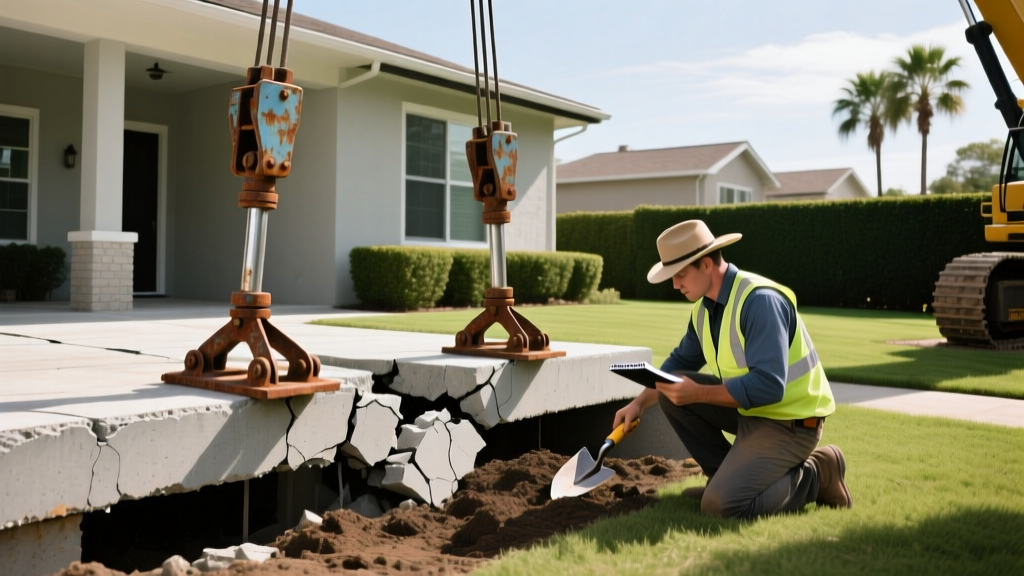
Regional Soil Profiles and Their Impact on Pricing
The primary driver of foundation repair costs in Texas is the depth to stable load-bearing strata. The deeper the unstable clay layer, the more materials and labor are required to bypass it.
Regional Cost Multipliers
- Dallas-Fort Worth (Eagle Ford Shale): Notorious for extreme swelling. The active zone (the depth where soil moisture fluctuates seasonally) can reach 15 to 20 feet deep. Expect to pay a 15-20% premium here because steel piers must be driven exceptionally deep to reach bedrock or stable load-bearing strata.
- Houston / Gulf Coast (Beaumont Formation): A mix of clay and sandy loam. The active zone is generally shallower (8 to 12 feet), but high water tables and poor surface drainage introduce hydrostatic pressure issues, often necessitating costly French drain installations alongside underpinning.
- Austin / Hill Country (Edwards Plateau): Characterized by shallow limestone bedrock. While the clay layer is thinner, drilling or driving piers into solid limestone requires specialized rock-drilling equipment, which can increase mobilization and per-pier costs by up to 30%.
Foundation Repair Selection Matrix: Method vs. Cost
Choosing the wrong repair method is the most expensive mistake a Texas homeowner can make. Below is a 2026 pricing and application matrix for the most common underpinning and lifting techniques used in the state.
| Repair Method | Cost Per Unit (2026) | Best Application | Expected Lifespan |
|---|---|---|---|
| Steel Push Piers | $1,200 - $1,800 / pier | Heavy masonry, severe settlement, deep unstable clay (DFW) | 75+ Years |
| Concrete Pressed Pilings | $650 - $950 / pier | Standard slab-on-grade, moderate settlement, budget-conscious | 20 - 40 Years |
| Helical Piers | $1,600 - $2,400 / pier | New construction tie-downs, light structures, high water tables | 75+ Years |
| Polyurethane Slabjacking | $5 - $12 / sq. ft. | Minor slab settling, driveway/patio voids, non-structural floors | 10 - 20 Years |
| Bell-Bottom Drilled Piers | $1,000 - $1,500 / pier | New builds, pre-construction soil stabilization, Austin limestone | 50+ Years |
The Texas Decision Framework: Matching Damage to Solution
Do not allow a contractor to dictate the method without verifying it against your specific structural profile. Use this framework to validate the proposed scope of work.
Scenario A: The Slab-on-Grade Perimeter Drop
Symptoms: Diagonal drywall cracks originating from door frames, exterior brick frieze cracks, doors binding at the top hinge.
Selection Logic: If the interior slab is relatively level but the perimeter has dropped (common in DFW due to tree root moisture extraction), you only need perimeter underpinning. Concrete pressed pilings are often sufficient and cost-effective here if the active clay zone is less than 12 feet deep. If the home is two stories with a heavy clay tile roof, upgrade to steel push piers to handle the higher axial load without pier cap crushing.
Scenario B: Interior Slab Heave
Symptoms: Floors sloping toward the exterior walls, center of the house feels raised, interior partition walls separating from the ceiling.
Selection Logic: This is caused by moisture accumulation under the center of the slab (often from a hidden plumbing leak or poor surface grading). Do not install piers for heave. Pushing piers against a heaving slab will cause catastrophic structural failure. The correct, lower-cost intervention is moisture mitigation: install French drains, repair plumbing, and potentially use chemical root barriers. Cost: $3,000 - $8,000 for drainage and plumbing, saving tens of thousands on unnecessary piers.
Scenario C: Pier and Beam / Crawlspace Settlement
Symptoms: Bouncy floors, localized sagging, visible gaps between baseboards and hardwood.
Selection Logic: Pier and beam foundations are repaired by shimming or replacing the wooden sub-structure, or adding new concrete pad footings under the wooden piers. If the existing wooden piers are rotting, replace them with pre-cast concrete piers with termite shields. Average cost: $150 - $300 per shim/adjustment, or $800 - $1,200 for full pad-and-pier replacement.
CRITICAL WARNING: The Plumbing Test Mandate
In Texas, it is an industry standard—and highly recommended by the Texas Attorney General's Consumer Protection Division—to perform a hydrostatic plumbing test both before and after lifting a slab foundation. Slab movement frequently severs cast-iron or PVC drainage lines encased in the concrete. If a contractor lifts your slab without testing, they may seal a massive leak under your newly leveled floor, leading to soil erosion and immediate foundation failure. Budget $350 - $600 for a licensed master plumber to conduct these mandatory tests.
Hidden Cost Variables That Inflate Texas Quotes
When comparing bids, ensure you are looking at the total project cost, not just the per-pier price. Texas foundation projects frequently incur the following ancillary costs:
- Root Barriers ($60 - $90 per linear foot): If large Live Oaks, Pecans, or Cottonwoods are within 15 feet of the foundation, a structural engineer will likely mandate a high-density polyethylene (HDPE) root barrier to prevent future moisture extraction. A 50-foot barrier adds $3,000 - $4,500 to the project.
- Mud-Pumping / Void Filling ($4 - $7 per sq. ft.): When a slab settles, it leaves a void between the bottom of the concrete and the soil. After lifting the slab with piers, contractors must pump a cementitious slurry under the slab to provide uniform support. Ensure this is included in the base quote, as some companies list it as an "optional" upgrade.
- Permitting and Engineering Fees ($800 - $1,500): Most major Texas municipalities (including Dallas, Austin, and Houston) require a sealed engineering letter from a licensed Professional Engineer (P.E.) to pull a foundation repair permit. Never hire a contractor who suggests bypassing the permit process; this will invalidate your home insurance and complicate future real estate transactions.
- Landscape and Hardscape Demolition ($1,000 - $3,500): Accessing the perimeter footing often requires breaking and removing concrete walkways, patios, or AC pads. Clarify whether the contractor includes concrete demolition and replacement, or if you must hire a separate flatwork mason.
Evaluating the Warranty: The Ultimate Selection Criteria
The structural repair industry is plagued by fly-by-night operators. According to guidelines referenced by the U.S. Department of Housing and Urban Development (HUD), foundation repairs must meet specific engineering standards to be considered permanent. A warranty is only as valuable as the company backing it.
"A 'Lifetime Warranty' in Texas typically means the lifetime of the LLC, not the lifetime of the home. If the company dissolves in three years, your warranty dissolves with it. Always demand a warranty that is backed by a third-party surety bond or an independent insurance policy."
The Warranty Checklist for Texas Homeowners
- Transferability: Is the warranty fully transferable to a new buyer for a flat administrative fee (usually $150-$300), or does it require an expensive re-inspection? Non-transferable warranties can reduce your home's resale value.
- Adjustment Period: Does the warranty cover free adjustments if the foundation settles more than 1/4 inch over the first 5 years? (Standard reputable companies offer this; budget companies charge $300+ per "recall" visit).
- Exclusions: Read the fine print regarding plumbing leaks. Most warranties are immediately voided if a post-repair hydrostatic test reveals an under-slab leak that the homeowner failed to repair within 30 days.
Frequently Asked Questions
Can I just water my foundation instead of paying for piers?
Foundation watering (using soaker hoses or buried drip lines) is a preventative maintenance strategy, not a repair method. If your foundation has already experienced differential settlement exceeding 1 inch, the soil structure has failed, and the concrete has permanently cracked. Watering will not lift a settled slab; it will only cause further heaving and damage to interior finishes. Piers are required to bypass the failed soil layer entirely.
Does home insurance cover foundation repair in Texas?
Standard Texas homeowners insurance policies (HO-A, HO-B, HO-C) explicitly exclude foundation damage caused by earth movement, soil expansion, or settling. The only exception is if the foundation damage is the direct, sudden result of a covered peril, such as a sudden and accidental plumbing leak bursting under the slab. Even then, the insurance will only cover the "tear out and replace" of the concrete to access the pipe, not the underpinning required to stabilize the house.
How long does a typical Texas foundation repair take?
The physical installation of 15-20 piers typically takes 3 to 5 days for an experienced crew. However, the total project timeline is usually 3 to 6 weeks. This accounts for the 1-2 weeks required to get a P.E. stamped plan, 1-2 weeks for municipal permit approval, and 1 week for post-repair masonry and drywall patching.
Written by
Priya KapoorPriya Kapoor is a real estate market analyst and construction economics researcher with expertise in housing affordability, development feasibility, and infrastructure investment. She holds a Master of Regional Planning from Cornell University and previously worked as a senior analyst at CBRE's Investment Properties group, where she modeled returns for $4B in mixed-use development pipelines. Priya now runs an independent research practice advising developers, municipalities, and REITs on construction cost forecasting and market timing. She publishes the quarterly "BuildMat Market Pulse" report tracking material price indices across 12 commodity categories. Based in Austin, TX, Priya serves on the board of Habitat for Humanity Austin and is a marathon runner.
More from Priya Kapoor
View all
Construction Cost
Cost to Build a 1600 Sq Ft Home in 2026: Full Breakdown
Accurate 2026 cost to build a 1600 sq ft home—material, labor, and regional pricing breakdowns included. Plan your budget with real-time estimates.
Aug 11, 2026

Wood & Lumber
Name the Types of Wood for Pressure Treatment and Preservation
Learn how to name the types of wood best suited for pressure treatment. Compare species treatability, chemical retention levels, and 2026 preservation costs.
Aug 4, 2026

Stone & Masonry
Stone Veneer Suppliers Lindenhurst: 2026 Cost Analysis
Analyze 2026 stone veneer costs in Lindenhurst, NY. Compare local supplier pricing, delivery fees, and Suffolk County installation labor rates.
Aug 4, 2026