Foundation Repair Cost Houston: 2026 Pricing & Soil Guide
Analyze the 2026 foundation repair cost Houston homeowners face. Compare pressed concrete and steel piers, soil impacts, and exact pricing data.

The Houston Soil Factor: Expansive Clay and Evapotranspiration
Houston’s expansive clay soils and extreme moisture fluctuations create one of the most hostile environments for slab-on-grade foundations in the United States. The majority of the Greater Houston area sits atop the Beaumont Formation and Alpine clay deposits. These soils possess a Plasticity Index (PI) frequently exceeding 45, meaning they undergo massive volumetric changes when moisture levels shift.
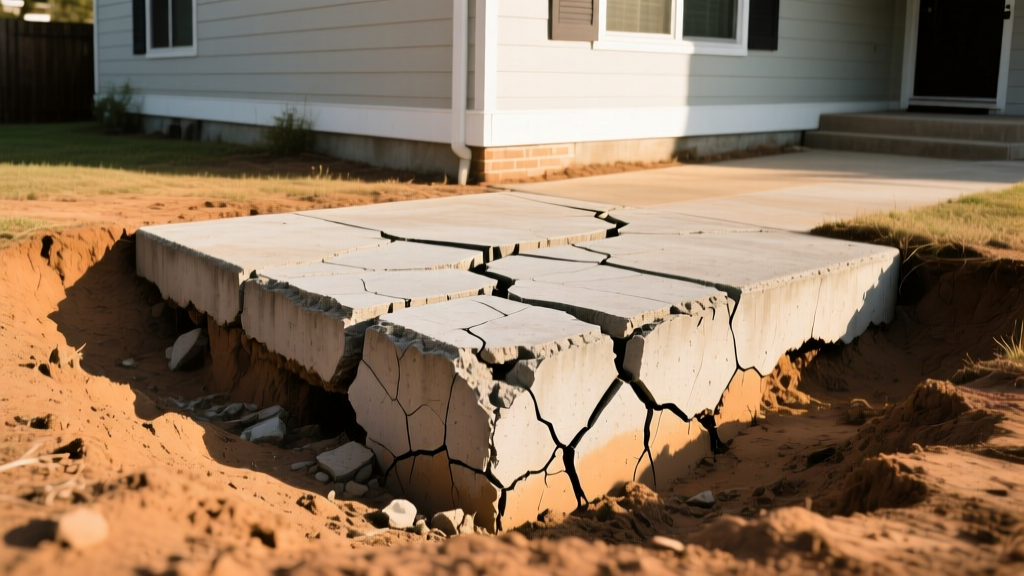
During the intense Texas summer, high evapotranspiration rates pull moisture from the soil, causing the clay to shrink and pull away from the foundation. This loss of support leads to differential settlement, manifesting as diagonal drywall cracks, sticking doors, and frieze board separation. Conversely, heavy spring rains cause the clay to swell, creating upward heaving forces that can crack grade beams and snap post-tension cables. Understanding this soil mechanics cycle is critical because it dictates the depth and type of underpinning required to stabilize a structure.
Mature Oak, Willow, and Pine trees planted within 20 feet of a foundation will extract thousands of gallons of water from the clay during droughts. This localized soil desiccation causes severe corner settlement that mimics structural failure. Before approving a multi-pier repair plan, mandate a root barrier installation or targeted deep-root watering system to address the biological moisture sink.
2026 Foundation Repair Cost Breakdown for Houston Homes
The foundation repair cost Houston homeowners encounter in 2026 varies wildly based on the extent of the differential settlement, the accessibility of the work area, and the underpinning method selected. A typical residential repair involves installing 15 to 30 piers along the affected exterior perimeter or interior grade beams.
| Repair Method | 2026 Cost Per Pier | Typical Depth | Load Mechanism | Best Application |
|---|---|---|---|---|
| Pressed Concrete Pilings | $180 - $280 | 12 - 25 ft | Skin Friction | Standard 1-2 story slab homes |
| Steel Push Piers | $320 - $480 | 30 - 70 ft | End-Bearing | Heavy masonry, 3+ story, severe settlement |
| Drilled Bell-Bottom Piers | $450 - $650 | 15 - 30 ft | End-Bearing / Friction | New construction, pool decks, light commercial |
| Polyurethane Foam Jacking | $8 - $14 / sq ft | 3 - 8 ft | Void Filling / Slab Lift | Minor slab settling, patio slabs, pool decks |
For an average 2,500-square-foot home requiring 20 exterior pressed concrete pilings, the total project cost typically ranges from $5,500 to $8,500. However, interior pier installation requires cutting through the concrete slab, excavating the subgrade, and patching the concrete, which pushes interior pier costs to $350–$500 per location.
Method Comparison: Pressed Concrete vs. Steel Push Piers
Contractors in Harris County predominantly recommend either pressed concrete or steel piers. The choice hinges on soil stratigraphy and the structural load of the home.
Pressed Concrete Pilings (Friction System)
This is the most common repair method in Houston. A hydraulic ram presses 6-inch diameter cylindrical concrete segments into the ground. The installer continues pressing until the piling reaches "refusal"—the point where the friction of the dense, dry clay against the concrete cylinder is strong enough to support the house. In Houston, refusal typically occurs between 15 and 25 feet deep. While highly effective for standard wood-frame and brick veneer homes, friction pilings can theoretically settle again if a severe, prolonged drought dries the clay below the 20-foot mark.
Steel Push Piers (End-Bearing System)
Steel piers are driven hydraulically through the unstable clay layers all the way down to a load-bearing stratum, such as the Willis Formation or bedrock. In Houston, this stable layer can be 40 to 70 feet below the surface. Because they rely on end-bearing rather than skin friction, steel piers offer a permanent, immutable solution. The Foundation Performance Association notes that steel piers are the required standard for homes exhibiting severe structural distress, heavy stone veneers, or multi-story load concentrations where clay friction alone is insufficient.
Hidden Costs: Engineering, Permits, and Plumbing
When budgeting for foundation repair, the per-pier cost is only the baseline. Houston’s regulatory environment and soil conditions introduce mandatory secondary costs that homeowners must anticipate.
- Independent Structural Engineering Report ($600 - $1,200): Never rely solely on a contractor’s assessment. Hire a licensed Professional Engineer (P.E.) in Texas to conduct an elevation survey using a zip-level or hydrostatic altimeter. The engineer will dictate the exact number and placement of piers, preventing contractors from over-selling unnecessary piers.
- Hydrostatic Plumbing Test ($450 - $850): Houston’s shifting clay frequently fractures under-slab cast-iron and PVC waste lines. Before a contractor lifts the foundation, a master plumber must perform a hydrostatic test to ensure no leaks are washing away the subgrade. Lifting a slab with an active leak will cause immediate re-settlement and void the repair warranty.
- City of Houston Permits ($150 - $350): The City of Houston and surrounding municipalities (like Sugar Land and The Woodlands) require permits for foundation underpinning. The permit process ensures the repair plan is stamped by a licensed engineer and complies with local building codes.
- Landscaping and Hardscape Remediation ($1,000 - $3,000): Exterior excavation for piers will destroy flower beds, sidewalks, and HVAC lines. Budget for concrete saw-cutting, trenching, and post-repair landscaping restoration.
Many Houston homes built after 1990 utilize post-tension (PT) cable foundations. If a contractor cuts a tensioned steel cable while installing an interior pier or plumbing access, the cable can whip through the concrete slab, causing severe injury and structural failure. Always require a ground-penetrating radar (GPR) scan or X-ray of the slab before any interior concrete cutting begins.
Preventative Maintenance: The Soaker Hose Protocol
Repairing a foundation is a reactive measure. In Houston’s climate, proactive moisture management is the most cost-effective way to prevent future differential settlement. The goal is to maintain a constant moisture content in the clay immediately adjacent to the grade beam.
According to research published by Texas A&M AgriLife Extension, consistent foundation watering mitigates the shrink-swell cycle of expansive soils. Implement the following protocol during the peak evapotranspiration months of July through September:
- Placement: Lay flat soaker hoses exactly 18 inches away from the foundation perimeter. Placing them directly against the slab causes water to pool at the grade beam, potentially softening the subgrade and causing heaving.
- Duration and Frequency: Run the soaker hoses for 45 to 60 minutes, three times per week during severe droughts. The objective is to deliver approximately 3/4 inch of water per week to the root zone and subgrade.
- Capillary Breaks: Ensure the final grading slopes away from the house at a minimum 5% drop over the first 10 feet. This prevents surface runoff from ponding against the slab during heavy Gulf storms, which causes the opposite problem: clay swelling and upward heave.
By understanding the specific mechanics of Houston’s gumbo clay and accurately forecasting the true costs of underpinning, engineering, and plumbing verification, homeowners can navigate foundation repairs with precision and avoid costly remediation failures.
Written by
Sarah WhitfieldSarah Whitfield is a chartered quantity surveyor (MRICS) and construction cost analyst with 15 years of experience in material pricing, procurement strategy, and project budgeting. She earned her degree in Construction Management from the University of Reading (UK) and has worked on projects ranging from $2M custom homes to $180M mixed-use developments across North America and Europe. Sarah currently leads cost estimating for BuildMat Insight, maintaining a proprietary database of 4,000+ material price points updated quarterly. She is a frequent contributor to RSMeans cost data panels and has presented at the International Cost Engineering Council (ICEC) congress. Based in Denver, CO, Sarah is an avid trail runner and volunteer mentor for Women in Construction.
More from Sarah Whitfield
View all
Wood & Lumber
What Are the Different Types of Wood? A Builder's Guide
Compare structural softwoods, finish hardwoods, and engineered lumber. Analyze Janka ratings, MOE values, and 2026 pricing for construction.
Aug 4, 2026

Walls & Panels
Steel Framing vs Wood Framing: Corrosion and Moisture Defense
Compare steel framing vs wood framing for moisture resistance. Learn about galvanized coatings, condensation risks, and corrosion protection strategies.
Jul 21, 2026

Stone & Masonry
How to Cut Stone Veneer: Wet Saw vs Grinder Comparison
Compare the best tools for cutting stone veneer. We review wet saws, angle grinders, and chop saws to help you achieve clean, chip-free cuts.
Jul 21, 2026