True Cost for Foundation Repair: Selection Framework & Pricing
Evaluate the true cost for foundation repair with our selection framework. Compare piering, slabjacking, and carbon fiber pricing to choose the right fix.
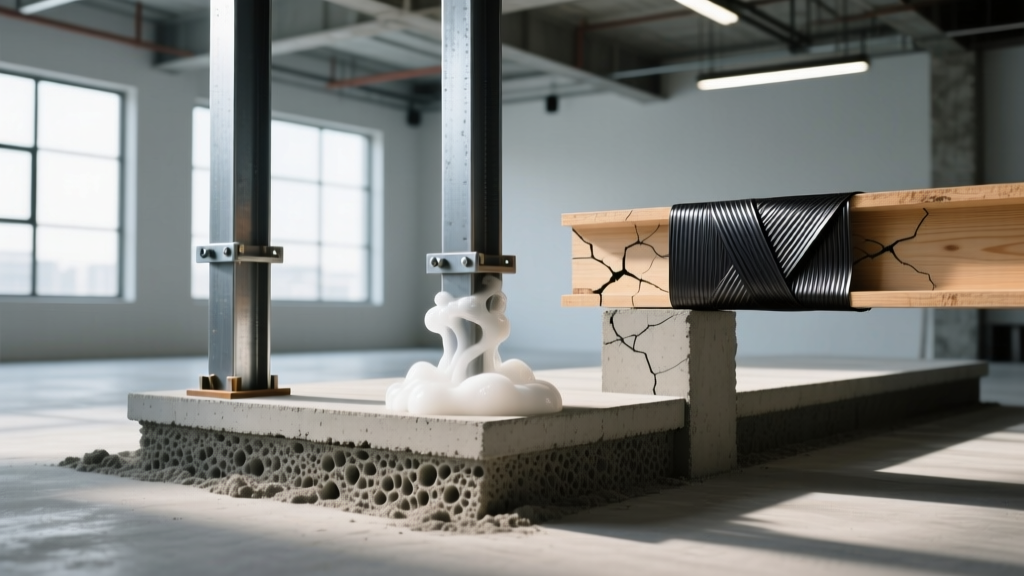
The 2026 Foundation Repair Cost Matrix
When a structural engineer flags differential settlement, the immediate question is financial. However, evaluating the cost for foundation repair requires looking beyond the bottom line of a contractor’s quote. The cheapest method is rarely the correct engineering solution for your specific soil profile. In 2026, material costs for high-carbon steel and structural polyurethane have stabilized, but labor and heavy equipment mobilization remain significant cost drivers.
Below is the current pricing matrix for primary structural stabilization methods. These figures represent fully burdened costs, including equipment mobilization, engineering sign-off, and standard site restoration.
| Repair Method | Average Cost (2026) | Primary Application | Expected Lifespan |
|---|---|---|---|
| Steel Push Piers | $1,500 – $2,800 per pier | Deep bedrock anchoring for heavy masonry loads | 75+ years |
| Helical Piers | $1,800 – $3,200 per pier | High-torque friction loading in deep clay/sand | 100+ years |
| Polyurethane Slabjacking | $10 – $25 per sq. ft. | Void filling and lifting sunken concrete slabs | 20 – 40 years |
| Carbon Fiber Straps | $800 – $1,500 per strap | Stabilizing inward-bowing basement block walls | 50+ years (tensile) |
| Compaction Grouting | $250 – $450 per cubic yard | Densifying loose, granular soils beneath footings | Permanent (soil alter) |
Soil Mechanics Selection Framework
Selecting a repair method based purely on price leads to catastrophic failure modes. The correct framework matches the repair technology to the geotechnical failure mechanism. According to InterNACHI’s Foundation Standards, understanding the active soil zone is critical before authorizing any subterranean work.
Expansive Clay Soils (Texas, Colorado, Gulf Coast)
Expansive clays undergo massive volumetric changes based on moisture content. The ‘active zone’ of seasonal moisture fluctuation typically extends 5 to 8 feet deep. Slabjacking will fail here because the underlying clay will continue to heave and shrink. You must bypass the active zone entirely. Selection: Steel push piers driven to bedrock, or deep-set helical piers with friction collars extending 25+ feet below grade.
Poorly Compacted Fill and Sandy Loam
Subdivisions built on un-engineered fill dirt suffer from consolidation settlement. The soil isn’t expanding; it is simply compressing under the weight of the structure. Selection: Helical piers are ideal here. The installation process relies on a torque-to-capacity correlation—the hydraulic torque motor measures soil density in real-time, ensuring the pier reaches a load-bearing stratum before installation stops.
Peat and High-Organic Soils
Organic soils decompose over time, creating massive voids. Push piers will fail because there is no bedrock to bear against, and the friction on the steel shaft is negligible in decomposing peat. Selection: Micro-piles or specialized helical piles with large-diameter bearing plates designed to distribute loads across a wider surface area of weak soil.
Contractors heavily market polyurethane foam injection because it requires minimal equipment and yields high profit margins. While excellent for lifting a settled driveway or patio slab, using polyurethane to lift a structural house footing built on expansive clay is a temporary bandage. The foam does not stop the clay from swelling; it merely fills the current void. Expect recurrent settlement within 3 to 5 years in active clay regions.

Deconstructing the Quote: Hidden Cost Variables
A contractor’s initial proposal rarely captures the full financial impact of the project. When budgeting the cost for foundation repair, you must account for ancillary trades and site-restoration expenses that foundation companies explicitly exclude from their contracts.
- Geotechnical Soil Boring Report ($1,200 – $3,500): Never authorize a $30,000 piering job without an independent soil engineer’s boring report. This dictates the exact depth and type of pier required, preventing contractors from over-engineering (and overcharging) the solution.
- HVAC and Plumbing Disconnect/Reconnect ($800 – $2,500): Lifting a house even two inches will snap rigid cast-iron sewer lines and strain copper gas lines. You must hire licensed plumbers to cut and flex these lines before the lift, and re-certify them after.
- Interior Floor Tear-Out ($4 – $8 per sq. ft.): If the foundation company needs interior access to drive piers along a central load-bearing beam, they will jackhammer the concrete slab. Re-pouring and finishing the interior concrete is an out-of-pocket expense.
- Egress Window Well Modifications ($600 – $1,200 per well): Lifting a settled basement wall raises the house above the existing window wells, violating fire egress codes. Steel wells must be excavated and lowered.
- Landscaping and Hardscape Destruction: Excavating the perimeter for exterior waterproofing or pier brackets will destroy shrubbery, sprinkler lines, and adjacent concrete walkways. Budget 10% of the total repair cost for exterior restoration.
Vetting Structural Warranties and Vendor Selection
The foundation repair industry is notorious for inflated warranty claims. A ‘Lifetime Warranty’ printed on a contractor’s letterhead is legally defined as the lifetime of the issuing company. If the contractor goes out of business in four years, your warranty evaporates. The Federal Trade Commission guidelines on home improvement contracts strongly advise consumers to verify the financial backing of any long-term structural guarantee.
Only hire contractors whose warranties are backed by a third-party insurance entity or a massive national network (e.g., the Foundation Supportworks network or Olshan’s external warranty trust). Demand to see the actual third-party warranty certificate, not just the dealer agreement. Furthermore, ensure the warranty covers ‘performance’ (e.g., the wall will not move more than 1/4 inch) rather than just ‘materials’ (the steel pier won’t rust).
Additionally, verify the contractor’s licensing. In many states, foundation repair falls under a specialized structural contractor license, not a general handyman or basic concrete license. Cross-reference their license number with your state’s contractor board to check for active litigation or bond claims.
ROI and Real Estate Transaction Impacts
How does the cost for foundation repair impact your home’s equity? According to HUD guidelines on structural inspections, unresolved foundation issues are among the top three deal-killers in residential real estate transactions. Appraisers will flag active differential settlement, forcing a sale into FHA/VA loan rejection or requiring an escrow holdback that is typically 1.5x the estimated repair cost.
“Investing $15,000 in engineered push piers with a transferable, third-party-backed warranty does not necessarily increase your home’s appraised value above the neighborhood baseline, but it entirely protects your listing price from the 10% to 20% discount that cash-buyers and flippers demand for ‘as-is’ structural distress.”
If you plan to sell within 24 months, prioritize repair methods that come with highly recognizable, transferable warranties. Buyers and their home inspectors look for the paperwork of the steel installation, not just the physical brackets in the dirt. Ensure the contractor provides a detailed as-built drawing showing the exact location, depth, and hydraulic pressure of every pier installed, as this documentation is required to transfer the warranty to the new homeowner at closing.
Written by
Priya KapoorPriya Kapoor is a real estate market analyst and construction economics researcher with expertise in housing affordability, development feasibility, and infrastructure investment. She holds a Master of Regional Planning from Cornell University and previously worked as a senior analyst at CBRE's Investment Properties group, where she modeled returns for $4B in mixed-use development pipelines. Priya now runs an independent research practice advising developers, municipalities, and REITs on construction cost forecasting and market timing. She publishes the quarterly "BuildMat Market Pulse" report tracking material price indices across 12 commodity categories. Based in Austin, TX, Priya serves on the board of Habitat for Humanity Austin and is a marathon runner.
More from Priya Kapoor
View all
Construction Cost
Cost to Build a 1600 Sq Ft Home in 2026: Full Breakdown
Accurate 2026 cost to build a 1600 sq ft home—material, labor, and regional pricing breakdowns included. Plan your budget with real-time estimates.
Aug 11, 2026

Wood & Lumber
Name the Types of Wood for Pressure Treatment and Preservation
Learn how to name the types of wood best suited for pressure treatment. Compare species treatability, chemical retention levels, and 2026 preservation costs.
Aug 4, 2026

Stone & Masonry
Stone Veneer Suppliers Lindenhurst: 2026 Cost Analysis
Analyze 2026 stone veneer costs in Lindenhurst, NY. Compare local supplier pricing, delivery fees, and Suffolk County installation labor rates.
Aug 4, 2026