The Cost of Foundation Repair by Region: 2026 Soil and Climate Guide
Discover the true cost of foundation repair across different US regions. Learn how expansive clay, frost lines, and local climate impact 2026 pricing.

The cost of foundation repair is rarely a standard national average. A sinking slab in Dallas requires vastly different engineering interventions than a frost-heaved basement in Minneapolis or a settling coastal home in Charleston. In 2026, regional geotechnical realities—specifically soil plasticity, frost line depths, and water table fluctuations—dictate not only the failure mode of your foundation but the exact materials and labor required to stabilize it.
Understanding the regional cost of foundation repair requires moving beyond generic per-pier estimates. This guide breaks down the geotechnical drivers of foundation failure by region, provides a 2026 pricing matrix, and outlines the specific engineered solutions required for local soil profiles.
The Geotechnical Drivers of Regional Repair Costs
Foundation repair pricing is fundamentally tied to the load-bearing capacity and volumetric stability of the soil beneath your home. Before a contractor can quote a repair, they must account for three regional variables:
- Plasticity Index (PI): Measures a soil's tendency to expand and contract with moisture changes. Soils with a PI above 25 are considered highly expansive and require deep friction piers.
- Frost Line Depth: In northern climates, footings must be placed below the frost line to prevent heave. Deeper frost lines mean more excavation, higher concrete volumes, and increased labor costs.
- Skin Friction & Water Tables: Coastal and sandy soils lack the skin friction required for traditional push piers, necessitating helical piles with larger bearing plates.
2026 Regional Cost of Foundation Repair Matrix
The following table outlines average regional costs based on 2026 material pricing and localized labor rates. These ranges assume a standard 2,000 sq. ft. residential footprint requiring moderate to severe stabilization (8 to 15 piers).
| Region | Primary Geotechnical Threat | Average Repair Cost Range | Primary Engineered Solution |
|---|---|---|---|
| South & Southwest (TX, OK, CO) | Expansive Clay / Drought Cycles | $18,000 – $45,000 | Steel Push Piers / Root Barriers |
| Midwest & Northeast (MN, MI, NY) | Frost Heave / Freeze-Thaw | $14,000 – $38,000 | Helical Piers / Carbon Fiber Straps |
| Southeast & Coastal (FL, GA, SC) | High Water Table / Sandy Loam | $10,000 – $28,000 | Helical Piles / Grade Beams |
| West Coast (CA, WA, OR) | Seismic Activity / Landslide | $22,000 – $65,000+ | Seismic Retrofitting / Caissons |
Deep Dive: South & Southwest (The Expansive Clay Belt)
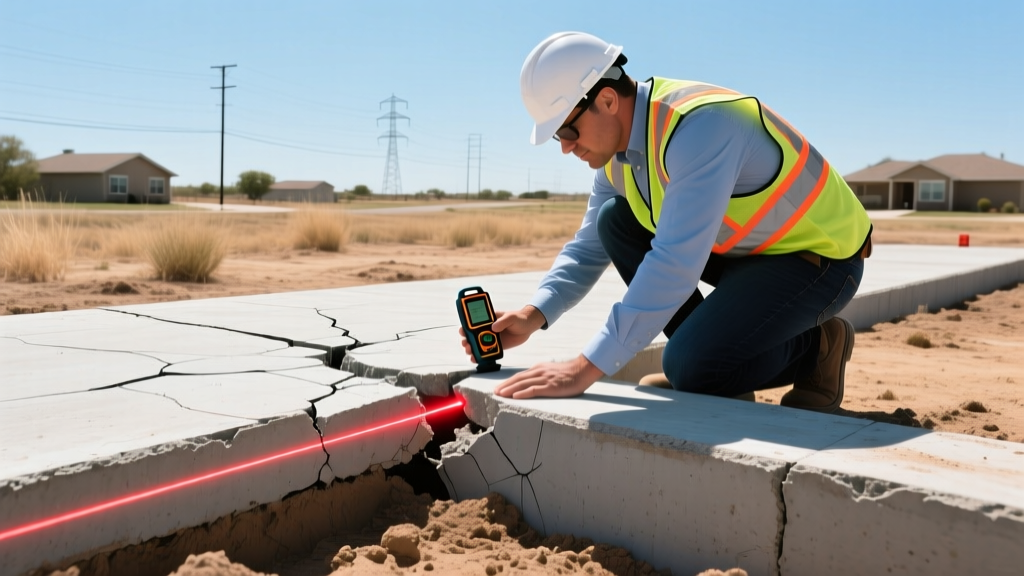
In states like Texas, Oklahoma, and parts of Colorado, the cost of foundation repair is dominated by expansive clays, particularly the Eagle Ford Shale formation. These soils exhibit a Plasticity Index (PI) frequently exceeding 40. During drought cycles, the soil shrinks and pulls away from the foundation; during heavy rains, it swells violently, causing differential settlement.
Required Interventions and Costs
Standard concrete pressed pilings are insufficient here because they rely on skin friction in the active clay zone, which shifts seasonally. Contractors must use Atlas Resistance Steel Push Piers or equivalent friction-collar systems driven 25 to 40 feet deep into load-bearing strata or bedrock.
- Steel Push Piers: $2,800 to $4,500 per pier installed. A typical 10-pier job will range from $28,000 to $45,000.
- HDPE Root Barriers: Mature oak and mesquite trees extract massive amounts of moisture from clay. Installing high-density polyethylene root barriers costs $1,200 to $2,500 per linear tree line and is often mandatory to void-proof the warranty.
- French Drains & Moisture Maintenance: Automated drip-line foundation watering systems ($1,500 - $3,000) are frequently required by structural engineers in this region to maintain consistent soil moisture.
Deep Dive: Midwest & Northeast (Frost Heave and Bowing Walls)
The regional cost of foundation repair in the Midwest and Northeast is driven by the freeze-thaw cycle and deep frost lines. In Minnesota and upstate New York, the frost line depth requires footings to be placed 48 to 60+ inches below grade. When water in the soil freezes, it expands laterally against basement walls, causing bowing, shearing, and stair-step cracking in CMU (concrete masonry unit) and poured concrete walls.
Required Interventions and Costs
Excavation costs surge in these regions due to the depth required to reach the footing, compounded by rocky glacial till soils.
- Carbon Fiber Straps: For walls bowing inward less than 2 inches, structural carbon fiber straps (e.g., Fortress Stabilization systems) are the standard. Cost: $800 to $1,200 per strap installed. A standard basement wall requiring 10 straps will cost $8,000 to $12,000.
- Steel I-Beam Wall Braces: For walls deflected more than 2 inches, galvanized steel I-beams anchored to the floor joists and basement slab are required. Cost: $1,500 to $2,200 per beam.
- Helical Tiebacks: Used in conjunction with wall braces to pull the wall back to plumb by anchoring into the soil outside. Cost: $2,500 to $3,500 per tieback.
Critical Warning for Northern Climates: Never attempt to repair a bowing basement wall without first addressing exterior hydrostatic pressure. Installing interior steel braces without exterior waterproofing and footing drains will simply transfer the hydraulic load, eventually causing the floor slab to heave or crack.
Deep Dive: Coastal & Southeast (High Water Tables and Sand)
Coastal regions from the Carolinas down through Florida present a unique geotechnical profile: high water tables, sandy loam, and organic peat layers. According to FEMA Flood Map data, many of these homes sit in high-velocity wave zones or coastal floodplains, meaning the soil is constantly saturated and lacks cohesive strength.
Required Interventions and Costs
Push piers fail in coastal sand because there is insufficient skin friction to hold the steel shaft in place. Instead, engineers specify Helical Piles (such as Chance Helical Piles), which feature large steel bearing plates that are mechanically screwed into the ground, relying on the bearing capacity of the helix plates rather than shaft friction.
- Helical Piles: $3,200 to $5,500 per pile installed. Because they require specialized hydraulic torque motors and larger steel components, they are roughly 20% more expensive than push piers.
- Crawl Space Encapsulation & Vapor Barriers: In the Southeast, high humidity rots wooden pier-and-beam foundations. Full crawl space encapsulation with a 20-mil polyethylene liner and commercial dehumidifier costs $5,000 to $12,000, often required to halt organic decay of wooden girders.
Hidden Regional Costs: Permits, Engineering, and Access
The base cost of materials and labor is only part of the equation. Regional regulatory environments and site access issues can add 15% to 30% to your final invoice.
- Geotechnical Engineering Reports: In California and Colorado, structural engineers frequently require a formal geotechnical soil report before approving a pier layout. Independent soil boring and lab testing cost $1,800 to $3,500.
- Seismic Retrofitting Permits: In California, foundation repairs often trigger mandatory seismic retrofitting requirements under local building codes. Bolting the sill plate to the foundation and adding plywood shear panels can add $8,000 to $15,000 to the project.
- Site Access Constraints: In dense urban areas (e.g., Boston, Chicago) or properties with zero-lot-line setbacks, contractors cannot use standard track-mounted hydraulic rigs. They must use portable, hand-dug micro-piling equipment, which increases labor time and costs by up to 40%.
Decision Framework: Aligning Repair Methods to Soil Profiles
Use this framework to verify your contractor's proposed solution against your regional soil reality. Always ensure the proposed method aligns with the HUD Single Family Housing Policy Handbook standards for permanent foundation stabilization.
If your soil is Expansive Clay (PI > 25) & Bedrock is Deep:
Action: Demand Steel Push Piers with friction collars. Avoid: Concrete pressed pilings or segmented concrete cylinders, which will float in the active clay zone during wet seasons.
If your soil is Loose Sand / Coastal Loam:
Action: Demand Helical Piles with dual or triple helix bearing plates. Avoid: Push piers, which will sink continuously under the structural load due to lack of skin friction.
If your foundation is CMU Block and Bowing Inward:
Action: Install exterior helical tiebacks combined with interior carbon fiber or steel I-beam braces. Avoid: Simply parging (applying cement over) the cracks, which is purely cosmetic and ignores the lateral hydrostatic pressure.
Ultimately, the cost of foundation repair is an investment in geotechnical stabilization. By understanding the specific soil mechanics and climate variables of your region, you can accurately evaluate contractor bids, avoid inappropriate repair methods, and ensure your home's structural integrity for decades to come.
Written by
James ThorntonJames Thornton is a construction industry veteran with 25 years of hands-on experience in wood framing, lumber grading, and residential building codes. He started as a framing carpenter in rural Oregon, earned his ICC Residential Building Inspector certification, and eventually became a senior plan reviewer for the City of Portland Bureau of Development Services. James holds a B.S. in Wood Science & Technology from Oregon State University and is a certified lumber grader through the West Coast Lumber Inspection Bureau (WCLIB). He has inspected over 3,000 residential construction sites and authored the city's internal guide on advanced framing techniques (2x6 at 24" O.C.). James lives in Bend, OR, where he builds custom timber-frame cabins and competes in lumberjack sports.
More from James Thornton
View all
Insulation
Best Home Insulation Materials: Complete 2026 Guide
Compare top home insulation materials for 2026. Find R-values, installed costs per square foot, and best uses for fiberglass, spray foam, and mineral wool.
Aug 4, 2026

Sustainable Building
Certify Your Green Building Material for LEED and WELL
Step-by-step guide to certifying a green building material for LEED v5 and WELL v2. Master EPDs, HPDs, and VOC limits for 2026 project specifications.
Aug 4, 2026

Stone & Masonry
Veneer Stacked Stone Panels: Interior Design & Style Showcase
Discover how veneer stacked stone panels transform interiors. Explore modern design profiles, material pairings, and technical installation specs.
Aug 4, 2026