The Complete Foundation Damage Repair Cost Guide for 2026
Discover the true foundation damage repair cost in 2026. Compare pricing for piering, polyjacking, and wall anchors with expert diagnostic frameworks.
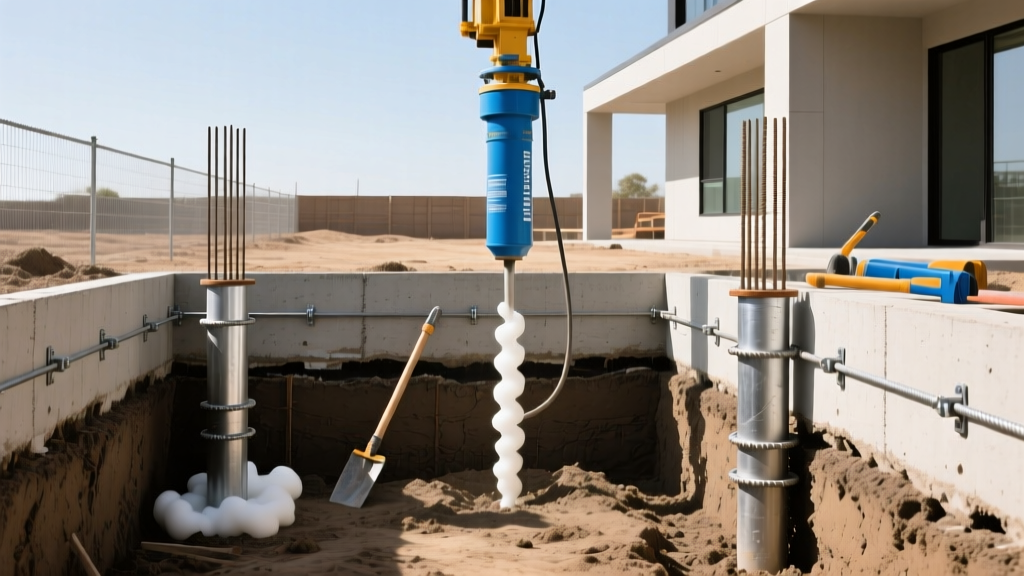
The True Scope of Foundation Damage Repair Cost in 2026
Foundation damage is a distress signal from your soil, not just your concrete. While supply chain stabilization in 2026 has normalized the cost of raw materials like steel and polyurethane, specialized labor rates for structural underpinning continue to climb. Understanding the true foundation damage repair cost requires looking past surface-level drywall cracks and analyzing the geotechnical failure driving them. A generic estimate is useless; a hairline shrinkage crack costs $400 to seal, while a differential settlement requiring helical piers can easily exceed $25,000.
• Minor Crack Sealing (Epoxy/Polyurethane): $350 – $800
• Slab Leveling (Polyjacking): $1,200 – $3,500
• Structural Piering (Helical/Push): $15,000 – $30,000
• Basement Wall Stabilization: $4,000 – $12,000
• Full Foundation Replacement: $40,000 – $85,000+
Soil Mechanics: The Root Cause of Your Invoice
Before evaluating repair methods, you must understand the soil mechanics dictating the damage. According to InterNACHI’s foundation inspection standards, over 70% of foundation failures stem from moisture fluctuations in expansive clay soils (montmorillonite). When these soils absorb water, they expand, exerting up to 5,000 pounds per square foot of uplift pressure. During droughts, they shrink, leaving the foundation unsupported. Repairing the concrete without addressing the soil moisture equilibrium via proper drainage and root barriers guarantees a repeat failure, effectively doubling your long-term foundation damage repair cost.
Diagnostic Breakdown: Matching Damage to the Repair Method
1. Slab Settlement: Polyjacking vs. Mudjacking
When a concrete slab foundation sinks uniformly or experiences minor differential settlement (less than 2 inches), void-filling is the standard remedy. The industry has largely shifted away from traditional mudjacking (pumping a heavy cement-sand slurry) toward polyjacking.
- Polyjacking: Injects high-density structural polyurethane foam (typically 2.5 to 6.0 lb/cu ft). The foam expands 20 to 30 times its liquid volume, filling microscopic voids and curing in 15 minutes. It adds virtually no weight to the underlying soil. Cost: $10 to $25 per square foot.
- Mudjacking: Pumps a cementitious slurry weighing over 100 lb/cu ft. While cheaper, the heavy slurry can exacerbate soil compression over time, leading to secondary settlement. Cost: $5 to $15 per square foot.
2. Deep Foundation Failure: Helical vs. Push Piers
When the load-bearing strata is deep, or the structure is experiencing severe differential settlement (stair-step cracking, doors binding), slab jacking is insufficient. You must bypass the unstable surface soils and transfer the structural load to bedrock or dense, load-bearing strata using steel piers.
- Push Piers: Driven hydraulically into the ground using the actual weight of the house as resistance. They are highly effective for heavy masonry structures but can fail on lighter wood-framed homes that lack the mass to drive the pier deep enough. Cost: $1,500 to $2,200 per pier.
- Helical Piers: Feature helical bearing plates and are mechanically torqued into the soil, much like a giant screw. The installation torque directly correlates to the pier’s load capacity (verified via hydraulic torque motors reading 4,000 to 6,000 ft-lbs). Because they do not rely on the structure’s weight for installation, they are the mandatory choice for light structures, new additions, and seismic zones. Cost: $1,800 to $2,800 per pier.
3. Bowing Basement Walls: Carbon Fiber vs. Earth Anchors
Hydrostatic pressure from saturated exterior soil pushes inward on basement walls, causing horizontal cracking and bowing. The repair method depends entirely on the degree of deflection.
- Carbon Fiber Straps: Woven Kevlar and carbon fiber grids epoxied directly to the concrete. They possess a tensile strength 10 times greater than steel but offer zero resistance to further movement once installed. They are strictly for walls bowing less than 2 inches. Cost: $400 to $800 per strap.
- Earth Anchors (Tiebacks): A steel rod is driven through the wall into the exterior soil, anchored to a deadman plate, and tensioned back against the wall. This actively pulls the wall back toward plumb and is required for deflections exceeding 2 inches. Cost: $600 to $1,100 per anchor.
2026 Foundation Repair Cost Matrix
The following matrix synthesizes current 2026 market rates, integrating material, labor, and equipment mobilization fees based on Angi’s comprehensive foundation repair cost analysis.
| Repair Method | Primary Application | Unit Cost (2026) | Total Average Project Range |
|---|---|---|---|
| Epoxy/Polyurethane Injection | Non-structural crack sealing, water stopping | $25 - $50 per linear foot | $350 - $800 |
| Polyurethane Slab Jacking | Leveling sunken concrete slabs, patios, garage floors | $10 - $25 per sq ft | $1,200 - $3,500 |
| Steel Push Piers | Stabilizing heavy structures with deep settlement | $1,500 - $2,200 per pier | $15,000 - $25,000 |
| Helical Piers | Underpinning light structures, seismic retrofitting | $1,800 - $2,800 per pier | $18,000 - $32,000 |
| Carbon Fiber Wall Straps | Stabilizing minor basement wall bowing (< 2 inches) | $400 - $800 per strap | $4,000 - $8,000 |
| Exterior Waterproofing Membrane | Preventing hydrostatic pressure and water intrusion | $80 - $120 per linear foot | $8,000 - $15,000 |
Hidden Variables That Spike Your Invoice
Contractor estimates rarely include the ancillary costs required to execute a permanent repair. When budgeting your foundation damage repair cost, allocate an additional 15% to 25% for the following hidden variables:
- Geotechnical Engineering Reports: If your municipality requires a soil analysis before underpinning, or if the contractor disputes the failure cause, an independent geotechnical engineer will charge $1,500 to $3,500 for soil borings and a lab analysis.
- Landscaping and Hardscape Demolition: Installing exterior piers or waterproofing membranes requires excavating down to the footing. This means destroying patios, decks, HVAC concrete pads, and mature landscaping. Restoration is almost never included in the structural repair quote.
- Permitting and Municipal Inspections: Deep underpinning alters the structural load path of your home. Expect municipal permit fees ranging from $250 to $800, plus potential delays if the city requires an independent structural engineer to sign off on the pier placement plan.
- Plumbing Stress Testing: Lifting a settled slab can shear cast-iron or PVC sewer lines. Reputable contractors will mandate a $250 hydrostatic plumbing test before and after the lift to ensure no sub-slab leaks are washing away the newly stabilized soil.

When to Walk Away: Red Flags in Repair Quotes
The foundation repair industry is plagued by high-pressure sales tactics disguised as ‘free inspections.’ Protect your investment by recognizing these critical red flags:
Warning: If a contractor recommends installing 15 piers along a wall that only shows localized settling at one corner, demand a second opinion. Over-engineering a repair to maximize the invoice is a common predatory tactic. Always require the contractor to provide the specific hydraulic torque readings or refusal depths that justify the proposed pier count.
Furthermore, never accept a lifetime warranty without reading the transferability clause. Many ‘lifetime’ warranties are actually 25-year prorated agreements that become void if you fail to maintain a specific soil moisture level around the perimeter—a metric that is nearly impossible to prove or dispute during a warranty claim.
Insurance and Financing Realities
Homeowners insurance almost universally excludes foundation damage caused by gradual soil settlement, expansive clay, or poor drainage. Insurance will only cover foundation damage repair costs if the damage is the direct, sudden result of a covered peril, such as a sudden plumbing leak beneath the slab or a vehicle striking the foundation. If your damage is due to natural soil movement, you will be paying out of pocket. Most reputable structural repair firms in 2026 offer in-house financing or partner with specialized lenders, typically offering terms ranging from 36 to 120 months, though interest rates for unsecured home improvement loans currently hover between 9% and 14% APR.
Written by
David NakamuraDavid Nakamura is a licensed architect (AIA) and construction technology writer focused on sustainable building methods, mass timber engineering, and high-performance building envelopes. He holds a Master of Architecture from the University of Washington and is a certified Passive House Consultant (CPHC). David spent eight years at the Seattle firm Mithun, where he led the design of three LEED Platinum projects, before founding his own practice specializing in net-zero residential design. He serves on the editorial advisory board of GreenBuilder Magazine and has authored peer-reviewed papers on cross-laminated timber (CLT) connections for the Journal of Structural Engineering. In his spare time, David teaches woodworking at Pratt Fine Arts Center and kayaks the Puget Sound.
More from David Nakamura
View all
Construction Cost
Labor Cost to Build a Deck Per Sq Ft: 2026 Installation Guide
Discover the exact labor cost to build a deck per sq ft in 2026. This installation guide breaks down contractor rates, complexity factors, and hidden fees.
Aug 4, 2026

Construction Cost
How Much Does It Cost to Build a 3 Bedroom House? Financing Guide
Learn exactly how much it costs to build a 3 bedroom house and explore 2026 financing options, construction loan types, and budget frameworks for your build.
Aug 4, 2026

Construction Cost
Cost to Build a Tennis Court: 2026 Guide
How much does it cost to build a tennis court in 2026? Breakdowns for asphalt, concrete, and synthetic surfaces plus fencing and lighting.
Jul 30, 2026