The Real Cost of Foundation Repair for a House by Method
Discover the true cost of foundation repair for a house in 2026. Compare pricing for piers, slabjacking, and crack injection with expert decision frameworks.

The Financial Reality of Foundation Damage
When calculating the cost of foundation repair for a house, homeowners must look beyond the initial contractor estimate. Foundation failures are rarely uniform; a sinking corner requires a completely different engineering solution than a bowing basement wall or a settling interior slab. In 2026, the national average for comprehensive structural underpinning ranges from $15,000 to $35,000, while localized concrete lifting or crack sealing can cost as little as $1,200. The final invoice is dictated by soil mechanics, access constraints, and the specific load-bearing requirements of your structure.
Quick Cost Summary (2026 National Averages)
- Minor Crack Repair (Epoxy/Polyurethane): $500 – $1,500
- Slabjacking / Mudjacking: $800 – $2,500 per zone
- Steel Push Pier Underpinning: $1,500 – $2,500 per pier
- Helical Pier Installation: $1,800 – $3,000 per pier
- Carbon Fiber Wall Stabilization: $1,000 – $1,500 per strap
Cost of Foundation Repair for a House by Repair Method
Contractors price foundation repairs based on the linear footage of affected walls, the square footage of sinking slabs, or the number of piers required to reach load-bearing strata. Below is a breakdown of the primary repair methodologies and their associated costs.
| Repair Method | Best Application | Average Cost Range | Expected Lifespan |
|---|---|---|---|
| Steel Push Piers | Heavy structures, deep bedrock | $1,500 - $2,500 / pier | 75+ Years |
| Helical Piers | Lighter loads, new construction, high water tables | $1,800 - $3,000 / pier | 100+ Years |
| Polyurethane Foam | Slab lifting, void filling, lightweight | $5 - $25 / sq. ft. | 20+ Years |
| Cement Mudjacking | Driveways, sidewalks, heavy exterior slabs | $3 - $6 / sq. ft. | 5 - 10 Years |
| Carbon Fiber Straps | Bowing basement walls, shear cracks | $1,000 - $1,500 / strap | Permanent (if no further movement) |
Deep Foundation Underpinning: Push vs. Helical Piers
When a house experiences differential settlement due to unstable soil, underpinning is required to transfer the structural load to stable earth or bedrock. Steel push piers are hydraulically driven through the unstable soil using the actual weight of the house as resistance. They are ideal for heavy masonry or multi-story homes but require a minimum structural weight to drive them to 'refusal' (the point where the pier can no longer be pushed). Helical piers, conversely, feature steel helical plates and are mechanically torqued into the ground like a giant screw. Because they do not rely on the weight of the structure for installation, helical piers are mandatory for lighter structures, porches, and additions, though the torque motors and heavier steel shafts increase the per-pier cost by roughly 20%.
Slabjacking: Polyurethane vs. Cementitious Grout
For settling concrete slab foundations, slabjacking lifts the concrete back to its original elevation. Traditional mudjacking uses a cementitious slurry (weighing roughly 100 lbs per cubic foot) pumped through 1.5-inch holes. While cheap, the heavy slurry can cause further subsidence over time. Modern structural repairs utilize high-density polyurethane foam. This two-part chemical resin expands up to 20 times its liquid volume, curing in 15 minutes with a density of just 2.5 to 4.0 lbs per cubic foot. It requires only 5/8-inch injection holes and is completely hydrophobic, meaning it will not wash away during heavy rain events.
Hidden Variables That Inflate Your Final Bill
The base cost per pier or square foot rarely tells the whole story. Structural contractors frequently encounter site-specific variables that trigger change orders. Anticipate these hidden costs when budgeting:
- Interior vs. Exterior Excavation: Installing piers from the exterior requires mechanical trenching. If the settling wall is interior (e.g., a central load-bearing beam), contractors must hand-dig through the basement floor, break the concrete slab, haul the soil out in buckets, and repour the slab. This interior access multiplier typically adds $3,500 to $6,000 to the project.
- HVAC and Plumbing Obstructions: Foundation settlement often damages rigid plumbing lines. If a main sewer line runs directly beneath a sinking grade beam, a master plumber must be hired to excavate, reroute, and pressure-test the lines before the structural crew can install piers.
- Engineering and Permitting Fees: Most municipalities require a stamped letter from a licensed Professional Engineer (P.E.) detailing the exact pier depth, spacing, and load calculations. Expect to pay $800 to $1,500 for an independent geotechnical and structural engineering report.
- Landscaping and Hardscape Destruction: Exterior underpinning requires a 3-to-4-foot trench along the foundation. Decks, patios, and mature landscaping in this footprint will be demolished and are rarely covered in the foundation contractor's scope of work.
Decision Matrix: When to Repair vs. When to Walk Away
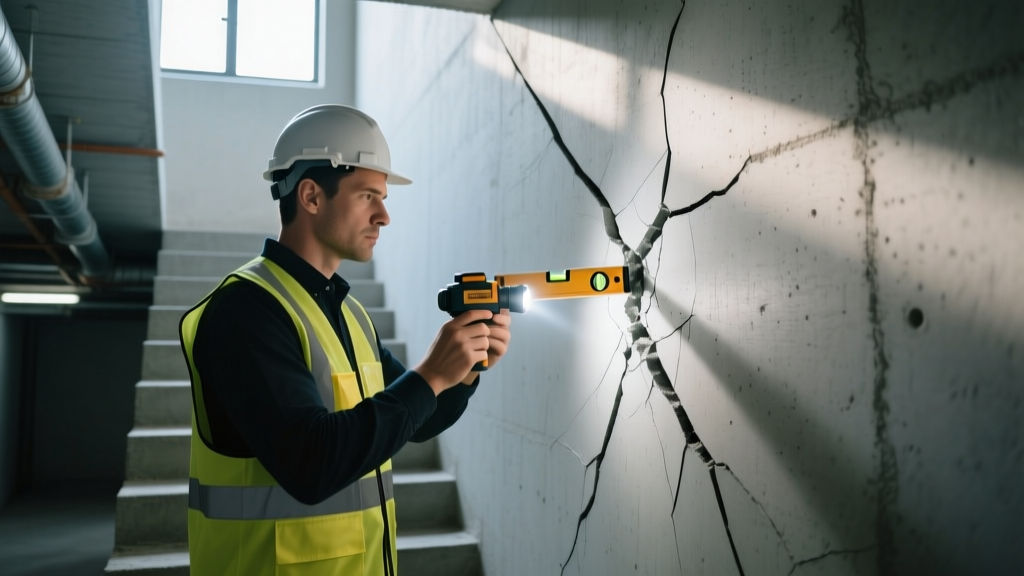
Not every foundation crack warrants a $30,000 investment. Use this framework to determine if the cost of foundation repair for a house aligns with the property's long-term viability.
| Condition Indicator | Action Required | Financial Rationale |
|---|---|---|
| Vertical shrinkage cracks (< 1/8 inch) | Monitor and seal with epoxy. | Standard concrete curing; no structural threat. |
| Stair-step cracks with > 1/4 inch displacement | Install helical/push piers. | Active differential settlement; will worsen and destroy drywall/plumbing. |
| Bowing basement wall (< 2 inches inward) | Carbon fiber straps + exterior drainage. | Cost-effective stabilization; prevents catastrophic shear failure. |
| Bowing wall (> 3 inches) + rotten sill plates | Walk away or demand massive price reduction. | Repair costs will likely exceed 25% of the home's total equity. |
Navigating Insurance, Soil Science, and Mortgages
A critical factor in foundation economics is understanding what triggers the damage. According to the Federal Emergency Management Agency (FEMA), expansive soils—which swell when wet and shrink during droughts—cause billions of dollars in structural damage annually, far exceeding the damage caused by earthquakes and floods combined.
Does Homeowners Insurance Cover Foundation Repair?
In almost all cases, standard HO-3 homeowners insurance policies explicitly exclude 'earth movement,' which encompasses subsidence, expanding soil, and poor soil compaction. Insurance will only cover foundation damage if it is the direct, secondary result of a covered peril, such as a sudden plumbing leak beneath the slab that washes away the supporting soil. If your home is suffering from seasonal clay soil expansion, the repair costs will be strictly out-of-pocket.
The FHA and Mortgage Underwriting Hurdle
If you are purchasing a home with visible foundation distress, securing financing will be difficult. The FHA Single Family Housing Policy Handbook mandates that foundations must be structurally sound, capable of supporting all loads, and free from active water intrusion. If an FHA or conventional appraiser flags a structural deficiency, the lender will require a P.E. certification and completed repairs before funding the mortgage, effectively forcing the seller to absorb the cost of foundation repair for the house prior to closing.
Expert Tip: Never accept a 'lifetime warranty' from a foundation repair company without verifying their financial backing. Many contractors offer transferable warranties that become void if the company goes out of business. Insist on a warranty backed by a third-party national insurer or a recognized industry network like the Foundation Performance Association.
Sourcing and Vetting Structural Contractors
The barrier to entry for concrete work is low, but structural underpinning requires specialized engineering knowledge. When soliciting bids, require contractors to provide the manufacturer's load-test data for their specific pier brackets and hydraulic equipment. Ensure they carry both general liability and specialized workers' compensation insurance, as deep excavation carries significant cave-in risks. Finally, always hire an independent third-party structural engineer to review the contractor's proposed repair plan before signing any agreements. Paying $600 for an independent engineering review can prevent you from being sold a $20,000 over-engineered piering system when a $3,000 exterior drainage correction would have stabilized the soil.
Written by
Priya KapoorPriya Kapoor is a real estate market analyst and construction economics researcher with expertise in housing affordability, development feasibility, and infrastructure investment. She holds a Master of Regional Planning from Cornell University and previously worked as a senior analyst at CBRE's Investment Properties group, where she modeled returns for $4B in mixed-use development pipelines. Priya now runs an independent research practice advising developers, municipalities, and REITs on construction cost forecasting and market timing. She publishes the quarterly "BuildMat Market Pulse" report tracking material price indices across 12 commodity categories. Based in Austin, TX, Priya serves on the board of Habitat for Humanity Austin and is a marathon runner.
More from Priya Kapoor
View all
Construction Cost
Cost to Build a 1600 Sq Ft Home in 2026: Full Breakdown
Accurate 2026 cost to build a 1600 sq ft home—material, labor, and regional pricing breakdowns included. Plan your budget with real-time estimates.
Aug 11, 2026

Wood & Lumber
Name the Types of Wood for Pressure Treatment and Preservation
Learn how to name the types of wood best suited for pressure treatment. Compare species treatability, chemical retention levels, and 2026 preservation costs.
Aug 4, 2026

Stone & Masonry
Stone Veneer Suppliers Lindenhurst: 2026 Cost Analysis
Analyze 2026 stone veneer costs in Lindenhurst, NY. Compare local supplier pricing, delivery fees, and Suffolk County installation labor rates.
Aug 4, 2026