Structural Analysis: When Foundation Building Materials Are Compromised
Learn how structural engineers diagnose compromised foundation building materials using NDT, material science, and targeted remediation frameworks.
The Diagnostic Framework: Moving Beyond Visual Inspection
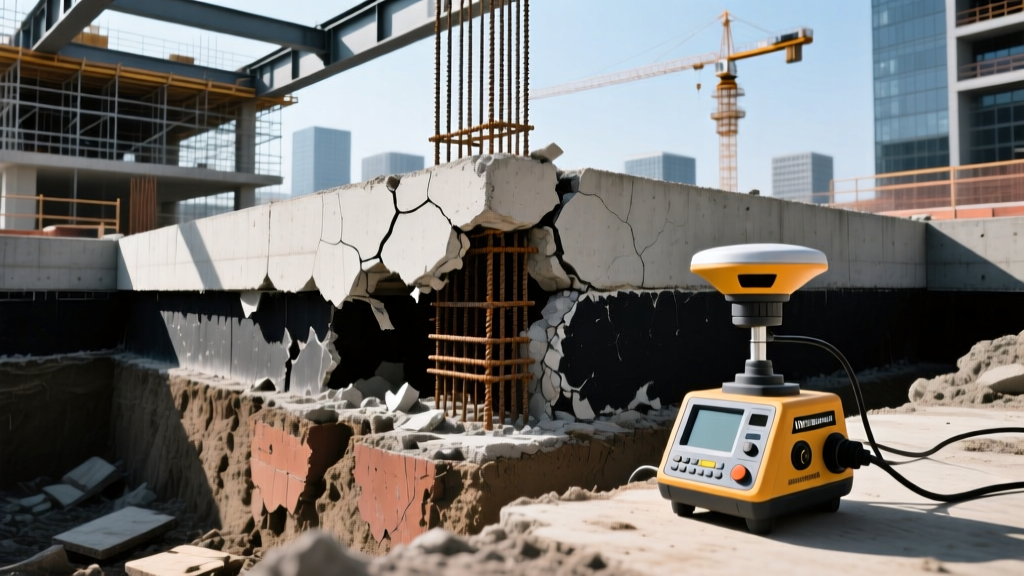
When foundation building materials compromised by environmental stressors, hydrostatic pressure, or chemical ingress begin to fail, visual inspection is rarely sufficient for accurate structural analysis. Surface spalling, step-cracking, or efflorescence are merely symptoms of deeper pathologies. Modern structural engineering relies on a rigorous diagnostic framework that quantifies material degradation before specifying remediation.
Assessing the true load-bearing capacity of a compromised foundation requires non-destructive testing (NDT) combined with localized destructive sampling. This approach prevents the catastrophic underestimation of structural deficits common in purely visual assessments, ensuring that repair protocols address the root mechanical or chemical failure rather than just the cosmetic damage.
Standardized NDT Protocols for Foundation Assessment
As of 2026, structural engineers deploy a matrix of NDT tools to map internal anomalies without coring the structural element. The selection of tools depends on the specific foundation material and the suspected failure mode.
| NDT Method | Target Material | Data Output & Standard | 2026 Avg. Cost |
|---|---|---|---|
| Ground Penetrating Radar (GPR) | Concrete / Masonry | Rebar mapping, void detection (ASTM D6432) | $850 - $1,400 |
| Ultrasonic Pulse Velocity (UPV) | Concrete / Timber | Elastic modulus, internal cracking (ASTM C597) | $600 - $950 |
| Half-Cell Potential | Reinforced Concrete | Rebar corrosion probability (ASTM C876) | $450 - $750 |
| Resistograph Drilling | Timber Piers / Beams | Micro-drilling resistance, internal decay | $300 - $500 |
Concrete Degradation: Carbonation, Chlorides, and Rebar Corrosion
Reinforced concrete foundations fail primarily due to the depassivation of the steel rebar. In highly alkaline environments (pH > 12.5), rebar forms a protective passive oxide layer. However, when foundation building materials compromised by carbonation or chloride ingress lose this alkalinity, rapid oxidation begins.
Quantifying Carbonation Depth
Structural analysts test carbonation depth by spraying freshly fractured concrete cores with a 1% phenolphthalein indicator solution. Uncompromised concrete turns magenta (pH > 9), while carbonated, compromised concrete remains colorless. If the carbonation front reaches the depth of the rebar cover (typically 1.5 to 2 inches for residential foundations), corrosion is imminent. According to the Portland Cement Association, maintaining a low water-to-cement ratio (w/c < 0.45) and using supplementary cementitious materials like fly ash or slag are the primary defenses against this ingress.
Chloride Thresholds and Half-Cell Mapping
In regions utilizing de-icing salts or in coastal environments, chloride ions penetrate the concrete matrix. The critical threshold for initiating active corrosion is generally accepted at 0.4% acid-soluble chlorides by weight of cement. Engineers use Half-Cell Potential testing (copper/copper-sulfate electrode) to map the electrical potential across the foundation wall. Readings more negative than -350 mV indicate a greater than 90% probability of active, severe rebar corrosion, necessitating immediate cathodic protection or electrochemical chloride extraction.
Unreinforced Masonry (URM) and Block: Shear and Moisture Pathologies
Concrete masonry unit (CMU) and brick foundations rely on the composite action between the units and the mortar joints. When analyzing these systems, structural engineers focus on shear capacity and moisture-induced degradation.
Mortar Joint Hardness and Repointing Risks
A common failure mode occurs when historical or aging masonry foundations are repointed with modern, high-strength Portland cement mortar (Type S or M). If the original foundation was laid with soft lime mortar (Type O or N), the rigid new mortar traps moisture and prevents natural thermal expansion. This forces the masonry units to absorb the shear stress, leading to severe spalling of the brick or block faces. Per Brick Industry Association Technical Notes, repointing mortar must always be softer and more permeable than the original masonry unit to preserve structural integrity.
Step-Cracking and Displacement Transducers
Step-cracking along mortar joints indicates differential settlement or lateral soil pressure exceeding the masonry's shear strength. Engineers install digital displacement transducers across the cracks to monitor movement over a 90-day period. If lateral displacement exceeds 1/8 inch per month, the wall has lost its structural arching action and requires immediate stabilization via carbon fiber reinforcement or steel I-beam bracing.
Timber Piers and Grade Beams: Biological and Moisture Compromise
Timber foundations, common in pier-and-beam construction and older historical structures, are highly susceptible to biological degradation when moisture thresholds are breached. Fungal decay requires a wood moisture content (MC) consistently above 19%. The USDA Forest Products Laboratory emphasizes that once brown rot or white rot fungi colonize the cellular structure, the timber loses its compressive and bending strength exponentially, not linearly.
Resistograph Testing for Internal Decay
Visual inspection often misses internal timber decay, as the outer shell may remain intact while the core is entirely compromised. Structural engineers use Resistograph micro-drilling, which measures the mechanical resistance of a 1/8-inch drill bit as it penetrates the timber. A sudden drop in resistance on the readout graph pinpoints the exact depth and severity of internal voids or rot. For localized compromise, engineers specify structural epoxy consolidants like Abatron WoodEpox to restore compressive strength, provided the moisture source has been permanently eliminated.

Engineered Remediation Decision Matrix
Once the specific material pathology is quantified, the structural analysis transitions into the remediation phase. The following matrix outlines engineered solutions for specific failure modes, utilizing current 2026 material technologies.
| Material & Failure Mode | Engineered Remediation | Specific Products / Standards | Est. Cost (2026) |
|---|---|---|---|
| Concrete: Active Rebar Corrosion | Galvanic Cathodic Protection | Eco-Gal anodes, NACE SP0104 | $35 - $55 / sq ft |
| Concrete: Flexural / Shear Cracking | CFRP Wrapping & Epoxy Injection | SikaWrap Hex-100C, SikaDur 52 | $45 - $80 / sq ft |
| Masonry: Lateral Bowing > 2 inches | Steel C-Channel Bracing | W6x9 Steel beams, torque-tensioned | $600 - $900 / pier |
| Timber: Localized Fungal Decay | Epoxy Consolidation & Borate Treatment | Bora-Care, Abatron WoodEpox | $1,200 - $2,500 / pier |
Long-Term Structural Health Monitoring (SHM)
For foundations with marginal capacity or those situated in expansive clay soils where material compromise is an ongoing risk, static repairs are insufficient. Modern structural analysis incorporates Long-Term Structural Health Monitoring (SHM).
Engineers install vibrating wire strain gauges and biaxial tiltmeters directly onto the foundation elements. These sensors transmit continuous telemetry to cloud-based dashboards, alerting structural engineers to micro-strain accumulations or rotational shifts that precede visible material failure. By shifting from reactive material replacement to predictive SHM, facility managers and homeowners can extend the service life of aging foundation systems by decades, ensuring that minor environmental shifts do not escalate into catastrophic structural collapses.
Written by
Sarah WhitfieldSarah Whitfield is a chartered quantity surveyor (MRICS) and construction cost analyst with 15 years of experience in material pricing, procurement strategy, and project budgeting. She earned her degree in Construction Management from the University of Reading (UK) and has worked on projects ranging from $2M custom homes to $180M mixed-use developments across North America and Europe. Sarah currently leads cost estimating for BuildMat Insight, maintaining a proprietary database of 4,000+ material price points updated quarterly. She is a frequent contributor to RSMeans cost data panels and has presented at the International Cost Engineering Council (ICEC) congress. Based in Denver, CO, Sarah is an avid trail runner and volunteer mentor for Women in Construction.
More from Sarah Whitfield
View all
Wood & Lumber
What Are the Different Types of Wood? A Builder's Guide
Compare structural softwoods, finish hardwoods, and engineered lumber. Analyze Janka ratings, MOE values, and 2026 pricing for construction.
Aug 4, 2026

Walls & Panels
Steel Framing vs Wood Framing: Corrosion and Moisture Defense
Compare steel framing vs wood framing for moisture resistance. Learn about galvanized coatings, condensation risks, and corrosion protection strategies.
Jul 21, 2026

Stone & Masonry
How to Cut Stone Veneer: Wet Saw vs Grinder Comparison
Compare the best tools for cutting stone veneer. We review wet saws, angle grinders, and chop saws to help you achieve clean, chip-free cuts.
Jul 21, 2026