Average Foundation Repair Cost in Austin, Texas: 2025 Data and 2026 Trends
Discover the average foundation repair cost in Austin, Texas for 2025. Explore pricing by repair type, expansive soil impacts, and 2026 projections.

The True Average Foundation Repair Cost in Austin, Texas (2025 Data)
When analyzing the average foundation repair cost in Austin, Texas for 2025, homeowners must look beyond national averages, which fail to account for Central Texas's unique geological challenges. Based on regional contractor data and structural engineering reports from the past 12 months, the average cost to repair a standard 2,000-square-foot slab-on-grade foundation in the Austin metro area ranges from $9,200 to $13,500. However, this figure is highly dependent on the specific repair method required and the underlying soil composition at the property.
Minor slab leveling or localized mudjacking typically costs between $3,500 and $6,000, while comprehensive structural underpinning involving 20 or more piers can easily escalate to $18,000 to $28,000. Unlike coastal or northern regions where frost heave or water table fluctuations dominate, Austin's foundation issues are almost exclusively driven by highly expansive clays and extreme seasonal moisture variance.
- Minor Settlement (Slab Jacking/Foam): $3,500 – $6,500
- Average Structural Repair (15-20 Piers): $9,200 – $13,500
- Severe Structural Failure (30+ Piers + Beam Breaks): $18,000 – $28,000+
- Structural Engineer Assessment: $500 – $850
The Mopac Divide: How Austin's Geology Dictates Repair Needs
To understand foundation repair pricing in Austin, you must understand the 'Mopac Divide.' The geological makeup of the city changes drastically depending on whether a property sits east or west of the Mopac Expressway (Loop 1). According to the USDA NRCS Web Soil Survey, this geographical split dictates the depth, method, and ultimate cost of your foundation repair.
East of Mopac: The Blackland Prairie and Taylor Marl
Neighborhoods in East Austin, Pflugerville, Round Rock, and Manor sit on the Blackland Prairie. The dominant soil type here is Taylor Marl, a highly expansive clay rich in montmorillonite. This soil acts like a sponge, swelling significantly during heavy rains and shrinking deeply during the notorious Texas summer droughts. This constant heave-and-settle cycle places immense differential stress on concrete slab foundations. Repairing foundations in these areas usually requires deep piers—often 12 to 18 feet—to bypass the active clay zone and anchor into stable bedrock. This depth requirement directly increases the average foundation repair cost in Austin, Texas, as more materials and hydraulic driving time are required per pier.
West of Mopac: The Edwards Plateau and Austin Chalk
Properties in West Austin, Lakeway, Bee Cave, and Dripping Springs are situated on the Edwards Plateau, characterized by shallow topsoil over solid Austin Chalk or Edwards Limestone bedrock. Foundations here generally experience less expansive soil movement. However, when settlement does occur, it is often due to inadequate soil compaction during original construction or hillside erosion (creep). Repairs on the west side often require rock-socketed steel piers drilled directly into the limestone shelf, which requires specialized rotary drilling equipment rather than standard hydraulic pressing, altering the pricing structure.
Cost Breakdown by Repair Method in Central Texas
The method prescribed by a structural engineer will be the primary driver of your final invoice. Below is a detailed matrix of the most common repair techniques utilized in the Austin market, including current material and labor rates.
| Repair Method | Average Cost Per Unit | Typical Depth in Austin | Best Application |
|---|---|---|---|
| Pressed Concrete Piers | $160 – $240 per pier | 10 – 15 feet | Standard slab-on-grade homes in East Austin/Round Rock with moderate settlement. |
| Galvanized Steel Piers | $280 – $420 per pier | 15 – 25+ feet | Severe settlement, heavy masonry loads, or areas requiring deep bedrock anchoring. |
| Polyurethane Foam Injection | $18 – $28 per sq. ft. | 2 – 6 feet (Slab level) | Filling voids beneath interior slabs, driveway leveling, and minor interior settlement. |
| Bell-Bottom Drilled Piers | $300 – $450 per pier | 10 – 15 feet | New construction remediation or heavy commercial loads in expansive clay zones. |
Austin-Specific Hidden Costs: Permitting, Trees, and Engineering
When budgeting for foundation repair, the raw cost of piers is only part of the equation. Austin's municipal regulations and environmental factors introduce several mandatory ancillary costs that out-of-state contractors frequently overlook.
City of Austin Permitting and Inspections
If your property falls within the city limits or the extraterritorial jurisdiction (ETJ), foundation repair is classified as structural alteration. The City of Austin Development Services Department requires a building permit for underpinning. Permit fees generally range from $250 to $600 based on the project valuation. Furthermore, the city mandates that a licensed Professional Engineer (PE) registered in Texas must stamp the foundation repair plan. Independent structural engineering assessments typically cost between $500 and $850. Never skip this step; relying solely on a contractor's 'free estimate' without third-party engineering verification is a primary cause of repair failure in Central Texas.
The Live Oak Factor: Root Barriers and Landscaping
Austin is heavily canopied by protected heritage trees, particularly Live Oaks and Pecans. These trees possess aggressive, shallow root systems that extract massive amounts of moisture from the soil, causing localized foundation subsidence. If a tree is contributing to your foundation settlement, a structural engineer will likely prescribe the installation of a root barrier. Trenching and installing a high-density polyethylene (HDPE) root barrier costs roughly $60 to $90 per linear foot. Additionally, because many Austin homes feature expensive xeriscaping or native limestone retaining walls, expect to budget $1,500 to $4,000 for post-repair landscaping and concrete flatwork restoration.
Evaluating Repair Quotes: A Decision Framework
The foundation repair industry in Texas is heavily saturated, and pricing can vary wildly between contractors. To protect your investment, utilize the following framework when evaluating bids:
- Demand the Engineering Report First: Do not allow a contractor to begin work without a Texas-licensed PE report. The Texas Real Estate Commission (TREC) relies heavily on PE documentation during property transactions. If a contractor suggests their 'in-house foreman' can determine pier depth, walk away.
- Verify Pier Depth Guarantees: In East Austin's Taylor Marl, piers must reach 'refusal' (the Austin Chalk bedrock). Ensure your contract specifies that the quoted price includes driving piers to true refusal, rather than an arbitrary depth limit (e.g., 'up to 15 feet'). If they hit clay at 14 feet and stop, the pier will likely fail during the next drought.
- Check for Friction Collars: When installing steel or concrete piers in expansive clay, contractors should use friction collars or sleeves around the pier shaft. This prevents the swelling clay from gripping the pier and uplifting the foundation during wet seasons. If a bid excludes friction collars in Blackland Prairie soil, it is an incomplete quote.
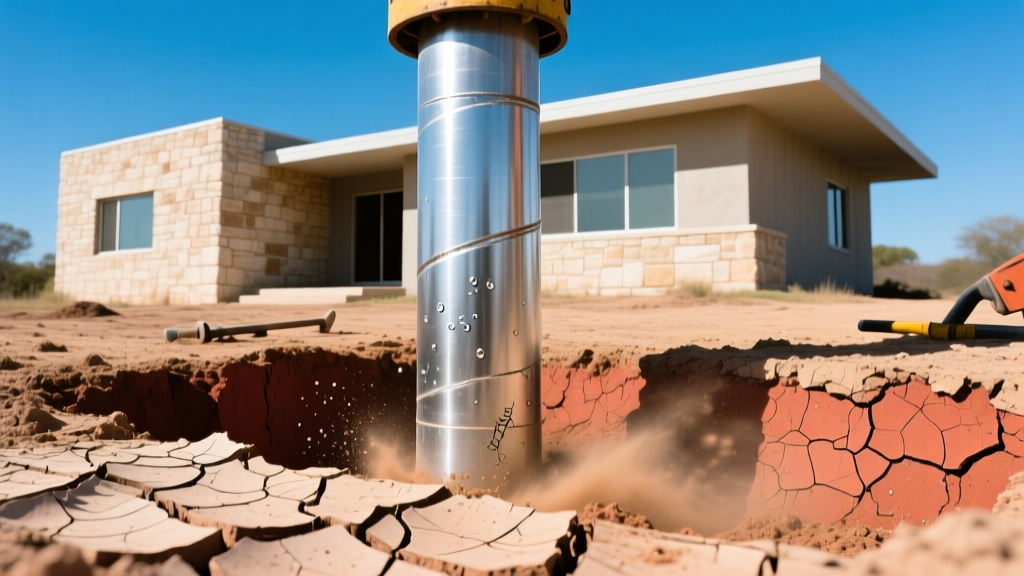
2026 Market Projections and Material Availability
Looking ahead to 2026, the average foundation repair cost in Austin, Texas is projected to see a moderate increase of 4% to 6%. This upward pressure is driven by two main factors: the rising cost of galvanized steel due to ongoing tariff adjustments, and increased demand for polyurethane deep-injection foams (such as Alchemy-Spetec AP Lift 430) as homeowners seek less invasive alternatives to traditional excavation.
Furthermore, Austin's continued population growth and expansion into the eastern clay-heavy corridors (like Bastrop and eastern Travis County) are stretching the capacity of specialized foundation crews. Homeowners experiencing active structural distress—indicated by drywall diagonal cracking, frieze board separation, or binding doors—should secure engineering assessments and lock in repair contracts before the peak spring real estate transaction season, when contractor lead times routinely stretch past 10 weeks.
Actionable Next Steps for Homeowners
If you suspect foundation movement, do not immediately call a repair contractor for a free estimate. First, hire an independent structural engineer to conduct a manometer survey and floor elevation analysis. This $600 investment provides you with an unbiased, data-driven repair scope that you can hand to three different reputable contractors for competitive bidding. By understanding the specific soil mechanics of your Austin neighborhood and demanding code-compliant, engineer-approved methodologies, you ensure your foundation repair provides permanent stability rather than a temporary cosmetic fix.
Written by
David NakamuraDavid Nakamura is a licensed architect (AIA) and construction technology writer focused on sustainable building methods, mass timber engineering, and high-performance building envelopes. He holds a Master of Architecture from the University of Washington and is a certified Passive House Consultant (CPHC). David spent eight years at the Seattle firm Mithun, where he led the design of three LEED Platinum projects, before founding his own practice specializing in net-zero residential design. He serves on the editorial advisory board of GreenBuilder Magazine and has authored peer-reviewed papers on cross-laminated timber (CLT) connections for the Journal of Structural Engineering. In his spare time, David teaches woodworking at Pratt Fine Arts Center and kayaks the Puget Sound.
More from David Nakamura
View all
Construction Cost
Labor Cost to Build a Deck Per Sq Ft: 2026 Installation Guide
Discover the exact labor cost to build a deck per sq ft in 2026. This installation guide breaks down contractor rates, complexity factors, and hidden fees.
Aug 4, 2026

Construction Cost
How Much Does It Cost to Build a 3 Bedroom House? Financing Guide
Learn exactly how much it costs to build a 3 bedroom house and explore 2026 financing options, construction loan types, and budget frameworks for your build.
Aug 4, 2026

Construction Cost
Cost to Build a Tennis Court: 2026 Guide
How much does it cost to build a tennis court in 2026? Breakdowns for asphalt, concrete, and synthetic surfaces plus fencing and lighting.
Jul 30, 2026