Average Cost Foundation Repair Breakdown: 2026 Methods & Prices
Discover the true cost foundation repair requires in 2026. Compare pricing for helical piers, polyurethane foam, and slabjacking with expert repair insights.

The Real Cost Foundation Repair Demands: Beyond the National Average
When homeowners research the true cost foundation repair entails, they are frequently met with misleading national averages ranging from $4,500 to $12,000. These figures obscure the mechanical reality of structural stabilization. Foundation repair is not a flat-rate service; it is an engineered response to soil failure, hydrostatic pressure, and structural load distribution. In 2026, material costs for high-carbon steel piers and two-part polyurethane resins have stabilized, but labor and heavy equipment mobilization continue to dictate the final invoice.
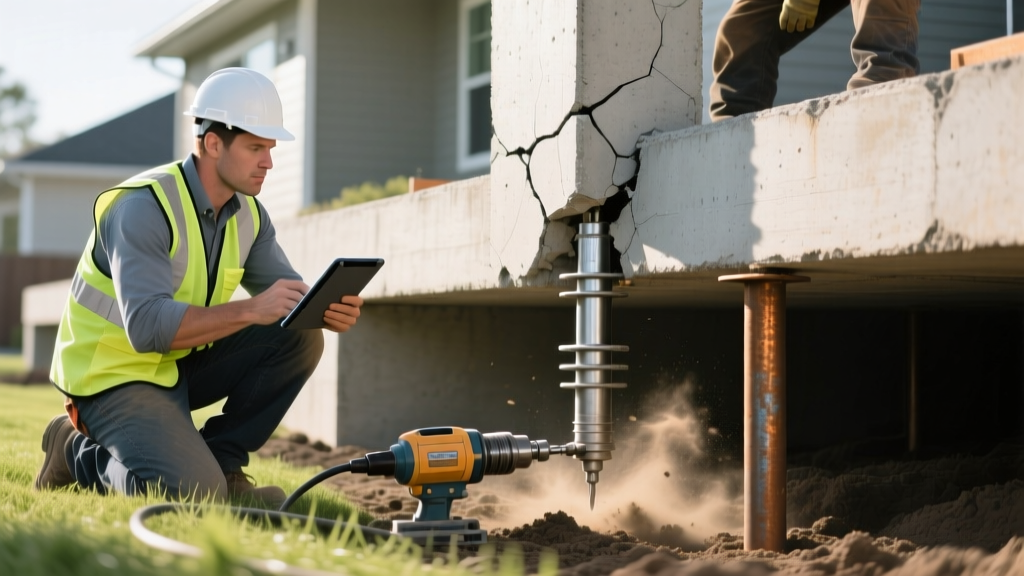
Method-by-Method Pricing Matrix
The following matrix breaks down the primary repair techniques by unit cost and total project scope. Prices reflect 2026 market rates for residential structures.
| Repair Method | Primary Application | Unit Cost | Typical Project Range | Expected Lifespan |
|---|---|---|---|---|
| Steel Push Piers | Heavy structural settlement | $1,400 - $2,200 / pier | $15,000 - $45,000 | 75+ Years |
| Helical Piers | Light loads / new construction | $1,800 - $2,800 / pier | $18,000 - $50,000 | 100+ Years |
| Polyurethane Foam | Slab lifting / void filling | $12 - $22 / sq. ft. | $2,500 - $8,000 | 20 - 50 Years |
| Cementitious Mudjacking | Exterior flatwork / sidewalks | $4 - $8 / sq. ft. | $800 - $2,500 | 5 - 10 Years |
| Carbon Fiber Straps | Bowing basement walls | $500 - $900 / strap | $4,000 - $12,000 | Permanent (if epoxy holds) |
Deep Dive: Structural Underpinning (Piers)
When a continuous footing fails due to expansive clay or soil consolidation, the structure must be transferred to load-bearing strata. This requires underpinning. The two dominant systems are push piers and helical piers.
Push Piers vs. Helical Piers: Mechanical Differences
Push piers utilize the weight of the structure itself as resistance. A hydraulic ram (operating at 10,000 PSI) drives interlocking steel pipe sections (typically 2.875-inch OD with a 0.25-inch wall thickness) deep into the ground until they refuse on bedrock or dense glacial till. Because they rely on structural weight, they are ideal for heavy, multi-story masonry homes.
Helical piers, conversely, are screwed into the ground using a hydraulic torque motor. The installation torque directly correlates to the soil's bearing capacity. If you are repairing a lighter structure (like a wood-frame addition or a sunroom) where the building weight is insufficient to drive push piers, helical piers are mandatory. The leading helical plates (usually 8 to 14 inches in diameter) pull the shaft downward. Expect to pay a 15-25% premium for helical systems due to the cost of the torque motor and the complex geometry of the lead section.
Slab Stabilization: Polyurethane vs. Mudjacking
For post-tension or conventional slab-on-grade foundations experiencing differential settlement, lifting the slab is required. The industry has largely bifurcated into two methods.
- High-Density Polyurethane Foam: Injected through 5/8-inch drilled holes, this two-part resin expands to 20-30 times its liquid volume, curing in roughly 15 minutes. Structural grades achieve a compressive strength of 60 to 80 PSI and a density of 4 to 6 lbs per cubic foot. It is hydrophobic, meaning it will not wash away during subsequent soil saturation events. According to industry data tracked by Angi's structural repair cost indexes, polyurethane has become the standard for interior slab lifting due to its minimal invasiveness.
- Cementitious Mudjacking (Slabjacking): This involves pumping a slurry of topsoil, cement, and water through 1.5-inch holes. While significantly cheaper per square foot, the slurry weighs roughly 100 lbs per cubic foot. This immense weight can cause further subsidence in weak underlying soils. Furthermore, the material is highly susceptible to erosion if plumbing leaks occur beneath the slab.
Hidden Variables That Spike Your Invoice
The base price per pier or square foot rarely tells the whole story. Contractors factor in site-specific logistical hurdles that can increase the final cost foundation repair demands by 20% to 40%.
Logistical Cost Multipliers
- Limited Access / Manual Excavation: If a skid-steer or mini-excavator cannot access the foundation perimeter due to narrow side yards or fencing, crews must hand-dig the working pits (typically 3x4 feet down to the footing). Manual excavation adds $150 to $300 per pier location.
- Concrete Cutting and Patching: Lifting an interior slab or installing interior piers requires saw-cutting the concrete floor. Dust mitigation, debris removal, and patching with high-strength non-shrink grout add $1,500 to $3,000 to the project.
- Plumbing Isolation and Testing: In slab foundations, severe settlement often fractures cast-iron or PVC waste lines. A mandatory hydrostatic pressure test (costing $350–$500) is required post-lift to ensure the plumbing wasn't severed during the jacking process.
Managing Expansive Soils and Hydrostatic Pressure
Repairing the structural symptom without addressing the environmental cause guarantees failure. The Federal Emergency Management Agency (FEMA) identifies expansive soils as a primary driver of foundation distress, causing billions in damage annually. Clay soils swell when wet and shrink when dry, creating a cyclical heaving and settling effect.
If your repair involves a basement wall bowing inward due to hydrostatic pressure, carbon fiber straps or steel I-beams (wall anchors) are required. Carbon fiber grids, bonded with a high-modulus structural epoxy, offer a tensile strength exceeding 130,000 PSI. However, they only halt movement; they do not push the wall back to plumb. To achieve a partial pull-back, contractors must excavate the exterior soil, relieve the lateral pressure, and use interior jacking systems before the epoxy cures.
Decision Framework: Repair vs. Rebuild vs. Monitor
Not every crack warrants a $30,000 underpinning contract. Use this diagnostic framework to determine the appropriate intervention level:
- Monitor (Cost: $0 - $500): Hairline shrinkage cracks (less than 1/16 inch wide) in a newly poured slab, or minor seasonal sticking of doors. Install a digital crack monitor gauge and track movement over 12 months.
- Cosmetic / Drainage Correction (Cost: $2,000 - $6,000): Step-cracking in brick veneer accompanied by negative grading. Regrade the soil to a 5% slope away from the house, extend downspouts 10 feet, and install French drains. Tuckpoint the masonry.
- Targeted Underpinning (Cost: $8,000 - $20,000): Diagonal drywall cracks emanating from door frames, combined with a measurable floor slope exceeding 1 inch per 20 feet. Requires 6 to 12 piers on the affected elevation only.
- Full Perimeter Stabilization (Cost: $35,000 - $80,000+): Severe structural distortion, fractured grade beams, and plumbing failures. Requires engineering oversight, 30+ piers, and potentially a complete interior slab replacement.
Securing Independent Engineering Verification
Never rely solely on a contractor's proprietary inspection software. Before signing any contract exceeding $10,000, hire an independent Structural Engineer (PE) to conduct a geotechnical and structural assessment. An independent PE report typically costs $800 to $1,500 but provides an unbiased specification of exactly how many piers are required, the target depth to load-bearing strata, and the required jacking sequence. This document serves as your legal baseline to ensure the contractor does not over-prescribe piers to inflate the invoice, or under-prescribe them to win the bid with an artificially low estimate.
Written by
Priya KapoorPriya Kapoor is a real estate market analyst and construction economics researcher with expertise in housing affordability, development feasibility, and infrastructure investment. She holds a Master of Regional Planning from Cornell University and previously worked as a senior analyst at CBRE's Investment Properties group, where she modeled returns for $4B in mixed-use development pipelines. Priya now runs an independent research practice advising developers, municipalities, and REITs on construction cost forecasting and market timing. She publishes the quarterly "BuildMat Market Pulse" report tracking material price indices across 12 commodity categories. Based in Austin, TX, Priya serves on the board of Habitat for Humanity Austin and is a marathon runner.
More from Priya Kapoor
View all
Construction Cost
Cost to Build a 1600 Sq Ft Home in 2026: Full Breakdown
Accurate 2026 cost to build a 1600 sq ft home—material, labor, and regional pricing breakdowns included. Plan your budget with real-time estimates.
Aug 11, 2026

Wood & Lumber
Name the Types of Wood for Pressure Treatment and Preservation
Learn how to name the types of wood best suited for pressure treatment. Compare species treatability, chemical retention levels, and 2026 preservation costs.
Aug 4, 2026

Stone & Masonry
Stone Veneer Suppliers Lindenhurst: 2026 Cost Analysis
Analyze 2026 stone veneer costs in Lindenhurst, NY. Compare local supplier pricing, delivery fees, and Suffolk County installation labor rates.
Aug 4, 2026