Average Foundation Repair Cost Texas: 2026 vs 2024 Data
Discover the average foundation repair cost in Texas for 2026, comparing 2024 trends. Get exact pricing for piers, foam jacking, and soil mitigation.

The Shift in Texas Foundation Repair Pricing (2024 to 2026)
The structural realities of Texas real estate are dictated by highly expansive soils, prolonged drought cycles, and aggressive urban tree root systems. When analyzing the average foundation repair cost in Texas, historical 2024 data indicated a statewide project average between $4,500 and $8,500. However, 2026 pricing reflects a 14% to 18% increase across the board. This upward shift is driven by sustained high costs for galvanized steel, increased hydraulic equipment fuel surcharges, and a severe shortage of licensed structural engineers required to certify under-slab plumbing tests prior to lifting.
2026 Quick Cost Snapshot
- Minor Slab Leveling (Foam/Mud): $1,800 – $3,500
- Moderate Piering (10-15 Piers): $9,500 – $16,000
- Severe Structural Failure (25+ Piers + Drainage): $22,000 – $45,000+
- Independent Engineering Report: $650 – $950 (Mandatory prerequisite)
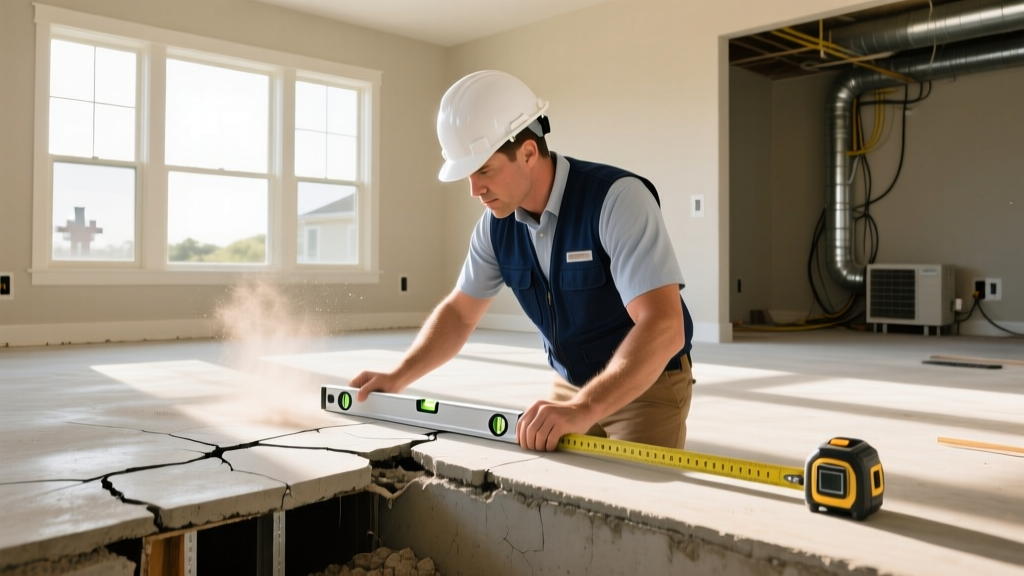
Breakdown of Repair Methods and 2026 Unit Costs
Contractor estimates vary wildly based on the substrate and the depth required to reach load-bearing strata. The Foundation Performance Association (FPA) categorizes underpinning methods by their mechanical interaction with Texas soil profiles. Below is the current unit-cost matrix for 2026, contrasted with 2024 baselines.
| Method | 2024 Avg Cost | 2026 Avg Cost | Technical Specs & Application |
|---|---|---|---|
| Steel Push Piers | $900 / pier | $1,150 / pier | 2-7/8" OD steel tubing. Driven 25-45 ft to refusal. Best for heavy masonry loads and deep Blackland Prairie clays. |
| Helical Piers | $1,100 / pier | $1,350 / pier | Screwed into soil. Torque-correlated to capacity. Ideal for new construction tie-backs and lighter wood-frame loads. |
| Concrete Pressed Pilings | $650 / pier | $800 / pier | 6" x 12" cylindrical, 5,000 PSI concrete. Limited to 12-20 ft depth. Fails in high-friction Gulf Coast clays. |
| Polyurethane Foam | $12 / sq ft | $18 / sq ft | High-density structural foam (4-6 lbs/cu ft). Used for void fill, slab lifting, and moisture sealing. Not for deep structural underpinning. |
Regional Soil Variances: Why Houston Costs More Than Austin
The phrase "average foundation repair cost" is highly misleading without geographic context. According to soil mapping data from the Texas A&M AgriLife Extension, the state's foundation repair complexity is divided into three primary geotechnical zones:
1. Dallas-Fort Worth (Blackland Prairie)
DFW sits atop Houston Black and Beaumont clays, which possess a Plasticity Index (PI) exceeding 45. These soils swell massively when wet and shrink deeply during droughts. Cost Impact: High. Push piers must often be driven 35 to 50 feet to bypass the active moisture zone and reach stable shale. Expect project averages to skew 20% higher than the state mean due to the sheer linear footage of steel required.
2. Houston & The Gulf Coast (Coastal Plains)
Houston's issue is less about deep desiccation and more about poor surface drainage and high water tables. The clay here is highly plastic but sits closer to the surface. Cost Impact: Moderate to High. While piers don't need to be driven as deep (15-25 feet), Houston repairs almost universally require extensive exterior mitigation—French drains, sump pumps, and surface grading—which can add $4,000 to $8,000 to the structural lifting quote.
3. Austin & San Antonio (Hill Country Transition)
This region features shallower soils over limestone bedrock (Austin Chalk). Cost Impact: Variable. Pier depths are shallower (10-15 feet), but contractors frequently encounter solid rock, requiring specialized rock-drilling bits and resulting in "hard dig" surcharges of $150 to $300 per pier.
Hidden Cost Drivers Often Missed in Initial Quotes
Homeowners frequently compare the base "per-pier" cost between contractors, ignoring the ancillary requirements that dictate the final invoice. When reviewing a 2026 proposal, ensure the following line items are explicitly addressed:
- Hydrostatic Plumbing Testing ($350 - $600): Lifting a post-tension or conventionally reinforced slab without verifying the under-slab DWV (Drain-Waste-Vent) lines is negligent. If a cast-iron or PVC sewer line snaps during the lift, the resulting sub-slab erosion will void the foundation warranty and necessitate a $5,000+ tunneling repair.
- Root Barriers ($120 - $180 per linear foot): If large Oak or Pecan trees are within 20 feet of the grade beam, mechanical root barriers must be trenched to a depth of 36 inches to prevent future moisture extraction from the soil matrix.
- Permitting and City Inspections ($250 - $800): Municipalities like Fort Worth and Plano have strictly enforced zoning codes requiring engineered plans and multiple municipal inspections for any underpinning exceeding 5 piers.
Warning on "Free Estimates": A contractor's free estimate is a sales pitch, not a structural diagnosis. Always hire an independent, third-party structural engineer to draft a repair plan before soliciting contractor bids. This ensures contractors are bidding on the exact same engineered scope of work, eliminating the tactic of under-designing a repair to win the lowest price.
Decision Framework: Repair vs. Mitigate vs. Walk Away
Not every crack requires steel underpinning. Use this framework to determine the appropriate intervention level based on the 2026 Texas Department of Insurance (TDI) guidelines regarding structural performance and insurability:
- Cosmetic Distress (Hairline drywall cracks, doors sticking seasonally): Action: Mitigate. Implement a soaker hose drip-line system 18 inches from the foundation. Maintain soil moisture consistency. Cost: $150 for timers and hoses.
- Moderate Distress (1/4" diagonal drywall fissures, window frame separation, slab elevation variance of 1-2 inches): Action: Spot Repair + Drainage. Install 8-12 piers in the localized zone of deflection, combined with exterior gutter extensions and French drains. Cost: $8,000 - $12,000.
- Severe Structural Failure (3/4"+ slab variance, shattered exterior brick veneer, plumbing leaks): Action: Full Perimeter Repair. Complete engineered underpinning, plumbing tunneling, and cosmetic masonry restoration. Cost: $25,000+. Walk Away Indicator: If the cost of structural repair exceeds 15% of the home's unimproved lot value, the property is often considered a financial tear-down or flip-only investment.
Navigating Texas Warranties and Insurance Realities
The Texas Department of Insurance (TDI) explicitly excludes foundation damage caused by soil expansion, contraction, or poor drainage from standard homeowner's policies. Insurance will only cover foundation repair if the direct, proximate cause is a sudden, covered peril—such as a burst under-slab plumbing leak. Furthermore, be highly skeptical of contractor-issued "Lifetime Warranties." In Texas, these are typically prorated after year 10 and are entirely voided if the homeowner fails to maintain a documented moisture-control regimen (e.g., soaker hose logs) or if they plant vegetation within 10 feet of the grade beam. For genuine protection, require the contractor to provide a third-party, nationally backed warranty (such as the National Foundation Repair Association warranty program) which remains valid even if the original contractor goes out of business.
Written by
Marcus ChenMarcus Chen is a licensed structural engineer (PE) and building materials analyst with over 12 years of experience across residential, commercial, and industrial construction. He holds a Master of Science in Civil Engineering from UC Berkeley and spent six years at Thornton Tomasetti before transitioning to independent consulting and technical writing. Marcus specializes in material selection for seismic-prone regions, concrete reinforcement strategies, and lifecycle cost analysis. His work has been cited by the American Concrete Institute (ACI) and the Structural Engineers Association of California (SEAOC). When he is not on a job site or at his desk, you will find him hiking the Sierra Nevada or restoring a 1920s craftsman bungalow in Oakland, CA.
More from Marcus Chen
View all
Construction Cost
How Much Did the Eiffel Tower Cost to Build?
How much did the Eiffel Tower cost to build in 1889? We adjust for inflation and compare its budget to modern skyscraper construction.
Aug 4, 2026

Fire Resistance
What Is a Fire Resistant Material? Testing & Certification Guide
Discover what is a fire resistant material through ASTM and UL testing. Learn how fire ratings, certifications, and assemblies work in construction.
Aug 4, 2026

Construction Cost
How Much Did the Burj Khalifa Cost to Build?
How much did the Burj Khalifa cost to build? We break down the $1.5B project and extract 5 money-saving strategies for your next build.
Jul 30, 2026