Typical Foundation Repair Cost in 2026: Structural Analysis
Analyze the typical foundation repair cost in 2026 through a structural engineering lens, covering piering, carbon fiber, and soil mechanics.
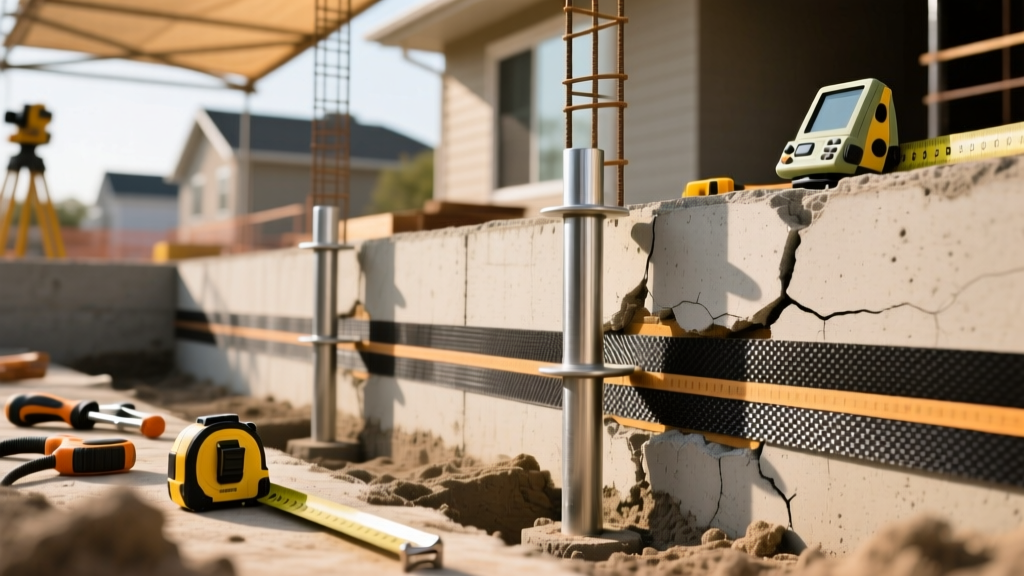
Foundation repair is fundamentally an exercise in applied geotechnical and structural engineering. When homeowners and property managers evaluate the typical foundation repair cost, they are frequently met with superficial national averages that ignore the underlying mechanics of load transfer, soil shear strength, and hydrostatic pressure. In 2026, the financial reality of stabilizing a compromised structure is dictated not by the cosmetic severity of drywall cracks, but by the depth of the load-bearing strata, the specific failure mode of the footing, and the engineered capacity required to arrest differential settlement.
This analysis deconstructs foundation repair pricing through a structural lens, detailing the exact material specifications, engineering parameters, and 2026 market rates for the most common stabilization interventions.
The Mechanics of Foundation Failure and Cost Drivers
Before assigning a dollar value to a repair, a structural analyst must identify the kinetic forces acting on the foundation. The vast majority of foundation distress stems from three primary mechanisms:
- Differential Settlement: Occurs when the bearing capacity of the underlying soil is exceeded or when expansive clays undergo uneven volumetric changes due to moisture fluctuations. According to research on expansive soils by Texas A&M AgriLife Extension, moisture differentials between the center and the perimeter of a slab-on-grade foundation create severe bending moments that exceed the tensile strength of unreinforced concrete.
- Lateral Earth Pressure: Hydrostatic pressure and soil swelling exert horizontal forces against basement walls, leading to shear cracks, inward bowing, and eventual structural collapse if the wall's moment capacity is exceeded.
- Soil Consolidation and Voids: Poorly compacted fill soil or the erosion of fine particles (piping) creates sub-slab voids, removing continuous support and causing slab deflection under live and dead loads.
The typical foundation repair cost scales directly with the complexity of neutralizing these specific forces. Transferring a 200,000-pound structural load to bedrock 30 feet below grade requires vastly different capital expenditure than injecting high-density polyurethane into a shallow, 2-inch sub-slab void.
2026 Cost Matrix: Structural Interventions by Failure Mode
The following matrix outlines current 2026 pricing for engineered foundation repair systems, categorized by the structural problem they are designed to resolve. These figures encompass materials, specialized labor, and equipment mobilization, but exclude secondary costs such as landscaping restoration or interior finish repair.
| Failure Mode | Structural Intervention | Typical 2026 Cost | Engineering Parameters & Specifications |
|---|---|---|---|
| Deep Differential Settlement (Perimeter) | Resistance Push Piers | $1,400 - $2,200 per pier | Driven to refusal (bedrock/dense till); 50,000+ psi yield strength steel; requires 20-30 ft average depth. |
| Deep Settlement (Light to Medium Loads) | Helical Piers | $1,600 - $2,800 per pier | Torque-to-capacity correlation (ICC-ES AC358); installed to specific torque (e.g., 4,500 ft-lbs) to verify load capacity. |
| Lateral Wall Bowing (Minor to Moderate) | Carbon Fiber Straps | $900 - $1,400 per strap | 12-inch Kevlar/carbon weave; 90,000+ psi tensile strength; bonded with structural saturating epoxy. |
| Lateral Wall Bowing (Severe / Active) | Helical Tieback Anchors | $1,800 - $2,500 per anchor | Extends 15-20 ft into stable soil; applies active lateral clamping force to reverse wall deflection. |
| Sub-Slab Voids / Slab Deflection | Polyurethane Foam Jacking | $12 - $18 per sq. ft. | Closed-cell, hydrophobic foam; 2.5 to 4.0 lb/cu ft density; cures in 15 minutes with minimal added dead load. |
| Non-Structural Slab Settlement | Cementitious Mudjacking | $5 - $9 per sq. ft. | Heavy slurry (approx. 100 lb/cu ft); requires larger drill holes; prone to future washout in high-water-table areas. |
Deep Foundation Underpinning: Piering Systems Analyzed
When a continuous footing or grade beam fails due to inadequate shallow soil bearing capacity, the structural remedy involves bypassing the active soil zone and transferring the structural load to a competent stratum. This is achieved through underpinning, which represents the highest tier of the typical foundation repair cost spectrum.
Resistance Push Piers vs. Helical Piers
Push piers utilize the weight of the structure itself as resistance to hydraulically drive steel pipe sections into the ground. They are the default choice for heavy masonry or multi-story structures. The cost is heavily influenced by the depth to bedrock or a highly dense glacial till layer. If bedrock is located at 15 feet, the cost per pier leans toward the $1,400 mark; if the bearing strata is 45 feet deep, the cost easily exceeds $2,200 per pier due to the additional steel sections and extended hydraulic press time.
Helical piers, conversely, are mechanically screwed into the ground and do not rely on the structure's weight for installation. This makes them mandatory for light-load structures (like porches or single-story wood frames) where push piers would simply lift the building instead of driving the pier down. From an engineering standpoint, helical piers offer a distinct advantage: verifiable capacity during installation. Using the torque-to-capacity equation ($Q = K \times T$), installers can measure the hydraulic motor's torque to confirm the pier has reached the required load-bearing capacity before the bracket is even attached to the footing. This empirical verification aligns with standards monitored by organizations like the American Concrete Institute (ACI) for deep foundation reliability.

Lateral Load Stabilization: Bowing Walls and Shear Failure
Basement walls act as retaining structures. When exterior drainage fails or expansive soils saturate, lateral earth pressure can exceed the wall's design limits, causing horizontal shear cracking and inward deflection. The repair cost depends entirely on the magnitude of the deflection.
Carbon Fiber Reinforcement
For walls exhibiting less than 2 inches of inward bowing, carbon fiber straps provide a high-strength, low-profile solution. The structural efficacy relies entirely on the surface preparation and the structural epoxy used to bond the 12-inch wide straps to the concrete. The carbon fiber possesses a tensile strength exceeding 90,000 psi, effectively locking the wall in place and preventing further movement. At $900 to $1,400 per strap (typically spaced 4 feet on center), this method is highly cost-effective but cannot straighten a wall; it only arrests further movement.
Helical Tiebacks and Wall Anchors
When deflection exceeds 2 inches, or when the wall must be actively straightened, carbon fiber is insufficient. Helical tiebacks involve drilling through the compromised wall, screwing a helical plate into the stable soil mass 15 to 20 feet away, and applying a massive lateral clamping force via a steel wall plate. This actively pulls the wall back toward plumb. Because this requires exterior excavation or specialized horizontal drilling equipment, the cost jumps to $1,800 - $2,500 per anchor point.
The Hidden Variable: Geotechnical and Structural Engineering Fees
A critical, often omitted component of the typical foundation repair cost is the price of independent diagnostics. Many foundation repair contractors offer 'free inspections,' which inherently present a conflict of interest; the inspector's compensation is tied to the sale of their proprietary repair products, frequently leading to the over-prescription of deep piering systems when simple drainage corrections or slab jacking would suffice.
Engaging an independent, licensed structural engineer or geotechnical firm to conduct a forensic analysis typically costs between $600 and $1,500. This fee covers:
- Topographic and Elevation Surveys: Using laser levels or digital water levels to map the exact differential settlement profile of the slab or footing.
- Soil Borings: Extracting core samples to identify the depth of the active expansive clay zone, the water table elevation, and the depth to competent load-bearing strata.
- Engineering Repair Plan: A stamped document specifying the exact number, depth, and capacity of piers required, which the homeowner can then use to solicit competitive, apples-to-apples bids from multiple contractors.
Spending $1,000 on an independent engineering report routinely saves property owners $10,000 to $30,000 by preventing unnecessary pier installations and ensuring the proposed repair addresses the actual root cause of the structural distress.
Diagnostic Decision Framework for Homeowners
To determine which cost tier applies to a specific property, structural analysts use a logical diagnostic sequence. Apply this framework when evaluating a compromised foundation:
- Symptom: Diagonal drywall cracks emanating from door frames, accompanied by sticking doors.
Structural Implication: Differential settlement of the perimeter footing.
Required Action: Elevation survey and soil boring. Expect deep piering costs ($1,500+ per pier). - Symptom: Horizontal cracking midway down a poured concrete basement wall, with minor inward leaning.
Structural Implication: Lateral earth pressure exceeding the concrete's flexural tensile strength.
Required Action: Measure deflection. If <2 inches, budget for carbon fiber straps ($1,000/strap). If >2 inches, budget for tiebacks ($2,000/anchor) and exterior French drain installation. - Symptom: Sunken interior floor tiles, hollow sound when tapping the slab, but perimeter walls remain plumb and uncracked.
Structural Implication: Sub-slab soil consolidation or washout; the structural grade beam is intact.
Required Action: Ground penetrating radar (GPR) to map voids. Budget for polyurethane foam jacking ($15/sq. ft.), avoiding expensive and unnecessary perimeter piering.
Understanding the typical foundation repair cost requires moving beyond generic online calculators. By analyzing the specific soil mechanics, structural load paths, and material properties involved in a foundation failure, property owners can accurately forecast the capital required to engineer a permanent, code-compliant stabilization solution.
Written by
Priya KapoorPriya Kapoor is a real estate market analyst and construction economics researcher with expertise in housing affordability, development feasibility, and infrastructure investment. She holds a Master of Regional Planning from Cornell University and previously worked as a senior analyst at CBRE's Investment Properties group, where she modeled returns for $4B in mixed-use development pipelines. Priya now runs an independent research practice advising developers, municipalities, and REITs on construction cost forecasting and market timing. She publishes the quarterly "BuildMat Market Pulse" report tracking material price indices across 12 commodity categories. Based in Austin, TX, Priya serves on the board of Habitat for Humanity Austin and is a marathon runner.
More from Priya Kapoor
View all
Construction Cost
Cost to Build a 1600 Sq Ft Home in 2026: Full Breakdown
Accurate 2026 cost to build a 1600 sq ft home—material, labor, and regional pricing breakdowns included. Plan your budget with real-time estimates.
Aug 11, 2026

Wood & Lumber
Name the Types of Wood for Pressure Treatment and Preservation
Learn how to name the types of wood best suited for pressure treatment. Compare species treatability, chemical retention levels, and 2026 preservation costs.
Aug 4, 2026

Stone & Masonry
Stone Veneer Suppliers Lindenhurst: 2026 Cost Analysis
Analyze 2026 stone veneer costs in Lindenhurst, NY. Compare local supplier pricing, delivery fees, and Suffolk County installation labor rates.
Aug 4, 2026