Aluminum Roof Maintenance Playbook: Clean Without Damage
Learn how to safely clean and maintain your aluminum roof. This playbook covers PSI limits, safe chemicals, oxidation removal, and inspection steps.
The Unique Vulnerabilities of Aluminum Roofing
Aluminum roofing systems, particularly standing seam and corrugated profiles, offer a 40- to 60-year lifespan due to the metal's natural resistance to rust. However, aluminum is highly reactive to specific chemical environments and dissimilar metals. Improper maintenance can strip the factory-applied PVDF (polyvinylidene fluoride) coating, accelerate oxidation, or trigger catastrophic galvanic corrosion. This playbook details the exact protocols for cleaning, inspecting, and restoring aluminum roofs without compromising their structural or aesthetic integrity.
Aluminum is anodic. If your roof features copper flashings, untreated steel valley pans, or standard zinc-plated fasteners, moisture will create a galvanic cell that rapidly pits and eats through the aluminum panels. Always ensure all penetrations, flashings, and fasteners are either aluminum, stainless steel (Series 300), or heavily isolated with butyl rubber tape.
The Aluminum Roof Cleaning Playbook
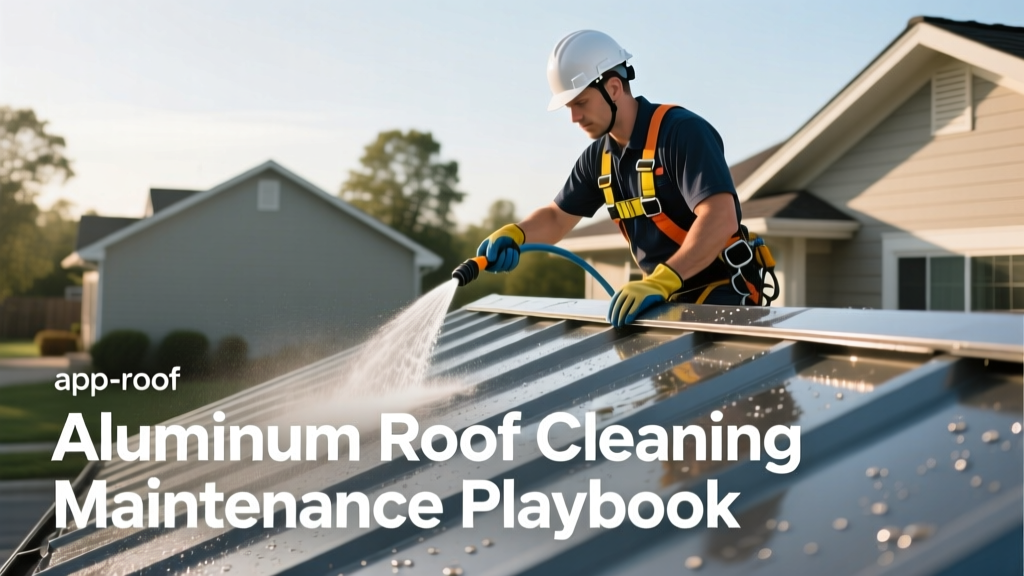
Cleaning an aluminum roof is not about blasting away dirt; it is about chemically loosening biological growth and atmospheric pollutants without degrading the Kynar 500® or Hylar 5000® resin coatings. Follow this three-step soft-wash protocol.
Step 1: Pre-Wet and Debris Management
Before applying any surfactants, thoroughly pre-wet the roof panels and surrounding landscaping using a standard garden hose (approx. 40-60 PSI). This pre-wetting serves two purposes: it cools the metal surface to prevent rapid chemical evaporation (which causes streaking) and dilutes any runoff before it reaches soil or concrete foundations. Remove pine needles and leaf dams from valleys and gutters manually; trapped organic matter holds moisture and creates localized acidic environments that degrade the aluminum substrate.
Step 2: Chemical Application (The Right Surfactants)
Apply an aluminum-safe, non-ionic surfactant. Products like Jomax House Cleaner and Mildew Stain Remover (diluted according to label instructions) or a 1:10 dilution of Simple Green Oxy Solv are ideal. Apply the solution using a downstream injector or a low-pressure pump sprayer. Allow a dwell time of 10 to 15 minutes. Do not let the solution dry on the panels. If working in direct sunlight or high heat, work in small 10x10 foot sections to maintain a wet edge.
Step 3: The 1,200 PSI Soft-Wash Rule
Rinse the roof using a pressure washer strictly governed to a maximum of 1,200 PSI. Equip the wand with a 40-degree fan tip and maintain a minimum distance of 12 inches from the panel surface. Why this specific limit? Standing seam aluminum roofs rely on capillary breaks and factory-applied seam sealants to prevent water intrusion. Pressures exceeding 1,500 PSI can force water backward up the vertical seams, bypassing the clips and weeping into the roof deck. Furthermore, high-pressure pin-point streams can physically dent 24-gauge and 26-gauge aluminum panels.
Approved vs. Prohibited Cleaning Agents
The factory coatings on aluminum roofs are designed to withstand UV radiation and thermal expansion, but they are highly susceptible to alkaline and strong acidic degradation. Refer to this matrix before selecting a cleaning agent.
| Agent Type | Specific Products / Examples | Verdict & Mechanism |
|---|---|---|
| Non-Ionic Surfactants | Jomax, Simple Green Oxy Solv, Dawn Dish Soap | APPROVED. pH neutral (6.5-7.5). Lifts dirt without attacking the PVDF resin matrix. |
| Diluted Sodium Hypochlorite | Household bleach (max 2% concentration) | APPROVED (with caution). Only for severe algae. Must be thoroughly rinsed to prevent salt residue buildup. |
| High-Alkaline Cleaners | TSP (Trisodium Phosphate), Heavy-duty degreasers | PROHIBITED. pH > 9 causes rapid oxidation and permanently dulls the factory coating. |
| Muriatic / Hydrochloric Acid | Brick cleaners, rust removers | PROHIBITED. Will instantly strip the coating and aggressively pit the bare aluminum substrate. |
| Abrasive Pads / Brushes | Scotch-Brite, wire brushes, stiff bristle push brooms | PROHIBITED. Creates micro-scratches that trap moisture and accelerate UV fading. |
Annual Inspection Checklist & Fastener Torque
Cleaning should be paired with an annual physical inspection. According to guidelines published by the Metal Construction Association (MCA), thermal cycling causes metal panels to expand and contract, which can gradually back out mechanical fasteners and compromise sealant joints.
If your aluminum roof utilizes exposed fasteners (like corrugated profiles), inspect the EPDM (ethylene propylene diene monomer) neoprene washers. A properly torqued screw (typically 20-25 in-lbs) will compress the washer so it is slightly visible around the perimeter of the metal head, but not extruded or squeezed out entirely. If the washer is cracked, UV-brittled, or missing, replace the screw with a #12 x 1.5-inch oversized pancake head screw featuring a fresh EPDM seal.
- Seam Clip Engagement: On standing seam roofs, check that the panels are fully engaged in the concealed sliding clips. Look for 'oil-canning' (visible ripples), which indicates restricted thermal movement.
- Polyurethane Lap Sealant: Inspect all end-laps and penetrations. If the factory butyl tape or polyurethane sealant is shrinking, cracking, or losing adhesion, carefully cut out the failed section and re-apply a high-quality, UV-stable polyurethane sealant like SikaFlex-1a or Geocel 2300. Avoid silicone, which cannot be painted over and often peels off painted aluminum in sheet form.
- Galvanic Isolation: Verify that copper grounding wires or HVAC copper drain lines are not resting directly on the aluminum panels. Use rubber isolation pads or route copper drains through PVC extensions.
Addressing Oxidation, Chalking, and Scratch Touch-Ups
Over a 15- to 20-year period, the acrylic resin component of PVDF (Kynar 500) roof coatings begins to degrade under UV exposure, leaving the PVDF pigment exposed. This manifests as 'chalking'—a white, powdery residue that rubs off on your hands. The National Roofing Contractors Association (NRCA) recommends testing for chalking by wiping a dark, clean cloth across a dry, sun-exposed panel. If heavy white residue transfers, the coating is failing.
Restoration Protocol for Chalked Panels
- Wash and De-chalk: Clean the roof using the soft-wash playbook above. For heavy chalking, use a mild automotive rubbing compound (e.g., Meguiar's M49 Heavy Duty Oxidation Remover) applied with a microfiber pad to gently remove the loose, oxidized acrylic layer.
- Adhesion Promoter: Wipe the panels down with an alcohol-based prep solvent to remove any remaining oils or compound residue.
- Apply a Topcoat: Roll or spray a high-solids, elastomeric acrylic-urethane or silicone roof coating. Products like GacoRoof 100% Silicone or Henry 887 Tropi-Cool are excellent choices. These coatings adhere tenaciously to weathered PVDF surfaces, halt the chalking process, and reflect up to 88% of solar heat, significantly reducing cooling loads.
"When touching up deep scratches that expose the bare aluminum substrate, always use a factory-matched PVDF touch-up pen. Standard exterior latex or oil-based paints will fade within two years and create a stark visual mismatch against the UV-stable factory coating."
DIY vs. Professional Maintenance Costs (2026 Estimates)
Deciding whether to execute this playbook yourself or hire a certified metal roof contractor depends on your roof's pitch, height, and the severity of biological staining.
| Service Level | Estimated Cost (per sq. ft.) | What's Included |
|---|---|---|
| DIY Soft-Wash | $0.03 - $0.06 | Cost of chemicals (Jomax/Simple Green), pump sprayer rental, and standard garden hose water. Excludes safety harness gear. |
| Professional Cleaning | $0.25 - $0.45 | Low-pressure soft wash, gutter clearing, basic visual inspection, and liability insurance coverage for roof walking. |
| Pro Cleaning + Fastener/Sealant Repair | $0.60 - $1.10 | Full cleaning, replacement of up to 10% of exposed fasteners, and re-caulking of all penetrations and end-laps with polyurethane sealant. |
| Full PVDF Restoration Coating | $3.50 - $6.00 | Power washing, rust/pitting treatment, primer (if bare metal is exposed), and two coats of high-solids silicone or acrylic-urethane topcoat. |
By strictly adhering to pH-neutral cleaning agents, respecting the 1,200 PSI pressure threshold, and proactively managing galvanic isolation, you can easily extend the functional and aesthetic life of an aluminum roof well past the half-century mark.