Navigating Roofing Materials Shortage News: 2026 Installation Guide
Actionable installation guide for contractors navigating 2026 roofing materials shortage news, covering substitutions, fastening adjustments, and procurement.
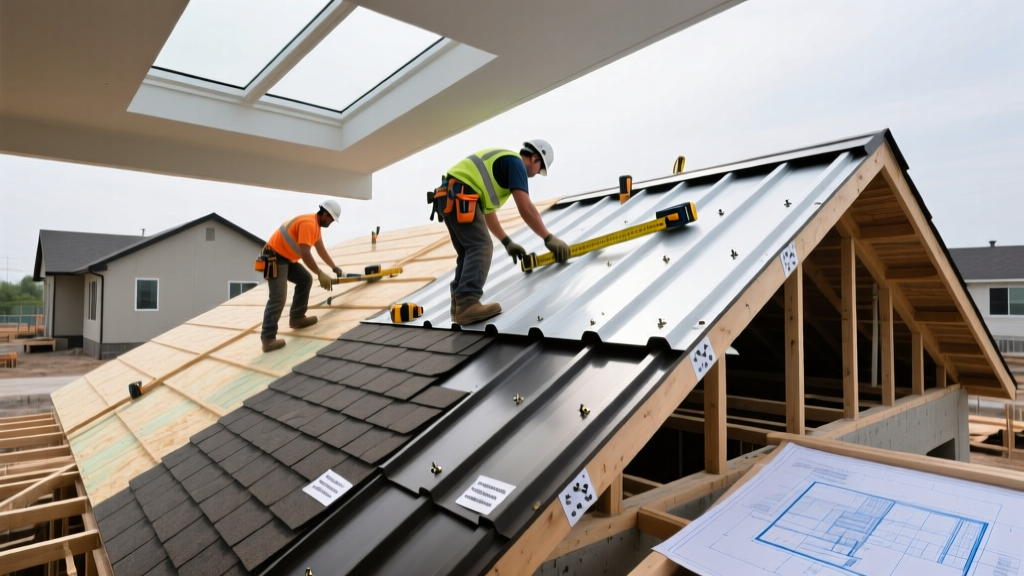
Interpreting 2026 Supply Chain Disruptions on the Job Site
Tracking roofing materials shortage news is no longer just an administrative task for procurement managers; it is a critical component of field installation strategy. In 2026, localized disruptions in polymer-modified asphalt, Galvalume steel coils, and polyisocyanurate (polyiso) insulation continue to force mid-project material swaps. According to data from the National Association of Home Builders (NAHB), supply chain volatility remains the primary cause of residential and commercial roofing delays. For installation crews, the challenge is not merely sourcing alternatives, but adapting fastening schedules, thermal management techniques, and flashing details to accommodate substitute materials without compromising wind uplift ratings or manufacturer warranties.
Material Substitution Matrix for Active Job Sites
When primary materials are backordered, contractors must pivot to approved alternatives. The following matrix outlines common substitutions driven by recent shortage news and the immediate installation adjustments required.
| Shortaged Material | Approved Alternative | Installation Adjustment Required | Cost Impact (per sq. ft.) |
|---|---|---|---|
| 26-Ga Galvalume Panels | 0.032" Aluminum Panels | Reduce clip spacing to 24" O.C.; use slotted fastener holes. | +$1.15 - $1.40 |
| Polyiso Insulation (R-5.6/in) | EPS Type II (R-3.8/in) | Increase board thickness; extend fastener length by 3". | -$0.30 (material) / +$0.45 (labor) |
| 30lb Asphalt Felt | Synthetic Underlayment | Switch to cap nails or 1" crown staples; adjust overlap. | +$0.12 - $0.18 |
| Modified Bitumen (SBS) | TPO Single-Ply (60-mil) | Transition from torch-applied to fully adhered or mechanically attached. | +$0.85 - $1.10 |
Critical Installation Adjustments for Alternative Materials
Swapping materials without adjusting installation techniques is the leading cause of premature roof failure during supply shortages. Field supervisors must enforce the following technical modifications when executing substitutions.
Thermal Expansion in Metal Panel Swaps
When Galvalume steel is unavailable, crews often substitute 0.032-inch aluminum standing seam panels. Aluminum has a coefficient of thermal expansion of roughly 13 x 10^-6 in/in/°F, which is exactly double that of steel (6.5 x 10^-6 in/in/°F). If you install aluminum using standard steel clip spacing and fixed fastener holes, the panels will experience severe oil-canning, and the fasteners will eventually back out due to thermal cycling.
- Clip Spacing: Reduce maximum clip spacing from 36 inches on center (standard for steel) to 24 inches on center for aluminum.
- Fastener Slots: Ensure all panel clips feature slotted screw holes to allow for lateral movement. Never pin the center of an aluminum panel clip unless specifically directed by the manufacturer's engineering details.
- Engagement: Verify that the male and female seam legs maintain a minimum 1/4-inch engagement at the top of the seam after seaming, accounting for the increased lateral drift.
Insulation Thickness and Fastener Penetration
Polyiso shortages frequently force contractors to use Expanded Polystyrene (EPS) Type II. Polyiso provides an R-value of 5.6 per inch, while EPS Type II provides only 3.8 per inch. To achieve a code-required R-30 assembly, you must increase the insulation thickness from roughly 5.5 inches (polyiso) to 8 inches (EPS). This 2.5-inch difference cascades through the entire installation.
- Fastener Length: Standard 7-inch insulation fasteners will fail to penetrate the steel deck. You must upgrade to 10-inch or 11-inch fasteners to maintain the mandatory 1/2-inch to 3/4-inch penetration into the structural deck, as outlined by NRCA Technical Resources.
- Edge Metal and Coping: The increased roof height requires all perimeter edge metal, gravel stops, and parapet copings to be raised. Do not attempt to shim edge metal with wood blocking; use manufactured steel cleats and extend the membrane up the new curb height.
- Drain Extensions: Roof drains must be extended using manufactured clamping ring extensions to match the new 8-inch insulation height, ensuring the membrane can be properly integrated into the drain flange without creating a depression.
Synthetic Underlayment Fastening Protocols
When 30lb asphalt felt is unavailable, synthetic underlayment (such as GAF FeltBuster or Titanium UDL 50) is the default swap. Synthetic materials are highly slippery and have different tear-resistance profiles. Standard smooth-shank roofing nails will pull through synthetic underlayment under high wind uplift conditions (ASTM D7158).
- Fasteners: Use 1-inch crown staples or plastic cap nails with a minimum 1-inch diameter cap.
- Overlap: Maintain a 4-inch side lap and a 6-inch end lap. In high-wind zones (HVHZ), apply a 3-inch bead of compatible roofing cement or manufacturer-approved tape at all end laps.
Procurement, Staging, and Contract Protections
Adapting to roofing materials shortage news requires shifting from "just-in-time" delivery to "just-in-case" staging. Material volatility means that a bundle of shingles available on Tuesday might be allocated to a commercial project by Thursday.
On-Site Staging for Early Deliveries
When you secure alternative materials ahead of schedule, proper staging is critical to prevent UV degradation and moisture damage. Synthetic underlayments left exposed to UV radiation for more than the manufacturer's specified window (typically 30 to 60 days) will become brittle and fail tensile strength tests.
- Store all substitute insulation and underlayment in temporary, weather-proof enclosures on the job site.
- Use heavy-duty, UV-resistant tarps supported by a 2x4 framing structure to prevent water pooling on top of the material bundles.
- Elevate EPS and Polyiso boards at least 4 inches off the ground using dunnage to prevent ground moisture wicking.
Implementing Price Escalation Clauses
Shortages inevitably trigger price spikes. According to the Bureau of Labor Statistics Producer Price Index (PPI), roofing material indices can fluctuate by 8% to 12% within a single quarter during severe shortages. Contractors must protect their margins by including specific escalation clauses in 2026 contracts.
Sample Escalation Framework: "The base contract price assumes material costs current as of the signing date. If the distributor invoice for primary roofing materials (shingles, metal panels, or insulation) exceeds the base estimate by more than 5%, the Owner agrees to pay the exact difference for the overage, supported by original distributor invoices. Labor rates remain fixed."

Frequently Asked Questions
How do I verify if an alternative material meets local building codes?
Always check the alternative material's ICC-ES Evaluation Report. If you are swapping from a modified bitumen system to a TPO single-ply system due to shortages, the local building official will require the TPO's specific ICC-ES report to verify wind uplift ratings (ASTM E1592) and fire classification (UL 790). Do not rely solely on the distributor's verbal assurance.
Can I mix different brands of architectural shingles if one brand is short on specific colors?
No. Mixing brands, or even different production lots of the same brand, will result in visible color banding and shadow lines due to variations in granule blends and asphalt formulations. Furthermore, mixing brands voids the system warranty. If the exact color is unavailable, you must pivot the entire project to an alternative color or a completely different material class (e.g., synthetic slate) with the homeowner's written approval.
Written by
Elena RodriguezElena Rodriguez is a civil engineer and technical writer specializing in concrete technology, masonry systems, and ASTM/ACI compliance. She earned her B.S. in Civil Engineering from Texas A&M University and spent a decade at a materials testing laboratory, performing over 2,000 concrete compressive strength tests and masonry prism evaluations. Elena is an ACI-certified Field Testing Technician (Grade I) and a member of ASTM Committee C12 on Natural Building Stone. She currently consults on forensic engineering cases involving concrete failures and moisture intrusion. Based in San Antonio, TX, Elena is a proud member of the Society of Women Engineers (SWE) and coaches her daughter's FIRST Robotics team.
More from Elena Rodriguez
View all
Walls & Panels
Cost Analysis: Light Gauge Steel Framing Advantages and Disadvantages
Evaluate light gauge steel framing advantages and disadvantages through a strict cost analysis lens, comparing material, labor, and lifecycle expenses.
Aug 4, 2026

Walls & Panels
Gypsum Board Types: Exact Specifications, Thickness & Dimensions
Compare standard, Type X, and moisture-resistant gypsum board types. Get exact specifications, thicknesses, dimensions, and ASTM standards for your project.
Aug 4, 2026

Fire Resistance
Best Fire-Resistant Outdoor Decking Materials: 2026 Buyer Guide
Discover the best fire-resistant outdoor decking materials for 2026. Compare Class A PVC, aluminum, and hardwood options for WUI compliance and safety.
Aug 4, 2026