A Practical Selection Framework for Aluminum Roofing Materials
Evaluate aluminum roofing materials using our expert selection framework. Compare thicknesses, profiles, and coatings to choose the ideal system.

The Core Advantages of Aluminum in Modern Roofing
Aluminum roofing materials dominate in coastal, high-humidity, and industrial environments due to their innate resistance to saltwater corrosion and chemical degradation. Unlike steel, which relies on sacrificial zinc or galvalume coatings to prevent rust, aluminum forms a self-healing oxide layer when exposed to oxygen. This makes it the undisputed choice for structures within 1,500 feet of a saltwater coastline. Furthermore, aluminum weighs approximately one-third as much as steel (roughly 1.5 to 2.0 pounds per square foot depending on profile), reducing structural load requirements and making it ideal for retrofitting over older buildings or lightweight framing systems.
Selecting the right aluminum system requires moving beyond basic aesthetics. This framework guides you through profile selection, decimal thickness specifications, coating chemistry, and critical installation parameters to ensure a 50-plus-year lifecycle.
Step 1: Profile Selection Matrix
The physical shape of the aluminum panels dictates water shedding capabilities, wind uplift resistance, and minimum roof pitch requirements. Use the matrix below to align your architectural constraints with the correct profile.
| Profile Type | Fastener System | Minimum Pitch | Wind Uplift Rating | Best Application |
|---|---|---|---|---|
| Mechanical Lock Standing Seam | Concealed Floating Clips | 1:12 (with sealant) | Class 90 / 150+ | Low-slope commercial, hurricane zones |
| Snap-Lock Standing Seam | Concealed Fixed Clips | 3:12 | Class 60 / 90 | Standard residential, steep-slope commercial |
| Interlocking Aluminum Shingles | Concealed Nailing Flange | 4:12 | Class 110 | Historic retrofits, HOA-restricted neighborhoods |
| Corrugated / R-Panel | Exposed Screws w/ Washers | 3:12 | Class 30 / 60 | Agricultural, utilitarian, budget-conscious builds |
Step 2: Decimal Thickness Specifications
A common error in material procurement is requesting aluminum by 'gauge' (e.g., 24-gauge or 26-gauge). The gauge system applies to steel; aluminum roofing materials are specified in decimal inches or mils according to ASTM B209 standards published by the Metal Construction Association (MCA).
Standard Thickness Tiers
- .032-inch (32 mils): The baseline for residential standing seam and shingle applications. Provides adequate rigidity for standard rafter spacing (24 inches on center) and normal thermal cycling.
- .040-inch (40 mils): The premium residential and light commercial standard. Recommended for high-wind coastal zones (120+ mph design speeds) or roofs with wider purlin spacing (up to 36 inches on center). Resists 'oil canning' (visible waviness) significantly better than .032-inch stock.
- .050-inch to .063-inch (50-63 mils): Reserved for heavy commercial applications, high-traffic flat roof perimeters, and specialized architectural facades. Rarely used in standard residential roofing due to increased material costs and forming difficulties on-site.
Step 3: Coating Systems and Finish Durability
Raw aluminum oxidizes to a dull gray. To achieve color retention and reflectivity, the coils are coated via a continuous coil coating line. The selection framework for coatings relies on AAMA (American Architectural Manufacturers Association) specifications.
PVDF (Kynar 500 / Hylar 5000) - AAMA 2605
Polyvinylidene fluoride (PVDF) resins are the undisputed standard for premium aluminum roofing. AAMA 2605 certification requires the coating to withstand 4,000 hours of salt spray and maintain a Delta E (color fade) of less than 5 Hunter units after 10 years of South Florida exposure. If your project is in a high-UV environment (Southwest US) or a salt-spray zone, PVDF is non-negotiable. Expect to pay a 15% to 25% premium over SMP coatings.
SMP (Silicone Modified Polyester) - AAMA 2604
SMP coatings offer excellent hardness and abrasion resistance, making them less prone to scratching during installation. However, they lack the UV stability of PVDF. SMP roofs will begin to chalk and fade noticeably after 7 to 10 years in high-sun environments. Use SMP only for inland, budget-restricted projects where long-term color retention is secondary to initial cost.
Step 4: Avoiding Galvanic Corrosion Failures
Aluminum's greatest vulnerability is galvanic corrosion when it comes into direct contact with dissimilar, more noble metals in the presence of an electrolyte (rainwater or condensation).
For comprehensive detailing on dissimilar metal separation and flashing protocols, refer to the National Roofing Contractors Association (NRCA) design details database.
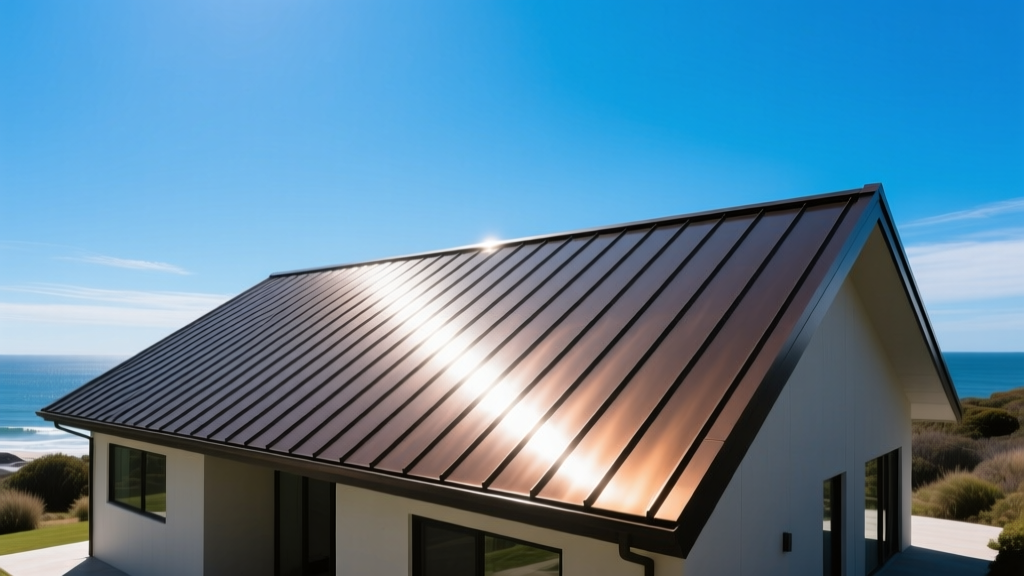
Step 5: Budgeting and Lifecycle Cost Analysis
While aluminum carries a higher upfront material cost compared to galvalume steel, its lifecycle cost in corrosive environments is significantly lower due to the elimination of premature rust replacement. Below is the current pricing framework for installed aluminum systems.
| System Profile | Material Cost (per sq. ft.) | Labor & Accessories (per sq. ft.) | Total Installed Cost (per sq. ft.) |
|---|---|---|---|
| .032' Snap-Lock Standing Seam | $5.50 - $7.00 | $6.50 - $9.00 | $12.00 - $16.00 |
| .040' Mechanical Lock Standing Seam | $7.50 - $9.50 | $8.00 - $12.00 | $15.50 - $21.50 |
| Interlocking Aluminum Shingles | $4.50 - $6.50 | $5.00 - $8.00 | $9.50 - $14.50 |
| Corrugated (Exposed Fastener) | $2.50 - $4.00 | $3.50 - $5.50 | $6.00 - $9.50 |
Note: Pricing reflects national averages. Projects in high-cost labor markets (e.g., Northeast US, coastal California) or requiring complex tear-offs and decking repairs will push costs toward the upper bounds or exceed them by 15-20%.
Final Decision Flowchart
Use this logic tree to finalize your aluminum roofing material specification:
- Is the building within 1,500 feet of saltwater?
- Yes: Mandate .040-inch thickness, PVDF (AAMA 2605) coating, and stainless steel fasteners. Proceed to Step 2.
- No: .032-inch thickness and SMP (AAMA 2604) coating are acceptable for budget optimization. Proceed to Step 2.
- What is the roof pitch?
- Below 3:12: You must use a Mechanical Lock Standing Seam system with factory-applied sealant in the seams.
- 3:12 to 4:12: Snap-Lock Standing Seam or Corrugated profiles are viable.
- Above 4:12: All profiles, including interlocking shingles, are structurally and hydrostatically viable.
- Is there an HOA or historic district restriction on metal panels?
- Yes: Specify interlocking aluminum shingles stamped with slate or wood shake profiles. Ensure the PVDF coating includes a low-gloss matte finish to mimic natural materials.
- No: Proceed with standing seam for maximum wind uplift resistance and modern aesthetics.
By rigorously applying this framework, you eliminate the guesswork from material procurement. Specifying the correct decimal thickness, isolating dissimilar metals, and matching the coating chemistry to the local UV and salt exposure ensures your aluminum roof will perform flawlessly for decades. For additional data on cool roof reflectivity and energy savings, consult the EPA Energy Star roofing products directory to ensure your selected PVDF color meets minimum solar reflectance index (SRI) requirements for your climate zone.
Written by
Marcus ChenMarcus Chen is a licensed structural engineer (PE) and building materials analyst with over 12 years of experience across residential, commercial, and industrial construction. He holds a Master of Science in Civil Engineering from UC Berkeley and spent six years at Thornton Tomasetti before transitioning to independent consulting and technical writing. Marcus specializes in material selection for seismic-prone regions, concrete reinforcement strategies, and lifecycle cost analysis. His work has been cited by the American Concrete Institute (ACI) and the Structural Engineers Association of California (SEAOC). When he is not on a job site or at his desk, you will find him hiking the Sierra Nevada or restoring a 1920s craftsman bungalow in Oakland, CA.
More from Marcus Chen
View all
Construction Cost
How Much Did the Eiffel Tower Cost to Build?
How much did the Eiffel Tower cost to build in 1889? We adjust for inflation and compare its budget to modern skyscraper construction.
Aug 4, 2026

Fire Resistance
What Is a Fire Resistant Material? Testing & Certification Guide
Discover what is a fire resistant material through ASTM and UL testing. Learn how fire ratings, certifications, and assemblies work in construction.
Aug 4, 2026

Construction Cost
How Much Did the Burj Khalifa Cost to Build?
How much did the Burj Khalifa cost to build? We break down the $1.5B project and extract 5 money-saving strategies for your next build.
Jul 30, 2026