Architectural Asphalt Shingles: Material Taxonomy & Selection Guide
Explore the material taxonomy of architectural asphalt shingles, including premium grades, composition specs, pricing, and climate-driven selection matrices.
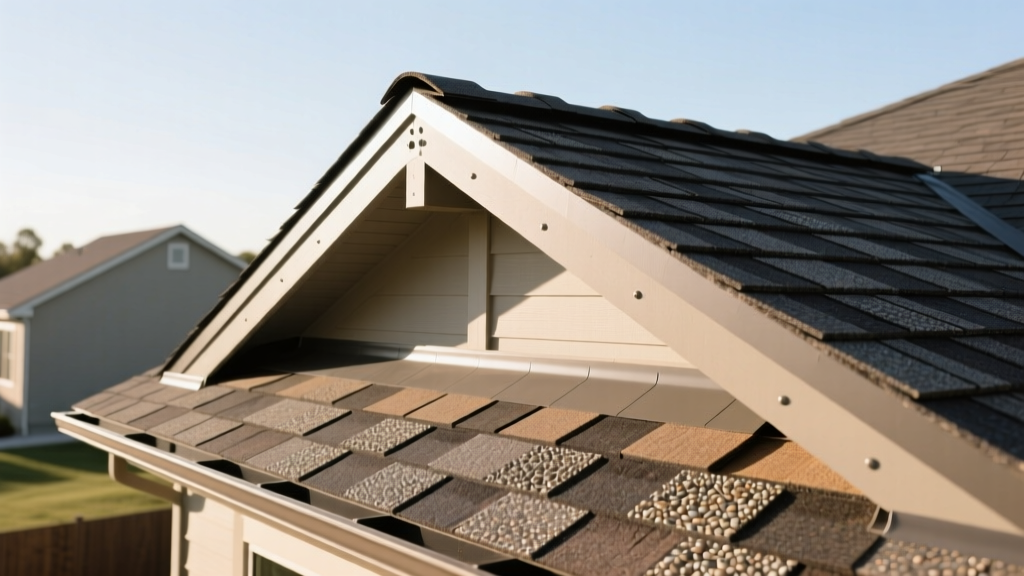
The Shift from 3-Tab to Dimensional Roofing
Architectural asphalt shingles, frequently referred to as dimensional or laminated shingles, have entirely superseded traditional 3-tab shingles in the residential roofing market. While 3-tab shingles rely on a single layer of asphalt-coated fiberglass with cutouts to simulate separate pieces, architectural shingles are manufactured by laminating two or more layers of asphalt material together. This structural evolution creates a multi-dimensional profile that mimics the shadow lines of natural wood shakes or slate tiles while delivering superior wind uplift resistance and impact durability.
According to the National Roofing Contractors Association (NRCA), architectural shingles now account for over 80% of all asphalt shingle installations in North America. This dominance is driven by stricter municipal building codes requiring higher wind ratings (ASTM D7158) and homeowner demand for enhanced curb appeal. However, 'architectural' is a broad umbrella term. Selecting the correct sub-type requires understanding the material taxonomy, weight classifications, and polymer modifications available in the current market.
Taxonomy of Architectural Asphalt Shingles
The architectural shingle category is segmented into four distinct material grades, each engineered for specific performance thresholds and aesthetic requirements.
| Shingle Sub-Type | Layer Construction | Weight (per square) | Wind Rating (ASTM D7158) | Primary Application |
|---|---|---|---|---|
| Standard Dimensional | 2-layer laminate | 230 - 250 lbs | Class H (150 mph) | Standard residential re-roofs; budget-conscious upgrades. |
| Premium / Luxury | 3+ layer ultra-thick laminate | 300 - 450 lbs | Class H (150 mph) | High-end custom homes; steep-pitch roofs requiring slate/shake aesthetics. |
| Impact-Resistant (IR) | 2-layer with SBS polymer | 240 - 280 lbs | Class H (150 mph) | Hail-prone regions (TX, CO, Midwest); required for IBHS FORTIFIED compliance. |
| Cool Roof / Solar Reflective | 2-layer with IR granules | 230 - 260 lbs | Class F or H | Sunbelt climates; required for ENERGY STAR or Title 24 compliance. |
Material Composition and Manufacturing Specs
The performance of an architectural shingle is dictated by its raw material matrix. Modern shingles no longer use organic felt mats, which were prone to moisture absorption and rot. Instead, they rely on a continuous fiberglass mat base.
The Asphalt Coating: Oxidized vs. Polymer-Modified
Standard dimensional shingles utilize oxidized asphalt, which is blown with air to increase its melting point and rigidity. While cost-effective, oxidized asphalt becomes brittle in sub-freezing temperatures and can soften in extreme heat. Premium and impact-resistant shingles utilize polymer-modified asphalt, specifically SBS (Styrene-Butadiene-Styrene). SBS acts as a rubberizing agent, allowing the shingle to absorb the kinetic energy of hail strikes without fracturing the fiberglass mat. Shingles with SBS modification routinely achieve a UL 2218 Class 4 impact rating, the highest standard in the industry.
Ceramic Granule Technology
The top surface is embedded with ceramic-coated crushed stone granules. These granules serve three functions: UV protection for the asphalt binder, fire resistance, and color aesthetics. For cool roof variants, manufacturers apply specialized infrared-reflective (IR) pigments to the granules, increasing the Solar Reflectance Index (SRI) to 25 or higher, which reduces attic heat transfer by up to 15%.
When selecting shingles for humid climates or heavily shaded roof planes, verify the inclusion of copper-infused granules (e.g., 3M's Algae Block technology). Standard zinc strips installed at the ridge are often insufficient for preventing Gloeocapsa magma (black algae streaks) on lower roof slopes.
Selection Matrix: Matching Grade to Climate and Pitch
Choosing the correct architectural shingle requires aligning the material taxonomy with the specific environmental stressors and geometric constraints of the structure.
| Environmental / Structural Factor | Recommended Shingle Sub-Type | Critical Specification to Verify |
|---|---|---|
| Frequent Hail (1.5 inch+ stones) | Impact-Resistant (SBS Modified) | UL 2218 Class 4 Rating; IBHS FORTIFIED approved. |
| High Wind / Coastal (110+ mph gusts) | Standard or Premium with reinforced nailing zones | ASTM D7158 Class H; 6-nail fastening pattern required. |
| Low Slope (2:12 to 4:12 pitch) | Premium / Luxury (Heavier weight) | Ice and water shield required on entire deck; heavier shingle resists capillary action. |
| High Solar Exposure (Sunbelt) | Cool Roof / Solar Reflective | SRI value ≥ 25; CRRC (Cool Roof Rating Council) listed. |
Real-World Pricing and Lifecycle Cost Analysis
Material costs for architectural shingles are priced per 'square' (100 square feet of roof area). As of current market conditions, pricing structures are as follows:
- Standard Dimensional: $110 to $150 per square (material only).
- Premium / Luxury: $220 to $380 per square (material only).
- Impact-Resistant (Class 4): $160 to $210 per square (material only).
When calculating total project costs, factor in tear-off and disposal of the existing roof ($1.50 to $2.50 per sq. ft.), synthetic underlayment, ice and water shield, and labor. Fully installed, a standard architectural roof averages $4.50 to $6.50 per square foot, while luxury systems range from $7.50 to $10.00 per square foot. While the upfront premium for SBS impact-resistant shingles is roughly 20% higher than standard dimensional, this cost is frequently offset by 15% to 30% discounts on homeowners insurance premiums in hail-prone states.
Common Failure Modes and Installation Edge Cases
Even the highest-grade architectural shingle will fail prematurely if installation protocols violate manufacturer specifications. The most common field failures include:
Cold-Weather Sealant Failure
Architectural shingles rely on thermally activated asphalt sealant strips to bond the overlapping layers. If installed when ambient temperatures are below 40°F (4°C), the sealant will not activate. Edge Case Fix: Installers must manually hand-seal every shingle tab with quarter-sized dabs of asphalt roof cement in cold weather. Failing to do so will result in massive blow-offs during the first winter storm.
Improper Valley Flashing Integration
Roof valleys channel 60% of the roof's water runoff. The traditional 'woven valley' method (weaving shingles across the intersection) creates thick ridges that trap water and accelerate granule loss. Modern best practice dictates a 'closed-cut valley' over a 36-inch wide ice and water shield membrane, or an 'open valley' utilizing a 20-gauge galvanized steel or copper valley liner.
Asphalt shingles are manufactured in batches, resulting in slight color variations between pallets. If an installer works out of a single pallet and finishes a roof plane before moving to the next, severe color banding will occur. Installers must simultaneously blend shingles from at least three to four different pallets across the roof plane to ensure a uniform aesthetic.
Nail Placement and the 'Strike Zone'
Architectural shingles feature a specific nailing zone, often reinforced with a woven fabric band (e.g., Owens Corning's SureNail or GAF's StrikeZone). Nails placed too high will miss the double-layer laminate, compromising pull-through resistance. Nails placed too low will be exposed to the elements once the next course is installed. Pneumatic nail guns must be calibrated daily to ensure the nail head sits flush with the mat; over-driven nails will cut through the fiberglass, while under-driven nails will prevent the sealant strip from engaging.
Top Manufacturer Lines and Model Specifications
When specifying materials, reference exact model lines rather than generic brand names to ensure you receive the correct warranty and performance tier:
- GAF Timberline HDZ: Features a proprietary StrikeZone nailing area that is 60% wider than standard, drastically reducing installation errors. Includes the WindProven limited wind warranty (no maximum wind speed limit).
- Owens Corning Duration: Utilizes SureNail woven fabric technology in the nailing zone for exceptional tear-through resistance. Standard architectural grade with a 130 mph wind warranty.
- CertainTeed Landmark PRO: Offers a thicker, dual-layer design with Dimensional Profile technology for deeper shadow lines. Includes a 15-year StreakFighter algae resistance warranty.
- Malarkey Vista Arctic (IR): An SBS polymer-modified impact-resistant shingle engineered specifically for extreme cold and hail, maintaining flexibility at temperatures where oxidized asphalt would shatter.