Cloth Roofing Material Cost Breakdown & 2026 Price Guide
Analyze 2026 cloth roofing material costs, including fabric-reinforced membranes, tensile PTFE, and fiberglass mats. Get exact pricing and ROI data.

When architects and facility managers refer to 'cloth roofing material,' they are rarely talking about traditional canvas. In modern commercial and high-end residential construction, cloth roofing encompasses engineered textile systems: polyester-scrim reinforced single-ply membranes, fiberglass reinforcement mats for liquid-applied roofs, and architectural tensile fabrics like PTFE-coated fiberglass. These materials provide critical structural stability, puncture resistance, and thermal performance that unreinforced liquid or rubber coatings simply cannot achieve.
This 2026 cost breakdown dissects the exact pricing, installation variables, and long-term ROI of fabric-based roofing systems, giving you the concrete data needed to specify the right material for your budget and building envelope.
Defining Cloth Roofing in Modern Construction
To accurately estimate costs, you must first identify which category of cloth roofing your project requires. The term spans three distinct material families, each with different manufacturing processes and price points:
- Fiberglass Reinforcement Mats: Woven or non-woven fiberglass cloths (typically 3 to 4 oz per square yard) embedded into liquid-applied silicone or urethane coatings. The cloth acts like rebar in concrete, bridging gaps and preventing the liquid membrane from splitting under thermal expansion.
- Polyester-Scrim Single-Ply Membranes: TPO (Thermoplastic Polyolefin) and PVC (Polyvinyl Chloride) sheets that feature an internal layer of high-tenacity polyester fabric (often 1000-denier). This internal cloth provides the dimensional stability required for mechanically attached or fully adhered flat roofs.
- Architectural Tensile Fabrics: PTFE (Polytetrafluoroethylene) coated fiberglass or heavy-duty PVC fabrics used in tensioned, non-traditional roof structures like stadium canopies, airport terminals, and modern courtyard covers.
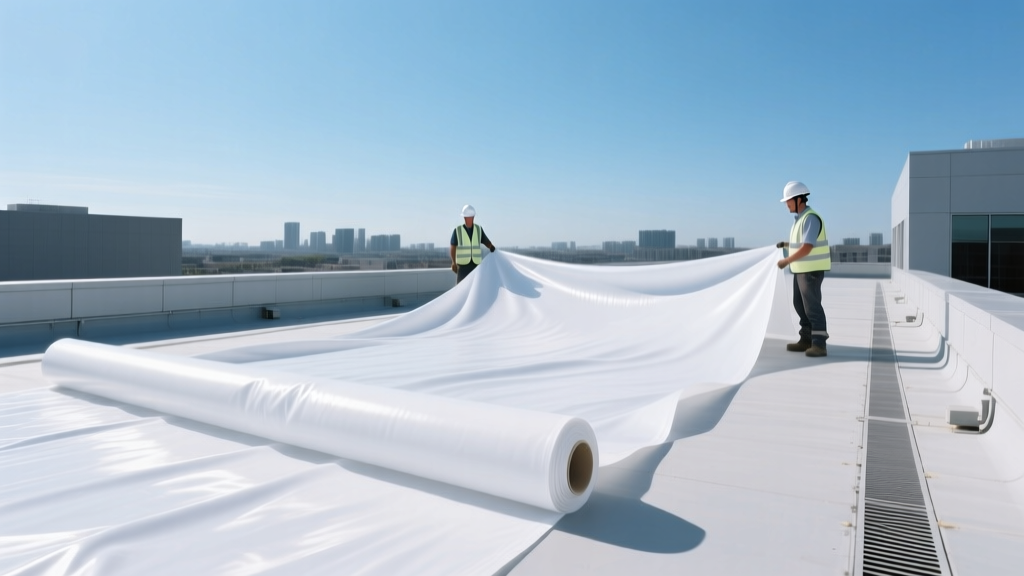
2026 Cost Breakdown Matrix: Material vs. Installed
The following matrix reflects Q1 2026 national average pricing for commercial and large-scale residential applications. Prices assume a standard 10,000+ square foot roof footprint; smaller residential footprints will incur a 15% to 25% premium per square foot due to fixed mobilization costs.
| System Type | Material Cost (Per Sq. Ft.) | Labor & Equipment (Per Sq. Ft.) | Total Installed Cost (Per Sq. Ft.) | Expected Lifespan |
|---|---|---|---|---|
| Fiberglass Mat + Silicone | $1.80 - $2.50 | $3.50 - $5.00 | $5.30 - $7.50 | 20 - 30 Years |
| Polyester-Scrim TPO (60-mil) | $2.20 - $3.10 | $4.00 - $6.50 | $6.20 - $9.60 | 25 - 35 Years |
| Polyester-Scrim PVC (50-mil) | $3.50 - $4.80 | $4.50 - $7.00 | $8.00 - $11.80 | 30 - 40 Years |
| PTFE Architectural Tensile | $18.00 - $28.00 | $15.00 - $25.00 | $33.00 - $53.00 | 30 - 50+ Years |
Understanding the Labor-to-Material Ratio
Notice that in fabric-reinforced liquid systems and single-ply membranes, labor often accounts for 60% to 70% of the total invoice. The cloth material itself is relatively inexpensive. The cost driver is the meticulous preparation required: cleaning the substrate, applying primer, embedding the cloth without wrinkles or fishmouths, and applying topcoats. For PTFE tensile structures, the high material cost reflects the complex, custom-fabricated nature of the cloth, which must be precision-cut and heat-sealed off-site before installation.
System Deep-Dive: Failure Modes and Edge Cases
Choosing the cheapest cloth roofing material without understanding its failure modes is a common specification error that leads to premature replacement. Here is what you need to know about the technical limitations of each system.
Fiberglass Mat in Liquid-Applied Systems
When specifying a fiberglass mat for a silicone roof coating, ensure you are using a high-solids silicone that meets ASTM D6694. The most frequent failure mode occurs when contractors use a low-viscosity coating that bleeds entirely through the cloth, leaving the top fibers exposed to UV degradation and foot traffic damage. The cloth must be fully encapsulated with a minimum of 20 mils of silicone above the fabric surface.
If you are installing a polyester-reinforced PVC membrane over an existing asphalt-based roof or polystyrene insulation, you must use a separation slip sheet. Without it, plasticizers from the PVC cloth membrane will migrate into the asphalt, causing the membrane to become brittle and crack within 3 to 5 years.
Polyester-Scrim TPO and PVC
For single-ply membranes, the internal polyester cloth is what allows the roof to withstand wind uplift. Look for membranes tested to ASTM D6878 (for TPO) or ASTM D4434 (for PVC). In high-wind zones (HVHZ), specify a heavier scrim weight (e.g., 18x18 threads per inch) to increase the mechanical fastener pull-through resistance. A standard 45-mil TPO might fail under 90 mph uplift, whereas a 60-mil or 80-mil fabric-reinforced TPO will easily pass FM 1-90 wind ratings.
Hidden Cost Triggers in Fabric Roofing Projects
The base per-square-foot rates rarely tell the whole financial story. Budget overruns typically stem from these secondary requirements:
- Substrate Remediation ($1.50 - $4.00/sq ft): Cloth roofing systems, especially liquid-applied fiberglass mats, require a perfectly clean, dry, and sound substrate. Power washing, chemical treatment for algae, and grinding down rough concrete add significant prep time.
- Seam Welding Equipment ($800 - $1,500/day rental): For TPO and PVC cloth membranes, hot-air welding is mandatory. Automatic robotic welders are required for long field seams to ensure consistent heat and pressure, while hand welders are needed for details and penetrations.
- Custom Fabrication for Tensile ($5,000 - $15,000+ flat fee): PTFE and architectural PVC cannot be cut on-site. The steel cable network must be surveyed via 3D laser scanning, and the cloth panels must be factory-welded using high-frequency or heat-seal technology.
- Edge Metal and Flashing ($12 - $25 per linear foot): The cloth membrane is only as strong as its termination points. Heavy-gauge aluminum or galvanized steel edge metal, complete with polyurethane caulking and termination bars, is a non-negotiable line item.
Long-Term ROI and Energy Savings
White cloth roofing materials—specifically white TPO, white PVC, and white silicone-coated fiberglass—offer massive secondary financial benefits through solar reflectance. According to the Department of Energy Cool Roof Guidelines, highly reflective fabric roofs can reduce peak cooling demand by 10% to 15%, significantly shrinking HVAC operational costs and extending the life of rooftop chillers.
'Highly reflective roof surfaces, including fabric-reinforced single-ply membranes, can lower roof surface temperatures by up to 50°F compared to traditional dark roofs, directly mitigating the urban heat island effect and reducing building cooling loads.' — EPA Heat Island Effect Mitigation
When calculating your 20-year ROI, factor in the energy rebates often provided by local utilities for installing Energy Star-rated reflective cloth membranes. These rebates can offset 10% to 20% of the initial material cost, effectively making the polyester scrim or fiberglass mat upgrade pay for itself within the first three cooling seasons.
Procurement Checklist: What to Demand from Your Contractor
Do not sign a contract for a cloth roofing system without verifying the following technical specifications:
- Scrim Weight and Denier: Demand the exact denier count of the polyester reinforcement (e.g., 1000x1000 denier) and the weight of the fiberglass mat (e.g., 4 oz/sq yd). Thinner, non-reinforced materials will not provide the same puncture resistance.
- Manufacturer Warranty Exclusions: Read the fine print. Many manufacturers will void a 20-year warranty if the cloth membrane is exposed to animal fats, grease exhaust, or unauthorized foot traffic without designated walkway pads.
- Adhesive Compatibility: For fully adhered systems, ensure the contractor specifies a low-VOC, water-based or solvent-based adhesive explicitly approved by the membrane manufacturer for use with their specific fabric-backed product.
- Core Cuts and Moisture Scans: Before installing any cloth system over an existing roof, require an infrared moisture scan and physical core cuts. Trapping moisture beneath a new fabric membrane will lead to blistering and catastrophic adhesive failure.
For comprehensive technical standards regarding roof assembly and textile integration, facility managers should consult the Whole Building Design Guide (WBDG) Roofing Resources, which provides up-to-date federal specifications for fabric-reinforced and single-ply systems.
By understanding the precise material costs, labor requirements, and technical limitations of engineered cloth roofing, you can confidently specify a system that balances upfront budget constraints with decades of weather-tight performance.
Written by
Elena RodriguezElena Rodriguez is a civil engineer and technical writer specializing in concrete technology, masonry systems, and ASTM/ACI compliance. She earned her B.S. in Civil Engineering from Texas A&M University and spent a decade at a materials testing laboratory, performing over 2,000 concrete compressive strength tests and masonry prism evaluations. Elena is an ACI-certified Field Testing Technician (Grade I) and a member of ASTM Committee C12 on Natural Building Stone. She currently consults on forensic engineering cases involving concrete failures and moisture intrusion. Based in San Antonio, TX, Elena is a proud member of the Society of Women Engineers (SWE) and coaches her daughter's FIRST Robotics team.
More from Elena Rodriguez
View all
Walls & Panels
Cost Analysis: Light Gauge Steel Framing Advantages and Disadvantages
Evaluate light gauge steel framing advantages and disadvantages through a strict cost analysis lens, comparing material, labor, and lifecycle expenses.
Aug 4, 2026

Walls & Panels
Gypsum Board Types: Exact Specifications, Thickness & Dimensions
Compare standard, Type X, and moisture-resistant gypsum board types. Get exact specifications, thicknesses, dimensions, and ASTM standards for your project.
Aug 4, 2026

Fire Resistance
Best Fire-Resistant Outdoor Decking Materials: 2026 Buyer Guide
Discover the best fire-resistant outdoor decking materials for 2026. Compare Class A PVC, aluminum, and hardwood options for WUI compliance and safety.
Aug 4, 2026