Brand Deep-Dive: Top Product Lines for the Repair of Roofing Systems
Explore top brand product lines for the repair of roofing systems. Compare GAF, Tremco, and Henry coatings, membranes, and sealants for lasting fixes.
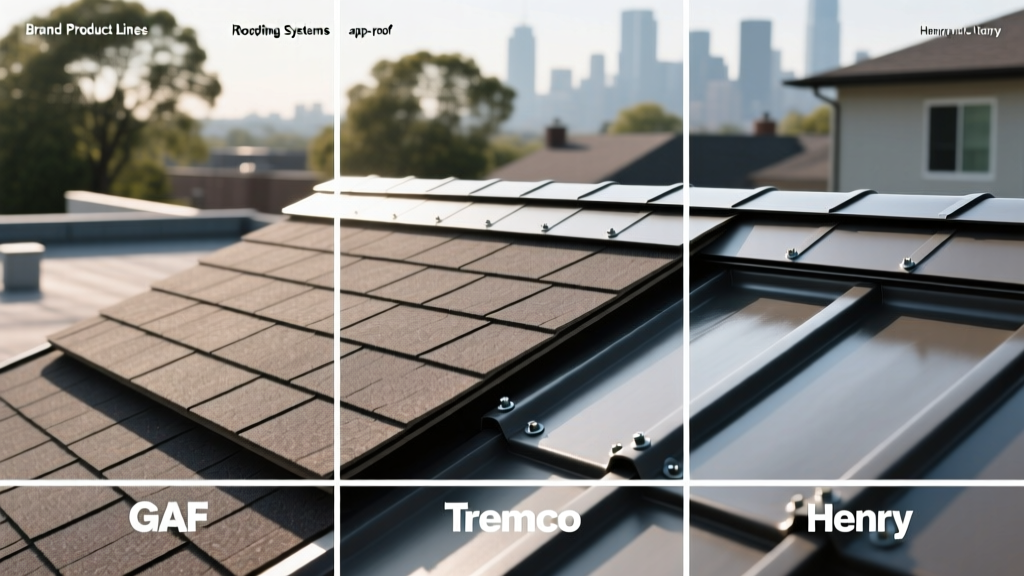
The Science of Substrate Matching in Roof Repair
The repair of roofing systems is rarely a one-size-fits-all endeavor. When a leak develops, a membrane blisters, or shingles blow off, the specific product line you choose dictates the longevity of the fix. The most common failure in DIY and even some professional roof repairs is chemical or mechanical incompatibility between the existing roof substrate and the repair material. Asphalt-based cements will degrade EPDM rubber; solvent-based polyurethanes can melt certain foam insulations; and mixing shingle brands can instantly void a manufacturer's lifetime warranty.
This deep-dive analyzes the top-tier brand product lines engineered specifically for the repair of roofing, breaking down their chemical compositions, ideal use cases, and 2026 market pricing to help contractors and facility managers make precise, warranty-safe decisions.
Steep-Slope Shingle Systems: GAF vs. Owens Corning
When addressing wind damage, ice dam water intrusion, or localized rot on asphalt shingle roofs, the repair must integrate seamlessly with the existing underlayment and shingle matrix. The two dominant players, GAF and Owens Corning, approach leak prevention and repair with proprietary accessory lines.
GAF: The United Protection System Accessories
For targeted repairs around valleys, eaves, and penetrations, GAF's WeatherWatch leak barrier is the industry standard. It is a self-adhering, SBS-modified bitumen membrane. When repairing a localized leak caused by ice damming, contractors must strip the damaged shingles, apply WeatherWatch directly to the roof deck, and tie it into the existing underlayment. GAF requires a minimum 24-inch overlap onto the existing underlayment to maintain the integrity of their System Plus warranty.
- Best for: Eaves, valleys, and skylight perimeters.
- Application Temp: 40°F to 120°F (requires primer below 50°F).
- 2026 Material Cost: ~$115 per 2-square roll.
Owens Corning: WeatherLock and ProArmor
Owens Corning counters with WeatherLock, a flexible, self-sealing underlayment that utilizes a slightly more aggressive adhesive matrix than standard SBS barriers. For broader deck repairs where plywood has been replaced, their ProArmor synthetic underlayment offers superior tear resistance (ASTM D4586 compliant) compared to traditional felt, ensuring the repaired section outlasts the original roof.
Low-Slope and Commercial Membranes: Tremco & Sika
The repair of roofing on commercial flat roofs (EPDM, TPO, PVC, and Modified Bitumen) requires advanced elastomeric and polyurethane chemistries. Standard asphalt cements are entirely obsolete in this space.
Tremco: AlphaGuard and Vulkem Lines
Tremco Roofing and Building Envelope dominates the polyurethane and fluid-applied repair sector. For repairing blisters, splits, or failing seams on Built-Up Roofing (BUR) or Modified Bitumen, the AlphaGuard system is unmatched. It utilizes a moisture-cured polyurethane base coat reinforced with a polyester fleece, topped with an aliphatic polyurethane finish.
For localized joint and penetration repairs, Vulkem 116 remains the gold standard polyurethane sealant. Unlike cheap caulks that shrink and crack within a year, Vulkem 116 cures to a tough, rubbery solid with 600% elongation, accommodating the extreme thermal expansion and contraction of commercial roof decks.
Expert Insight: Never apply Tremco's solvent-based polyurethanes directly over uncured EPDM membranes or polystyrene insulation. The solvents will chemically attack and liquefy the substrate. Always use a water-based or approved primer tie-in layer first.
Sika: SikaRoof MTC (Moisture Triggered Chemistry)
Sika's MTC product line revolutionized the repair of roofing in damp climates. Traditional silicone and acrylic coatings require bone-dry substrates. SikaRoof MTC actually uses atmospheric moisture to catalyze its cure. This allows facility managers to execute emergency leak repairs on EPDM or concrete decks immediately after a rainstorm, drastically reducing interior water damage.
Liquid Applied Emergency Patching: Henry Company
For rapid, high-solids liquid repairs across mixed substrates, the Henry Company's 887 Tropi-Cool 100% Silicone line is a benchmark product. Unlike acrylic elastomerics that rely on water evaporation (and can wash away if it rains before curing), Tropi-Cool is 95%+ volume solids and is rain-safe in just 15 minutes.
It can be applied to wet surfaces and adheres aggressively to metal, single-ply membranes, and aged asphalt. At approximately $210 per 5-gallon pail in 2026, it carries a premium price tag, but the elimination of primer requirements and the ability to apply it in temperatures down to 35°F make it the most cost-effective emergency repair solution for property managers.
Product Line Comparison Matrix
| Brand | Product Line | Ideal Substrate | Cure Mechanism | Est. Cost (2026) |
|---|---|---|---|---|
| GAF | WeatherWatch | Wood Decking / Asphalt | Self-Adhering (SBS) | $115 / roll |
| Tremco | Vulkem 116 | Concrete / Metal / Mod-Bit | Moisture-Cured PU | $85 / gallon |
| Sika | SikaRoof MTC | EPDM / TPO / Concrete | Moisture-Triggered | $240 / 5-gal |
| Henry | 887 Tropi-Cool | Mixed / Metal / Single-Ply | Moisture-Cured Silicone | $210 / 5-gal |
The Warranty Trap: Mixing Brands During Repair
When executing the repair of roofing systems on residential properties, mixing accessory brands is a critical error. If you replace three damaged GAF Timberline HDZ shingles but use an IKO or Owens Corning synthetic underlayment patch beneath them, you automatically void the GAF Golden Pledge or System Plus warranty for that entire roof plane. Manufacturers explicitly require their proprietary underlayments, starter strips, and ridge caps to maintain system certification. Always match the repair accessory brand to the primary field shingle brand.
Regulatory Shifts: VOC Limits in 2026
Contractors must be aware of tightening Volatile Organic Compound (VOC) regulations impacting the repair of roofing. As of 2026, states like California, New York, and Colorado have enforced stricter VOC limits on solvent-based roof cements and primers. This has forced manufacturers like Karnak and Henry to reformulate their classic asphalt-based plastic cements. When sourcing materials for cold-weather repairs, verify that the product label explicitly states compliance with the latest SCAQMD (South Coast Air Quality Management District) Rule 1168, or risk failing municipal building inspections.
Frequently Asked Questions
Can I use silicone roof coatings to repair asphalt shingles?
No. Silicone coatings like Henry 887 are designed for low-slope, non-porous, or granular-free surfaces. Applying silicone to asphalt shingles will trap moisture within the shingle matrix, accelerate granule loss, and create a slippery, hazardous surface. Shingle repairs must rely on matching asphaltic materials or targeted polyurethane sealants like Geocel 2300 for minor flashing fixes.
How do I prep an EPDM membrane before applying a liquid repair coating?
EPDM membranes contain residual oils and carbon black that bleed through most coatings. Before applying any liquid repair product, the EPDM must be cleaned with a dedicated EPDM primer/cleaner (such as Mule-Hide EPDM Primer) and lightly abraded. Skipping this step will result in the coating delaminating within 12 to 18 months.
Where can I find technical specifications for these repair systems?
For comprehensive installation guidelines, warranty requirements, and substrate compatibility charts, always consult the National Roofing Contractors Association (NRCA) technical resources, alongside specific manufacturer data sheets available via the Henry Company and Tremco Roofing official portals.