Repair Guide: Maintaining Common Roofing Materials for Flat Roofs
Learn exact repair protocols, seam welding temperatures, and maintenance schedules for EPDM, TPO, PVC, and modified bitumen flat roof systems.

Diagnostic Triage: Identifying Your Membrane and Failure Mode
Flat roof systems operate under continuous environmental stress, pooling water, and extreme thermal cycling. Before initiating any repair, you must accurately identify the specific membrane type, as applying an incompatible adhesive or patch will accelerate degradation. The most common roofing materials for flat roofs include EPDM, TPO, PVC, and Modified Bitumen.
The Field Identification Test
- EPDM (Ethylene Propylene Diene Monomer): Feels like heavy rubber. When stretched, it returns to its original shape. Typically black (though white exists) and emits a distinct tire-rubber odor when scored.
- TPO (Thermoplastic Polyolefin): Feels like a stiff plastic sheet. Usually white or light gray. The top surface is smooth, while the bottom often has a fleece backing. It does not stretch like EPDM.
- PVC (Polyvinyl Chloride): Similar feel to TPO but generally more flexible due to plasticizers. When heated or scored, it emits a sharp, distinct chemical odor.
- Modified Bitumen (Mod-Bit): An asphalt-based system reinforced with fiberglass or polyester. Surfaces are either granulated (like asphalt shingles) or smooth with a protective coating.
According to the National Roofing Contractors Association (NRCA) Technical Bulletins, over 80% of flat roof leaks occur at penetrations, flashings, and seams rather than the field of the membrane. Your diagnostic focus should prioritize HVAC curbs, pipe boots, and parapet walls.
EPDM Repair Protocols: Addressing Shrinkage and Punctures
EPDM is highly resistant to UV radiation but is prone to seam shrinkage over time, particularly on mechanically attached systems where the membrane pulls away from flashings. Punctures from dropped tools or hail are also common.
Seam and Flashing Repairs
Never use standard asphalt-based patch cements on EPDM; the petroleum distillates will break down the rubber polymer. For seam failures, use a butyl-based tape system.
- Clean the Area: Scrub the existing membrane with a dedicated EPDM splice wash or a mild, non-residue detergent. Rinse and allow to dry completely.
- Apply Primer: Coat the repair area with a manufacturer-approved EPDM primer (e.g., Mule-Hide or Carlisle SynTec). Wait until the primer is tacky to the touch but does not transfer to your knuckle (typically 15–30 minutes depending on humidity).
- Apply Tape: Center a 4-inch or 6-inch butyl seam tape (such as EternaBond RoofSeal) over the failed seam.
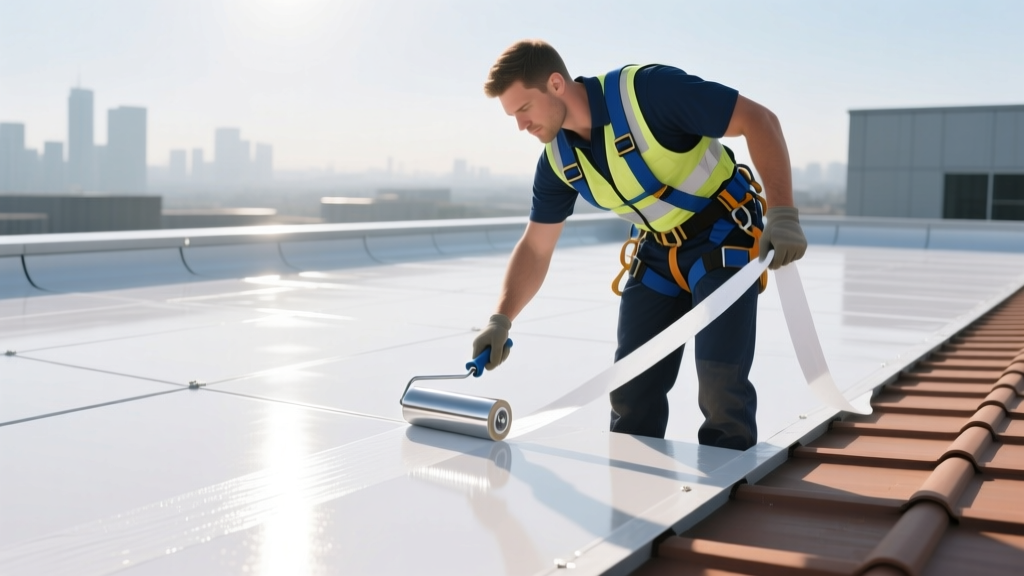
- Roll the Seam: Use a 2-inch steel seam roller. Apply firm, overlapping passes in both directions to ensure molecular bonding and eliminate air pockets.
Puncture Patching
For punctures larger than 1/4 inch, cut a patch from uncured EPDM flashing material that extends at least 3 inches beyond the damage in all directions. Prime both the roof membrane and the patch, allow to flash off, and adhere using the rolling technique described above. Seal the perimeter of the patch with a compatible lap sealant.
TPO and PVC Thermoplastic Repairs: Welding and Plasticizer Loss
Thermoplastic membranes are heat-welded at the seams. While highly reflective and energy-efficient, TPO can suffer from seam delamination if the original weld temperature was incorrect, and older PVC membranes can become brittle as plasticizers migrate out of the material.
Hot Air Welding for Seam Failures
Repairing TPO and PVC requires specialized equipment, such as a Leister Triac S hot air welder. The Single-Ply Roofing Industry (SPRI) mandates strict temperature controls for thermoplastic welding.
- Temperature Settings: TPO typically requires weld temperatures between 1,000°F and 1,150°F. PVC requires slightly lower temperatures, generally 900°F to 1,050°F.
- Preparation: Score the top surface of the bottom membrane and the bottom surface of the top membrane with a scouring pad to remove oxidation and dirt.
- The Weld: Direct the hot air nozzle between the overlapping membranes while applying immediate pressure with a silicone hand roller.
- Verification: Perform a "peel test" on a sacrificial scrap piece welded at the same settings. The membrane should tear (fuzz) before the weld breaks. If the weld peels cleanly, increase the temperature or slow your travel speed.
If you are repairing an older PVC roof (installed prior to 2015), be aware that plasticizer loss makes the membrane brittle. If the PVC cracks when bent at a 90-degree angle, spot repairs will fail. The membrane has reached the end of its serviceable life and requires a full overlay or tear-off.
Modified Bitumen Repairs: Alligatoring and Blistering
Modified bitumen (SBS or APP) is an asphalt-based system. SBS (Styrene-Butadiene-Styrene) is rubber-modified and typically torch-applied or cold-adhered, while APP (Atactic Polypropylene) is plastic-modified and almost exclusively torch-applied.
Addressing Alligatoring and Blisters
Alligatoring (surface cracking resembling alligator skin) indicates the top coating has dried out. If the cracks do not penetrate the reinforcement mat, clean the area with a wire brush, apply a heavy coat of asphalt roof primer, and embed a fiberglass reinforcing fabric into a layer of cold-process roof cement. Top with a second layer of cement and finish with an aluminum or elastomeric reflective coating.
For active leaks at seams, torch-down repairs are most effective for APP systems. Heat the patch material until the asphalt compound flows, then press it into place. Crucial Safety Note: Never use an open torch near EPS (expanded polystyrene) insulation or wood decking without a fire-resistant barrier, as the heat can ignite the substrate below the membrane.
Material Repair Cost and Complexity Matrix
Understanding the financial and technical requirements of repairing different roofing materials for flat roofs helps facility managers budget accurately and decide whether to utilize in-house maintenance teams or hire specialized contractors.
| Membrane Type | Primary Failure Mode | Standard Repair Method | Est. Repair Cost (per sq. ft.) | DIY Viability |
|---|---|---|---|---|
| EPDM | Seam shrinkage, punctures | Butyl tape, liquid rubber sealants | $3.50 - $6.00 | Moderate (Tape repairs) |
| TPO | Seam delamination | Hot air welding, TPO patch tape | $5.00 - $8.50 | Low (Requires welding gear) |
| PVC | Plasticizer loss, cracking | Hot air welding, PVC solvent patches | $6.00 - $9.50 | Low (Requires welding gear) |
| Mod-Bit (SBS/APP) | Alligatoring, blistering | Torch-down, cold-process mastic | $4.00 - $7.50 | Low (Fire hazard, specialized) |
Note: Costs reflect 2026 national averages for professional localized repairs (under 500 sq. ft.) and include labor and materials. Full membrane replacement costs significantly more.
Penetration and Flashing Details: The Weak Links
The field of a flat roof rarely fails before the flashings. Pipe boots, HVAC curbs, and scuppers are subjected to differential movement between the roof deck and the penetrating structure.
Upgrading Pipe Boots
Standard rubber pipe boots degrade rapidly under UV exposure. When repairing a failed pipe boot, do not simply caulk over the crack. Cut away the old boot, clean the pipe, and install a pre-formed, reinforced flashing boot (such as a Tyco or Elevate pipe boot). Secure the base to the roof membrane using the appropriate adhesive or weld, and seal the top collar to the pipe with a high-quality polyurethane sealant and a stainless steel draw-band clamp.
Managing HVAC Curbs
Heavy rooftop units vibrate, breaking the seal at the curb flashing. To repair this, install a flexible, uncured flashing membrane around the base of the curb. This material can be stretched and formed to accommodate the 90-degree angle and will absorb vibration without tearing.
The Preventative Maintenance Protocol
Reactive repairs are exponentially more expensive than proactive maintenance. The Asphalt Roofing Manufacturers Association (ARMA) and other industry bodies recommend a strict bi-annual inspection schedule to maximize the lifespan of flat roof systems.
Bi-Annual Maintenance Checklist
- Spring/Fall Inspections: Walk the entire perimeter and check all flashing terminations for pulling or cracking.
- Drain Clearing: Remove all debris from interior drains, scuppers, and gutters. Ponding water exceeding 48 hours after rainfall accelerates membrane degradation and voids most manufacturer warranties.
- Fastener Check (Mechanically Attached): Inspect a sampling of seam fasteners to ensure they have not backed out or popped through the membrane.
- Infrared Moisture Survey: Every 3 to 5 years, hire a certified thermographer to conduct an infrared scan. This identifies trapped moisture within the insulation layers before it causes structural deck rot or interior leaks.
By matching the exact repair methodology to the specific chemical composition of your roof membrane, and adhering to a rigorous maintenance schedule, facility managers can extend the service life of their flat roof systems by 5 to 10 years, deferring massive capital expenditures on full replacements.
Written by
Priya KapoorPriya Kapoor is a real estate market analyst and construction economics researcher with expertise in housing affordability, development feasibility, and infrastructure investment. She holds a Master of Regional Planning from Cornell University and previously worked as a senior analyst at CBRE's Investment Properties group, where she modeled returns for $4B in mixed-use development pipelines. Priya now runs an independent research practice advising developers, municipalities, and REITs on construction cost forecasting and market timing. She publishes the quarterly "BuildMat Market Pulse" report tracking material price indices across 12 commodity categories. Based in Austin, TX, Priya serves on the board of Habitat for Humanity Austin and is a marathon runner.
More from Priya Kapoor
View all
Construction Cost
Cost to Build a 1600 Sq Ft Home in 2026: Full Breakdown
Accurate 2026 cost to build a 1600 sq ft home—material, labor, and regional pricing breakdowns included. Plan your budget with real-time estimates.
Aug 11, 2026

Wood & Lumber
Name the Types of Wood for Pressure Treatment and Preservation
Learn how to name the types of wood best suited for pressure treatment. Compare species treatability, chemical retention levels, and 2026 preservation costs.
Aug 4, 2026

Stone & Masonry
Stone Veneer Suppliers Lindenhurst: 2026 Cost Analysis
Analyze 2026 stone veneer costs in Lindenhurst, NY. Compare local supplier pricing, delivery fees, and Suffolk County installation labor rates.
Aug 4, 2026