How to Choose the Right Roofing Material for Maximum Lifespan
Learn how to choose the right roofing material based on lifespan, climate durability, and failure modes. Compare asphalt, metal, slate, and tile systems.

The Lifespan vs. Cost Matrix: Rethinking Roofing ROI
When evaluating how to choose the right roofing material, homeowners and commercial developers often fixate on initial installation costs. However, true material selection requires analyzing the annualized cost of ownership over the structure's lifecycle. A $12,000 asphalt roof that requires replacement in 18 years is significantly more expensive over a 50-year horizon than a $35,000 standing seam metal roof that lasts six decades with minimal maintenance.
(Initial Material + Installation Cost + Projected Maintenance) / Expected Lifespan in Years = Annualized Roofing Cost.
Always factor in the structural tear-off costs for subsequent replacements, which typically add $2.50 to $4.00 per square foot to future asphalt or tile installations.
Material Failure Modes: Why Roofs Actually Die
Manufacturer warranties often state 30 or 50 years, but real-world lifespans are dictated by localized environmental stressors. Understanding specific failure modes is critical for matching the material to the building's microclimate.
Thermal Shock and UV Degradation
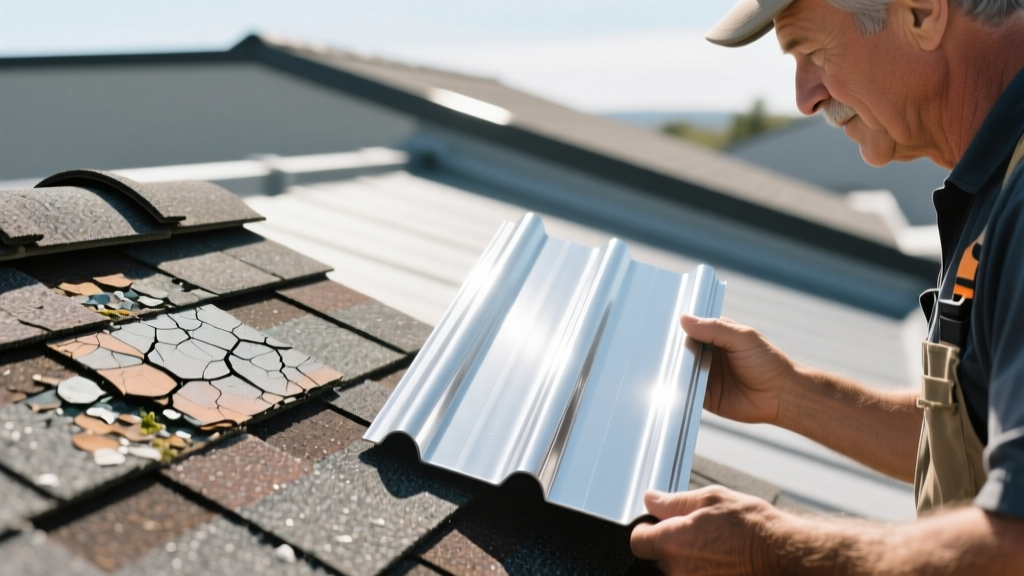
In regions with extreme diurnal temperature swings (e.g., the American Southwest or high-altitude plains), roofing materials expand and contract daily. Clay and concrete tiles are highly susceptible to thermal shock, where rapid cooling after intense heat causes micro-fractures that eventually split the tile. Conversely, UV degradation breaks down the asphalt binders in traditional shingles, causing granule loss and brittle curling. For high-UV environments, specifying materials with high solar reflectance is critical; the EPA's Cool Roofs initiative highlights how reflective coatings can lower roof surface temperatures by up to 50°F, drastically slowing UV-induced polymer breakdown.
Moisture Intrusion and Biological Growth
In humid, coastal, or heavily shaded environments, biological growth is the primary lifespan killer. Gloeocapsa magma (black algae) feeds on the limestone filler in standard asphalt shingles, accelerating granule loss. To combat this, specify shingles with copper- or zinc-infused granules. For wood shakes, the failure mode is almost always fungal decay and moss retention, which traps moisture against the decking. In these climates, switching to a Class A fire-rated composite shake or a coated aluminum panel eliminates the biological food source entirely.
Galvanic Corrosion in Metal Systems
A common catastrophic failure in metal roofing occurs when dissimilar metals are mixed. Using copper flashings or untreated steel fasteners with aluminum or Galvalume panels creates a galvanic cell in the presence of rainwater, leading to rapid, severe corrosion at the seams. Always ensure fasteners, flashings, and panels share compatible metallurgical profiles, or use heavy-duty isolation membranes between them.
Climate-Specific Durability Matrix
Use this decision matrix to align material properties with regional weather extremes.
| Climate Zone | Primary Threat | Optimal Material | Critical Specification |
|---|---|---|---|
| Coastal / Salt Air | Salt spray corrosion | Aluminum or Copper | 0.032-inch minimum thickness; avoid steel entirely |
| High Wind / Hurricane | Uplift and debris impact | Standing Seam Metal | Mechanical lock seams; IBHS Fortified rated |
| Heavy Snow / Alpine | Ice damming, dead load | Slate or Metal | Self-adhering ice/water shield at eaves; snow guards |
| Arid / High UV | Thermal shock, UV baking | Clay Tile or TPO | Grade 1 freeze-thaw rating; high-albedo coatings |
Deep Dive: Top 4 Materials Ranked by Century-Scale Survivability
1. Natural Slate (The 100+ Year Benchmark)
Natural slate is the undisputed champion of roofing longevity, routinely outlasting the structures it protects. However, not all slate is equal. To guarantee a century-long lifespan, you must specify S1 grade slate per ASTM C406 standards, which ensures maximum density and minimal water absorption. S2 and S3 grades will delaminate and spall within 40 to 60 years.
Cost Reality: $25 to $45 per square foot installed.
Edge Case: Slate weighs up to 1,500 lbs per square (100 sq ft). Most standard residential roof trusses cannot support this dead load. Expect to spend an additional $5,000 to $12,000 on structural reinforcement before installation.
2. Standing Seam Metal (The 50-70 Year Workhorse)
For a balance of extreme durability, lightweight properties, and modern aesthetics, standing seam metal is the optimal choice. The secret to its lifespan lies in the concealed fastener system and the metallic coating. Specify 24-gauge Galvalume steel (an aluminum-zinc alloy coating) rather than standard galvanized steel. For the paint finish, demand a Kynar 500 or Hylar 5000 PVDF resin coating, which resists chalking and UV fading for decades.
Cost Reality: $14 to $22 per square foot installed.
Failure Point: Neoprene washers on exposed-fastener (corrugated) metal roofs dry rot and leak after 15 years. Always choose concealed-clip standing seam for true longevity.
3. Clay & Concrete Tile (The 50-75 Year Heavyweight)
Tile roofs are iconic in Mediterranean and Southwestern climates. Concrete tile is cheaper but more porous, requiring periodic sealing to prevent efflorescence and freeze-thaw spalling. Genuine terracotta clay tile is virtually impervious to water and UV radiation.
Cost Reality: $18 to $30 per square foot installed.
Edge Case: While the tile itself may last 75 years, the underlayment beneath it (typically a 30lb felt or synthetic membrane) degrades in 30 to 40 years. Budget for a 'lift and relay' maintenance cycle where tiles are removed, the deck is re-papered, and tiles are reinstalled halfway through the roof's life.
4. Architectural Asphalt Shingles (The 30-Year Compromise)
Asphalt remains the most common roofing material due to its low upfront cost and ease of installation. To maximize lifespan, bypass standard 3-tab shingles entirely. Specify SBS (Styrene-Butadiene-Styrene) modified architectural shingles. SBS polymers give the asphalt a rubber-like elasticity, allowing it to withstand thermal expansion and hail impacts far better than standard oxidized asphalt. Look for a UL 2218 Class 4 impact resistance rating if you are in hail-prone regions.
Cost Reality: $6 to $11 per square foot installed.
Failure Point: Poor attic ventilation. If an attic exceeds 140°F in the summer, it literally bakes the shingles from underneath, cutting a 30-year shingle's life down to 15 years.
Structural Load and Decking Prerequisites
Choosing a durable material is useless if the roof deck cannot support it. Standard 1/2-inch or 5/8-inch OSB or CDX plywood is sufficient for metal and asphalt. However, heavy materials require specific decking upgrades:
- Slate and Clay Tile: Require a minimum of 3/4-inch solid tongue-and-groove wood decking or 1-inch rough-sawn boards. OSB is strictly prohibited due to its tendency to sag under sustained heavy loads.
- Low-Slope Systems (TPO/EPDM): Require high-density polyisocyanurate insulation boards overlaid with a 1/2-inch fiberglass-faced gypsum cover board to prevent puncture from hail or foot traffic during maintenance.
FAQ: Real-World Lifespan Questions
Do 50-year asphalt shingle warranties actually mean the roof lasts 50 years?
No. Manufacturer warranties are heavily prorated and only cover manufacturing defects, not environmental wear, wind damage above specific thresholds, or installation errors. In real-world conditions, even premium SBS-modified architectural shingles rarely exceed 30 to 35 years before requiring full replacement due to granule loss and sealant failure.
Is it safe to install a new metal roof over existing asphalt shingles?
While building codes in some jurisdictions allow overlaying (roofing over), it is highly discouraged for maximizing lifespan. Overlaying traps heat, prevents proper inspection of the roof deck for rot, and makes it impossible to install a high-temperature ice and water shield at the eaves. Always budget for a complete tear-off to ensure the new roof achieves its rated lifespan.
How does roof pitch affect material longevity?
Pitch dictates water shedding speed. Low-slope roofs (under 3:12 pitch) experience water pooling, which accelerates the degradation of asphalt and wood. For low slopes, you must use continuous membrane systems like TPO, EPDM, or soldered standing seam metal. Standard shingles and tiles require a minimum 4:12 pitch to maintain their warranty and expected lifespan.
Written by
Priya KapoorPriya Kapoor is a real estate market analyst and construction economics researcher with expertise in housing affordability, development feasibility, and infrastructure investment. She holds a Master of Regional Planning from Cornell University and previously worked as a senior analyst at CBRE's Investment Properties group, where she modeled returns for $4B in mixed-use development pipelines. Priya now runs an independent research practice advising developers, municipalities, and REITs on construction cost forecasting and market timing. She publishes the quarterly "BuildMat Market Pulse" report tracking material price indices across 12 commodity categories. Based in Austin, TX, Priya serves on the board of Habitat for Humanity Austin and is a marathon runner.
More from Priya Kapoor
View all
Construction Cost
Cost to Build a 1600 Sq Ft Home in 2026: Full Breakdown
Accurate 2026 cost to build a 1600 sq ft home—material, labor, and regional pricing breakdowns included. Plan your budget with real-time estimates.
Aug 11, 2026

Wood & Lumber
Name the Types of Wood for Pressure Treatment and Preservation
Learn how to name the types of wood best suited for pressure treatment. Compare species treatability, chemical retention levels, and 2026 preservation costs.
Aug 4, 2026

Stone & Masonry
Stone Veneer Suppliers Lindenhurst: 2026 Cost Analysis
Analyze 2026 stone veneer costs in Lindenhurst, NY. Compare local supplier pricing, delivery fees, and Suffolk County installation labor rates.
Aug 4, 2026