Matching Different Types of Roof Materials to Your Climate Zone
Discover how to select different types of roof materials based on your climate zone, including SRI ratings, wind uplift specs, and 2026 cost data.

The Science of Climate-Driven Roofing Selection
Choosing the right roofing system is not a one-size-fits-all decision. The physical degradation of roofing membranes, shingles, and panels is directly accelerated by localized environmental stressors. When evaluating different types of roof materials, contractors and homeowners must account for thermal shock, ultraviolet (UV) radiation, freeze-thaw cycles, and wind uplift. A material that yields a 40-year lifespan in the Pacific Northwest may fail in 15 years in the Sonoran Desert due to UV embrittlement and thermal expansion.
The core metrics for climate-specific selection include the Solar Reflectance Index (SRI), impact resistance ratings (UL 2218), and wind uplift classifications (ASTM D3161). According to the U.S. Department of Energy, optimizing these metrics for your specific climate zone can reduce peak cooling demand by up to 15% while preventing catastrophic structural failures during extreme weather events.
Before selecting materials, review the Insurance Institute for Business & Home Safety (IBHS) FORTIFIED Roof guidelines. Achieving FORTIFIED certification often requires specific nailing patterns, sealed roof decks, and specialized edge metal detailing that supersede basic manufacturer instructions.
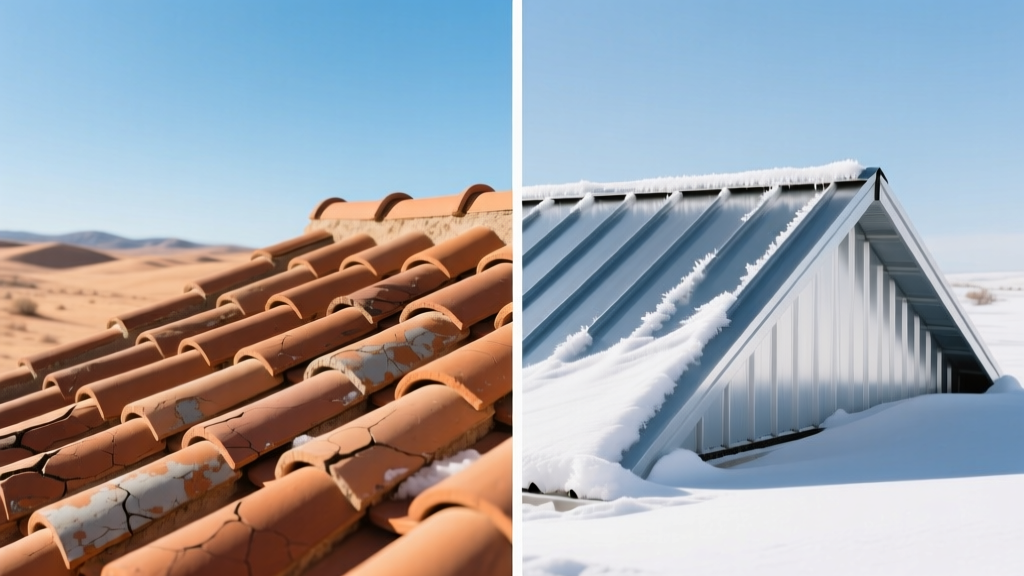
Hot and Arid Climates (Zones 1-3): Beating Solar Gain
In regions characterized by intense solar radiation and high ambient temperatures, the primary enemy is UV degradation and thermal shock. Standard dark asphalt shingles can reach surface temperatures of 160°F (71°C), baking the underlying decking and accelerating asphalt volatilization.
Optimal Materials for High-Heat Zones
- Cool Asphalt Shingles: Products like the GAF Timberline HDZ Reflector Series or CertainTeed Landmark Solaris utilize specialized solar-reflective granules. Look for an SRI of 50 or higher, as rated by the Cool Roof Rating Council (CRRC).
- Clay and Concrete Tile: Brands like Boral Roofing offer terracotta and concrete profiles that create a natural thermal break. The air channel between the tile and the decking allows convective cooling, reducing heat transfer into the attic by up to 40%.
- TPO and PVC Membranes (Flat/Low-Slope): For commercial or modern residential flat roofs, 60-mil or 80-mil white TPO (Thermoplastic Polyolefin) reflects up to 85% of solar energy.
In arid climates, traditional asphalt-saturated felt (#15 or #30) dries out, cracks, and loses its secondary water barrier properties. Always specify a high-temperature synthetic underlayment, such as Tyvek Protec 120 or GAF FeltBuster, which can withstand surface temperatures exceeding 240°F without degrading.
Cold and Snow-Heavy Climates (Zones 5-8): Shedding Load and Ice Dams
Northern climates demand materials that facilitate snow shedding while resisting the destructive forces of ice dams and freeze-thaw cycling. The weight of snow can exceed 20 pounds per square foot (psf), and ice dams can force meltwater backward under the roofing material.
Optimal Materials for Cold Zones
- Standing Seam Metal Roofing: Systems with a 2/12 pitch or greater, such as those from ATAS International or Petersen, allow snow to slide off cleanly. Concealed fastener systems eliminate the primary entry points for wind-driven snow.
- Impact-Resistant Architectural Shingles: Hail and falling ice require shingles with a UL 2218 Class 4 impact rating. Malarkey Vista and Owens Corning Duration Flex utilize rubberized SBS-modified asphalt that remains pliable in sub-zero temperatures, preventing the brittle fracturing seen in standard shingles.
- Natural Slate: While heavy, high-grade slate (like Buckingham Slate) is virtually impervious to freeze-thaw damage, provided it meets ASTM C406 standards for absorption (less than 0.25%).
Crucial Detailing: In Zones 5 and above, building codes typically mandate a self-adhering modified bitumen ice and water shield (e.g., Grace Ice & Water Shield HT) extending at least 24 inches past the interior warm wall line. In severe snow regions, extending this membrane to cover the entire roof deck (a "sealed deck" approach) is highly recommended.
Coastal and High-Wind Zones: Surviving Uplift and Salt Spray
Properties within the High-Velocity Hurricane Zone (HVHZ), particularly in Florida and the Gulf Coast, face extreme wind uplift and corrosive salt aerosols. Material selection here is heavily regulated by Miami-Dade County Notices of Acceptance (NOA).
Optimal Materials for Coastal Zones
- Mechanically Fastened Concrete Tile: Unlike mortar-set tiles, coastal installations require concrete tiles (e.g., Eagle Roofing Products) to be secured using corrosion-resistant stainless steel screws and structural foam adhesives to withstand 150+ mph winds.
- Heavy-Gauge Metal Panels: 24-gauge or 22-gauge galvalume steel panels with a Kynar 500 paint finish resist salt corrosion. Panels must feature a concealed-clip system tested to ASTM E1592 for structural wind uplift.
- Modified Bitumen: For low-slope coastal homes, SBS-modified bitumen cap sheets with granular surfaces offer superior puncture resistance from wind-blown debris compared to single-ply membranes.
Mixed-Humid Climates (Zone 4): The Moisture Balancing Act
The transition zone (spanning from the Mid-Atlantic through the Midwest) experiences hot, humid summers and freezing winters. The primary threat here is biological growth (algae and moss) combined with moderate thermal cycling.
- Algae-Resistant Shingles: Specify shingles infused with copper or zinc-coated granules. Owens Corning Duration with StreakGuard technology releases trace amounts of copper when wet, preventing the black streaks caused by Gloeocapsa magma algae.
- Synthetic Polymer Slate: Products like DaVinci Roofscapes offer the aesthetic of slate without the moisture-absorption risks. They are completely impervious to water, preventing the spalling and delamination that natural stone can suffer in mixed freeze-thaw environments.
Material Performance Matrix by Climate Zone
| Climate Zone | Primary Threat | Best Material | Crucial Spec/Rating | Avg Installed Cost (2026) |
|---|---|---|---|---|
| Hot/Arid (1-3) | UV Degradation, Heat | Clay Tile / Cool Shingles | SRI > 50 | $8.50 - $22.00 / sq ft |
| Cold/Snow (5-8) | Ice Dams, Freeze-Thaw | Standing Seam Metal | Sealed Deck, UL 2218 Class 4 | $14.00 - $20.00 / sq ft |
| Coastal/HVHZ | Wind Uplift, Salt | Mechanically Fastened Tile | Miami-Dade NOA, ASTM E1592 | $16.00 - $26.00 / sq ft |
| Mixed-Humid (4) | Algae, Thermal Cycling | Algae-Resistant Asphalt | Copper-infused granules | $5.50 - $8.50 / sq ft |
Cost Implications and Lifespan Adjustments by Region
When calculating the return on investment for different types of roof materials, you must adjust the manufacturer's stated lifespan based on regional climate stressors. A 30-year architectural shingle warranty assumes ideal, temperate conditions.
- Desert Degradation: In Phoenix or Las Vegas, expect a standard 30-year asphalt shingle to last only 15 to 18 years due to continuous UV exposure and thermal expansion. Upgrading to a metal roof (50+ year lifespan) yields a better lifecycle cost despite the higher initial investment.
- Coastal Corrosion: Standard galvanized steel fasteners and flashings will rust within 5 years in a salt-air environment. Always specify 316 stainless steel or hot-dipped galvanized hardware, which adds roughly $0.50 to $1.00 per square foot to the total project cost but prevents premature system failure.
- Insurance Premiums: In hail-prone regions (Texas, Colorado, Nebraska), installing a UL 2218 Class 4 impact-resistant roof can reduce homeowners insurance premiums by 15% to 25%. This discount often recoups the 15% material upcharge for Class 4 shingles within three to four years.
Frequently Asked Questions
Can I install a dark roof in a hot climate if I add more attic insulation?
While increasing attic insulation (e.g., upgrading to R-60 blown-in cellulose) reduces heat transfer into the living space, it does not protect the roofing material itself. A dark roof in a hot climate will still experience accelerated asphalt aging and extreme thermal expansion of the roof deck, leading to premature fastener popping and membrane failure.
Are solar panels compatible with all climate-specific roofing materials?
Solar PV arrays can be mounted on most materials, but the attachment method varies. Standing seam metal roofs allow for clamp-on attachments (like S-5! clamps) that require zero roof penetrations, making them the gold standard for solar integration in high-wind and snow zones. Tile roofs require specialized flashing hooks that replace individual tiles, which increases installation time and labor costs.
Written by
Marcus ChenMarcus Chen is a licensed structural engineer (PE) and building materials analyst with over 12 years of experience across residential, commercial, and industrial construction. He holds a Master of Science in Civil Engineering from UC Berkeley and spent six years at Thornton Tomasetti before transitioning to independent consulting and technical writing. Marcus specializes in material selection for seismic-prone regions, concrete reinforcement strategies, and lifecycle cost analysis. His work has been cited by the American Concrete Institute (ACI) and the Structural Engineers Association of California (SEAOC). When he is not on a job site or at his desk, you will find him hiking the Sierra Nevada or restoring a 1920s craftsman bungalow in Oakland, CA.
More from Marcus Chen
View all
Construction Cost
How Much Did the Eiffel Tower Cost to Build?
How much did the Eiffel Tower cost to build in 1889? We adjust for inflation and compare its budget to modern skyscraper construction.
Aug 4, 2026

Fire Resistance
What Is a Fire Resistant Material? Testing & Certification Guide
Discover what is a fire resistant material through ASTM and UL testing. Learn how fire ratings, certifications, and assemblies work in construction.
Aug 4, 2026

Construction Cost
How Much Did the Burj Khalifa Cost to Build?
How much did the Burj Khalifa cost to build? We break down the $1.5B project and extract 5 money-saving strategies for your next build.
Jul 30, 2026