Class 4 Shingles Durability: Lifespan and Impact Analysis
Discover the true lifespan and durability of Class 4 shingles. We analyze impact resistance, real-world weathering, and long-term ROI for your roof.
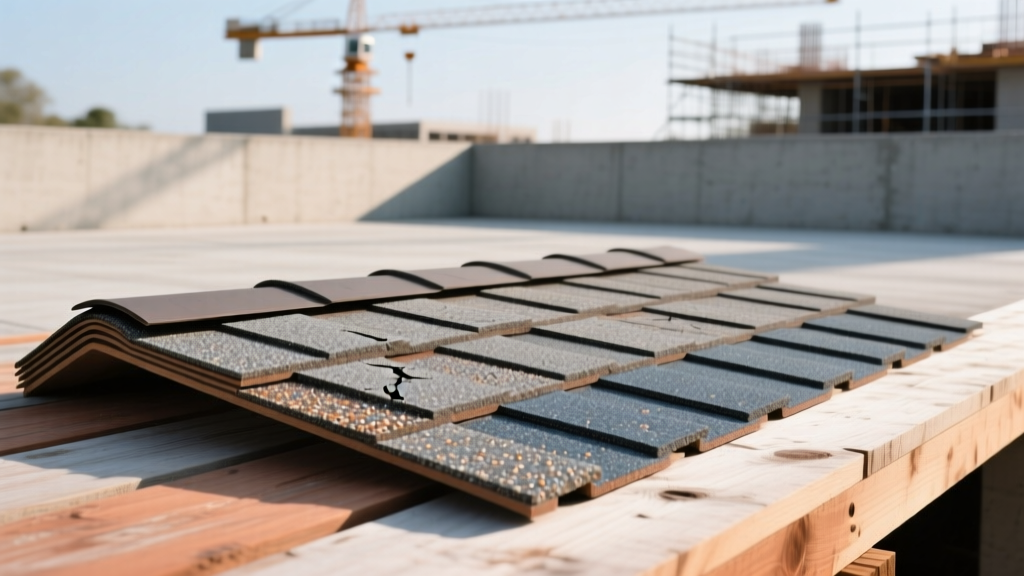
The Physics of UL 2218: Beyond the Marketing
The term 'Class 4' is not a marketing buzzword; it is the highest rating in the Underwriters Laboratories (UL) 2218 Impact Resistance standard. To achieve this rating, a shingle must withstand the impact of a 2-inch steel ball dropped from a height of 20 feet, repeated twice on the same spot, without exhibiting any tearing, fracturing, cracking, or splitting of the fiberglass mat.
A 2-inch steel ball weighs approximately 1.18 lbs (0.535 kg). Dropped from 20 feet, it strikes the shingle at roughly 24 mph, delivering about 31.8 Joules of kinetic energy. This specific threshold simulates the terminal velocity impact of a 2.5-inch hailstone—the exact size at which standard asphalt shingles begin to suffer catastrophic granule loss and mat fractures.
While standard architectural shingles typically fail at Class 2 or Class 3 thresholds, Class 4 shingles are engineered to absorb and dissipate this 31.8 Joule shockwave. However, the true measure of a Class 4 shingle's durability is not just its initial impact resistance, but how its material composition holds up over decades of thermal cycling and UV exposure.
Material Science: SBS Modified vs. Oxidized Asphalt
The secret to Class 4 durability lies in the asphalt binder chemistry. Standard shingles use oxidized asphalt, which is blown with air to harden it for roofing applications. While this makes the shingle rigid and fire-resistant, it also makes the material highly brittle, especially in cold weather (exactly when severe hail storms frequently occur).
True Class 4 shingles utilize Styrene-Butadiene-Styrene (SBS) polymer modification. SBS is a rubber-like block copolymer that creates a 3D elastic network within the asphalt binder. This chemical alteration yields critical durability advantages:
- Elongation at Break: Standard oxidized asphalt shingles have an elongation at break of less than 5%. SBS-modified Class 4 shingles boast an elongation of 30% to 40%, allowing the shingle to deform elastically around a hailstone and rebound without snapping the internal fiberglass mat.
- Cold-Weather Flexibility: Oxidized asphalt becomes rigid below 40°F. SBS-modified shingles maintain their rubbery flexibility down to -20°F, ensuring impact resistance during early spring or late autumn hail events when roof surface temperatures are near freezing.
- Self-Sealing Adhesion: The polymer-modified asphalt creates a stronger, more pliable sealant strip that resists wind-uplift fatigue over the lifespan of the roof.
Real-World Lifespan and Degradation Matrix
While manufacturers often stamp 'Lifetime' or '50-Year' warranties on premium shingles, the functional lifespan—defined as the period before significant granule loss or sealant failure requires replacement—varies drastically by material grade and climate zone.
| Shingle Type | Expected Functional Lifespan | Hail Survival Rate (2.5" Stone) | Primary Degradation Mode |
|---|---|---|---|
| Standard 3-Tab | 12 - 15 Years | < 10% | Mat fracture, wind tearing |
| Standard Architectural | 18 - 22 Years | 20% - 35% | Granule loss, UV cracking |
| Class 4 SBS Modified | 25 - 30+ Years | 85% - 95% | Long-term UV polymer weeping |
| Synthetic Polymer | 40 - 50 Years | 99% | Fading, thermal expansion |
Top Tier Class 4 Models: Technical Breakdown
Not all Class 4 shingles are engineered identically. The integration of the impact-resistant technology dictates both the cost and the long-term wind uplift resistance.
CertainTeed Landmark™ IR
This shingle utilizes a proprietary polymer mesh embedded within the SBS-modified asphalt layers. The mesh acts as a shock absorber, distributing the kinetic energy of a hail strike laterally across the shingle rather than allowing it to concentrate on the fiberglass mat. It carries a 130 mph wind warranty and features dual-layer sealant strips for enhanced coastal durability.
Owens Corning Duration® Storm
Instead of a full-mesh backing, Owens Corning employs SureNail® Technology—a woven fabric strip embedded directly into the nailing zone. While the SBS asphalt provides the Class 4 impact resistance, the SureNail fabric prevents the most common failure mode in high-wind zones: nail pull-through. When the shingle flexes during a storm, the fabric grips the nail shaft, maintaining structural integrity.
Malarkey Vista® AR
Malarkey approaches durability through environmental integration. The Vista AR uses a heavy SBS polymer blend for Class 4 impact resistance but distinguishes itself with 3M™ Smog-Reducing Granules. These granules utilize photocatalysis to break down atmospheric nitrogen oxides. From a durability standpoint, Malarkey's polymer blend is slightly softer at high ambient temperatures, requiring careful installation timing in extreme southern climates to prevent scuffing.
Hidden Failure Modes in Impact-Resistant Systems
While Class 4 shingles excel at surviving direct hail impacts, their unique material properties introduce specific edge-case failure modes that roofing contractors must manage.
Because SBS-modified shingles are highly elastic, they deform and rebound when struck by hail or subjected to high wind uplift. If a roofing nail is over-driven (driven too deep, crushing the shingle) or under-driven (proud of the surface), the shingle's elastic rebound can essentially 'pump' the shingle up the nail shaft over hundreds of thermal and impact cycles. This leads to a loss of wind uplift resistance, causing the shingle to tear at the nail hole years after the storm has passed.
Thermal Shock and Granule Adhesion
In desert climates (e.g., Arizona, Nevada), roof surfaces can reach 160°F during the day and drop to 70°F at night. This extreme thermal cycling causes the SBS polymer to expand and contract rapidly. Over a 20-year period, this can lead to 'polymer weeping,' where the oils in the modified asphalt migrate to the surface, slightly softening the asphalt and reducing the adhesion of the ceramic granules. While the mat remains intact, premature granule loss in these specific microclimates can reduce the functional lifespan by 15%.
Financial ROI: Upfront Premium vs. Insurance Discounts
The primary barrier to Class 4 shingles is the upfront material premium. However, in hail-prone regions, the return on investment is realized through homeowners insurance premium discounts. According to the Insurance Information Institute, hail and wind claims account for the highest frequency of property damage payouts in the central United States.
| Financial Metric | Standard Architectural | Class 4 SBS Modified |
|---|---|---|
| Material Cost (per sq. ft.) | $1.20 - $1.60 | $1.85 - $2.60 |
| Installed Cost (2,500 sq ft roof) | $11,250 - $15,000 | $14,500 - $19,500 |
| Upfront Premium | N/A | $3,250 - $4,500 |
| Avg. Annual Insurance Discount (TX/CO/OK) | $0 | $350 - $650 (15% - 28% on Wind/Hail) |
| Payback Period | N/A | 6.5 to 11 Years |
For a homeowner in Dallas, Texas, paying $3,200 annually for homeowners insurance, a 25% discount on the wind/hail portion of the policy yields roughly $550 in annual savings. Over a 25-year lifespan, this equates to $13,750 in saved premiums, easily eclipsing the $4,000 installation premium.
Geographic Decision Framework: Is Class 4 Worth It?
Specifying Class 4 shingles on a home in Seattle or Miami is generally an inefficient allocation of capital, as the primary threats in those regions are moisture and hurricane-force wind, respectively (where synthetic or specialized wind-rated systems are superior). Class 4 is specifically engineered for the 'Hail Alley' corridor.
- Zone 1: High Hail Frequency (Texas, Oklahoma, Colorado, Nebraska, South Dakota). Verdict: Mandatory. The Insurance Institute for Business & Home Safety (IBHS) strongly recommends Class 4 impact resistance or FORTIFIED Roof standards in these states. The insurance discounts alone justify the cost, and the likelihood of a total roof replacement due to a single storm is mitigated.
- Zone 2: Moderate Hail / High Wind (Midwest, Southeast). Verdict: Conditional. If the home is in a heavily wooded area where falling branches are a primary threat, the impact resistance of SBS shingles provides excellent secondary protection against blunt-force punctures from deadwood.
- Zone 3: Low Hail / Coastal (Pacific Northwest, Eastern Seaboard). Verdict: Skip. Reallocate the Class 4 material premium toward upgraded synthetic underlayment, ice and water shields, or enhanced wind-mitigation fastening patterns (e.g., 6-nail per shingle application).
When requesting quotes for Class 4 shingles, explicitly require the contractor to use a minimum 11-gauge, 1.25-inch hot-dipped galvanized roofing nail. Standard electro-galvanized nails will corrode and lose their holding power long before the SBS-modified shingle reaches the end of its functional lifespan, rendering the impact-resistant investment void.