Roofing Material Cost Comparison: 2026 Price Guide
Compare 2026 roofing material costs for asphalt, metal, tile, and slate. Get exact per-square-foot pricing, lifespan data, and ROI breakdowns.

The 2026 Roofing Material Cost Matrix
Evaluating a roof replacement requires looking past the initial sticker price to understand the true lifecycle cost. In 2026, material pricing has stabilized following the supply chain fluctuations of the early 2020s, but labor rates and structural requirements continue to dictate final project totals. Roofing contractors measure materials in "squares" (one square equals 100 square feet). The matrix below breaks down the baseline material and fully installed costs per square for the most common residential systems.
| Material Type | Material Cost (Per Square) | Installed Cost (Per Square) | Expected Lifespan | Weight per Square |
|---|---|---|---|---|
| 3-Tab Asphalt | $90 - $130 | $350 - $450 | 15 - 20 Years | 200 - 250 lbs |
| Architectural Asphalt | $150 - $250 | $500 - $750 | 25 - 35 Years | 250 - 350 lbs |
| Exposed-Fastener Metal | $300 - $500 | $700 - $1,000 | 30 - 45 Years | 50 - 100 lbs |
| Standing Seam Metal | $600 - $1,000 | $1,200 - $1,800 | 50+ Years | 50 - 100 lbs |
| Concrete Tile | $400 - $600 | $800 - $1,200 | 40 - 50 Years | 900 - 1,100 lbs |
| Clay Tile | $800 - $1,400 | $1,500 - $2,500 | 75 - 100 Years | 1,000 - 1,200 lbs |
| Natural Slate | $1,200 - $2,500 | $2,500 - $4,000+ | 100+ Years | 800 - 1,500 lbs |
Note: Installed costs assume a standard single-story home with a 4/12 to 6/12 pitch. Complex rooflines, steep pitches (8/12+), and multi-story access will increase labor costs by 15% to 40%.
Asphalt Shingles: The Baseline Standard
Asphalt shingles cover approximately 75% of residential roofs in North America due to their low upfront cost and straightforward installation. However, not all asphalt is created equal. The market is strictly divided between basic 3-tab shingles and premium architectural (dimensional) shingles.
3-Tab vs. Architectural Pricing and Performance
Standard 3-tab shingles (like GAF Royal Sovereign) are flat, single-layer products. While they sit at the lowest tier of the roofing material cost spectrum ($350-$450 installed per square), they offer minimal wind resistance (typically rated for 60 mph) and a shorter lifespan. They are best reserved for budget-constrained flips, shed roofs, or regions with mild weather.
Architectural shingles, such as GAF Timberline UHDZ or Owens Corning Duration, feature a multi-layered laminate construction that mimics the shadow lines of wood shakes. Priced between $500 and $750 per square installed, they offer vastly superior performance. Most premium architectural lines carry a 130 mph wind warranty (ASTM D3161 Class F) and feature algae-resistant copper-infused granules. For an average 2,000-square-foot roof (20 squares), upgrading from 3-tab to architectural shingles adds roughly $3,000 to $5,000 to the total project cost, but yields a significantly higher return on investment at resale.
Metal Roofing: Premium Upfront, Maximum ROI
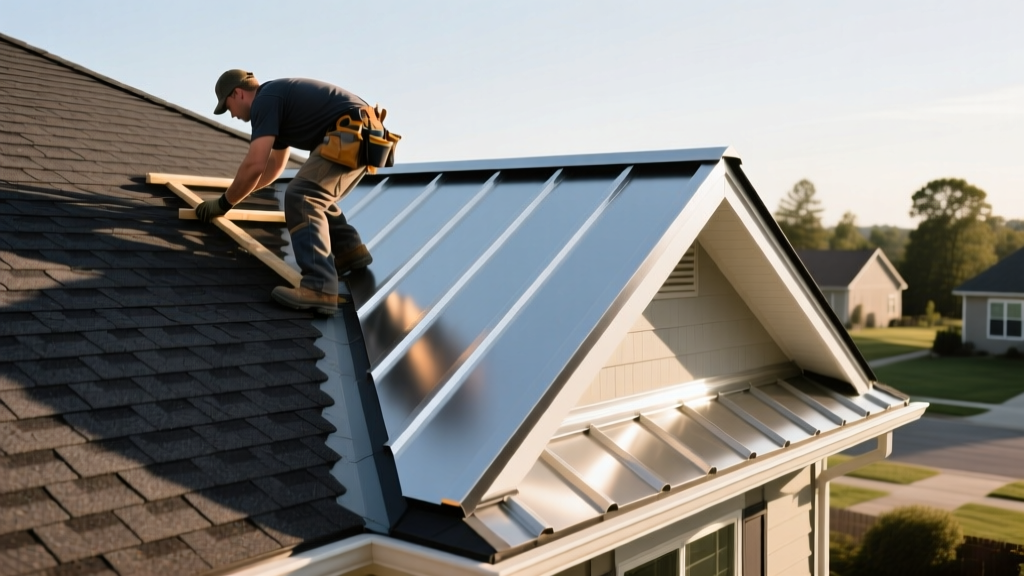
Metal roofing has seen a massive surge in market share, driven by its longevity and energy efficiency. When analyzing metal roofing material costs, it is critical to distinguish between exposed-fastener systems and concealed-fastener (standing seam) systems.
Expert Insight: The Fastener Failure Point
Exposed-fastener metal roofs (often 29-gauge corrugated panels) are cheaper ($700-$1,000 per square installed) because they require less specialized labor. However, the neoprene washers on the exposed screws degrade under UV exposure after 15-20 years, leading to leaks. Standing seam roofs (typically 24-gauge Galvalume) use concealed clips that allow the metal to expand and contract thermally without compromising the waterproof seal. Always specify 24-gauge or thicker for standing seam to prevent oil-canning (visible rippling).
According to the Metal Roofing Alliance, a properly installed standing seam metal roof will easily outlast the building's original siding and windows. While the installed cost of $1,200 to $1,800 per square is high, the elimination of tear-off costs in future decades (metal can often be installed over existing single-layer roofs, subject to local building codes) alters the long-term financial equation.
Tile and Slate: Heavy-Duty Longevity and Structural Reality
Clay, concrete, and slate represent the premium tier of roofing. These materials offer unmatched lifespans—often exceeding 75 to 100 years—but their roofing material cost is only half the financial story. The hidden expense lies in structural engineering.
The Structural Retrofit Multiplier
Standard asphalt shingles weigh roughly 250 pounds per square. Concrete and clay tiles weigh between 900 and 1,200 pounds per square. If you are retrofitting an existing home originally built for asphalt, the roof trusses and load-bearing walls must be reinforced. This structural reinforcement typically adds $1,500 to $4,000 to the total project cost, depending on the home's square footage and engineering requirements.
For new construction, specifying tile or slate during the architectural phase allows engineers to size the trusses correctly, avoiding retrofit costs. When selecting tile, brands like Ludowici (clay) and Eagle Roofing (concrete) offer varied profiles. Slate alternatives, such as DaVinci Roofscapes synthetic polymer slate, provide the aesthetic of natural Buckingham slate at roughly half the weight and a 40% reduction in installed labor costs.
Hidden Cost Variables That Break Budgets
Homeowners frequently receive estimates that only account for the visible roofing material. To accurately forecast your total roofing material cost, you must factor in the critical underlayment and accessory components. According to Angi's national roofing cost data, the following variables routinely inflate final invoices:
- Decking Replacement: Once the old roof is torn off, compromised OSB or plywood decking must be replaced. Budget $70 to $110 per 4x8 sheet of CDX plywood or AdvanTech OSB. On an older home, expect to replace 10% to 20% of the decking.
- Ice and Water Shield: Building codes in northern climates mandate self-adhering membrane (e.g., Grace Ice & Water Shield) in valleys, eaves, and around penetrations. This material costs $1.50 to $2.50 per square foot, significantly more than standard synthetic underlayment ($0.15 to $0.25 per square foot).
- Tear-Off and Disposal: Removing an existing roof costs $100 to $150 per square. If the home has two or three layers of existing shingles, disposal fees and labor time will multiply accordingly.
- Flashing and Drip Edge: Upgrading from basic galvanized steel flashing to 24-gauge aluminum or copper flashing prevents rust streaks and extends the life of the transitions. Copper flashing adds roughly $15 to $25 per linear foot.
Decision Framework: Matching Material to Scenario
Selecting the right roof requires aligning the material's lifecycle with your ownership timeline and structural constraints. Use this framework to guide your specification:
- The Short-Term Owner (0-7 Years): Choose premium architectural asphalt shingles (e.g., Owens Corning Duration). The $500-$750 per square installed cost provides excellent curb appeal and a strong transferable warranty for the next buyer, without overcapitalizing the property.
- The Forever Home (15+ Years): Invest in 24-gauge standing seam metal. The $1,200-$1,800 per square cost is offset by zero maintenance, extreme weather resistance, and the elimination of a second roof replacement later in life.
- The Historic or High-End Custom Build: Specify natural slate or high-end clay tile. Ensure the structural engineer designs the trusses for a 1,200 lb/square dead load from day one. Factor in specialized copper flashing and slate hooks to maintain the integrity of the century-long lifespan.
For comprehensive technical standards regarding wind uplift and material testing, always verify that your selected products meet the current guidelines established by the National Roofing Contractors Association (NRCA) and carry appropriate UL or FM Global certifications for your specific climate zone.
Written by
James ThorntonJames Thornton is a construction industry veteran with 25 years of hands-on experience in wood framing, lumber grading, and residential building codes. He started as a framing carpenter in rural Oregon, earned his ICC Residential Building Inspector certification, and eventually became a senior plan reviewer for the City of Portland Bureau of Development Services. James holds a B.S. in Wood Science & Technology from Oregon State University and is a certified lumber grader through the West Coast Lumber Inspection Bureau (WCLIB). He has inspected over 3,000 residential construction sites and authored the city's internal guide on advanced framing techniques (2x6 at 24" O.C.). James lives in Bend, OR, where he builds custom timber-frame cabins and competes in lumberjack sports.
More from James Thornton
View all
Insulation
Best Home Insulation Materials: Complete 2026 Guide
Compare top home insulation materials for 2026. Find R-values, installed costs per square foot, and best uses for fiberglass, spray foam, and mineral wool.
Aug 4, 2026

Sustainable Building
Certify Your Green Building Material for LEED and WELL
Step-by-step guide to certifying a green building material for LEED v5 and WELL v2. Master EPDs, HPDs, and VOC limits for 2026 project specifications.
Aug 4, 2026

Stone & Masonry
Veneer Stacked Stone Panels: Interior Design & Style Showcase
Discover how veneer stacked stone panels transform interiors. Explore modern design profiles, material pairings, and technical installation specs.
Aug 4, 2026