Best Asphalt Shingles Roof Materials: Types, Costs & Lifespans
Compare top asphalt shingles roof materials. Explore 3-tab, architectural, and luxury shingle costs, lifespans, and leading brand models.
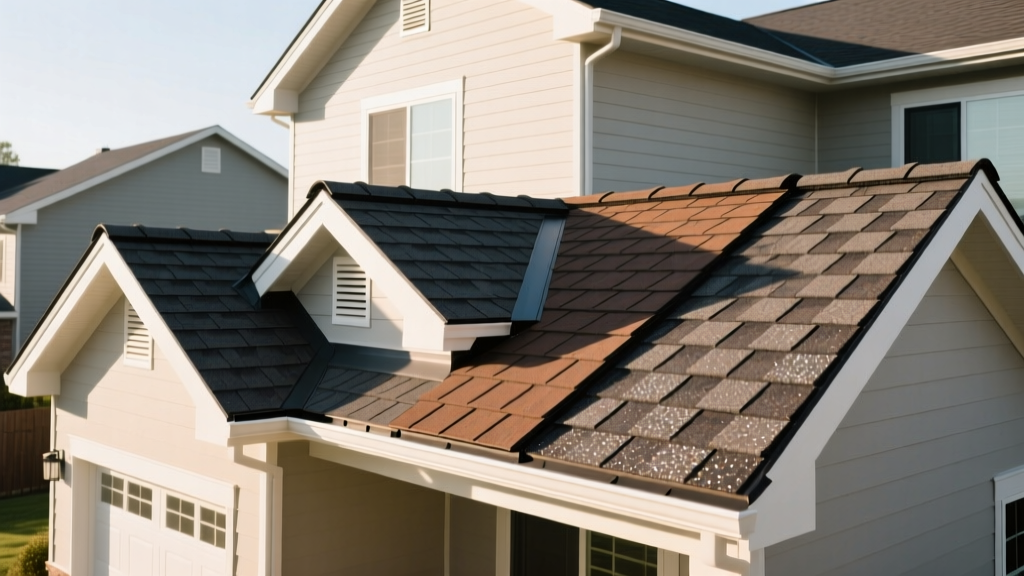
The Hierarchy of Asphalt Shingles Roof Materials
Asphalt shingles dominate the North American residential roofing market, accounting for over 70% of all steep-slope installations. However, treating all asphalt shingles as a single category is a critical procurement error. Modern asphalt shingles roof materials are engineered with distinct fiberglass mat thicknesses, asphalt coatings, and ceramic granule formulations that dictate their wind uplift resistance, impact ratings, and thermal longevity. Understanding the structural differences between the three primary tiers is essential for accurate life-cycle cost analysis.
3-Tab Shingles: The Budget Baseline
Often referred to as strip shingles, 3-tab shingles are manufactured from a single layer of fiberglass-reinforced asphalt with cutouts (tabs) along the lower edge to simulate separate pieces. While they offer the lowest upfront material cost, their flat profile provides minimal dimensional stability. In 2026, 3-tab shingles are largely relegated to budget-conscious flips, detached garages, or regions with strict historical overlay requirements where thicker profiles are prohibited. They typically carry a 60 mph wind warranty and a 20- to 25-year prorated manufacturer warranty.
Architectural (Dimensional) Shingles: The Industry Standard
Architectural shingles feature a laminated construction, bonding two or more layers of asphalt-coated fiberglass mat to create a contoured, three-dimensional profile. This added mass significantly improves wind resistance and thermal mass. Premium architectural lines incorporate proprietary nailing zones—such as GAF’s StrikeZone or Owens Corning’s SureNail—which widen the target area for pneumatic nail guns, drastically reducing installation errors and blow-offs. Standard architectural shingles routinely achieve 110 mph to 130 mph wind ratings when installed with a 6-nail high-wind pattern.
Luxury (Premium) Shingles: The Slate Alternative
Luxury shingles are ultra-thick, multi-layered laminates designed to replicate the shadow lines and heavy profile of natural slate or hand-split cedar shakes. Weighing up to 450 lbs per square (compared to 240 lbs for 3-tab), they require robust roof decking and structural verification. These materials often feature enhanced algae-resistant copper-infused granules and Class 4 impact resistance ratings (UL 2218), making them ideal for hail-prone regions.
Cost Breakdown and Material Specifications
Material costs fluctuate based on petroleum pricing and regional supply chain dynamics. The following table outlines the 2026 baseline material costs per square (100 square feet), excluding labor, underlayment, and flashing.
| Shingle Type | Material Cost / Sq | Bundles / Sq | Weight / Sq | Expected Lifespan | Standard Wind Rating |
|---|---|---|---|---|---|
| 3-Tab Strip | $90 - $115 | 3 | ~240 lbs | 15 - 20 Years | 60 mph |
| Architectural | $120 - $165 | 3 - 4 | ~300 lbs | 25 - 35 Years | 110 - 130 mph |
| Luxury / Premium | $210 - $380 | 4 - 5 | ~450+ lbs | 40 - 50 Years | 110 mph |
Top Brand Models and Wind Resistance Matrix
When specifying asphalt shingles roof materials, the exact model line dictates the warranty coverage and available accessory integrations. Below is a comparison of the leading architectural models dominating the current market.
- GAF Timberline HDZ: Features a proprietary LayerLock technology and StrikeZone nailing area (99.9% nail capture rate). Qualifies for the WindProven limited wind warranty with no maximum wind speed limit when installed with 4 GAF accessories.
- Owens Corning Duration: Utilizes SureNail Technology, embedding a woven fabric strip into the nailing line to prevent nail pull-through during extreme thermal cycling and high-wind uplift events.
- CertainTeed Landmark PRO: Offers a heavier base mat and Max Def color blends. Includes StreakFighter algae resistance backed by a 15-year warranty, crucial for humid, shaded environments.
Manufacturer wind warranties (e.g., 130 mph) are strictly conditional. They require a 6-nail fastening pattern per shingle, specific starter strip integration, and the use of the manufacturer’s proprietary ridge cap shingles. Using generic ridge caps or a 4-nail pattern in high-velocity hurricane zones (HVHZ) will immediately void the uplift warranty.
Critical Installation Variables: Nailing and Underlayment
The performance of asphalt shingles roof materials is entirely dependent on the concealed roofing system components beneath them.
Fastener Specifications
Always specify 11-gauge or 12-gauge galvanized steel roofing nails with a minimum 3/8-inch diameter head. Never use ring-shank nails for asphalt shingles. While ring-shank nails provide superior withdrawal resistance for roof decking, their ridges can tear the delicate fiberglass mat of the shingle during thermal expansion and contraction cycles, leading to premature tearing and blow-offs. Nail length must penetrate through the roof decking (typically 5/8" or 3/4" OSB/plywood) by at least 3/4 of an inch.
Synthetic vs. Felt Underlayment
Traditional #15 or #30 asphalt-saturated felt is rapidly being replaced by woven polypropylene synthetic underlayments (e.g., TigerPaw, Deck-Armor). Synthetics offer superior tear resistance, do not absorb moisture and wrinkle (which causes shingle telegraphing), and provide a safer, higher-traction walking surface for installers. According to the Asphalt Roofing Manufacturers Association (ARMA), synthetic underlayments are now the recommended baseline for all architectural shingle installations.
Climate-Specific Selection Framework
Selecting the right asphalt shingles roof materials requires adapting to local meteorological stressors.
High-Wind and Coastal Zones
In hurricane-prone regions, adhere to the IBHS FORTIFIED Home standards. This requires a sealed roof deck (applying a self-adhering polymer-modified bitumen membrane or fully adhered synthetic over the entire deck) before installing the shingles. This prevents water intrusion even if the asphalt shingles are completely stripped during a Category 3+ storm surge or wind event.
High-Heat and High-UV Environments
In the Southwest and deep South, thermal shock is the primary degradation factor. Specify cool-roof asphalt shingles featuring highly reflective ceramic granules. The U.S. Department of Energy notes that cool roofs can reduce peak cooling demand by 10-15%. Look for products rated by the Cool Roof Rating Council (CRRC) with a Solar Reflectance Index (SRI) of 16 or higher for steep-slope applications to comply with regional energy codes like California’s Title 24.
Heavy Snow and Ice Dam Regions
In northern climates, ice dams cause catastrophic interior water damage. Building codes mandate the installation of a self-adhering ice and water shield (e.g., WeatherWatch or WinterGuard) extending from the eave edge to at least 24 inches past the interior warm wall line. In complex roof geometries with valleys or dormers, extend the membrane 36 inches or further to account for deep snow accumulation.
Asphalt shingles will blister and degrade prematurely if attic temperatures exceed 150°F. Ensure your roof design meets the International Residential Code (IRC) requirement of 1 square foot of Net Free Area (NFA) ventilation for every 150 square feet of attic floor space. Split this 50/50 between intake (soffit) and exhaust (ridge vents) to create a continuous convective cooling loop.
Common Failure Modes and Troubleshooting
- Thermal Blistering: Small, popped bubbles on the shingle surface. Cause: Inadequate attic ventilation combined with moisture trapped in the fiberglass mat during manufacturing. Fix: Improve soffit/ridge ventilation; blistering is rarely covered under warranty if ventilation is proven deficient.
- Granule Loss in Valleys: Exposed asphalt mat in roof valleys. Cause: High-velocity water runoff acting as an abrasive. Fix: Install woven or closed-cut valleys with an underlying 36-inch wide ice and water shield to protect the deck once the shingle granules inevitably wear.
- Nail Pops: Visible bumps or exposed nail heads. Cause: Pneumatic nail gun pressure set too high, over-driving the nail and fracturing the mat, or using OSB decking that has swollen and pushed the nail back up. Fix: Calibrate compressors daily; replace swollen OSB with CDX plywood in high-moisture zones.
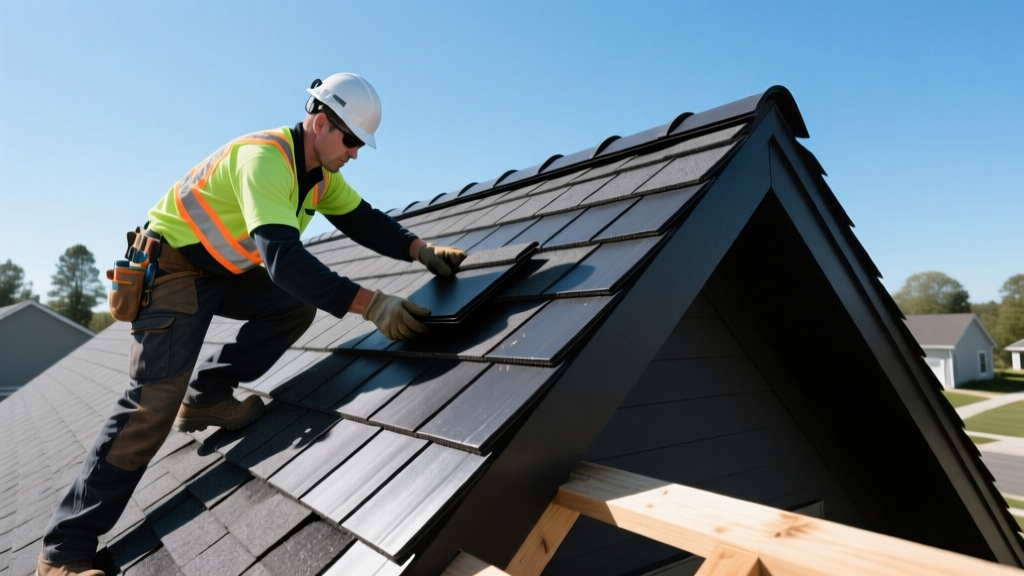
Frequently Asked Questions
Can I install architectural shingles over an existing layer of 3-tab shingles?
While most local building codes permit up to two layers of asphalt roofing, it is strongly discouraged. Installing over an existing layer traps heat, accelerates the degradation of the new shingles, voids the manufacturer’s warranty, and prevents the installation of a new synthetic underlayment and ice/water shield. Always budget for a complete tear-off to the decking.
Do darker asphalt shingles reduce the lifespan of the roof?
Historically, dark shingles absorbed more heat, leading to faster asphalt oxidation. However, modern architectural shingles utilize advanced ceramic-coated granules that reflect infrared radiation regardless of the visible color. While a charcoal or black shingle will still run slightly hotter than a weathered wood or white shingle, the difference in functional lifespan on a properly ventilated roof is negligible.
What is the difference between a Class 3 and Class 4 impact rating?
Tested under UL 2218, a Class 3 rating means the shingle survived a 1.75-inch steel ball dropped from 20 feet without cracking. A Class 4 rating (the highest available) requires surviving a 2-inch steel ball drop from the same height. In hail-prone states like Colorado or Texas, specifying Class 4 asphalt shingles roof materials can yield a 15% to 30% discount on homeowners insurance premiums.
Written by
David NakamuraDavid Nakamura is a licensed architect (AIA) and construction technology writer focused on sustainable building methods, mass timber engineering, and high-performance building envelopes. He holds a Master of Architecture from the University of Washington and is a certified Passive House Consultant (CPHC). David spent eight years at the Seattle firm Mithun, where he led the design of three LEED Platinum projects, before founding his own practice specializing in net-zero residential design. He serves on the editorial advisory board of GreenBuilder Magazine and has authored peer-reviewed papers on cross-laminated timber (CLT) connections for the Journal of Structural Engineering. In his spare time, David teaches woodworking at Pratt Fine Arts Center and kayaks the Puget Sound.
More from David Nakamura
View all
Construction Cost
Labor Cost to Build a Deck Per Sq Ft: 2026 Installation Guide
Discover the exact labor cost to build a deck per sq ft in 2026. This installation guide breaks down contractor rates, complexity factors, and hidden fees.
Aug 4, 2026

Construction Cost
How Much Does It Cost to Build a 3 Bedroom House? Financing Guide
Learn exactly how much it costs to build a 3 bedroom house and explore 2026 financing options, construction loan types, and budget frameworks for your build.
Aug 4, 2026

Construction Cost
Cost to Build a Tennis Court: 2026 Guide
How much does it cost to build a tennis court in 2026? Breakdowns for asphalt, concrete, and synthetic surfaces plus fencing and lighting.
Jul 30, 2026