DaVinci Roofing Materials vs Natural Slate: Complete Comparison
Compare DaVinci roofing materials and natural slate. Explore 2026 costs, structural weight limits, impact ratings, and installation realities.

The Core Dilemma: Advanced Polymer vs. Quarried Stone
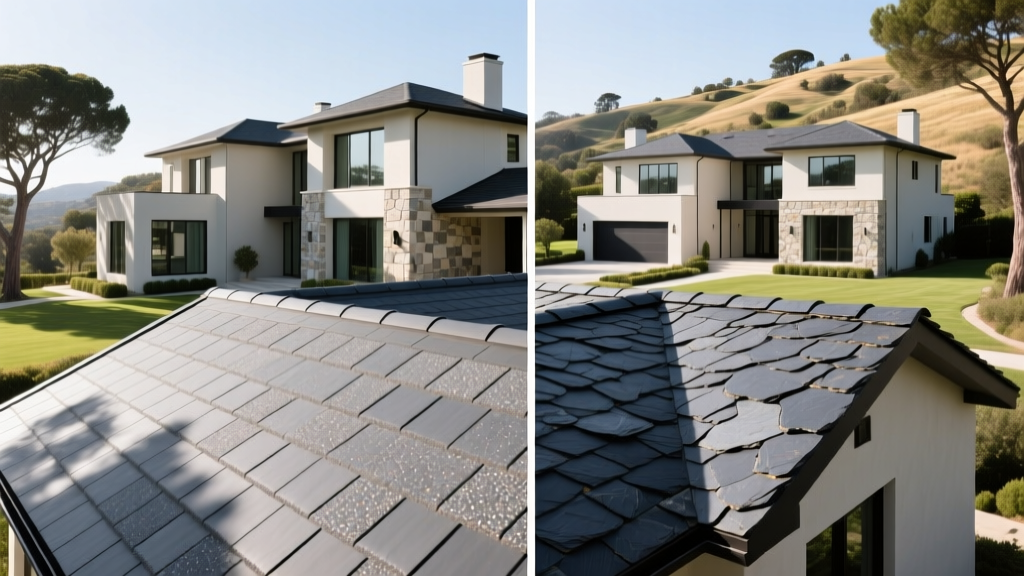
When specifying a premium steep-slope roof, architects and homeowners frequently narrow their choices to two distinct categories: natural quarried slate and high-end synthetic alternatives. DaVinci Roofscapes has established itself as the benchmark for polymer-based slate and shake, engineering products that mimic the aesthetic profile of stone while mitigating its structural and logistical drawbacks. However, natural slate—specifically S-1 grade quarried stone—remains the undisputed standard for historical authenticity and multi-generational longevity. Choosing between DaVinci roofing materials and natural slate requires moving beyond surface-level aesthetics to evaluate structural load capacities, long-term failure modes, and the true installed cost per square in the current market.
DaVinci Roofing Materials: Product Lineup and Specifications
DaVinci manufactures its roofing tiles from a proprietary virgin polymer resin, engineered to resist impact, UV degradation, and extreme temperature cycling. Unlike composite shingles made from recycled rubber or asphalt blends, DaVinci's solid polymer construction ensures consistent density and color throughout the tile thickness.
Multi-Width Slate
The flagship product, Multi-Width Slate, features a 1/2-inch thickness and is available in five varying widths (6", 7", 8", 9", and 10"). This staggered width profile is critical for replicating the randomized, hand-laid appearance of natural stone. It carries a Class 4 impact resistance rating (UL 2218) and a Class A fire rating, making it suitable for severe hail zones and wildfire-prone areas.
Bellaforté Slate
Designed for faster installation and reduced material waste, Bellaforté Slate utilizes an interlocking system and a uniform 12-inch width. While it sacrifices the randomized width of the Multi-Width line, it reduces installation time by approximately 20% and offers a more streamlined, contemporary aesthetic.
Fancy Shake
Though technically a shake profile rather than slate, Fancy Shake is a core DaVinci offering. At 5/8-inch thick, it replicates the deep shadow lines of heavy, hand-split cedar but eliminates the moisture retention and biological growth issues inherent to real wood.
Head-to-Head Comparison Matrix
The following matrix contrasts the physical and performance characteristics of DaVinci's Multi-Width Slate against S-1 Grade Natural Slate (as defined by ASTM C406).
| Metric | DaVinci Multi-Width Slate | Natural Quarried Slate (S-1) |
|---|---|---|
| Weight per Square (100 sq. ft.) | 290 lbs | 800 – 1,500 lbs |
| Thickness | 1/2 inch (Uniform) | 3/16 to 1/4 inch (Variable) |
| Impact Resistance | Class 4 (UL 2218) | Poor (Brittle, shatters on impact) |
| Wind Warranty | 110 mph (ASTM D3161) | Dependent on nailing pattern |
| Water Absorption | 0.03% (Virtually impervious) | 0.25% or less (S-1 Grade requirement) |
| Expected Lifespan | 50+ Years (Limited Warranty) | 75 – 150+ Years |
| Walkability | High (Can withstand foot traffic) | Low (Prone to cracking underfoot) |
Structural Realities: Decking and Framing Requirements
The most frequent oversight in specifying natural slate is underestimating the structural reinforcement required. A standard residential roof truss system is typically engineered for a dead load of 10 to 15 pounds per square foot (psf). DaVinci roofing materials weigh approximately 2.9 psf, which easily falls within standard framing parameters, requiring only a standard 5/8-inch or 3/4-inch OSB or plywood deck.
Furthermore, natural slate requires specialized fastening. According to the National Roofing Contractors Association (NRCA), slate must be secured using solid copper or stainless steel nails. Hot-dipped galvanized nails will eventually corrode, causing the heavy stone to slide off the roof deck decades before the slate itself degrades. DaVinci tiles, being significantly lighter, can be secured with standard electro-galvanized or stainless-steel roofing nails, drastically reducing fastener costs.
2026 Cost Breakdown: Material, Labor, and Hidden Fees
Pricing for premium roofing has stabilized following the supply chain disruptions of the early 2020s, but labor premiums for specialized trades remain high. Below is the estimated cost per square (100 sq. ft.) for a standard 3,000 sq. ft. roof (30 squares) in 2026.
DaVinci Synthetic Slate Costs
- Material Cost: $450 – $650 per square
- Labor & Installation: $500 – $800 per square
- Total Installed: $950 – $1,450 per square
- Project Total (30 Squares): $28,500 – $43,500
Natural S-1 Slate Costs
- Material Cost: $800 – $1,600 per square (varies by quarry origin)
- Labor & Installation: $1,200 – $1,800 per square (requires certified slate installers)
- Total Installed: $2,000 – $3,400 per square
- Project Total (30 Squares): $60,000 – $102,000
Note: The natural slate estimate above does not include structural reinforcement or the mandatory copper flashing and valleys required for a proper historic-grade installation, which can easily add another $10,000 to the project.
Long-Term Failure Modes and Maintenance
Every roofing material has a specific failure mode. Understanding how these materials age is critical for long-term facility management.
Natural Slate: Delamination and Spalling
While S-1 grade slate is highly durable, lower-grade (S-2 or S-3) slate is susceptible to freeze-thaw spalling. If water penetrates the microscopic cleavage planes of the stone and freezes, the expansion forces the slate to delaminate and flake apart. Additionally, natural slate is highly vulnerable to point-impact damage from hail or falling branches, which can fracture the stone and require individual tile replacements by a specialist.
DaVinci Polymer: Thermal Expansion and UV Fading
DaVinci's primary vulnerability lies in thermal expansion. Polymer resins expand and contract with temperature fluctuations at a higher rate than stone or wood. DaVinci Roofscapes mitigates this by engineering specific slotting in the nail holes to allow the tile to shift slightly without tearing the fastener hole. Regarding UV fading, early generations of synthetic slate suffered from chalkiness and color loss; however, modern DaVinci tiles utilize advanced UV stabilizers and through-body coloration, meaning scratches or minor abrasions do not reveal a different base color.
Decision Framework: Which Roof Belongs on Your Home?
Use the following criteria to make a definitive selection for your project:
Choose DaVinci Roofing Materials If:
- Structural Limits: Your existing roof framing cannot support an additional 10+ psf of dead load, and you want to avoid the cost of structural engineering and truss reinforcement.
- Severe Weather Zones: You live in a region prone to large hail (Class 4 impact requirement) or high winds, where natural slate would likely shatter or require exorbitant insurance deductibles.
- Complex Roof Geometry: Your roof features numerous valleys, dormers, and turrets. DaVinci's polymer tiles can be easily cut with a standard utility knife or fine-tooth saw, whereas natural slate requires specialized slate cutters and generates significant waste on complex cuts.
Choose Natural Slate If:
- Historical Authenticity: You are restoring a heritage property or building in a strict architectural review district where synthetic materials are explicitly prohibited.
- Multi-Generational Lifespan: You are building a legacy estate and require a roof that will outlast the next 100 years, provided the underlayment and flashing are maintained.
- Uncompromising Budget: You have the capital to cover both the premium material costs and any necessary structural upgrades without compromising other areas of the build.
Written by
James ThorntonJames Thornton is a construction industry veteran with 25 years of hands-on experience in wood framing, lumber grading, and residential building codes. He started as a framing carpenter in rural Oregon, earned his ICC Residential Building Inspector certification, and eventually became a senior plan reviewer for the City of Portland Bureau of Development Services. James holds a B.S. in Wood Science & Technology from Oregon State University and is a certified lumber grader through the West Coast Lumber Inspection Bureau (WCLIB). He has inspected over 3,000 residential construction sites and authored the city's internal guide on advanced framing techniques (2x6 at 24" O.C.). James lives in Bend, OR, where he builds custom timber-frame cabins and competes in lumberjack sports.
More from James Thornton
View all
Insulation
Best Home Insulation Materials: Complete 2026 Guide
Compare top home insulation materials for 2026. Find R-values, installed costs per square foot, and best uses for fiberglass, spray foam, and mineral wool.
Aug 4, 2026

Sustainable Building
Certify Your Green Building Material for LEED and WELL
Step-by-step guide to certifying a green building material for LEED v5 and WELL v2. Master EPDs, HPDs, and VOC limits for 2026 project specifications.
Aug 4, 2026

Stone & Masonry
Veneer Stacked Stone Panels: Interior Design & Style Showcase
Discover how veneer stacked stone panels transform interiors. Explore modern design profiles, material pairings, and technical installation specs.
Aug 4, 2026