Comparing Lifespans of Different Types of Roofs Materials
Discover the real-world lifespans of different types of roofs materials. Compare durability, failure modes, and costs for asphalt, metal, tile, and slate.

The Warranty vs. Reality Gap in Roofing
When evaluating different types of roofs materials, homeowners and commercial builders frequently fall into the trap of equating manufacturer warranties with actual field lifespans. A "50-year limited warranty" on an architectural asphalt shingle does not mean the roof will perform flawlessly for five decades. In reality, these warranties are heavily prorated, often dropping to a fraction of the material cost after the first 10 years, and they strictly exclude labor, tear-off, and consequential damage. According to the Insurance Institute for Business & Home Safety (IBHS), real-world longevity is dictated by a complex matrix of material chemistry, local microclimates, installation precision, and ventilation dynamics. To make a financially sound decision, you must look past the marketing literature and examine the empirical failure modes and expected service life of each material category.
Material-by-Material Durability Breakdown
Below is a deep dive into the actual performance metrics of the most common roofing systems, analyzing specific product grades and their primary degradation vectors.
Architectural Asphalt Shingles
Expected Field Lifespan: 18 to 25 years
Best-in-Class Example: GAF Timberline HDZ or Owens Corning Duration
Primary Failure Modes: Thermal cracking, granule loss, and wind uplift.
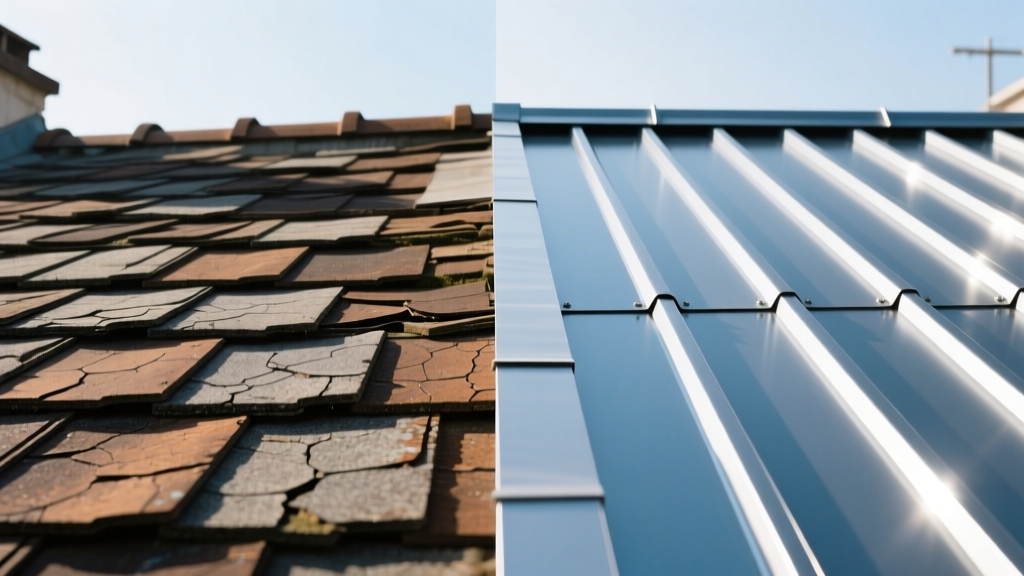
Asphalt shingles are petroleum-based and inherently susceptible to UV degradation and thermal expansion. In high-heat climates like the American Southwest, the asphalt binder dries out, leading to brittle shingles that crack under minor impact. When selecting shingles, demand products rated for ASTM D3161 Class F wind resistance (capable of withstanding 110 mph winds) and ensure they feature copper-infused granules to prevent Gloeocapsa magma (blue-green algae) streaking. Proper attic ventilation is non-negotiable; an unventilated attic can raise roof deck temperatures to 160°F, accelerating asphalt aging by up to 30%.
Standing Seam Metal Roofing
Expected Field Lifespan: 40 to 60+ years
Best-in-Class Example: 24-gauge Galvalume steel with a Kynar 500 (PVDF) finish
Primary Failure Modes: Oil-canning, fastener back-out (on exposed fastener variants), and galvanic corrosion.
Standing seam metal is the gold standard for durability in residential and light commercial applications. The hidden fastener clips allow the panels to expand and contract without tearing the metal. However, longevity relies heavily on the paint system. A standard polyester paint will chalk and fade within 15 years, whereas a PVDF resin (Kynar 500) maintains color integrity and chalk resistance for decades. Furthermore, installers must use dielectric separators (like peel-and-stick membrane or EPDM tape) where the metal contacts dissimilar metals, such as copper flashing or aluminum gutters, to prevent rapid galvanic corrosion.
Clay and Concrete Tile
Expected Field Lifespan: 50 to 100 years (Tile) / 30 to 40 years (Underlayment)
Best-in-Class Example: Ludowici Clay or Eagle Roofing Concrete
Primary Failure Modes: Underlayment rot, freeze-thaw spalling (concrete), and structural overloading.
The great paradox of tile roofing is that while the clay or concrete tiles themselves can easily outlast the building, the waterproofing underlayment beneath them typically fails around year 30. When budgeting for a tile roof, always specify a high-temp synthetic underlayment (like Polyglass Polystick TU Plus) rather than traditional 30lb felt, which degrades rapidly under the intense heat trapped by the tiles. Additionally, concrete tiles are porous; in freeze-thaw climates, water absorption leads to catastrophic spalling unless the tiles are factory-sealed with a silane/siloxane penetrant.
Natural Slate
Expected Field Lifespan: 75 to 150+ years
Best-in-Class Example: S1 Grade Vermont or Buckingham Slate
Primary Failure Modes: Delamination, rusting fasteners, and improper nail placement.
Slate is a geological material that requires zero maintenance, provided it is sourced and installed correctly. You must specify ASTM C406 S1 Grade slate, which guarantees a minimum 75-year lifespan based on water absorption and modulus of rupture testing. The most common cause of premature slate roof failure is not the stone, but the fasteners. If an installer uses electro-galvanized steel nails, the nails will rust through in 40 years, causing the pristine slate tiles to slide off the roof. Only solid copper or hot-dipped galvanized stainless steel nails should be used.
Before selecting slate or concrete tile, verify your roof framing's load-bearing capacity. Standard asphalt shingles weigh roughly 250 lbs per square (100 sq ft). Concrete tile weighs 900-1,100 lbs per square, and slate can exceed 1,500 lbs per square. Retrofitting a standard truss system to support these materials requires structural reinforcement that can add $5,000 to $15,000 to your project cost.
Comparative Lifespan & Cost Matrix
The following matrix provides a realistic baseline for material selection, factoring in 2026 market pricing and real-world longevity.
| Material Type | Real-World Lifespan | Installed Cost (per sq ft) | Primary Degradation Vector | Ideal Climate |
|---|---|---|---|---|
| Architectural Asphalt | 18 - 25 Years | $4.50 - $7.50 | UV / Thermal Cracking | Temperate / Moderate |
| Standing Seam Metal | 40 - 60 Years | $12.00 - $18.00 | Galvanic Corrosion / Paint Fade | All (Excellent for Snow/Wind) |
| Concrete Tile | 40 - 50 Years | $14.00 - $22.00 | Freeze-Thaw Spalling | Warm / Arid / Coastal |
| Clay Tile | 75 - 100+ Years | $20.00 - $35.00 | Underlayment Failure | Warm / Arid / Coastal |
| Natural Slate (S1) | 100 - 150+ Years | $30.00 - $55.00 | Fastener Corrosion | All (Except Severe Hail) |
Environmental Degradation Vectors
Understanding how different types of roofs materials react to specific environmental stressors is critical for regional optimization.
- Thermal Shock: In regions with extreme diurnal temperature swings (e.g., high desert climates), materials expand during the day and contract at night. Metal roofs handle this via sliding clips, but rigid materials like slate and concrete tile can develop micro-fractures over decades if not properly gapped during installation.
- UV Degradation: The Department of Energy notes that highly reflective "cool roofs" not only reduce interior cooling loads by up to 15% but also significantly slow the UV-induced breakdown of the roofing membrane or asphalt binder. Specifying light-colored or reflective granule shingles in southern latitudes can add 3 to 5 years to the roof's functional life.
- Moisture and Biological Growth: In the Pacific Northwest and other high-humidity zones, organic debris accumulation leads to moss and lichen. Moss rhizoids can physically lift asphalt shingle tabs, breaking the adhesive seal and inviting wind-driven rain. Zinc or copper ridge strips are mandatory in these biomes to create a toxic runoff that inhibits biological growth.
Actionable Maintenance Framework to Maximize ROI
No roof is truly "maintenance-free." Implement this strict schedule to ensure your chosen material reaches the upper bound of its lifespan:
- Bi-Annual Visual Inspections (Spring/Fall): Use binoculars from the ground to check for missing granules in gutters (asphalt), lifted seams (metal), or cracked tiles. Never walk on a slate or tile roof without specialized fall protection and footwear; the point-load of a single footstep can snap a tile.
- Year 5 Fastener Check (Metal Roofs Only): If you have an exposed-fastener metal roof (like corrugated agricultural panels), the neoprene washers on the screws will compress and degrade. Re-torque all screws and replace any with cracked washers at the 5-year mark, and every 7 years thereafter.
- Annual Penetration Flashing Audit: 90% of roof leaks occur at penetrations (plumbing vents, HVAC curbs, chimneys). Inspect the polyurethane or lead pipe jacks annually. UV light destroys rubber pipe boots in as little as 10 years; upgrade to lifetime silicone or lead-aluminum flashing collars during your first maintenance cycle.
- Gutter and Valley Clearing: Water damming in roof valleys accelerates wear on all materials. Ensure valleys are clear of pine needles and debris to maintain the designed hydrological flow rate.
"The single greatest threat to any roofing system is not the weather, but poor attic ventilation and inadequate insulation. A roof system is a holistic assembly; if the deck rots from the inside out due to trapped condensation, the exterior material's lifespan is rendered irrelevant."
Expert Verdict: Selecting for Your Specific Scenario
When comparing different types of roofs materials, the "best" choice is entirely dependent on your structural capacity, local climate, and capital expenditure tolerance. For budget-conscious projects in temperate zones, high-wind-rated architectural asphalt remains the most pragmatic choice, provided you budget for a replacement cycle every 20 years. For coastal, high-wind, or heavy-snow regions, the upfront premium of a 24-gauge standing seam metal roof is easily justified by its 50-year maintenance-free service life and superior shedding capabilities. Finally, for legacy builds where the goal is generational permanence and the framing can support the immense dead load, S1 Grade natural slate remains the undisputed apex of roofing durability.
Written by
James ThorntonJames Thornton is a construction industry veteran with 25 years of hands-on experience in wood framing, lumber grading, and residential building codes. He started as a framing carpenter in rural Oregon, earned his ICC Residential Building Inspector certification, and eventually became a senior plan reviewer for the City of Portland Bureau of Development Services. James holds a B.S. in Wood Science & Technology from Oregon State University and is a certified lumber grader through the West Coast Lumber Inspection Bureau (WCLIB). He has inspected over 3,000 residential construction sites and authored the city's internal guide on advanced framing techniques (2x6 at 24" O.C.). James lives in Bend, OR, where he builds custom timber-frame cabins and competes in lumberjack sports.
More from James Thornton
View all
Insulation
Best Home Insulation Materials: Complete 2026 Guide
Compare top home insulation materials for 2026. Find R-values, installed costs per square foot, and best uses for fiberglass, spray foam, and mineral wool.
Aug 4, 2026

Sustainable Building
Certify Your Green Building Material for LEED and WELL
Step-by-step guide to certifying a green building material for LEED v5 and WELL v2. Master EPDs, HPDs, and VOC limits for 2026 project specifications.
Aug 4, 2026

Stone & Masonry
Veneer Stacked Stone Panels: Interior Design & Style Showcase
Discover how veneer stacked stone panels transform interiors. Explore modern design profiles, material pairings, and technical installation specs.
Aug 4, 2026