Choosing the Right Flat Roof Roofing Material for Your Building
Compare top flat roof roofing material options including TPO, EPDM, and PVC. Expert analysis on costs, failure modes, and climate suitability.
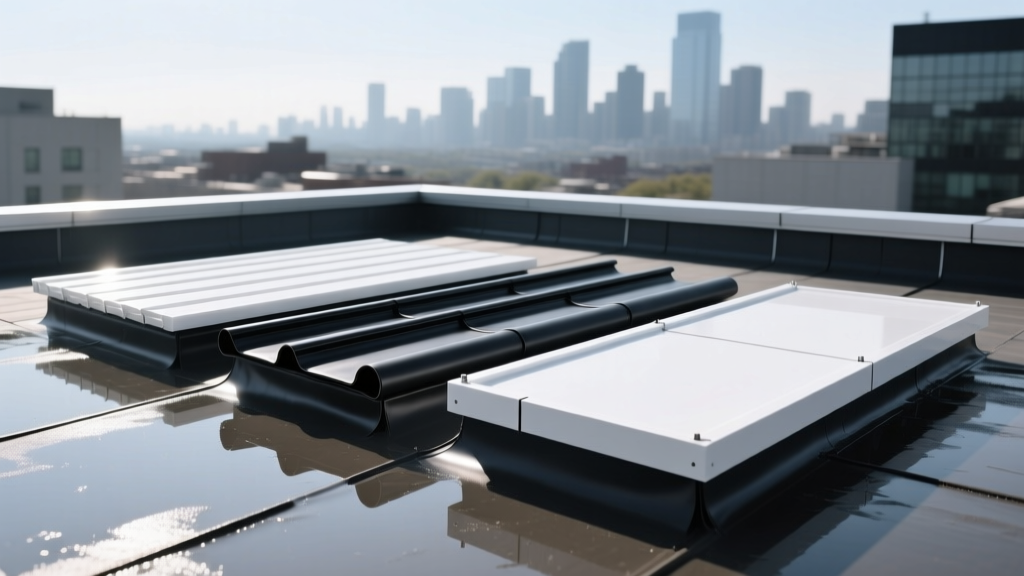
Selecting a flat roof roofing material requires moving beyond basic price-per-square-foot metrics. Low-slope roofs (defined by the building code as having a pitch of 3:12 or less) do not shed water; they manage it. A material that performs flawlessly in a dry, high-UV environment like Arizona may experience catastrophic seam failure in the freeze-thaw cycles of Minnesota. This guide dissects the chemical compositions, mechanical fastening methods, and real-world failure modes of the primary commercial and residential flat roof systems available today.
Single-Ply Membranes: TPO, EPDM, and PVC
Single-ply membranes dominate the modern low-slope market due to their lightweight nature, reflective properties, and rapid installation times. However, their chemical differences dictate their specific use cases.
TPO (Thermoplastic Polyolefin)
TPO currently holds the largest market share in commercial roofing. It is a single-ply membrane reinforced with a polyester scrim for dimensional stability. The seams are heat-welded using hot air, creating a monolithic bond that is often stronger than the membrane itself.
- Specifications: Always specify a minimum 60-mil thickness for standard applications. In high-wind zones or regions with severe hail, upgrade to 80-mil or 90-mil TPO to prevent puncture and fastener pull-through.
- Failure Modes: Early-generation TPOs (pre-2011) suffered from severe UV degradation and surface cracking. Modern formulations include HALS (Hindered Amine Light Stabilizers) to prevent this, but purchasing from unverified, overseas manufacturers remains a massive risk. Stick to established brands like Carlisle SynTec or GAF EverGuard.
EPDM (Ethylene Propylene Diene Monomer)
EPDM is a synthetic rubber membrane, most commonly installed in black (though white is available at a premium). It is highly resistant to ozone and weathering but relies on different seaming technologies than thermoplastics.
- Specifications: Available in 45-mil, 60-mil, and 90-mil thicknesses. For commercial applications, 60-mil fully adhered is the industry baseline.
- Failure Modes: The primary failure mode is membrane shrinkage over a 15-to-20-year lifespan. As the rubber cures and shrinks, it pulls away from flashings, causing severe leaks at parapet walls and pipe penetrations. This is mitigated by using fully adhered systems rather than loose-laid ballasted systems, and by installing reinforced walk pads in high-traffic HVAC areas.
PVC (Polyvinyl Chloride)
PVC membranes are formulated with plasticizers for flexibility and feature a fleece backing for enhanced puncture resistance. Seams are welded using hot air or chemical solvents (ketones).
- Specifications: Typically installed at 50-mil or 60-mil. Fleece-backed PVC is the premier choice for retrofit applications directly over existing EPS insulation or asphalt-based roofs, as the fleece prevents chemical incompatibility reactions.
- Failure Modes: Plasticizer migration over decades can cause the membrane to become brittle. However, PVC's unmatched advantage is its chemical resistance. If your building houses a restaurant, PVC is mandatory; animal fats and vegetable oils will rapidly dissolve the seams of TPO and EPDM membranes.
Modified Bitumen (Mod-Bit) Systems
Modified bitumen bridges the gap between traditional Built-Up Roofing (BUR) and single-ply membranes. It consists of asphalt reinforced with fiberglass or polyester, modified with either SBS (Styrene-Butadiene-Styrene) rubber or APP (Atactic Polypropylene) plastics.
SBS-modified bitumen remains highly flexible in sub-zero temperatures, making it the superior choice for cold climates experiencing heavy snow loads and ice damming. APP-modified bitumen is more rigid and better suited for high-heat environments, but it cannot be cold-applied and requires torching, which introduces severe fire risks during installation on occupied buildings.
2026 Installed Cost and Lifecycle Matrix
The following matrix reflects current national averages for commercial installations, including the cost of the membrane, polyiso insulation, fasteners/adhesives, and labor. Regional labor rates and roof accessibility will cause variances of up to 25%.
| Material | Standard Mil Thickness | Installed Cost (per sq. ft.) | Expected Lifespan | Seam Technology |
|---|---|---|---|---|
| TPO | 60-mil | $8.50 - $12.00 | 20 - 25 Years | Hot-Air Welded |
| EPDM | 60-mil | $7.50 - $11.00 | 25 - 30 Years | Tape / Liquid Adhesive |
| PVC | 60-mil | $10.00 - $15.00 | 25 - 30+ Years | Hot-Air / Solvent Weld |
| SBS Mod-Bit | 2-Ply System | $9.00 - $13.50 | 20 - 25 Years | Torch / Cold Adhesive |
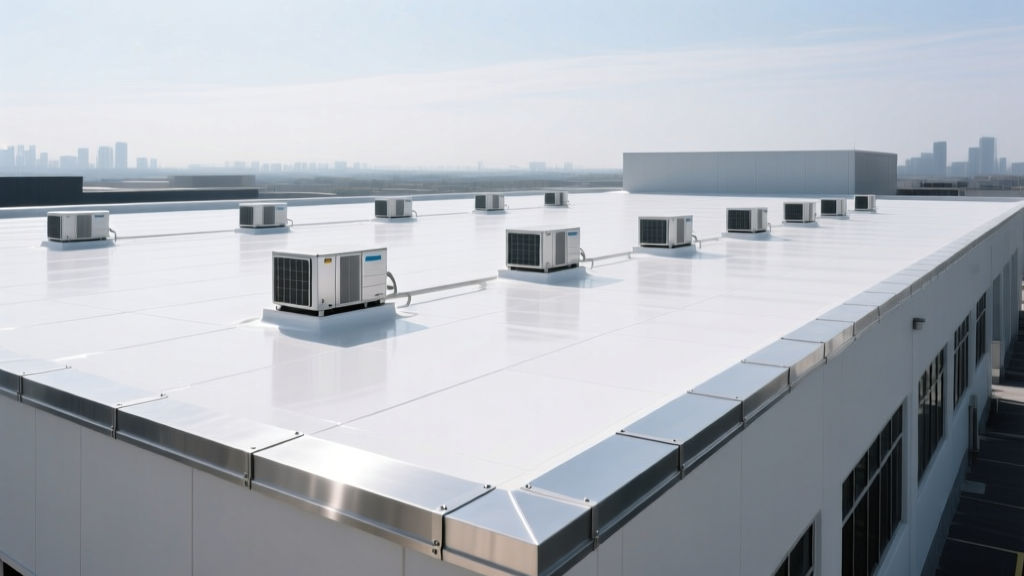
Climate and Structural Decision Framework
According to the Whole Building Design Guide, matching the roofing assembly to the local climate zone is the most critical factor in preventing premature envelope failure.
High UV / Hot Climates
Recommendation: White TPO or PVC.
Reflective membranes drastically reduce cooling loads. The US Department of Energy notes that cool roofs can lower peak cooling demand by 10-15%. Ensure the membrane meets ENERGY STAR solar reflectance index (SRI) requirements of 78 or higher for low-slope applications.
Heavy Snow / Cold Climates
Recommendation: SBS Mod-Bit or Fully Adhered EPDM.
Freeze-thaw cycles and ice damming require materials with high elongation properties. SBS rubber modifiers allow the asphalt to stretch without cracking when the deck deflects under heavy snow loads. Avoid mechanically attached single-plies in extreme cold, as fastener back-out can occur.
Chemical / Grease Exposure
Recommendation: PVC Only.
If the roof is above commercial kitchens, manufacturing plants, or aviation facilities, hydrocarbon and lipid exposure is guaranteed. PVC is inherently resistant to animal fats, oils, and industrial chemicals that will melt TPO seams and degrade EPDM rubber.
Critical Installation Details That Void Warranties
Even the most expensive flat roof roofing material will fail if the underlying assembly ignores building science principles. Manufacturers routinely deny warranty claims based on the following installation errors:
- Ponding Water Violations: Most single-ply warranties explicitly exclude damage caused by water that remains on the roof for more than 48 hours after precipitation. If your structural deck lacks the minimum 1/4-inch per foot slope, you must install tapered polyiso insulation crickets to route water to drains. Failure to do so voids the material warranty.
- Vapor Retarder Misplacement: In cold climates, warm, moist air from the building interior migrates upward. If a vapor retarder is not installed on the warm side of the polyiso insulation (directly on the steel or wood deck), moisture will condense inside the insulation layer during winter. This leads to saturated insulation, blistering membranes, and catastrophic deck rot. Always perform a dew point calculation per ASHRAE 90.1 guidelines before finalizing the assembly.
- Improper Fastener Patterns: Wind uplift resistance relies on strict fastener spacing. The perimeter and corner zones of the roof require significantly higher fastener density (often 12 inches on center) compared to the field of the roof (24 inches on center). Using a uniform field pattern across the entire roof will result in membrane tearing during severe wind events.
- Field-Fabricated Pipe Boots: Relying on uncured flashing tape to wrap HVAC pipes and plumbing vents is a leading cause of leaks. As the tape cures and weathers, it cracks. Mandate the use of pre-fabricated, reinforced pipe boots with base flanges that are welded or adhered directly to the field membrane.
For comprehensive technical bulletins on low-slope attachment and flashing details, roofing professionals should regularly consult the National Roofing Contractors Association (NRCA) technical resources. Selecting the correct flat roof roofing material is only the first step; rigorous oversight of the insulation, vapor control, and flashing details ensures the system reaches its engineered lifecycle.
Written by
James ThorntonJames Thornton is a construction industry veteran with 25 years of hands-on experience in wood framing, lumber grading, and residential building codes. He started as a framing carpenter in rural Oregon, earned his ICC Residential Building Inspector certification, and eventually became a senior plan reviewer for the City of Portland Bureau of Development Services. James holds a B.S. in Wood Science & Technology from Oregon State University and is a certified lumber grader through the West Coast Lumber Inspection Bureau (WCLIB). He has inspected over 3,000 residential construction sites and authored the city's internal guide on advanced framing techniques (2x6 at 24" O.C.). James lives in Bend, OR, where he builds custom timber-frame cabins and competes in lumberjack sports.
More from James Thornton
View all
Insulation
Best Home Insulation Materials: Complete 2026 Guide
Compare top home insulation materials for 2026. Find R-values, installed costs per square foot, and best uses for fiberglass, spray foam, and mineral wool.
Aug 4, 2026

Sustainable Building
Certify Your Green Building Material for LEED and WELL
Step-by-step guide to certifying a green building material for LEED v5 and WELL v2. Master EPDs, HPDs, and VOC limits for 2026 project specifications.
Aug 4, 2026

Stone & Masonry
Veneer Stacked Stone Panels: Interior Design & Style Showcase
Discover how veneer stacked stone panels transform interiors. Explore modern design profiles, material pairings, and technical installation specs.
Aug 4, 2026