2026 RV Roofing Material Cost Breakdown: EPDM, TPO, and Fiberglass
Compare 2026 RV roofing material costs. Detailed breakdown of EPDM, TPO, and fiberglass prices, installation labor, and long-term maintenance expenses.

The True Cost of RV Roof Replacement in 2026
Replacing an RV roof is one of the most critical and expensive maintenance tasks a motorhome or travel trailer owner will face. Water intrusion remains the leading cause of total-loss RV failures, making the choice of your RV roofing material a structural necessity rather than a mere cosmetic upgrade. In 2026, the national average for a complete RV roof replacement ranges from $3.50 to $8.50 per square foot installed, translating to $1,200 to $3,500 for a standard 25-foot travel trailer, and up to $7,000 for large fifth-wheel rigs.
However, the final invoice is rarely just the cost of the membrane. Substrate repair, specialized adhesives, lap sealants, and the removal of roof fixtures (AC units, vents, solar panels) drastically alter the bottom line. This guide breaks down the exact material costs, labor variables, and hidden expenses associated with the three dominant RV roofing systems: EPDM rubber, TPO thermoplastic, and molded fiberglass.
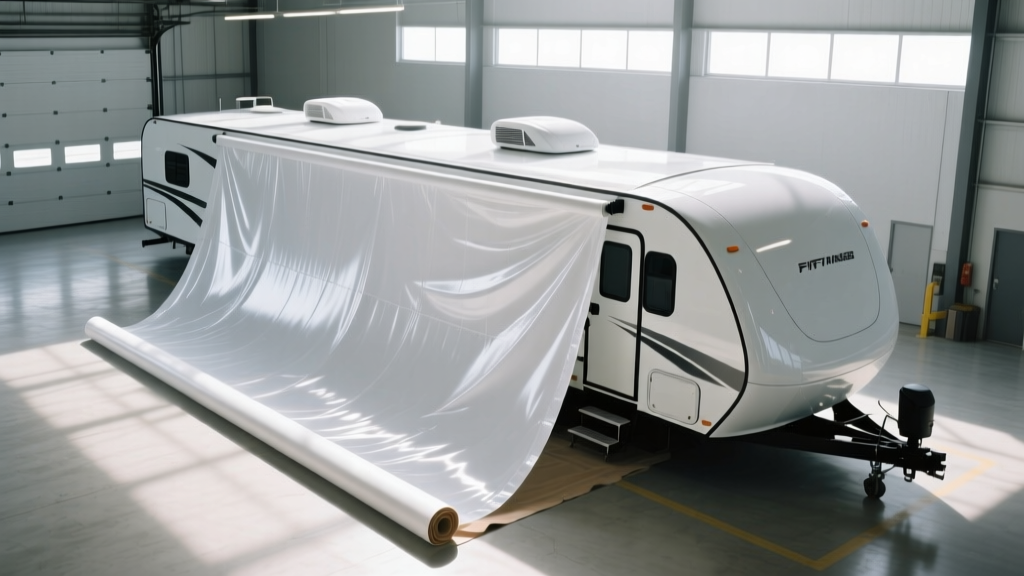
Material Cost Matrix: EPDM vs. TPO vs. Fiberglass
The table below outlines the baseline pricing for the most common RV roofing materials. Note that material costs represent the membrane only; adhesives, sealants, and labor are calculated separately in the installed price.
| Material Type | Material Cost (Per Sq. Ft.) | Installed Cost (Per Sq. Ft.) | Expected Lifespan | Maintenance Level |
|---|---|---|---|---|
| EPDM (Rubber) | $0.55 - $0.85 | $3.50 - $5.00 | 10 - 15 Years | High (Annual UV coating) |
| TPO (Thermoplastic) | $0.80 - $1.25 | $4.50 - $6.50 | 15 - 20+ Years | Low (Bi-annual cleaning) |
| Fiberglass (Molded) | $3.00 - $5.50 | $8.00 - $12.00 | 20 - 30 Years | Medium (Waxing/Gel coat) |
| Liquid Rubber Coating | $1.10 - $1.60 | $2.50 - $4.00 | 5 - 8 Years | Medium (Re-coat as needed) |
EPDM (Rubber) Roofing: The Budget Standard
Ethylene Propylene Diene Monomer (EPDM) has been the industry standard for decades due to its low upfront cost and high flexibility. Manufacturers like Dicor Products produce EPDM membranes that are typically 40 to 50 mils thick. The material is white on top to reflect UV rays and black on the bottom to absorb heat, which helps the adhesive cure during installation.
Material and Labor Costs
A 40-mil EPDM membrane costs approximately $0.55 to $0.70 per square foot, while a heavier 50-mil or 60-mil membrane pushes the cost to $0.85 per square foot. For a 30-foot RV with a roof area of roughly 240 square feet, the membrane itself will cost between $135 and $205. Labor is where the primary expense lies. Professional installation requires completely stripping the old roof, cleaning the OSB or plywood substrate, applying a water-based or solvent-based bonding adhesive, and rolling the membrane to remove air pockets. Expect to pay $3.00 to $4.50 per square foot for professional labor.
Failure Modes and Edge Cases
The primary vulnerability of EPDM is its tendency to oxidize and chalk over time when exposed to intense UV radiation. If left untreated, the membrane shrinks, pulling away from the roof edges and causing seam failures. To prevent this, owners must apply a UV protectant (such as Dicor's RP-UV-VR Vinyl Roof Protectant) annually. Additionally, EPDM is highly susceptible to puncture from low-hanging tree branches or hail, making it a poor choice for boondockers who frequently park under heavy canopy.
TPO (Thermoplastic Polyolefin): The Modern Upgrade
Thermoplastic Polyolefin (TPO) has rapidly overtaken EPDM as the preferred roofing material for mid-to-high-end RVs. Unlike EPDM, TPO is white all the way through and does not contain the same plasticizers that cause oxidization and chalking. Alpha Systems is a leading supplier of TPO membranes for the RV sector, offering thicknesses ranging from 30 to 50 mils.
Material and Labor Costs
TPO material costs range from $0.80 to $1.25 per square foot. While the membrane is slightly more expensive than EPDM, the real cost differential emerges during installation. TPO seams can be heat-welded using a hot air gun, creating a permanent, watertight bond that is chemically fused rather than just glued. Professional RV service centers charge a premium for this specialized equipment and skill, pushing installed costs to $4.50 - $6.50 per square foot.
Heat-Welding vs. Adhesive Installation
While heat-welding is the gold standard for TPO seams, many DIYers and budget shops opt for chemical adhesive installation. If you are using a contact adhesive (like Alpha Systems' TPO bonding adhesive at roughly $65 per gallon), you must ensure the ambient temperature is above 50°F (10°C) during application. Adhesive-installed TPO is more prone to delamination at the seams over a 10-year period compared to heat-welded seams, which can last the lifetime of the membrane.
Fiberglass and Aluminum: Premium Molded Options
Class A motorhomes and high-end fifth wheels often feature molded fiberglass or aluminum roofs. Unlike membrane systems that are rolled flat, these are rigid, single-piece (or few-piece) shells that are bonded to the roof trusses during manufacturing.
Replacing a molded fiberglass roof is rarely a simple overlay. It usually requires removing the entire upper cap or replacing large, custom-molded sections. Material costs for fiberglass sheeting range from $3.00 to $5.50 per square foot, but fabrication and custom fitting push installed costs to $8.00 - $12.00 per square foot. The primary maintenance expense for fiberglass is the gel coat; it requires annual waxing to prevent UV oxidation and spider-cracking. Aluminum roofs, while durable, suffer from thermal expansion and contraction, which frequently causes the lap sealant at the seams to fail, requiring bi-annual sealant inspections.
Hidden Costs: Sealants, Adhesives, and Decking Repair
The most common budgeting error in RV roof replacement is ignoring the ancillary materials and substrate conditions. A membrane is only as good as the deck beneath it.
If your previous roof leaked, the OSB or plywood decking is likely compromised. Replacing roof decking adds $1.50 to $2.50 per square foot to the project. A 240 sq. ft. roof with 30% rot will add $108 to $180 in wood costs, plus an additional 3-4 hours of labor for demolition and framing repair.
Sealant Specifications
Do not use standard silicone on an RV roof; it will not adhere to EPDM or TPO and will void manufacturer warranties. You must use specialized RV lap sealants. Dicor 501LSW is a self-leveling sealant designed for flat horizontal surfaces (costing ~$12 per 10oz tube). For vertical surfaces, such as the base of an AC unit or vent caps, you must use a non-leveling sealant like Dicor 551LSW to prevent the sealant from running down the sides of the fixture. A standard roof replacement requires 8 to 14 tubes of sealant, adding $100 to $170 to the material budget.
Liquid Coatings vs. Full Membrane Replacement
If your existing EPDM or TPO membrane is structurally sound but suffering from minor leaks, UV degradation, or seam separation, a full tear-off may be unnecessary. Liquid rubber roof coatings (such as Heng's Rubber Roof Coating or Dicor's Roof Coating System) offer a cost-effective stopgap.
Liquid coatings cost between $45 and $65 per gallon, with one gallon covering approximately 40 square feet per coat (two coats are mandatory). For a 240 sq. ft. roof, the material cost is roughly $270 to $390. While this is significantly cheaper than a $1,500 membrane replacement, liquid coatings are not a permanent fix. They typically last 5 to 8 years before requiring a re-coat and do not offer the puncture resistance of a 50-mil solid membrane. Use liquid coatings to extend the life of an aging roof by a few years, but opt for a full membrane replacement if the underlying scrim is exposed or the roof decking shows signs of softening.
Written by
Sarah WhitfieldSarah Whitfield is a chartered quantity surveyor (MRICS) and construction cost analyst with 15 years of experience in material pricing, procurement strategy, and project budgeting. She earned her degree in Construction Management from the University of Reading (UK) and has worked on projects ranging from $2M custom homes to $180M mixed-use developments across North America and Europe. Sarah currently leads cost estimating for BuildMat Insight, maintaining a proprietary database of 4,000+ material price points updated quarterly. She is a frequent contributor to RSMeans cost data panels and has presented at the International Cost Engineering Council (ICEC) congress. Based in Denver, CO, Sarah is an avid trail runner and volunteer mentor for Women in Construction.
More from Sarah Whitfield
View all
Wood & Lumber
What Are the Different Types of Wood? A Builder's Guide
Compare structural softwoods, finish hardwoods, and engineered lumber. Analyze Janka ratings, MOE values, and 2026 pricing for construction.
Aug 4, 2026

Walls & Panels
Steel Framing vs Wood Framing: Corrosion and Moisture Defense
Compare steel framing vs wood framing for moisture resistance. Learn about galvanized coatings, condensation risks, and corrosion protection strategies.
Jul 21, 2026

Stone & Masonry
How to Cut Stone Veneer: Wet Saw vs Grinder Comparison
Compare the best tools for cutting stone veneer. We review wet saws, angle grinders, and chop saws to help you achieve clean, chip-free cuts.
Jul 21, 2026