What Roofing Material Lasts the Longest? Selection Framework
Discover what roofing material lasts the longest using our expert selection framework, balancing lifespan, structural load, and true cost-per-year.

The Longevity Hierarchy: Ranking Materials by Expected Service Life
When property owners ask what roofing material lasts the longest, the superficial answer is natural slate or copper. However, selecting a roof based solely on maximum theoretical lifespan is a critical error. A 150-year slate roof installed over a standard 30-year asphalt-saturated felt underlayment is, functionally, a 30-year roof. Furthermore, the structural framing of a standard residential build cannot support the dead load of slate without expensive reinforcement.
To determine the optimal material, we must first establish the baseline longevity of premium and standard roofing systems based on current manufacturing standards and historical performance data.
| Roofing Material | Expected Lifespan | Weight per Square (100 sq ft) | 2026 Avg Installed Cost (per sq ft) | Primary Limiting Factor |
|---|---|---|---|---|
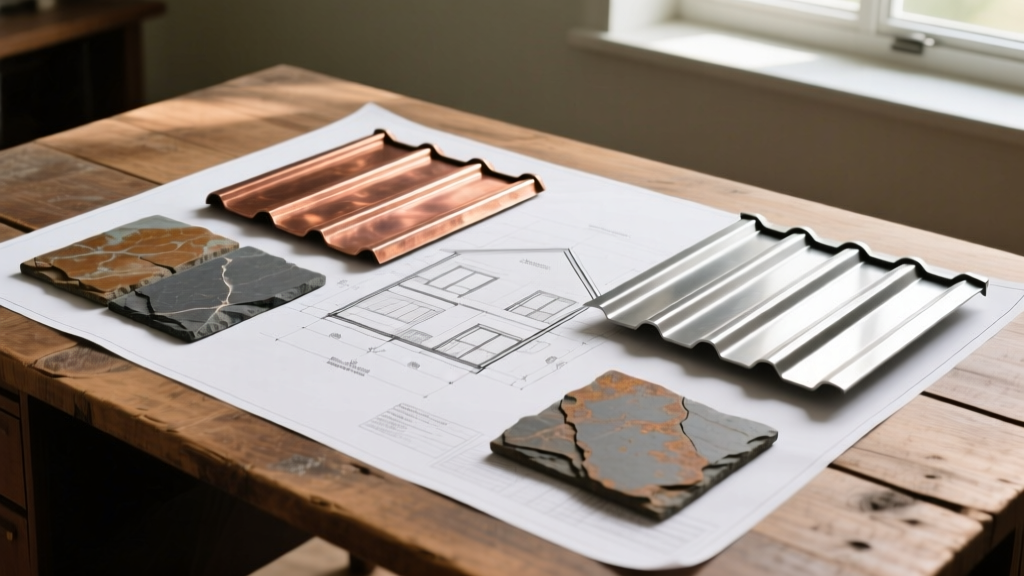
| Natural Slate (ASTM C406) | 100 - 150+ years | 800 - 1,500 lbs | $28.00 - $45.00 | Structural load capacity |
| Copper (Standing Seam) | 100 - 120+ years | 100 - 150 lbs | $35.00 - $55.00 | Galvanic corrosion / Cost |
| Clay / Concrete Tile | 75 - 100 years | 600 - 1,100 lbs | $18.00 - $30.00 | Thermal shock / Weight |
| Standing Seam Metal (Steel/Alu) | 50 - 80 years | 50 - 150 lbs | $14.00 - $22.00 | Fastener back-out / Coating fade |
| Premium Architectural Shingles | 30 - 50 years | 250 - 350 lbs | $6.50 - $11.00 | Granule loss / Wind uplift |
The 4-Pillar Selection Framework
According to guidelines published by the National Roofing Contractors Association (NRCA), material selection must align with the building's physical constraints and the owner's financial timeline. Use this four-pillar framework to filter the longevity hierarchy.
Pillar 1: Structural Load and Decking Capacity
Longevity is irrelevant if the roof collapses. Natural slate and clay tile are 'heavy' systems. A standard 2x6 or 2x8 roof rafter spaced at 16 inches on center is typically engineered for a dead load of 10 to 15 pounds per square foot (psf) and a live load (snow) of 20 to 40 psf. Slate introduces a dead load of 8 to 15 psf before adding snow. If you are retrofitting an existing structure with slate or tile, expect to spend $8,000 to $15,000+ on structural reinforcement (sistering rafters or adding purlins) before the first tile is laid.
Pillar 2: Climate and Environmental Stressors
A material that lasts 100 years in a mild, dry climate may fail in 20 years in a harsh environment.
- Coastal/Salt-Spray Environments: Avoid galvanized steel or standard aluminum. Specify 24-gauge Galvalume-coated steel or .032-inch marine-grade aluminum. Copper performs exceptionally well but will develop a aggressive patina and runoff that stains adjacent masonry.
- High-Hail Regions (Texas, Colorado, Midwest): Slate and clay tile will shatter under Class 3 or 4 hail impacts. In these zones, a 24-gauge standing seam metal roof with a Class 4 UL 2218 impact rating is the longest-lasting viable option.
- Freeze-Thaw Cycles: Porous concrete tiles will absorb water, freeze, and spall. Only use high-density, low-absorption clay tiles or slate rated for freeze-thaw (ASTM C406 Grade S1).
Pillar 3: The True Cost-Per-Year Calculation
To evaluate longevity financially, calculate the amortized annual cost. A $40,000 slate roof lasting 120 years costs $333 per year. A $12,000 architectural shingle roof lasting 30 years costs $400 per year. However, this calculation ignores the time value of money and maintenance. Metal roofing offers the optimal middle ground: a $22,000 investment for a 60-year lifespan yields an annualized cost of $366, with near-zero maintenance requirements compared to the periodic slate tile replacements needed after severe storms.
Pillar 4: Maintenance Tolerance and Foot Traffic
Roofs require inspections, HVAC servicing, and gutter cleaning. Slate and clay tile are highly brittle; a single misstep by an HVAC technician can crack a $40 tile and compromise the waterproofing layer. If the roof design includes multiple penetrations, skylights, or requires frequent access, a mechanically seamed metal roof or a high-quality synthetic polymer slate (like DaVinci Roofscapes) provides superior longevity under foot traffic.
Hidden Failure Modes in 'Lifetime' Roofs
The most critical insight in roofing selection is understanding that ancillary components fail long before the primary weathering material. When evaluating what roofing material lasts the longest, you must specify the entire system, not just the outer layer.
The Underlayment Trap: Installing natural slate over standard #30 asphalt felt guarantees failure in 30-40 years as the felt dries out and turns to dust. For a 100-year roof, you must specify a high-temp synthetic underlayment or a self-adhering polymer-modified bitumen membrane (ice and water shield) over the entire deck.
Fastener Galvanic Corrosion: Copper roofs frequently fail at the seams not because the copper degrades, but because installers used steel or aluminum fasteners. The galvanic reaction between dissimilar metals eats away the fastener in 15 years. Always specify solid copper or stainless steel (Grade 304 or 316) fasteners and flashings when installing copper or slate.
Decision Matrix: Matching Material to Your Property Profile
Use this scenario-based matrix to finalize your selection based on the intersection of longevity, budget, and structural reality.
- Scenario A: Historic Restoration / Generational Estate. Recommendation: Natural Slate (Grade S1) or Copper. Requirement: Verify structural framing can support 1,200+ lbs per square. Use copper flashings and stainless steel ring-shank nails. Budget $35+ per sq ft.
- Scenario B: Modern Residential in Hail/Wind Zone. Recommendation: 24-Gauge Galvalume Standing Seam Metal (mechanically seamed, not exposed fastener). Requirement: Specify a Class 4 impact rating and a PVDF (Kynar 500) paint system to prevent UV fading over the 60-year lifespan. Budget $16-$22 per sq ft.
- Scenario C: Sunbelt / High-UV Residential. Recommendation: Clay Tile (Barrel or Flat profile). Requirement: Ensure proper ventilation channels (counter-battens) beneath the tile to dissipate thermal shock. Use synthetic underlayment. Budget $20-$28 per sq ft.
- Scenario D: Budget-Conscious Long-Term Hold. Recommendation: Premium Architectural Asphalt Shingles (e.g., GAF Timberline HDZ or Owens Corning Duration). Requirement: While they only last 30-40 years, the low upfront cost and ease of repair make them the most pragmatic choice if the building will be sold within two decades. Budget $7-$10 per sq ft.
Ultimately, the longest-lasting roofing material is the one correctly engineered for your specific structural capacity, local climate stressors, and maintenance capabilities. For further technical specifications on material grades and installation tolerances, consult the Metal Roofing Alliance or your local building code authority regarding specific wind-uplift and fire-rating requirements in your municipality.
Written by
James ThorntonJames Thornton is a construction industry veteran with 25 years of hands-on experience in wood framing, lumber grading, and residential building codes. He started as a framing carpenter in rural Oregon, earned his ICC Residential Building Inspector certification, and eventually became a senior plan reviewer for the City of Portland Bureau of Development Services. James holds a B.S. in Wood Science & Technology from Oregon State University and is a certified lumber grader through the West Coast Lumber Inspection Bureau (WCLIB). He has inspected over 3,000 residential construction sites and authored the city's internal guide on advanced framing techniques (2x6 at 24" O.C.). James lives in Bend, OR, where he builds custom timber-frame cabins and competes in lumberjack sports.
More from James Thornton
View all
Insulation
Best Home Insulation Materials: Complete 2026 Guide
Compare top home insulation materials for 2026. Find R-values, installed costs per square foot, and best uses for fiberglass, spray foam, and mineral wool.
Aug 4, 2026

Sustainable Building
Certify Your Green Building Material for LEED and WELL
Step-by-step guide to certifying a green building material for LEED v5 and WELL v2. Master EPDs, HPDs, and VOC limits for 2026 project specifications.
Aug 4, 2026

Stone & Masonry
Veneer Stacked Stone Panels: Interior Design & Style Showcase
Discover how veneer stacked stone panels transform interiors. Explore modern design profiles, material pairings, and technical installation specs.
Aug 4, 2026