Polycarbonate Roofing Specs: Impact, UV, and Load Performance Ratings
Compare polycarbonate roofing performance ratings including impact resistance, UV degradation, thermal expansion, and structural load capacities.
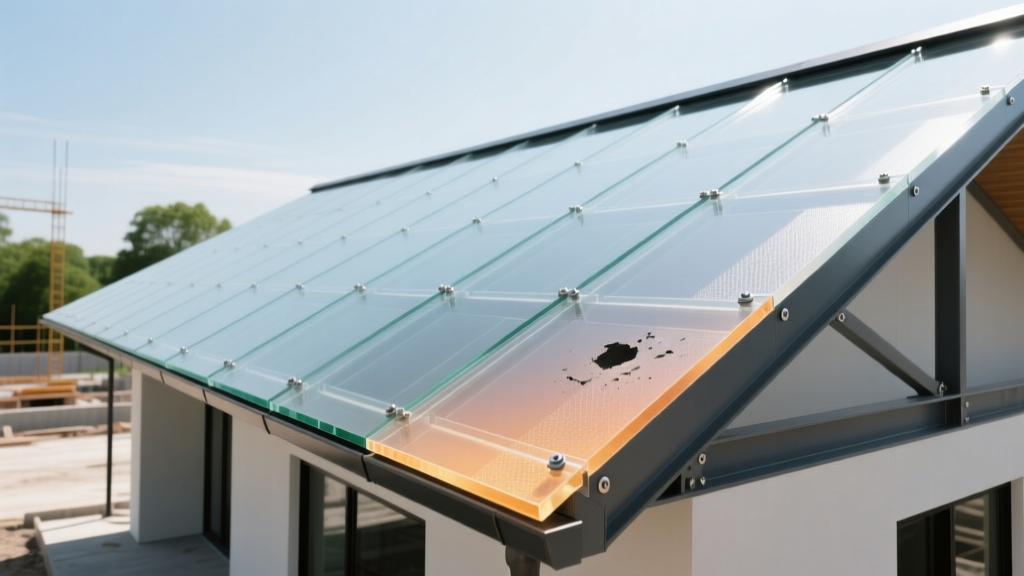
Decoding Polycarbonate Roofing Performance Specifications
Polycarbonate (PC) roofing has evolved from a niche greenhouse material to a mainstream architectural solution for patios, skylights, and commercial canopies. However, specifying the wrong profile or ignoring critical performance thresholds leads to catastrophic failures, including panel blow-offs, severe yellowing, and structural sagging. To ensure longevity, architects and contractors must evaluate polycarbonate based on rigorous material science specifications rather than generic marketing claims. This guide breaks down the exact performance ratings, ASTM testing standards, and physical tolerances required for a successful polycarbonate roofing installation.
Material Profiles: Structural and Thermal Matrices
Polycarbonate roofing is manufactured in four primary profiles, each with distinct load-bearing and insulation characteristics. Selecting the correct profile dictates the required purlin spacing and overall structural cost.
| Profile Type | Thickness Range | Weight (oz/sq ft) | Approx. R-Value | Light Transmission | Primary Application |
|---|---|---|---|---|---|
| Solid Flat Sheet | 2mm - 12mm | 24 - 144 | 0.78 - 1.4 | 85% - 90% | Security glazing, heavy-duty skylights |
| Corrugated | 0.8mm - 1.5mm | 10 - 18 | 0.85 | 85% - 92% | Agricultural buildings, patio covers |
| Twin-Wall | 4mm - 10mm | 8 - 16 | 1.4 - 1.7 | 79% - 82% | Standard pergolas, entryway canopies |
| Multi-Wall (3 to 5) | 16mm - 32mm | 25 - 55 | 2.4 - 3.8 | 62% - 74% | Commercial atriums, insulated enclosures |
Impact Resistance and Hail Ratings
Polycarbonate is prized for its extreme impact resistance, but this property varies wildly between solid and multiwall profiles. Performance is typically measured using the Gardner Impact Test (ASTM D5420) and UL 972 standards for burglar-resisting glazing.
Solid vs. Multiwall Impact Thresholds
- Solid Polycarbonate: Exhibits an impact strength of approximately 900 inch-ounces in the Gardner test. It is virtually unbreakable under normal environmental conditions and is rated to withstand 2-inch hail traveling at terminal velocity without cracking or shattering. Solid PC is roughly 250 times stronger than annealed glass of the same thickness.
- Multiwall Polycarbonate: While the top skin resists puncture, the internal flutes can crush under concentrated point loads. A 16mm multiwall panel typically withstands a 400 inch-ounce impact. For regions with severe hail (e.g., FM 4473 Class 3 or 4 ratings), multiwall panels must be specified at a minimum of 25mm thickness or upgraded to solid sheets.
While polycarbonate can be cold-curved, bending it beyond its minimum radius induces micro-fractures that reduce impact resistance by up to 40%. For solid sheets, the minimum cold-curve radius is 150 times the sheet thickness (e.g., a 6mm sheet requires a 900mm minimum radius). Never force panels into tighter radii to fit misaligned framing.
UV Degradation and Co-Extrusion Specifications
Unprotected polycarbonate degrades rapidly under ultraviolet radiation, leading to photo-oxidation. This manifests as yellowing, embrittlement, and a drastic drop in light transmission. When reviewing manufacturer specifications, the method of UV protection is the most critical differentiator between a 2-year product and a 20-year product.
Co-Extruded vs. Blended UV Inhibitors
Cheap imports often blend UV inhibitors directly into the resin melt. This provides only superficial protection. High-performance architectural polycarbonate utilizes a co-extruded UV-blocking layer applied to the top surface during the manufacturing process.
- Layer Thickness: Specify a minimum co-extruded UV layer thickness of 50 microns. Layers thinner than 40 microns will degrade within 5 to 7 years in high-solar environments.
- Yellowing Index (Delta YI): Premium co-extruded sheets guarantee a Delta YI of less than 10 over a 10-year period, as tested under ASTM D1925.
- Installation Orientation: The UV-protected side is always marked with a peel-off film (usually white or branded). Installing the panel upside down exposes the unprotected substrate to the sun, resulting in catastrophic yellowing and chalking within 18 months.
For deep-dive technical data on resin stability and optical properties, refer to the Sabic Polycarbonate Resins technical documentation, which outlines the baseline chemical resistance and weathering performance of Lexan-grade resins used by top-tier extruders.
Thermal Expansion: The Silent Failure Point
Polycarbonate has one of the highest coefficients of thermal expansion (CTE) among common building materials. Ignoring CTE specifications during installation guarantees buckled panels, popped fasteners, and torn screw holes.
Calculating Expansion Tolerances
The linear coefficient of thermal expansion for polycarbonate is 0.065 mm/m°C (or 3.6 x 10^-5 in/in/°F). This is approximately seven times greater than aluminum and nine times greater than steel.
Field Calculation Example:
For a 12-foot (3.65 meter) multiwall panel experiencing a 40°F (22°C) temperature swing from a cold winter night to a hot summer afternoon, the panel will expand:
3.65m × 0.065 mm/m°C × 22°C = 5.21 mm of total expansion.
If both ends of this panel are rigidly fastened without expansion slots, the panel will bow violently or tear away from the fasteners.
Mandatory Installation Specs:
- Drill all fastener holes 1/4 inch (6mm) oversize to allow for lateral movement.
- Leave a minimum 1/8 inch (3mm) gap between panel edges inside H-profiles and U-channels.
- Use fasteners with neoprene or EPDM washers that are at least 1 inch in diameter, and do not torque them to the point of compressing the panel.
Fire Performance and Smoke Development Ratings
Building codes strictly regulate the use of plastics in roofing, particularly for commercial structures and attached residential patios. Polycarbonate performance is evaluated using ASTM E84 (UL 723), which measures the Flame Spread Index (FSI) and Smoke Developed Index (SDI).
| Fire Rating Class | Flame Spread Index (FSI) | Smoke Developed Index (SDI) | Polycarbonate Availability |
|---|---|---|---|
| Class A | 0 - 25 | 0 - 450 | Rare; requires heavy halogenated flame retardants that reduce impact strength and light transmission. |
| Class B | 26 - 75 | 0 - 450 | Standard for high-quality architectural PC (e.g., 16mm multiwall). Naturally self-extinguishing. |
| Class C | 76 - 200 | 0 - 450 | Common in thin, unmodified corrugated agricultural panels. |
Standard polycarbonate is inherently flame retardant; it melts and drips rather than sustaining a flame, and it self-extinguishes once the heat source is removed. However, the dripping molten plastic poses a secondary hazard. For projects requiring strict adherence to the International Building Code (IBC) for exterior fire exposure, consult the ASTM E84 Standard Test Method to verify that your specific panel thickness and profile meet the local jurisdiction's Class B or Class A mandates.
Structural Load Capacities: Purlin Spacing Matrix
The allowable span of polycarbonate roofing is dictated by the panel thickness, profile, and the local ground snow load (measured in pounds per square foot, psf). Over-spanning is the primary cause of water pooling, which leads to UV degradation acceleration and eventual structural collapse.
The following matrix provides maximum allowable purlin spacing (center-to-center) for multiwall polycarbonate under varying snow loads, assuming a roof pitch of at least 3:12 (15 degrees) to ensure adequate water runoff. For comprehensive engineering load tables and deflection limits, always cross-reference the Palram Technical Documents library or the specific extruder's engineering manual.
| Panel Thickness | 20 psf Snow Load | 30 psf Snow Load | 40 psf Snow Load | 50+ psf Snow Load |
|---|---|---|---|---|
| 6mm Twin-Wall | 24 inches | 16 inches | Not Recommended | Not Recommended |
| 8mm Twin-Wall | 32 inches | 24 inches | 20 inches | 16 inches |
| 10mm Triple-Wall | 40 inches | 32 inches | 24 inches | 20 inches |
| 16mm Multi-Wall | 48 inches | 40 inches | 32 inches | 24 inches |
| 25mm Multi-Wall | 60 inches | 48 inches | 40 inches | 32 inches |
Sourcing and Specification Checklist
Before finalizing a purchase order or architectural submittal for polycarbonate roofing, verify the following specifications with the supplier to ensure the material meets performance requirements:
- Resin Origin: Confirm the sheets are extruded from virgin, high-molecular-weight polycarbonate resin (e.g., Sabic Lexan or Covestro Makrolon), not recycled blends which suffer from reduced impact strength and optical clarity.
- UV Layer Verification: Request the manufacturer's spec sheet confirming a co-extruded UV layer of ≥50 microns on the top surface.
- Warranty Terms: Look for a minimum 10-year prorated warranty against yellowing (Delta YI < 10), loss of light transmission, and hail damage. Read the exclusions—many warranties are voided if the panels are cut with abrasive saws or if incompatible sealants (like silicone containing acetic acid) are used.
- Accessory Compatibility: Ensure that the aluminum or polycarbonate H-profiles, U-channels, and closure strips are engineered for the exact millimeter thickness of your chosen panel to prevent wind-driven rain infiltration.
By anchoring your material selection in these verifiable performance ratings and physical specifications, you eliminate the guesswork from polycarbonate roofing and ensure a structure that remains clear, rigid, and weather-tight for decades.