Choosing the Right Reflective Roofing Material by Climate Zone
Discover how to select the ideal reflective roofing material based on your specific IECC climate zone to maximize HVAC efficiency and prevent heating penalties.

The Physics of Reflectivity: SRI vs. Albedo
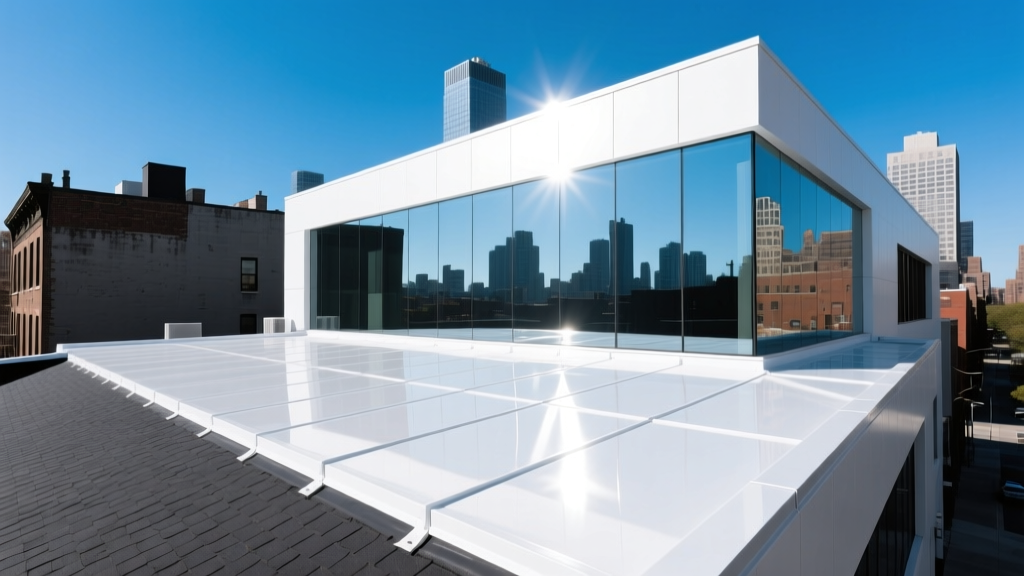
Selecting a reflective roofing material requires looking beyond basic color. The industry standard for measuring a roof's ability to reject solar heat is the Solar Reflectance Index (SRI). Unlike simple albedo (which only measures solar reflectance), SRI incorporates both solar reflectance and thermal emittance—the material's ability to radiate absorbed heat back into the atmosphere.
A standard black asphalt roof has an SRI of roughly 5, while a highly reflective white thermoplastic polyolefin (TPO) membrane can achieve an initial SRI of 107. However, material degradation, dirt accumulation, and biological growth can severely impact the 3-year aged SRI, which is the metric building inspectors and energy auditors actually use to verify code compliance.
Never purchase a reflective roofing material without verifying its Cool Roof Rating Council (CRRC) label. The CRRC Directory provides independently tested initial and 3-year aged SRI values. If a manufacturer cannot provide a CRRC product ID, their reflectivity claims are unverified and likely won't satisfy local IECC energy codes.
Climate Zone Matrix: Matching Material to Region
The International Energy Conservation Code (IECC) divides North America into eight climate zones. Applying a high-SRI reflective roofing material in a heating-dominated climate can actually increase your annual energy bills by reflecting beneficial winter solar gain. Use the matrix below to determine your baseline requirements.
| IECC Zone | Climate Profile | Target Aged SRI | Primary Material Strategy |
|---|---|---|---|
| Zones 1-3 | Hot-Humid / Hot-Dry | 78 - 100+ | Maximum rejection (White TPO, PVC, Silicone) |
| Zone 4 | Mixed / Transitional | 50 - 78 | Balanced (Cool metal, reflective granules) |
| Zone 5 | Cool / Mixed | 30 - 50 | Moderate (Light gray metal, coated mod-bit) |
| Zones 6-8 | Cold / Marine | Below 30 | Absorption prioritized (Dark metal, EPDM) |
Hot-Dry and Hot-Humid Zones (IECC 1-3): Maximum Rejection
In regions like the American Southwest, Florida, and the Gulf Coast, cooling loads dominate annual energy consumption. The U.S. Department of Energy notes that cool roofs in these zones can reduce peak cooling demand by 10% to 15%. The goal here is maximum solar reflectance and high thermal emittance.
Top Material Specifications for Zones 1-3
- Thermoplastic Polyolefin (TPO): Products like GAF EverGuard Extreme (60-mil) offer an initial SRI of 107 and a 3-year aged SRI of 84. TPO is heat-welded, making it highly resistant to the thermal expansion and contraction cycles common in desert climates. Installed cost: $6.50 - $9.00 per sq. ft.
- Polyvinyl Chloride (PVC): Ideal for hot-humid zones with high biological activity (algae/mold). PVC membranes, such as Johns Manville PVC, resist chemical and biological degradation better than TPO. The plasticizers in PVC keep it flexible despite high UV exposure. Installed cost: $7.50 - $11.00 per sq. ft.
- 100% Silicone Roof Coatings: For retrofitting existing low-slope roofs, fluid-applied silicone (e.g., Henry 887 Tropi-Cool) provides an SRI of 102. Unlike acrylics, silicone does not degrade under ponding water, which is critical in flat-roof applications in hurricane-prone humid zones. Material cost: $3.00 - $4.50 per sq. ft.
Mixed Climates (IECC 4-5): The Thermal Balancing Act
Transitional zones, covering much of the Mid-Atlantic, Midwest, and Pacific Northwest, experience both significant summer cooling loads and winter heating loads. A pure white roof here creates a "winter heating penalty"—reflecting the low-angle winter sun and forcing your HVAC system to work harder.
The Solution: Cool Pigment Technology
Instead of stark white membranes, specify reflective roofing materials utilizing cool-colored pigments. These are specialized inorganic pigments that reflect near-infrared (NIR) radiation while absorbing visible light. This allows you to install a dark bronze, charcoal, or terracotta roof that still achieves an SRI of 40-60.
Standing Seam Metal (Cool Pigments)
Use 24-gauge steel with a Kynar 500 resin-based coating formulated with NIR-reflective pigments. Achieves an SRI of 45-55 in darker colors. Excellent for shedding snow in winter while rejecting summer IR heat. Cost: $11.00 - $16.00 per sq. ft.
Modified Bitumen with Reflective Granules
For low-slope residential or commercial, SBS modified bitumen cap sheets coated with highly reflective ceramic granules (e.g., Malarkey's ARCTIC line) provide an SRI around 35-45. They offer the durability of asphalt with moderate reflectivity. Cost: $5.50 - $8.00 per sq. ft.
Cold Climates (IECC 6-8): Avoiding the Winter Penalty
In heating-dominated climates like the Northern Plains, New England, and Canada, the Environmental Protection Agency (EPA) advises against high-SRI roofs. The energy saved in the brief summer cooling season is vastly outweighed by the increased heating costs in the long, dark winter.
However, you still need to manage ice damming and thermal shock. The strategy shifts from solar reflectance to thermal emittance and insulation management.
- Prioritize R-Value over SRI: Invest the budget you would have spent on premium reflective membranes into upgrading polyisocyanurate (polyiso) insulation to meet or exceed IECC 2026 continuous insulation requirements (typically R-30 to R-40 for commercial decks).
- Use Dark EPDM or TPO: Black EPDM (SRI ~5) or dark gray TPO absorbs winter solar radiation, helping to melt snow and reduce ice dam formation at the eaves.
- Ventilation is Mandatory: Because dark roofs absorb more heat, ensure a minimum 2-inch continuous air channel from soffit to ridge to prevent attic overheating during the brief summer months and to equalize the roof deck temperature in winter.
Real-World Degradation: Maintaining the SRI Rating
A reflective roofing material is only as good as its surface cleanliness. The gap between a product's "initial" SRI and its "3-year aged" SRI is where most building owners lose their energy ROI.
The Maintenance Protocol for High-Albedo Roofs
- Year 1 (Post-Installation): Inspect for construction debris, HVAC exhaust soot, and pollen accumulation. Wash with a neutral pH detergent. Avoid high-pressure washing on TPO/PVC seams.
- Year 2 (Biological Check): Inspect north-facing slopes and areas under overhanging trees for algae. Apply a zinc sulfate or specialized roof-safe biocide treatment. Do not use chlorine bleach, which degrades polymer chains in single-ply membranes.
- Year 3 (Recertification): If the roof is part of a LEED or energy-star certification, hire an independent rater to take field SRI measurements using a portable reflectometer to prove the aged SRI meets design specifications.
Cost and ROI Framework
Upgrading from a standard code-minimum roof to a premium reflective roofing material typically adds 10% to 18% to the total installation cost. However, the return on investment is highly dependent on the building's insulation levels and HVAC efficiency.
Energy Savings Projection (Per 10,000 Sq. Ft. Roof)
Zone 2 (Hot-Humid - e.g., Miami, FL):
Estimated annual cooling savings: $2,800 - $3,500.
Payback period for SRI upgrade: 2.5 - 4 years.
Zone 4 (Mixed - e.g., St. Louis, MO):
Estimated annual net energy savings: $800 - $1,200 (cooling savings minus winter heating penalty).
Payback period for SRI upgrade: 6 - 9 years.
Zone 7 (Cold - e.g., Minneapolis, MN):
Estimated annual net energy loss: -$600 (increased heating costs).
Payback period: Negative ROI. Do not specify high-SRI materials here.
By aligning your reflective roofing material selection with your specific IECC climate zone, you move beyond generic green-building trends and engineer a roof assembly that actively optimizes your facility's thermodynamic profile year-round.
Written by
James ThorntonJames Thornton is a construction industry veteran with 25 years of hands-on experience in wood framing, lumber grading, and residential building codes. He started as a framing carpenter in rural Oregon, earned his ICC Residential Building Inspector certification, and eventually became a senior plan reviewer for the City of Portland Bureau of Development Services. James holds a B.S. in Wood Science & Technology from Oregon State University and is a certified lumber grader through the West Coast Lumber Inspection Bureau (WCLIB). He has inspected over 3,000 residential construction sites and authored the city's internal guide on advanced framing techniques (2x6 at 24" O.C.). James lives in Bend, OR, where he builds custom timber-frame cabins and competes in lumberjack sports.
More from James Thornton
View all
Insulation
Best Home Insulation Materials: Complete 2026 Guide
Compare top home insulation materials for 2026. Find R-values, installed costs per square foot, and best uses for fiberglass, spray foam, and mineral wool.
Aug 4, 2026

Sustainable Building
Certify Your Green Building Material for LEED and WELL
Step-by-step guide to certifying a green building material for LEED v5 and WELL v2. Master EPDs, HPDs, and VOC limits for 2026 project specifications.
Aug 4, 2026

Stone & Masonry
Veneer Stacked Stone Panels: Interior Design & Style Showcase
Discover how veneer stacked stone panels transform interiors. Explore modern design profiles, material pairings, and technical installation specs.
Aug 4, 2026