Synthetic Thatch Roof Material: Durability and Lifespan Guide
Discover the true lifespan, UV resistance, and wind durability of synthetic thatch roof material compared to natural palm and reed thatch.
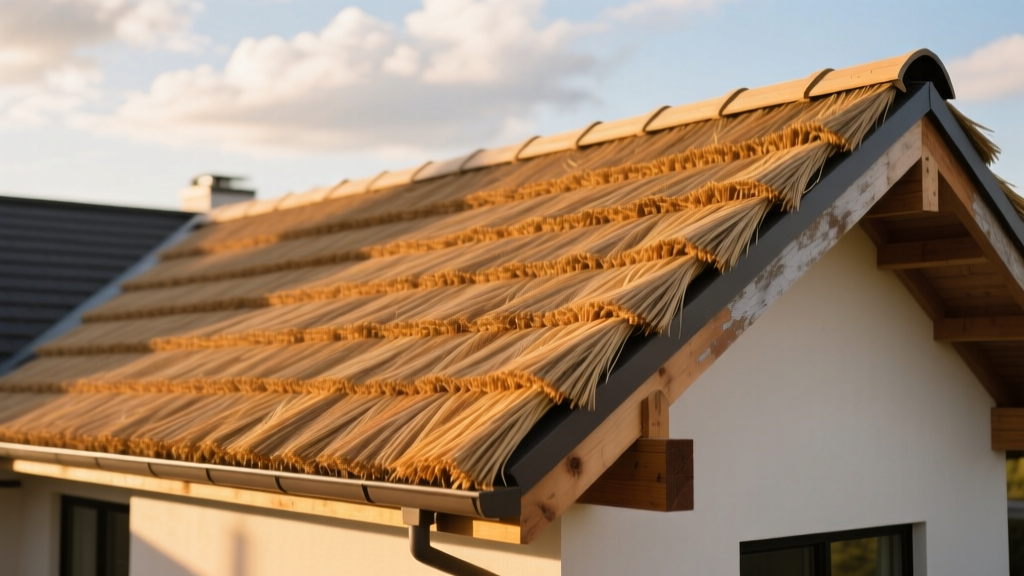
Architects and resort developers increasingly specify synthetic thatch roof material to achieve the aesthetic of tropical palm or reed thatch without the biological vulnerabilities of organic matter. While natural thatch succumbs to rot, insect infestation, and rapid UV degradation within a single decade, modern synthetic alternatives leverage advanced polymer science to extend service life dramatically. Understanding the precise durability mechanics, failure modes, and lifecycle costs of these materials is essential for specifying a roof that survives extreme weather while maintaining its visual integrity.
The Core Composition: Why Synthetic Thatch Outlasts Natural
The longevity of synthetic thatch roof material is dictated by its base resin and the specific chemical additives compounded during extrusion or injection molding. The market is currently dominated by two primary polymers:
High-Density Polyethylene (HDPE)
Premium synthetic thatch is typically extruded from HDPE. HDPE offers superior tensile strength and impact resistance compared to other plastics. To survive decades of direct sunlight, manufacturers incorporate Hindered Amine Light Stabilizers (HALS) and UV absorbers directly into the resin masterbatch. Unlike surface coatings that wear off, these molecular stabilizers prevent polymer chain scission (the breaking of chemical bonds caused by UV radiation) from the inside out. High-end HDPE thatch often includes a secondary layer of fire-retardant additives, allowing it to achieve a Class A fire rating without compromising flexibility.
Polyvinyl Chloride (PVC)
PVC-based thatch shingles are generally injection-molded rather than extruded, resulting in a stiffer, more rigid profile. While PVC inherently possesses better flame resistance than untreated polyethylene, it requires the addition of plasticizers to remain flexible in freezing temperatures. Over a 15- to 20-year period, plasticizer migration can cause PVC thatch to become brittle, making HDPE the superior choice for extreme temperature fluctuations and maximum lifespan.
Lifespan Breakdown: Synthetic vs. Natural Thatch
When evaluating the long-term viability of a thatch roof, the contrast between organic and synthetic materials is stark. The following matrix outlines the expected performance metrics across different thatch categories.
| Material Type | Expected Lifespan | Fire Rating | Wind Uplift Resistance | Primary Degradation Vector |
|---|---|---|---|---|
| HDPE Synthetic | 20–50 Years | Class A | Up to 160 mph | Extreme mechanical abrasion |
| PVC Synthetic | 15–30 Years | Class A / B | Up to 130 mph | Plasticizer loss / Brittleness |
| Natural Palm | 3–7 Years | Class F (Untreated) | 40–60 mph | Biological rot / Insect damage |
| Natural Reed | 5–10 Years | Class F (Untreated) | 50–70 mph | Fungal decay / Moisture retention |
Environmental Stressors and Degradation Mechanics
UV Radiation and Color Fastness
The most common complaint with early-generation artificial thatch was severe fading and chalking. Modern synthetic thatch roof material utilizes inorganic metal-oxide pigments (such as iron oxides for earth tones) rather than organic dyes. These pigments are encapsulated within the HDPE matrix, rendering them virtually immune to UV bleaching. According to accelerated weathering tests based on ASTM roofing and waterproofing standards, premium HDPE thatch exhibits a Delta E (color change) of less than 3.0 after 5,000 hours of continuous UV exposure, a threshold generally imperceptible to the human eye.
Wind Uplift and Structural Integrity
Natural thatch relies on heavy wire netting and thick bundling to resist wind, but it inherently creates a "sail effect" during hurricanes. Synthetic thatch is installed as individual, overlapping shingles. Wind passes through the engineered gaps between the extruded blades, equalizing pressure above and below the roof plane. When installed according to FEMA Building Science guidelines for high-wind zones, synthetic thatch systems utilizing ring-shank fasteners can withstand uplift pressures equivalent to Category 5 hurricane wind speeds (160+ mph).
Fire Resistance Standards
Organic thatch is a severe fire hazard, capable of engulfing a structure in minutes. Untreated natural thatch fails all standardized fire tests. Conversely, synthetic thatch roof material is heavily regulated. According to UL fire testing standards, premium HDPE thatch achieves a Class A fire rating (UL 790 / ASTM E108). When exposed to direct flame, the fire-retardant compounds cause the HDPE to melt, shrink, and drip away from the heat source rather than sustaining combustion or producing airborne embers, effectively starving the fire of fuel.
Real-World Failure Modes: What Actually Goes Wrong?
While the material itself is highly durable, the vast majority of synthetic thatch failures are rooted in improper installation. Understanding these edge cases is critical for contractors and project managers.
Never use standard electroplated galvanized nails or staples to secure synthetic thatch. The HDPE material is completely impermeable, meaning any rust developing on the fastener head has nowhere to go but down the face of the thatch, creating severe, irreversible rust streaks. Furthermore, as the nail corrodes, it loses its pull-out strength, leading to shingle blow-offs. Always specify Type 304 or Type 316 stainless steel ring-shank nails, or hot-dipped galvanized fasteners with a minimum 1.5 oz/ft² zinc coating.
Insufficient Headlap and Capillary Action
Synthetic thatch shingles typically measure 20 to 25 inches in length. A common error is reducing the headlap (the exposed portion of the shingle) to save on material costs. The manufacturer-mandated exposure is usually 5 to 6 inches. Exceeding this exposure reduces the overlap to a single layer in certain areas, allowing wind-driven rain to bypass the water-shedding plane via capillary action.
Ignoring the Minimum Pitch Requirement
Unlike natural thatch, which can be applied at incredibly steep, almost vertical angles or layered thickly on low slopes, synthetic thatch relies on gravity and overlapping channels to shed water. The National Roofing Contractors Association (NRCA) and most manufacturers mandate a minimum roof pitch of 3:12 (and preferably 4:12) for synthetic systems. Installing synthetic thatch on a low-slope or flat roof guarantees water pooling, leading to underlayment degradation and interior leaks.
Substrate and Decking Requirements
Synthetic thatch does not provide structural rigidity; it is purely a water-shedding cladding. The substrate must be solid and continuous.
- Solid Decking: Minimum 1/2-inch CDX plywood or 7/16-inch OSB is required. Spaced sheathing (skip decking) used for natural thatch or clay tiles is unacceptable for synthetic thatch, as the flexible HDPE shingles will sag between the battens, creating water dams.
- Underlayment: A high-quality synthetic roofing underlayment or self-adhering ice and water shield must be applied over the entire deck. Because synthetic thatch is highly ventilated, blowing snow or fine mist can occasionally penetrate the outer layers; the underlayment acts as the true secondary weather barrier.
Maintenance Protocols to Maximize the Warranty
While marketed as "maintenance-free," synthetic thatch roof material requires minimal but specific upkeep to honor 20-year manufacturer warranties.
- Debris Clearing: Accumulated leaves and pine needles trap moisture against the synthetic blades. While the HDPE will not rot, the trapped moisture can degrade the underlying underlayment and cause staining from decaying organic tannins. Clear debris bi-annually using a leaf blower.
- Washing Restrictions: If the roof requires cleaning due to pollen or environmental soot, use a garden hose or a low-pressure power washer. Never exceed 1,200 PSI. High-pressure streams will fray the extruded HDPE monofilaments, permanently altering the visual texture and voiding the UV warranty.
- Biocide Application: In heavily shaded, humid environments, airborne algae spores can colonize the surface of the thatch. While it will not eat the plastic, it causes green discoloration. Apply a 50/50 solution of sodium hypochlorite (bleach) and water, allow it to dwell for 15 minutes, and rinse thoroughly.
Cost-to-Lifespan Ratio Analysis
The initial capital expenditure for synthetic thatch is significantly higher than natural materials, but the total cost of ownership (TCO) heavily favors synthetic options over a 20-year horizon.
20-Year Total Cost of Ownership (Per Square Foot)
Natural Palm Thatch: $8.00 - $12.00 (Initial) + $16.00 - $24.00 (Three Replacements) = $24.00 - $36.00 / sq ft
HDPE Synthetic Thatch: $14.00 - $22.00 (Initial) + $0 (Replacements) = $14.00 - $22.00 / sq ft
Beyond direct material and labor costs, facility managers must also factor in the operational disruptions of re-thatching a commercial resort or restaurant every five years. Synthetic thatch roof material eliminates this recurring capital expense, providing a stable, fire-safe, and visually consistent roofline that reliably reaches the end of its multi-decade service life with only basic surface maintenance.
Written by
Priya KapoorPriya Kapoor is a real estate market analyst and construction economics researcher with expertise in housing affordability, development feasibility, and infrastructure investment. She holds a Master of Regional Planning from Cornell University and previously worked as a senior analyst at CBRE's Investment Properties group, where she modeled returns for $4B in mixed-use development pipelines. Priya now runs an independent research practice advising developers, municipalities, and REITs on construction cost forecasting and market timing. She publishes the quarterly "BuildMat Market Pulse" report tracking material price indices across 12 commodity categories. Based in Austin, TX, Priya serves on the board of Habitat for Humanity Austin and is a marathon runner.
More from Priya Kapoor
View all
Construction Cost
Cost to Build a 1600 Sq Ft Home in 2026: Full Breakdown
Accurate 2026 cost to build a 1600 sq ft home—material, labor, and regional pricing breakdowns included. Plan your budget with real-time estimates.
Aug 11, 2026

Wood & Lumber
Name the Types of Wood for Pressure Treatment and Preservation
Learn how to name the types of wood best suited for pressure treatment. Compare species treatability, chemical retention levels, and 2026 preservation costs.
Aug 4, 2026

Stone & Masonry
Stone Veneer Suppliers Lindenhurst: 2026 Cost Analysis
Analyze 2026 stone veneer costs in Lindenhurst, NY. Compare local supplier pricing, delivery fees, and Suffolk County installation labor rates.
Aug 4, 2026