Roofing Material List Template: Compare Systems and Costs
Use our comprehensive roofing material list template to compare asphalt, metal, and flat roof systems, exposing hidden costs and ensuring bid accuracy.
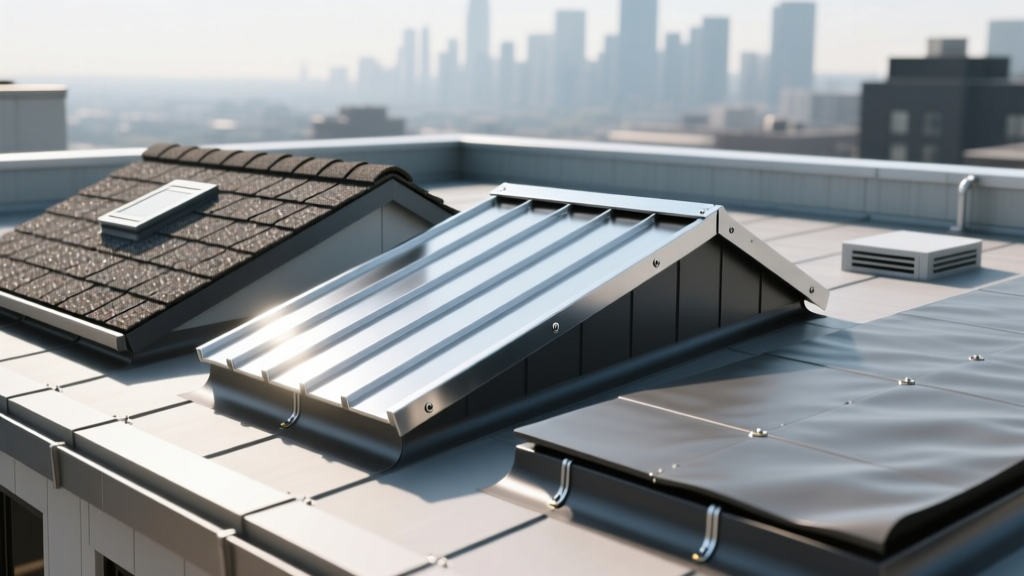
A roofing material list template is not merely a shopping list; it is a critical bid-leveling tool. When evaluating proposals for a roof replacement or new construction, homeowners and project managers frequently encounter estimates that list only the primary outer layer—such as '30-year architectural shingles'—while obscuring the quality of the underlying system. This omission leads to severe performance disparities and unexpected change orders. By utilizing a standardized roofing material list template, you force contractors to itemize every component from the deck preparation to the ridge ventilation, enabling an apples-to-apples comparison of competing bids.
The Flaw in Standard Roofing Estimates
Most residential and commercial roofing proposals fail to specify the exact grade of secondary materials. A contractor quoting a low price may be using 15-pound asphalt-saturated felt (ASTM D226) and plastic pipe boots, while a higher-priced bid might include high-tensile synthetic underlayment and lead-jacketed flashings. According to the National Roofing Contractors Association (NRCA), the underlayment and flashing systems are responsible for the majority of secondary water-shedding defense, yet they are the most frequently value-engineered components in competitive bidding.
Beware of line items labeled 'decking replacement allowance' or 'flashing allowance.' These are not material specifications; they are financial placeholders. A true roofing material list template requires the exact unit cost per sheet of 5/8-inch CDX plywood or OSB, and the specific gauge and metal type for all drip edges and step flashings.
The Comprehensive Roofing Material List Template
To properly compare roofing systems, your template must be divided into six distinct functional zones. Below is the structural framework you should require from any contractor or use for your own material takeoffs.
- Deck Preparation & Adhesives: Wood replacement metrics, primer requirements, and deck adhesives.
- Ice & Water Shield: Self-adhering membrane specifications for eaves, valleys, and penetrations.
- Underlayment: Primary field underlayment type, weight, and slip-resistance ratings.
- Primary Roof Covering: Exact manufacturer, product line, color, and wind warranty rating.
- Flashing & Edge Metal: Drip edge, step flashing, counter-flashing, and pipe boot materials.
- Ventilation & Fasteners: Intake/exhaust NFA (Net Free Area) calculations and specific nail/screw types.
Material Comparison Matrix: 4 Common Systems
The following table demonstrates how the template applies across different roofing systems, utilizing current 2026 material pricing averages for the United States.
| Template Category | Architectural Asphalt | Standing Seam Metal | EPDM (Flat/Low Slope) | Clay/Concrete Tile |
|---|---|---|---|---|
| Deck Prep | 5/8" OSB/Plywood | 5/8" Plywood or Purlins | ISO Polyiso Insulation | 5/8" Plywood + Battens |
| Ice & Water | Grace Ice & Water Shield | High-Temp (HT) Membrane | N/A (Use TPO/EPDM flashing) | Grace HT or Equivalent |
| Underlayment | GAF TigerPaw Synthetic | 30lb Felt or Synthetic | N/A (Fully Adhered System) | Barricade UDL Select |
| Primary Cover | GAF Timberline UHDZ | 24-Ga Galvalume Panels | 60-Mil EPDM Membrane | Boral Saxony 900 |
| Flashing | 24-Ga Galvanized Steel | Z-Flashing / Galvalume | Uncured EPDM Flashing | 16oz Copper / Lead |
| Fasteners | 11-Ga Ring-Shank Nails | Concealed Stainless Clips | Carlisle FlexBond Adhesive | Copper Tile Nails |
| Est. Material Cost (per sq) | $130 - $170 | $450 - $650 | $180 - $250 | $600 - $900 |

Deep Dive: Underlayment, Flashing, and Fasteners
The true value of a roofing material list template emerges when scrutinizing the secondary components. General contractors often accept the lowest bid without verifying these critical details, leading to premature system failure.
Underlayment and ASTM Standards
For steep-slope roofs, synthetic underlayments have largely replaced traditional asphalt-saturated felt. However, unlike felt, which is governed by ASTM D226 and ASTM D4869, synthetic underlayments lack a single unified ASTM standard for water resistance and vapor permeability. When filling out your template, do not just write 'synthetic underlayment.' Specify the exact product, such as Owens Corning ProArmor or GAF TigerPaw, and verify its vapor transmission rate. For metal roofs, standard self-adhered ice and water shields will melt and degrade under the high thermal load of metal panels. Your template must explicitly state 'High-Temp (HT) Ice and Water Shield' (rated for up to 240°F) for any metal roofing application.
Flashing and Pipe Boot Longevity
Pipe boots are the most common source of roof leaks. Standard neoprene-rubber pipe boots degrade and crack under UV exposure within 10 to 15 years. A high-quality roofing material list template should specify lead-jacketed pipe boots or heavy-duty silicone-lined aluminum boots, which match the 40-to-50-year lifespan of premium architectural shingles or metal panels. Similarly, step flashing should be specified by metal type and thickness: 24-gauge galvanized steel for asphalt roofs, and 16-ounce copper for tile or slate systems to prevent galvanic corrosion.
Expert Insight: The Insurance Institute for Business & Home Safety (IBHS) FORTIFIED Home standard requires specific sealed roof deck protocols to prevent water intrusion during high-wind events. If you are building in a hurricane or high-wind zone, your template must include a peel-and-stick membrane applied to the entire deck, or a minimum 4-inch wide tape applied over all plywood seams before the primary underlayment is installed.
Real-World Scenario: Leveling Two Competing Bids
Consider a 2,500-square-foot residential re-roofing project. You receive two bids:
Bid A: $14,500
Bid B: $18,200
- Underlayment: Bid A specifies '15lb felt'. Bid B specifies 'GAF TigerPaw synthetic with high-traction coating'. Advantage: Bid B (superior tear resistance and safety).
- Ice & Water: Bid A includes it only on the first 3 feet of the eaves. Bid B includes it on eaves, all valleys, and around all penetrations (chimneys, plumbing vents). Advantage: Bid B (comprehensive leak protection).
- Flashing: Bid A reuses existing step flashing and uses neoprene pipe boots. Bid B installs all-new 24-ga step flashing and lead pipe boots. Advantage: Bid B (prevents future leak points).
- Ventilation: Bid A uses static box vents. Bid B specifies a continuous ridge vent (Cobra SnowCountry) balanced with continuous soffit intake. Advantage: Bid B (proper NFA balance prevents ice dams).
By running both bids through the roofing material list template, it becomes evident that Bid A is not actually cheaper; it is simply incomplete. Bid A will likely result in a roof that leaks at the valleys within a decade and requires premature pipe boot replacements, whereas Bid B provides a complete, balanced system.
Calculating Waste Factors by Roof Geometry
A precise material list template must account for waste. Ordering exactly the measured square footage guarantees project delays and mismatched dye-lots. Apply the following waste multipliers to your primary covering and underlayment line items based on roof complexity:
- Simple Gable Roof: 10% waste factor.
- Hip Roof with Valleys: 15% waste factor (due to angled cuts on hips and valleys).
- Mansard, Gambrel, or Complex Dormers: 20% to 25% waste factor.
- Metal Standing Seam: 5% to 8% waste (panels are custom cut to length, but trim and flashing require overage).
Frequently Asked Questions
Should cool roofing be included in the material template?
Yes. If you are in a climate with high cooling demands, specify ENERGY STAR certified roof products. For flat roofs, this means specifying white 60-mil TPO instead of black EPDM. For steep slopes, specify shingles with high solar reflectance index (SRI) granules. Add a specific line item for 'Cool Roof Coating' if utilizing a modified bitumen system.
How do I handle fastener specifications in the template?
Never leave fasteners to the contractor's discretion. For asphalt shingles in high-wind regions (110+ mph), specify 11-gauge or 12-gauge hot-dipped galvanized ring-shank nails with a minimum 3/8-inch head, driven with exactly 6 nails per shingle instead of the standard 4. For metal roofing, specify stainless steel concealed clips and neoprene-washer screws for any exposed trim to prevent rust streaking.
What about permits and disposal?
While not physical 'materials,' your template should include line items for 'Tear-off and Disposal (per ton)' and 'Municipal Permit Fees.' Disposal costs vary wildly based on whether the existing roof has one layer or two, and whether the contractor uses a dedicated dump trailer or third-party waste pods (like Bagster). Force the contractor to specify the exact disposal method and tonnage estimate in the template.
Written by
Elena RodriguezElena Rodriguez is a civil engineer and technical writer specializing in concrete technology, masonry systems, and ASTM/ACI compliance. She earned her B.S. in Civil Engineering from Texas A&M University and spent a decade at a materials testing laboratory, performing over 2,000 concrete compressive strength tests and masonry prism evaluations. Elena is an ACI-certified Field Testing Technician (Grade I) and a member of ASTM Committee C12 on Natural Building Stone. She currently consults on forensic engineering cases involving concrete failures and moisture intrusion. Based in San Antonio, TX, Elena is a proud member of the Society of Women Engineers (SWE) and coaches her daughter's FIRST Robotics team.
More from Elena Rodriguez
View all
Walls & Panels
Cost Analysis: Light Gauge Steel Framing Advantages and Disadvantages
Evaluate light gauge steel framing advantages and disadvantages through a strict cost analysis lens, comparing material, labor, and lifecycle expenses.
Aug 4, 2026

Walls & Panels
Gypsum Board Types: Exact Specifications, Thickness & Dimensions
Compare standard, Type X, and moisture-resistant gypsum board types. Get exact specifications, thicknesses, dimensions, and ASTM standards for your project.
Aug 4, 2026

Fire Resistance
Best Fire-Resistant Outdoor Decking Materials: 2026 Buyer Guide
Discover the best fire-resistant outdoor decking materials for 2026. Compare Class A PVC, aluminum, and hardwood options for WUI compliance and safety.
Aug 4, 2026