Roof Types Material Comparison: Best Options for 2026
Compare top roof types material options for 2026. Analyze costs, lifespans, and climate suitability for asphalt, metal, tile, and synthetic membranes.

The 2026 Roofing Material Landscape: Beyond Basic Shingles
Selecting the correct roof types material requires balancing structural load limits, local climate extremes, and lifecycle return on investment. The days of defaulting to standard 3-tab asphalt shingles are over. In 2026, advanced polymer composites, high-reflectance metal alloys, and SBS-modified architectural shingles dominate the market, each engineered to solve specific environmental stressors. This guide strips away marketing jargon to compare the exact specifications, failure modes, and installed costs of the top roofing systems available today.
• High-Wind / Hurricane Zones: 24-gauge Standing Seam Metal or FORTIFIED-rated SBS Shingles.
• Heavy Snow / Ice Damming: Metal with integrated snow guards and self-adhering membrane underlayment.
• Historic / HOA Restricted: Synthetic Polymer Slate (Class A Fire, Class 4 Impact).
• Budget-Conscious Resale: Architectural Fiberglass Shingles with algae-resistant copper granules.
Asphalt Architectural Shingles: The Baseline Standard
Architectural (dimensional) shingles remain the most widely installed roof types material in North America, but the technology has evolved significantly. Modern premium shingles utilize a heavier fiberglass mat and ceramic-coated basalt granules. For high-wind and hail-prone regions, SBS (Styrene-Butadiene-Styrene) modified asphalt shingles are now the industry benchmark.
Product Spotlight & Specifications
- GAF Timberline UHDZ: Features a proprietary StrikeZone nailing area that is 30% wider than standard shingles, reducing installation errors and blow-offs. Rated for 130 mph winds when installed with the required 6-nail pattern.
- Owens Corning Duration Flex: An SBS modified shingle that achieves a UL 2218 Class 4 impact resistance rating. The rubberized asphalt matrix allows the shingle to absorb hail strikes without fracturing the fiberglass mat.
Installed Cost (2026): $5.50 to $8.50 per square foot, including tear-off, synthetic underlayment, and architectural shingles.
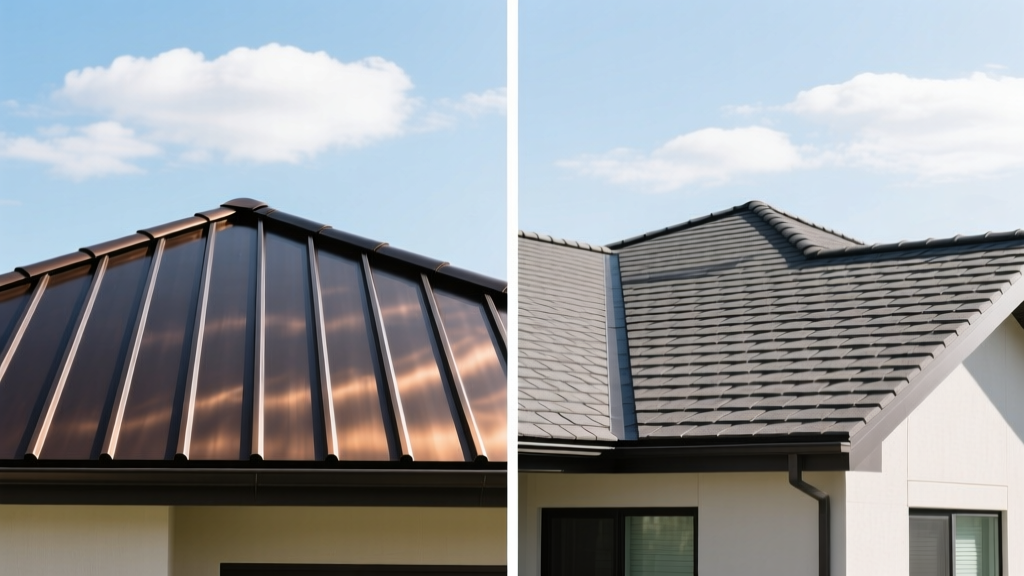
Standing Seam Metal Roofing: The Longevity Champion
When evaluating roof types material for maximum lifespan, concealed-fastener standing seam metal is unmatched. Unlike exposed-fastener corrugated panels (which require neoprene washer replacements every 15 years), standing seam systems use sliding clips that accommodate thermal expansion and contraction, eliminating fastener back-out and oil-canning.
Gauge, Coating, and Finish Specifics
Do not accept vague 'metal roofing' quotes. The performance of a metal roof relies entirely on the substrate and paint system:
- Substrate: Specify 24-gauge Galvalume steel (minimum AZ50 coating, which is 55% aluminum and 45% zinc). This prevents red rust at the cut edges through galvanic protection.
- Paint System: Require a PVDF resin coating (Kynar 500 or Hylar 5000). Standard SMP (Silicone Modified Polyester) paints will chalk and fade significantly within 10 years in high-UV environments, whereas PVDF systems retain color integrity for decades.
- Panel Profile: A 1.5-inch or 1.75-inch mechanical lock seam is mandatory for roof pitches below 3:12 to prevent capillary water draw.
Installed Cost (2026): $14.00 to $21.00 per square foot, heavily dependent on roof complexity, penetrations, and flashing details.
Synthetic Polymer & Composite Tiles: The Emerging Heavyweight
Synthetic roofing materials, engineered from recycled rubbers and engineered polymers, have captured significant market share from natural slate and concrete tile. They offer the aesthetic depth of quarried stone without the extreme structural loading requirements.
Products like DaVinci Roofscapes Bellaforté and EcoStar Majestic Niagra are molded from actual stone and wood casts. They weigh between 300 to 400 lbs per square (100 sq ft), compared to 900+ lbs for natural slate. This allows homeowners to achieve a luxury aesthetic without spending $15,000+ on structural truss reinforcement. Furthermore, these materials carry a Class A fire rating and Class 4 impact rating, and they will not absorb water, freeze, and spall like natural clay or concrete tiles.
Installed Cost (2026): $16.00 to $24.00 per square foot.
Comprehensive Cost & Performance Matrix
| Material Type | Avg Installed Cost (per sq ft) | Expected Lifespan | Weight per Square | Wind Warranty |
|---|---|---|---|---|
| Architectural Asphalt (Standard) | $5.50 - $7.50 | 25 - 35 Years | 240 - 280 lbs | 110 - 130 mph |
| SBS Modified Asphalt (Impact) | $7.50 - $9.50 | 35 - 45 Years | 300 - 350 lbs | 130 mph (Class 4 Impact) |
| Standing Seam Metal (24ga) | $14.00 - $21.00 | 50 - 70+ Years | 120 - 150 lbs | 140+ mph (HVHZ rated) |
| Synthetic Polymer Slate | $16.00 - $24.00 | 50+ Years | 300 - 400 lbs | 110 - 130 mph |
Climate-Specific Failure Modes & Material Selection
Choosing a roof types material without considering localized weather patterns is the primary cause of premature system failure. Consult the Insurance Institute for Business & Home Safety (IBHS) FORTIFIED Home standards for region-specific wind and hail requirements.
High-Wind & Hurricane Zones (HVHZ)
In coastal regions, uplift pressure at the eaves and rakes can exceed 100 PSF. Standard asphalt shingles will zipper and detach. Solution: Install a 24-gauge standing seam metal roof with a structural batten system, or use an SBS modified shingle system installed with a continuous peel-and-stick membrane (e.g., GAF WeatherWatch) over the entire roof deck, not just the eaves.
Heavy Snow & Ice Damming Regions
Ice dams occur when heat escapes the attic, melting snow that refreezes at the colder eaves, forcing water under the roofing material. Solution: Metal roofing sheds snow efficiently, but requires engineered snow guards to prevent dangerous avalanches onto walkways. Regardless of the exterior material, you must install a minimum 6-foot width of self-adhering ice and water shield at the eaves and in all valleys to protect the decking from capillary water backup.
High-Heat & Urban Heat Island Zones
Standard dark asphalt shingles can reach surface temperatures of 160°F, drastically increasing cooling loads and accelerating asphalt volatilization. For energy efficiency, look to the Cool Roof Rating Council (CRRC) database. Specify highly reflective standing seam metal with specialized cool-color PVDF pigments (which reflect infrared radiation even in dark colors like charcoal or bronze), achieving a Solar Reflectance Index (SRI) of 35 or higher.
The Substrate Reality: Decking and Underlayment
The most expensive roof types material will fail if the substrate is compromised. Standard CDX plywood or OSB decking is highly susceptible to moisture swelling and edge delamination. For premium roofing systems (metal, slate, synthetic), upgrade to engineered roof sheathing like the Huber ZIP System. This panels feature an integrated water-resistive barrier and taped seams, providing a secondary layer of defense against wind-driven rain and eliminating the need for traditional felt paper. According to the National Roofing Contractors Association (NRCA), ensuring a rigid, dry, and properly ventilated deck is a non-negotiable prerequisite for validating the manufacturer's warranty on any premium roofing material.
Written by
Elena RodriguezElena Rodriguez is a civil engineer and technical writer specializing in concrete technology, masonry systems, and ASTM/ACI compliance. She earned her B.S. in Civil Engineering from Texas A&M University and spent a decade at a materials testing laboratory, performing over 2,000 concrete compressive strength tests and masonry prism evaluations. Elena is an ACI-certified Field Testing Technician (Grade I) and a member of ASTM Committee C12 on Natural Building Stone. She currently consults on forensic engineering cases involving concrete failures and moisture intrusion. Based in San Antonio, TX, Elena is a proud member of the Society of Women Engineers (SWE) and coaches her daughter's FIRST Robotics team.
More from Elena Rodriguez
View all
Walls & Panels
Cost Analysis: Light Gauge Steel Framing Advantages and Disadvantages
Evaluate light gauge steel framing advantages and disadvantages through a strict cost analysis lens, comparing material, labor, and lifecycle expenses.
Aug 4, 2026

Walls & Panels
Gypsum Board Types: Exact Specifications, Thickness & Dimensions
Compare standard, Type X, and moisture-resistant gypsum board types. Get exact specifications, thicknesses, dimensions, and ASTM standards for your project.
Aug 4, 2026

Fire Resistance
Best Fire-Resistant Outdoor Decking Materials: 2026 Buyer Guide
Discover the best fire-resistant outdoor decking materials for 2026. Compare Class A PVC, aluminum, and hardwood options for WUI compliance and safety.
Aug 4, 2026