Roof Flashing Repair: Top Brand Product Lines Compared
Compare top roof flashing repair brands including PROSOCO, Tremco, and Henry. Deep dive into liquid flash, tapes, and sealants for lasting fixes.
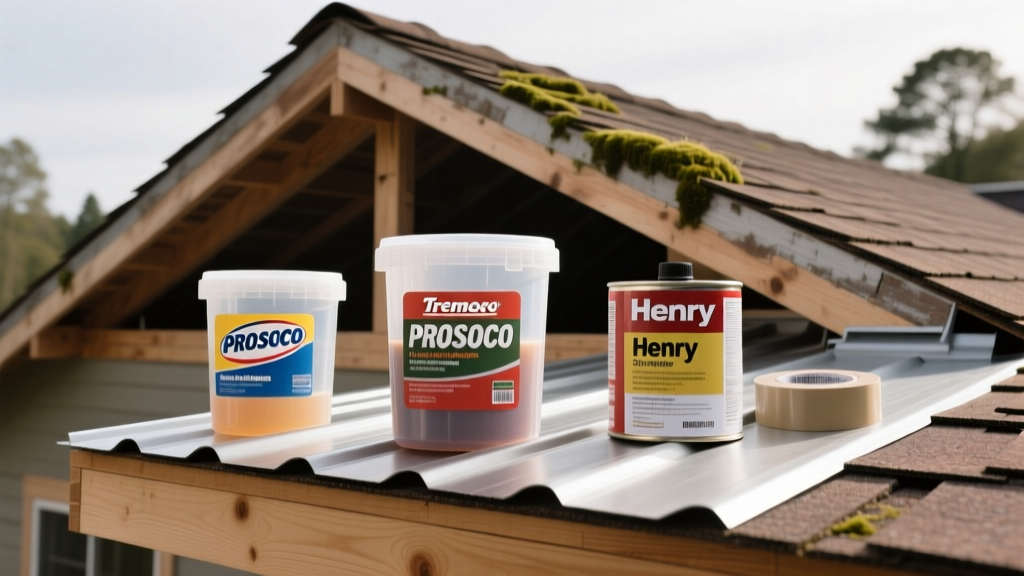
The Chemistry of Flashing Failure
Flashing intersections account for up to 90% of structural water intrusion in both residential and commercial roofing systems. The primary cause of failure is rarely the metal or membrane itself; it is the degradation of the sealant or transition tape bridging dissimilar materials. Traditional asphalt-based cements and generic butyl tapes fail prematurely due to UV oxidation, plasticizer migration, and thermal cycling. When a roof expands and contracts at different rates—such as an EPDM membrane meeting a masonry parapet—the repair material must possess high elongation and chemical compatibility with both substrates.
This deep dive evaluates the leading commercial and residential product lines for roof flashing repair, analyzing their chemical compositions, real-world pricing, and specific application parameters to ensure a permanent seal.
Liquid-Applied Flashing Systems: PROSOCO vs. Tremco
Liquid-applied flashing has largely replaced mechanical metal counter-flashing in complex penetration details. These systems cure into a seamless, fully adhered rubberized membrane that moves independently of the substrates.
PROSOCO R-Guard FastFlash
PROSOCO's R-Guard FastFlash utilizes STPE (Silyl-Terminated Polyether) chemistry. Unlike polyurethanes, STPE does not emit isocyanates during curing and will not bubble when applied to damp substrates. FastFlash is engineered to be applied at 20 to 30 wet mils, curing to a 15 to 20 dry mil thickness. It boasts an elongation rate of over 400%, making it ideal for high-movement joints like HVAC curbs and pipe penetrations.
- Pricing (2026): $75 - $85 per 2-gallon pail; $22 per 10.1 oz cartridge.
- Tack-Free Time: 2 to 4 hours at 70°F and 50% RH.
- Best Use Case: Complex penetrations, dissimilar material transitions, and damp-surface emergency repairs.
Tremco ExoAir Liquid Flash
Tremco's ExoAir Liquid Flash is a hybrid polyurethane system. It requires a slightly thicker application profile (40 wet mils) to achieve its specified 25 dry mil thickness. While it offers exceptional adhesion to porous substrates like concrete and CMU, it is moisture-curing, meaning high ambient humidity will accelerate the skin-over time, potentially trapping air if not troweled correctly.
- Pricing (2026): $80 - $95 per 2-gallon pail.
- Tack-Free Time: 1 to 2 hours (highly dependent on ambient humidity).
- Best Use Case: Masonry parapets, below-grade transitions, and heavy-movement structural joints.
| Feature | PROSOCO FastFlash (STPE) | Tremco ExoAir (Hybrid PU) |
|---|---|---|
| Target Dry Mil Thickness | 15 - 20 mils | 25 - 30 mils |
| Elongation at Break | > 400% | > 350% |
| Damp Surface Application | Yes (No bubbling) | No (Moisture-curing) |
| Coverage (2-gal pail) | ~40 linear ft at 6" wide | ~25 linear ft at 6" wide |
Peel-and-Stick Membrane Tapes: Protecto Wrap vs. ZIP System
For linear transitions, such as roof-to-wall intersections or step-flashing overlays, self-adhering membrane tapes provide immediate watertight seals. However, adhesive chemistry dictates their longevity and substrate compatibility.
Protecto Wrap BT20XL
The BT20XL utilizes a high-tack butyl adhesive laminated to a cross-laminated polyethylene film. Butyl adhesives are aggressive and bond instantly to most surfaces without primer. However, butyl is highly susceptible to plasticizer migration.
Never apply butyl-based tapes (like BT20XL) directly over PVC or TPO single-ply membranes. The plasticizers in the roofing membrane will migrate into the butyl adhesive, turning it into a liquid sludge within 12 to 18 months and causing catastrophic flashing failure. Use acrylic-based tapes or liquid STPE for PVC/TPO transitions.
Huber ZIP System Tape
While primarily marketed for wall sheathing, ZIP System Tape uses a high-performance acrylic adhesive. Acrylic adhesives are UV-stable, do not suffer from plasticizer migration, and maintain adhesion across extreme temperature swings (-40°F to 200°F). It is the superior choice for flashing repairs over single-ply membranes and metal roof panels.
- Pricing: $45 - $55 per 4-inch by 75-foot roll.
- Application Temp: Minimum 25°F (requires firm roller pressure to activate adhesive).
Elastomeric & Bituminous Sealants: Henry vs. Karnak
For budget-conscious repairs or temporary emergency patches during active precipitation, traditional cartridge sealants remain in the contractor's arsenal.
Henry 208R Rubberized Wet Patch
Henry's 208R Rubberized Wet Patch is an SBS (Styrene-Butadiene-Styrene) modified asphalt sealant. The SBS rubber modification provides significantly better elongation and cold-weather flexibility than standard asphalt cements. It can be applied in freezing temperatures and even underwater, making it the undisputed leader for emergency active-leak mitigation.
- Pricing: $14 - $18 per 10.1 oz cartridge; $45 per 3-gallon bucket.
- Limitation: Requires a protective coating (like aluminum roof coating) if exposed to direct, prolonged UV radiation to prevent surface checking.
Karnak 106 Fibered Asphalt
Karnak 106 is a traditional fibered asphalt cement reinforced with mineral fibers. While extremely cheap and effective for embedding roofing felts or patching built-up roofs (BUR), it lacks the elastomeric properties required for modern single-ply or metal flashing repairs. It will crack when subjected to the thermal expansion of metal counter-flashing.
Substrate Compatibility Decision Framework
Selecting the wrong product line for a specific roof membrane is the leading cause of callback warranties. Use this matrix to specify the correct flashing repair system based on the existing roof substrate.
| Existing Roof Substrate | Recommended Product Line | Products to Strictly Avoid |
|---|---|---|
| EPDM (Rubber) | PROSOCO FastFlash (STPE), EPDM-specific splice tape | Asphalt cements, Henry 208R (petroleum distillates swell EPDM) |
| TPO / PVC | ZIP System Tape (Acrylic), TPO liquid flash | Butyl tapes (Protecto Wrap), Asphalt products |
| Asphalt Shingles | Henry 208R, Karnak 106, Butyl tapes | Silicone sealants (poor adhesion to asphalt granules) |
| Standing Seam Metal | PROSOCO FastFlash, Tremco ExoAir, Polyurethane sealants | Asphalt cements (thermal degradation on hot metal) |
| Masonry / CMU | Tremco ExoAir (requires primer for porous block) | Unprimed acrylic tapes (dust infiltration kills bond) |
Application Protocol: Liquid Flashing Edge Cases
Even the most advanced STPE or hybrid polyurethane liquid flashing will fail if the substrate preparation is ignored. Follow this protocol for critical intersections:
- Mechanical Abrasion: Wire-brush metal surfaces to remove oxidation and chalky residue. For masonry, remove loose mortar and efflorescence.
- Chemical Cleaning: Do not use standard household degreasers, which leave surfactant residues. Wipe the intersection with denatured alcohol or a manufacturer-approved solvent wipe (e.g., PROSOCO Cleaner) to remove oils and silicones.
- Moisture Management: While STPE (FastFlash) can be applied to damp surfaces, standing water must be displaced. Use compressed air to blow out deep joints before application.
- Reinforcement Mesh: For gaps wider than 1/8 inch, or for inside corners experiencing structural settling, embed a polyester reinforcing mesh (like PROSOCO R-Guard Mesh) into the first 15-mil wet coat. Apply a second 15-mil coat immediately over the mesh to encapsulate it fully. This prevents the liquid membrane from thinning out at the apex of the corner.
- Tooling: Tool the material with a putty knife dipped in soapy water to ensure intimate contact with both substrates and to eliminate pinholes.
Before committing to a full pail of liquid flashing on an unknown or weathered substrate, apply a 2-inch skim coat and allow it to cure for 24 hours. Attempt to peel it back. If the material tears cohesively (the rubber itself breaks before the adhesive bond fails), the substrate is properly prepped. If it peels cleanly off the substrate, additional mechanical abrasion or a dedicated primer (like Tremco's ExoAir Primer) is mandatory.
Summary of Material Selection
Permanent roof flashing repair requires abandoning generic asphalt cements in favor of chemically engineered systems. Specify PROSOCO FastFlash for complex, damp, or multi-material penetrations. Utilize Tremco ExoAir for heavy-movement masonry transitions. Rely on ZIP System acrylic tapes for single-ply membrane overlaps, and keep Henry 208R exclusively for emergency, sub-freezing wet patches. Matching the adhesive chemistry to the specific roof substrate is the single most critical factor in achieving a zero-leak warranty.