Climate Guide to Flat Roofs Materials: Hot, Cold and Coastal
Discover the best flat roofs materials for hot, cold, coastal, and rainy climates. Compare TPO, EPDM, and Mod-Bit specs, costs, and failure modes.

The Climate-Material Matrix: A Quick Decision Framework
Selecting the right flat roofs materials is not a one-size-fits-all endeavor. A membrane that performs flawlessly in the arid heat of Arizona will rapidly degrade under the freeze-thaw cycles of Minnesota or the salt-laden hurricane winds of Florida. The primary driver of flat roof failure is the mismatch between material chemistry and local environmental stressors.
Before diving into specific product recommendations, use this decision matrix to align your primary climate threat with the correct baseline material category.
| Climate Zone | Primary Environmental Threat | Recommended Baseline Material | Critical Specification Requirement |
|---|---|---|---|
| Hot / Arid | UV degradation, thermal shock | TPO or PVC Membranes | SRI > 100, 60-mil minimum thickness |
| Cold / Snowy | Ice damming, freeze-thaw ponding | EPDM or Modified Bitumen | Tapered polyiso insulation (1/4" per ft) |
| Coastal / High-Wind | Uplift, salt spray corrosion | Fully Adhered TPO / PVC | FM 1-120 wind uplift rating |
| Temperate / High-Rain | Constant moisture, biological growth | BUR or Heavy-Duty EPDM | 90-mil thickness, root-resistant additives |
Hot and Arid Climates: Defeating UV and Thermal Shock
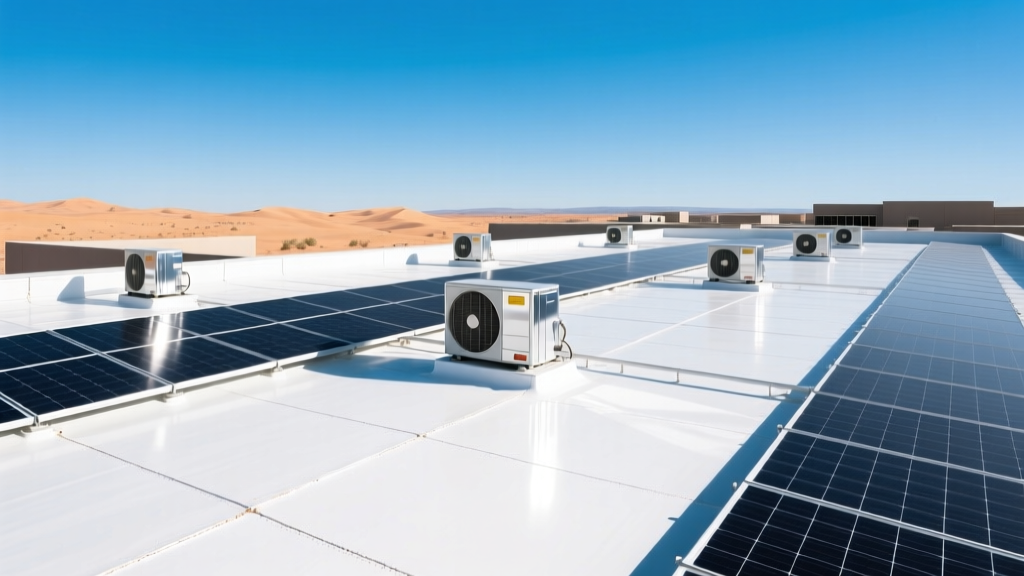
In regions where rooftop temperatures routinely exceed 160°F during summer months, the primary enemies of flat roofs materials are ultraviolet radiation and extreme thermal expansion. When a roof surface heats up during the day and rapidly cools at night, the membrane undergoes thermal shock, which can cause brittle cracking and seam separation over time.
Top Pick: High-Performance TPO Membranes
Thermoplastic Polyolefin (TPO) is the dominant choice for hot climates due to its inherent reflectivity and heat-welded seams. According to the U.S. Department of Energy, cool roofs with high solar reflectance can reduce peak cooling demand by 10% to 15%. For extreme heat, specify a product like GAF EverGuard Extreme TPO, which is engineered with specialized UV stabilizers to withstand prolonged high-heat exposure without becoming brittle.
Failure Mode to Avoid: Plasticizer Migration in PVC
While PVC (Polyvinyl Chloride) is also highly reflective, cheaper PVC formulations rely on liquid plasticizers to maintain flexibility. In extreme, sustained heat, these plasticizers can migrate to the surface and evaporate, leaving the membrane brittle. If choosing PVC over TPO in a hot climate, specify non-migratory polymeric plasticizers and ensure the membrane is at least 60 mils thick.
Cold and Snowy Climates: Managing Ice Dams and Ponding
Cold climates present a unique set of mechanical and thermal challenges. The Oak Ridge National Laboratory highlights that flat roofs in northern zones must manage heavy snow loads and the subsequent meltwater, which often refreezes at the roof perimeter, creating destructive ice dams.
Top Pick: EPDM and Modified Bitumen
Ethylene Propylene Diene Monomer (EPDM) remains a top-tier choice for cold climates due to its exceptional elasticity at sub-zero temperatures. Unlike some plastics that shatter when frozen, EPDM retains its flexibility down to -40°F. Carlisle Sure-Seal EPDM in 60-mil or 90-mil thickness provides excellent puncture resistance against falling ice and maintenance foot traffic in winter.
Modified Bitumen (Mod-Bit), specifically SBS (Styrene-Butadiene-Styrene) formulations, is another excellent option. The SBS rubber modifiers give the asphalt-based material a "memory," allowing it to stretch and recover during freeze-thaw cycles without cracking.
In cold climates, ponding water is catastrophic. When standing water freezes, it expands by approximately 9%, exerting immense lateral pressure on membrane seams. You must install a tapered polyiso insulation system to create a minimum slope of 1/4 inch per foot toward interior drains. Never rely solely on the structural deck slope.
Coastal and High-Wind Zones: Surviving Hurricanes and Salt
Coastal environments subject flat roofs materials to two distinct threats: corrosive salt spray and extreme wind uplift. Mechanically attached roofs are highly vulnerable here, as the metal fastener plates can corrode from salt exposure, and the membrane can billow and tear under hurricane-force winds.
Top Pick: Fully Adhered TPO or PVC Systems
To combat uplift, specify a fully adhered system using a low-VOC, moisture-cured polyurethane adhesive (such as OlyBond). By gluing the membrane directly to the substrate across 100% of the roof area, you eliminate the billowing effect and drastically increase the wind uplift rating.
Understanding Wind Uplift Ratings
When reviewing product data sheets for coastal installations, look for Factory Mutual (FM) Global approvals.
- FM 1-60: Standard for most interior, low-wind regions.
- FM 1-90: Required for suburban and moderate coastal zones.
- FM 1-120 (or higher): Mandatory for high-velocity hurricane zones (HVHZ) and direct coastlines.
Temperate and High-Rainfall Zones: Prioritizing Drainage and Puncture Resistance
In regions like the Pacific Northwest or the Southeastern U.S., flat roofs face constant moisture, heavy rainfall, and high humidity, which promotes algae and biological growth. The Environmental Protection Agency (EPA) notes that shaded, damp roofs in temperate zones are highly susceptible to biological degradation if not properly treated.
Top Pick: Built-Up Roofing (BUR) and Heavy-Duty EPDM
For buildings with high foot traffic or those situated under heavy tree canopies, a multi-ply Built-Up Roofing (BUR) system utilizing fiberglass mats and hot asphalt offers unparalleled redundancy. If a branch punctures the top ply, the underlying plies maintain watertight integrity.
Alternatively, a 90-mil EPDM system provides excellent long-term water resistance. When specifying EPDM for wet, temperate climates, request factory-applied antimicrobial treatments or plan for bi-annual roof washes to prevent algae from breaking down the membrane surface and clogging scuppers.
2026 Cost Breakdown by Material and Climate Upgrades
Pricing for flat roofs materials varies significantly based on the required thickness, attachment method, and insulation mandates for specific climate zones. The following table reflects average installed costs per square foot for commercial applications.
| Material System | Base Installed Cost (per sq. ft.) | Climate Premium Add-ons | Total Estimated Cost (per sq. ft.) | Expected Lifespan |
|---|---|---|---|---|
| 60-mil TPO (Mechanically Attached) | $8.50 - $10.50 | +$1.50 (High-wind fastener spacing) | $10.00 - $12.00 | 20 - 25 Years |
| 60-mil TPO (Fully Adhered) | $11.00 - $13.50 | +$2.00 (Cover board for FM 1-120) | $13.00 - $15.50 | 25 - 30 Years |
| 60-mil EPDM (Ballasted) | $9.00 - $11.00 | +$3.00 (Tapered polyiso for snow) | $12.00 - $14.00 | 25 - 30 Years |
| SBS Modified Bitumen (2-Ply) | $10.50 - $13.00 | +$1.00 (Cold-weather adhesive) | $11.50 - $14.00 | 20 - 25 Years |
| BUR (4-Ply with Gravel) | $12.00 - $15.00 | +$2.50 (Heavy drainage matting) | $14.50 - $17.50 | 30+ Years |
Expert Installation Directives for Extreme Weather
Even the most expensive flat roofs materials will fail if installation protocols ignore local weather realities. Adhere to these strict field directives:
- Cold-Weather Adhesive Rules: Never apply water-based adhesives or primers when temperatures are below 40°F (4°C) or expected to drop below freezing within 24 hours. Switch to solvent-based or moisture-cure polyurethane adhesives, and store adhesive buckets in heated enclosures on-site to maintain proper viscosity.
- Perimeter Fastener Spacing: In high-wind and coastal zones, the roof perimeter and corners experience the highest uplift forces. Reduce fastener spacing in the perimeter zone to 6 inches on center (o.c.) and corner zones to 4 inches o.c., regardless of the manufacturer's baseline field-spacing recommendations.
- Heat-Welding in High Heat: When welding TPO seams in arid climates where ambient roof temperatures exceed 120°F, the welder temperature must be dialed back by 10°F to 15°F to prevent scorching the membrane. Always perform test welds every morning and after lunch breaks to calibrate for ambient temperature shifts.
- Seam Tape in Humid Zones: If using EPDM splice tape in high-humidity environments, ensure the membrane is completely dry. Use a specialized primer (like QuickPrime Plus) and allow it to flash off completely before applying pressure. Trapped moisture under the tape will cause seam blisters and eventual failure.
By matching the specific chemical and structural properties of your chosen membrane to the exact environmental stressors of your region, you transition from reactive roof repair to proactive asset management. Always demand third-party testing certifications and verify that your contractor is licensed by the specific manufacturer for the exact system being installed.
Written by
Marcus ChenMarcus Chen is a licensed structural engineer (PE) and building materials analyst with over 12 years of experience across residential, commercial, and industrial construction. He holds a Master of Science in Civil Engineering from UC Berkeley and spent six years at Thornton Tomasetti before transitioning to independent consulting and technical writing. Marcus specializes in material selection for seismic-prone regions, concrete reinforcement strategies, and lifecycle cost analysis. His work has been cited by the American Concrete Institute (ACI) and the Structural Engineers Association of California (SEAOC). When he is not on a job site or at his desk, you will find him hiking the Sierra Nevada or restoring a 1920s craftsman bungalow in Oakland, CA.
More from Marcus Chen
View all
Construction Cost
How Much Did the Eiffel Tower Cost to Build?
How much did the Eiffel Tower cost to build in 1889? We adjust for inflation and compare its budget to modern skyscraper construction.
Aug 4, 2026

Fire Resistance
What Is a Fire Resistant Material? Testing & Certification Guide
Discover what is a fire resistant material through ASTM and UL testing. Learn how fire ratings, certifications, and assemblies work in construction.
Aug 4, 2026

Construction Cost
How Much Did the Burj Khalifa Cost to Build?
How much did the Burj Khalifa cost to build? We break down the $1.5B project and extract 5 money-saving strategies for your next build.
Jul 30, 2026