Roof Shingle Materials Cost Breakdown: 2026 Pricing Guide
Compare 2026 costs for asphalt, architectural, and premium roof shingle materials. Includes tear-off, underlayment, and hidden installation fees.
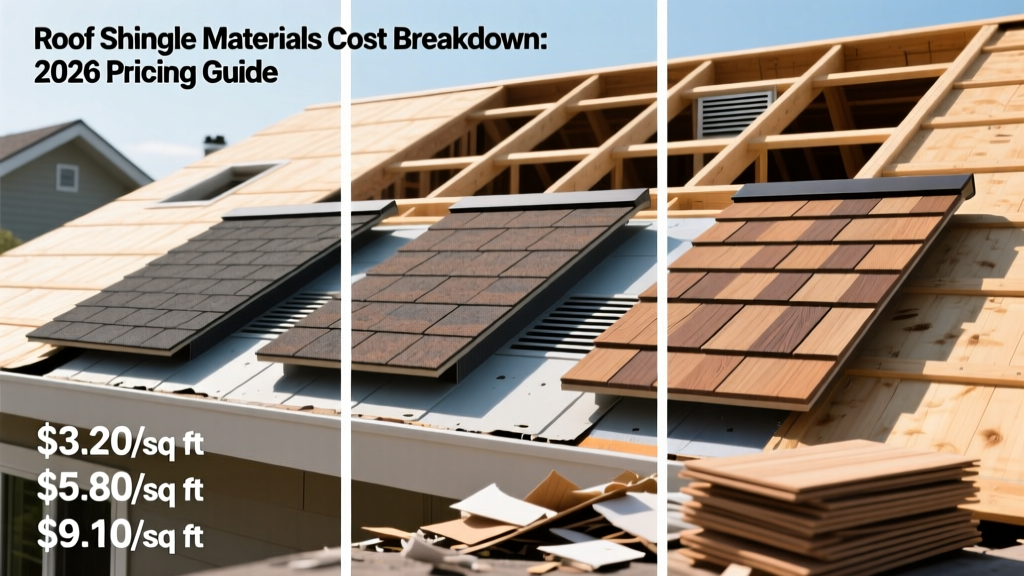
The True Cost of Roof Shingle Materials in 2026
Calculating the exact budget for a roof replacement requires looking far beyond the sticker price of the shingles themselves. In 2026, supply chain stabilization has leveled out extreme material spikes, but labor shortages and updated building code requirements for ice barriers and ventilation have shifted the overall cost structure. When evaluating roof shingle materials, contractors price projects per "square" (100 square feet). While basic 3-tab asphalt shingles might advertise for $100 per square, the fully installed system—including synthetic underlayment, ice and water shield, starter strips, and tear-off—typically triples that baseline material cost.
This guide breaks down the precise material costs, essential accessory pricing, and hidden structural fees you must account for when budgeting your 2026 roofing project, ensuring you avoid the mid-project change orders that plague unprepared homeowners.
Material Cost Matrix: Asphalt, Architectural, and Premium
The choice of shingle dictates not only the aesthetic and lifespan of your roof but also the required underlayment and fastener specifications. Below is the 2026 material-only pricing matrix for the most common residential roof shingle materials.
| Shingle Type | Material Cost (Per Square) | Typical Lifespan | Wind Warranty | Top 2026 Product Examples |
|---|---|---|---|---|
| 3-Tab Asphalt | $100 - $130 | 15 - 20 Years | 60 mph | GAF Royal Sovereign, Owens Corning Supreme |
| Architectural (Dimensional) | $140 - $210 | 25 - 30 Years | 110 - 130 mph | GAF Timberline HDZ, Owens Corning Duration |
| Premium / Designer | $280 - $550+ | 30 - 50 Years | 110+ mph | CertainTeed Grand Manor, GAF Camelot II |
Beyond the Shingles: Essential Accessory Costs
A common budgeting mistake is pricing only the field shingles. A watertight roofing system relies on a network of specialized accessories. According to the National Roofing Contractors Association (NRCA), ignoring these components is the leading cause of premature roof failure and voided manufacturer warranties.
- Synthetic Underlayment: Replacing traditional felt paper, synthetic options like GAF TigerPaw or Owens Corning ProArmor cost $20 to $35 per square. They offer superior tear resistance and slip resistance for installers.
- Ice and Water Shield: A self-adhering rubberized membrane required by code in most northern climates along the eaves and valleys. Expect to pay $65 to $95 per roll (covering roughly 2 squares). For a standard home, budget $300 to $500 for this material alone.
- Starter Strip Shingles: Crucial for sealing the eaves and preventing wind uplift. Pre-cut starter strips like GAF Pro-Start cost about $25 to $35 per bundle (covering roughly 120 linear feet).
- Ridge Vent and Cap Shingles: Proper attic ventilation is mandatory to maintain shingle warranties. A continuous ridge vent system (e.g., Cobra SnowCountry) costs $2.50 to $4.00 per linear foot, plus the cost of specialized hip and ridge cap shingles ($40 to $60 per bundle).
- Drip Edge and Flashing: Galvanized steel or aluminum drip edge is required by the International Residential Code (IRC). Budget $1.50 to $2.50 per linear foot for drip edge, and $2.00 to $4.00 per linear foot for step flashing around chimneys and dormers.
Warning: The Hidden Tear-Off and Disposal Fees
Tear-Off Pricing: Removing one layer of existing asphalt shingles costs $100 to $140 per square, which includes labor, dumpster rental, and landfill tipping fees. If your home has two layers (the maximum allowed by most building codes before a mandatory full tear-off), expect to pay $150 to $190 per square for the demolition phase.
Decking Replacement: Once the old shingles are removed, the roof deck (usually 5/8-inch CDX plywood or OSB) is exposed. It is standard for 10% to 15% of the decking to require replacement due to water damage. Contractors typically charge $75 to $125 per sheet (4x8 feet) for new decking material and installation. Always keep a 10% contingency fund specifically earmarked for decking repairs.
Regional Labor Variations and Contractor Markups
While material costs remain relatively uniform across the country (save for regional freight surcharges), labor rates fluctuate wildly based on local demand, union requirements, and the physical complexity of your roof. In 2026, the national average for roofing labor ranges from $150 to $250 per square.
"A steep-pitch roof (over 8/12 pitch) or a roof with multiple valleys, skylights, and chimneys requires specialized safety harnesses, slower installation times, and intricate flashing work. Homeowners with complex rooflines should expect labor premiums of 20% to 35% above the base square-footage rate."
In high-cost-of-living areas like the Northeast and West Coast, fully installed architectural shingle roofs frequently average $450 to $600 per square. In the Midwest and Southeast, where labor overhead is lower and roof pitches are generally more forgiving, the same system might install for $320 to $420 per square.
Step-by-Step Budgeting Framework for Your Project
To calculate a highly accurate budget for your specific home, follow this four-step framework before soliciting contractor bids:
- Calculate Total Square Footage: Measure your home's footprint and multiply by the pitch factor (e.g., a 6/12 pitch multiplier is 1.16). Divide by 100 to get your total "squares." Add 10% for waste and cuts.
- Price the Shingle Tier: Multiply your total squares by the material cost of your chosen shingle (e.g., 22 squares x $160 for architectural shingles = $3,520).
- Add the Accessory Multiplier: A safe rule of thumb is to add 35% to your base shingle cost to cover underlayment, ice shield, vents, flashing, and nails. ($3,520 x 1.35 = $4,752 for total materials).
- Factor in Tear-Off and Labor: Multiply your total squares by the regional labor/tear-off average (e.g., 22 squares x $220 = $4,840). Add $1,000 as a contingency for decking repair.
Using this framework, a 2,200 sq. ft. architectural shingle roof replacement in a mid-cost region will accurately budget around $10,592, protecting you from low-ball estimates that intentionally omit vital accessories.
Energy Efficiency and Long-Term ROI
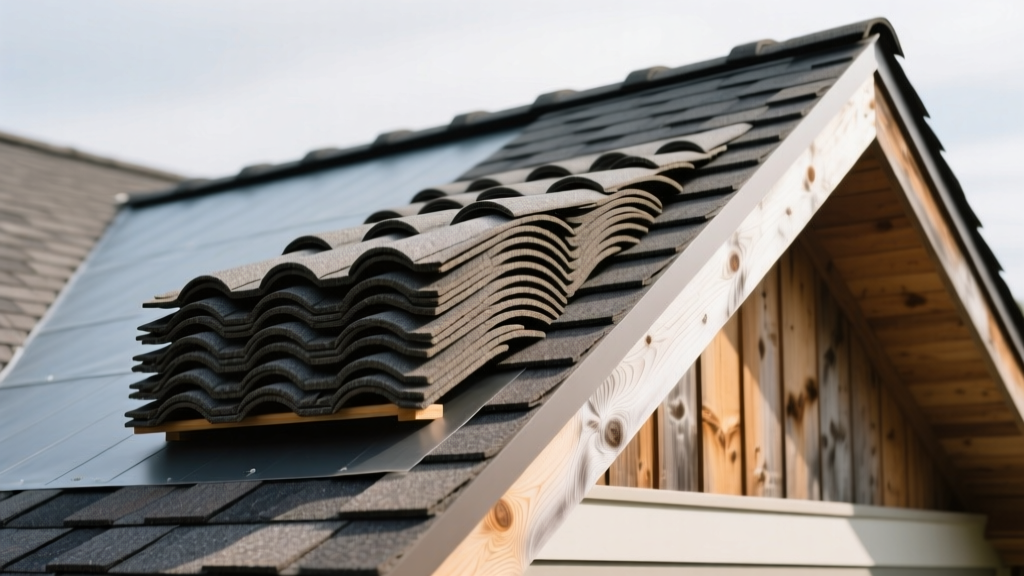
When selecting roof shingle materials, consider the long-term energy implications. The EPA notes that cool roofing technologies can significantly reduce cooling loads in warm climates. ENERGY STAR certified roof products, such as Owens Corning Duration Premium COOL shingles, feature specialized reflective granules that lower roof surface temperatures by up to 20%. While these specialized architectural shingles carry a 10% to 15% material premium, the reduction in summer HVAC usage often yields a payback period of 5 to 7 years in southern states, making them a financially sound upgrade for specific climate zones.
Frequently Asked Questions
Is it cheaper to overlay new shingles over an existing roof?
While an overlay (roofing over) saves $100 to $140 per square on tear-off and disposal costs, it is highly discouraged. Overlays trap heat, accelerating the degradation of the new shingles, hide underlying decking rot, and automatically void the manufacturer's wind and algae warranties. In 2026, the vast majority of reputable contractors refuse to perform overlays due to the liability and poor performance outcomes.
How much do copper or metal flashing upgrades cost?
Standard galvanized steel flashing is included in most baseline quotes. Upgrading to copper or heavy-gauge aluminum flashing for valleys, chimneys, and step flashing will add $800 to $1,500 to the total project cost. Copper is recommended for premium slate or designer shingle roofs where the flashing needs to match the 50-year lifespan of the field material.
Do I need to pay extra for ridge vent installation?
Yes. Cutting the ridge line, installing the continuous vent mesh, and applying the ridge cap shingles requires additional labor and materials. Expect a line-item charge of $400 to $700 for a standard ridge vent installation, which is a non-negotiable requirement for maintaining proper attic airflow and validating your shingle warranty.
Written by
James ThorntonJames Thornton is a construction industry veteran with 25 years of hands-on experience in wood framing, lumber grading, and residential building codes. He started as a framing carpenter in rural Oregon, earned his ICC Residential Building Inspector certification, and eventually became a senior plan reviewer for the City of Portland Bureau of Development Services. James holds a B.S. in Wood Science & Technology from Oregon State University and is a certified lumber grader through the West Coast Lumber Inspection Bureau (WCLIB). He has inspected over 3,000 residential construction sites and authored the city's internal guide on advanced framing techniques (2x6 at 24" O.C.). James lives in Bend, OR, where he builds custom timber-frame cabins and competes in lumberjack sports.
More from James Thornton
View all
Insulation
Best Home Insulation Materials: Complete 2026 Guide
Compare top home insulation materials for 2026. Find R-values, installed costs per square foot, and best uses for fiberglass, spray foam, and mineral wool.
Aug 4, 2026

Sustainable Building
Certify Your Green Building Material for LEED and WELL
Step-by-step guide to certifying a green building material for LEED v5 and WELL v2. Master EPDs, HPDs, and VOC limits for 2026 project specifications.
Aug 4, 2026

Stone & Masonry
Veneer Stacked Stone Panels: Interior Design & Style Showcase
Discover how veneer stacked stone panels transform interiors. Explore modern design profiles, material pairings, and technical installation specs.
Aug 4, 2026