Roofing Felt Durability: Lifespan Analysis and Degradation Factors
Analyze the true lifespan of roofing felt under shingles versus exposed. Explore ASTM standards, UV degradation, and failure modes for #15 and #30 felt.
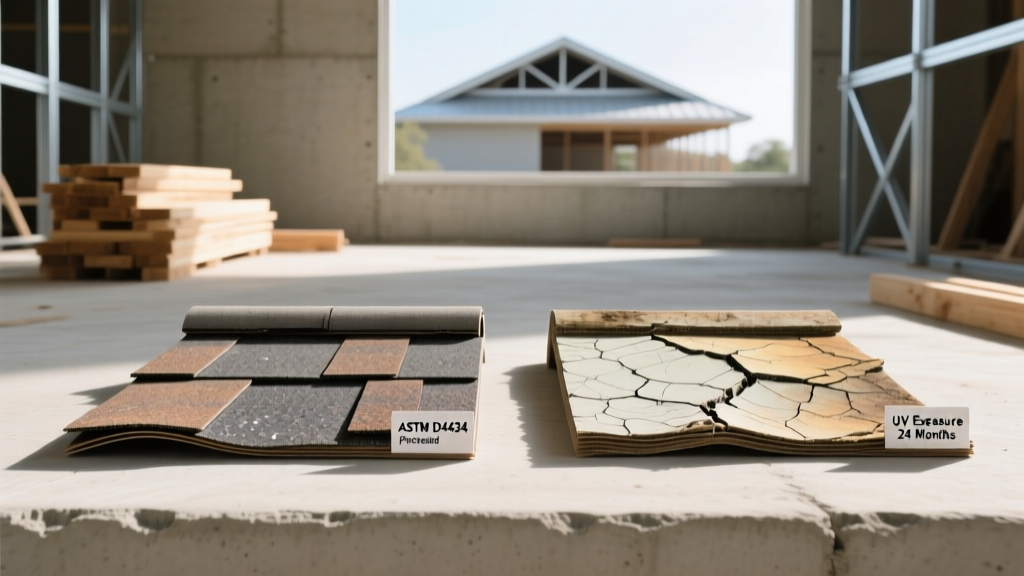
The True Lifespan of Roofing Felt: Exposed vs. Concealed Realities
Roofing felt, technically known as asphalt-saturated underlayment, serves as a critical secondary water barrier and temporary weather shield during roof installation. However, its durability profile changes drastically depending on whether it is exposed to the elements or concealed beneath a primary roofing system like asphalt shingles or metal panels.
- Exposed Lifespan: 30 to 60 days maximum before UV degradation and asphalt volatilization compromise water resistance.
- Concealed Lifespan: 20 to 30 years, effectively matching the service life of standard architectural asphalt shingles, provided adequate attic ventilation is maintained.
When left exposed to direct sunlight, the volatile organic compounds (VOCs) in the asphalt coating begin to off-gas immediately. This volatilization leaves the organic or fiberglass mat brittle, reducing its tear strength and allowing moisture infiltration. Once concealed under shingles and shielded from UV radiation, the felt stabilizes. Its longevity in this concealed state is primarily dictated by thermal cycling, attic moisture levels, and the structural movement of the roof deck.
Material Composition and ASTM Standards Governing Durability
To understand how long roofing felt lasts, you must look at the manufacturing standards that dictate its physical properties. Historically, roofing felt was governed by ASTM D226, which classified felt based on the weight of the organic rag-fiber mat before asphalt saturation. Today, the industry largely relies on ASTM D4869, which encompasses both organic and non-asphalt (fiberglass/cellulose) mats and focuses on performance metrics like tear strength and pliability rather than just raw weight.
#15 Felt (ASTM D4869 Type I)
While historically referred to as '15-pound felt' (meaning 15 lbs per 100 square feet), modern manufacturing efficiencies mean Type I felt often weighs between 8 and 11 pounds per square. Despite the lighter weight, advanced asphalt saturation techniques maintain the required minimum tear strength (typically 5 lbs of force in the machine direction). It is highly pliable and conforms well to complex roof geometries, but its thinner profile makes it more susceptible to tearing under foot traffic during installation.
#30 Felt (ASTM D4869 Type II)
Type II felt is thicker, heavier (roughly 16 to 18 lbs per square), and offers superior puncture resistance. It is the preferred choice for high-wind regions, steep-slope applications, and heavier roofing materials like slate or clay tile. The increased asphalt content provides a more robust secondary moisture barrier, though its stiffness can make it prone to cracking in freezing temperatures if not handled correctly.
| Material Type | Nominal Weight (per sq) | UV Exposure Limit | Tear Resistance | Primary Use Case |
|---|---|---|---|---|
| #15 Asphalt Felt (Type I) | 8 - 11 lbs | 30 Days | Moderate | Standard residential shingle roofs |
| #30 Asphalt Felt (Type II) | 16 - 18 lbs | 45 - 60 Days | High | Steep slopes, tile, and slate roofs |
| Synthetic Underlayment | 2 - 4 lbs | 6 Months (180 Days) | Very High | Long-duration projects, high-wind zones |
Environmental Degradation Factors: What Actually Kills Felt?
Even when properly concealed, roofing felt is subject to environmental stressors that can prematurely end its functional lifespan. Understanding these degradation vectors is crucial for forensic roof analysis and preventative design.
Thermal Expansion and Deck Movement
Wood roof decking (OSB or plywood) expands and contracts with seasonal humidity and temperature fluctuations. Asphalt felt has limited elasticity. Over years of thermal cycling, the friction between the expanding wood deck and the rigid felt can cause micro-tears, particularly around fastener penetrations. This is exacerbated if the felt was installed taut; best practices dictate leaving a slight slack to accommodate deck movement.
Moisture Trapping and Asphalt Emulsification
Roofing felt is vapor-permeable, which is a distinct advantage over some synthetic underlayments in unvented or 'hot' roof assemblies. However, if attic ventilation is inadequate, moisture from the interior living space can migrate into the roof cavity and condense on the underside of the felt. Prolonged exposure to trapped moisture can cause the asphalt coating to emulsify and the organic mat to rot, leading to fastener back-out and deck delamination.
If roofing felt absorbs ambient moisture or moisture from a damp wood deck prior to shingle installation, it will expand and wrinkle. If asphalt shingles are nailed over these wrinkles, the undulations will 'telegraph' through the shingles as the roof heats up, causing permanent aesthetic distortion and creating micro-pockets where wind-driven rain can pool.
Real-World Failure Modes and Edge Cases
Field data from National Roofing Contractors Association (NRCA) guidelines highlights several non-obvious failure modes associated with traditional felt underlayment:
- Wind Uplift Tearing Before Shingling: If a storm hits before shingles are laid, standard staples used to secure the felt will easily pull through the mat. Once the felt tears at the fastener point, water channels directly to the OSB deck, causing localized swelling that requires deck replacement before shingles can be installed.
- Asphalt Bleed-Through: On roofs with low slopes (between 2:12 and 4:12 pitch) exposed to intense, direct solar heat, the asphalt in the felt can soften and bleed through the primary shingle layer, causing unsightly staining and altering the fire-rating profile of the roof assembly.
- Fastener Corrosion: Using electro-galvanized or bare steel cap nails instead of hot-dipped galvanized fasteners will result in rust streaks that degrade the felt locally and stain the fascia or siding below the drip edge.
'While synthetic underlayments dominate the premium market, asphalt felt remains the benchmark for vapor permeability in specific climate zones. The key to its longevity is not just the material itself, but the precision of the overlap and the moisture content of the deck at the exact moment of installation.' — Building Science Technical Advisory
Actionable Installation Protocols to Maximize Felt Lifespan
To ensure roofing felt achieves its maximum 20-to-30-year concealed lifespan, contractors and inspectors must enforce the following site-specific protocols:
- Deck Moisture Verification: Do not install felt over OSB or plywood with a moisture content exceeding 19%. Use a pin-type moisture meter to verify. Installing over damp wood traps moisture, guaranteeing mat degradation and deck rot.
- Fastener Selection: Abandon staples. Use 1-inch to 1.25-inch hot-dipped galvanized cap nails (with a minimum 1-inch diameter plastic or metal cap). Caps distribute wind-uplift forces across a wider area of the felt, preventing the 'button-hole' tear effect.
- Precision Overlaps: Maintain strict 2-inch horizontal overlaps and 4-inch end-laps. In high-wind or ice-dam prone regions, increase horizontal overlaps to 4 inches and seal the laps with asphalt plastic cement to prevent capillary water draw.
- Temperature Thresholds: Avoid installing #30 felt when ambient temperatures are below 40°F (4°C). The thicker asphalt coating becomes highly brittle and will crack when rolled out or walked upon. If cold-weather installation is unavoidable, switch to #15 felt or a cold-weather rated synthetic.
Summary Decision Framework
Choose #15 Asphalt Felt for standard residential re-roofing where the primary shingles will be installed within 48 hours and budget is a primary constraint. Choose #30 Asphalt Felt for heavy roofing materials (slate/tile) or steep pitches where installer foot traffic is high. If the project timeline dictates the underlayment may be exposed to weather for more than 30 days, abandon felt entirely and specify a UV-stabilized synthetic underlayment to protect the structural deck.