Roofing Shingles Material Cost Breakdown & Pricing Guide 2026
Detailed 2026 cost breakdown for every roofing shingles material. Compare asphalt, architectural, and premium options with exact per-square-foot pricing.
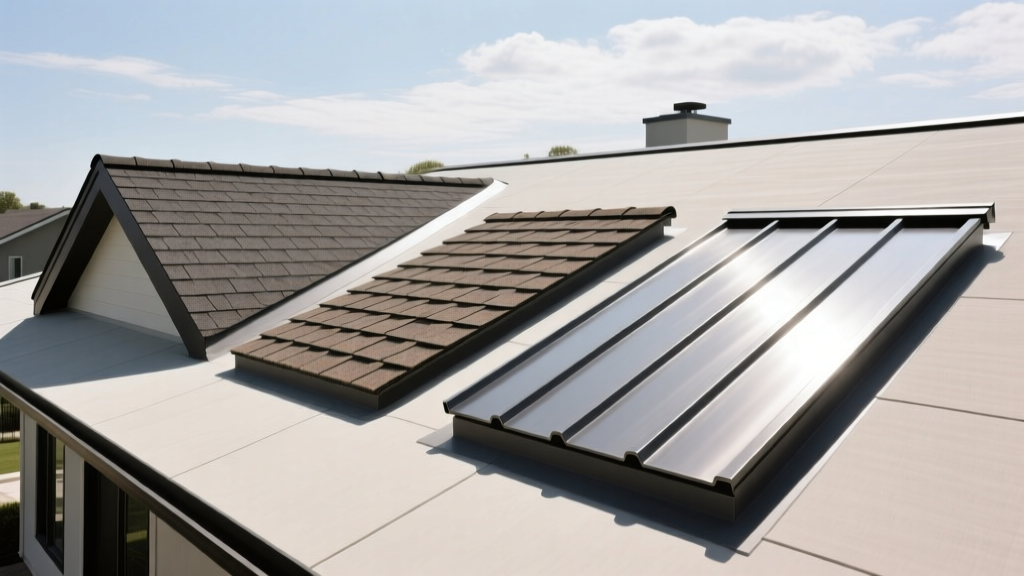
The True Cost of Roofing Shingles Material in 2026
When budgeting for a roof replacement, homeowners often focus solely on the visible outer layer. However, the total cost of your roofing shingles material extends far beyond the bundles stacked in your driveway. In 2026, supply chain stabilization has normalized base asphalt prices, but specialized polymer modifiers, upgraded warranty requirements, and synthetic accessory components have shifted the overall pricing landscape. This guide provides an exact, line-item cost breakdown for every roofing shingles material tier, alongside the critical accessory components required for a code-compliant, long-lasting installation.
• 3-Tab Asphalt: $90 - $120 per square
• Architectural Asphalt: $130 - $180 per square
• Luxury/Premium Asphalt: $250 - $400 per square
• Synthetic/Polymer: $350 - $600+ per square
Note: In roofing terminology, one 'square' equals 100 square feet of roof area.
Base Material Costs by Shingle Type
The choice of your primary roofing shingles material dictates the baseline of your budget. Asphalt remains the dominant residential choice, but the manufacturing processes vary wildly between entry-level and premium tiers.
3-Tab Asphalt: The Budget Baseline
3-tab shingles are single-layer, flat-profile shingles cut to look like three separate pieces when installed. While they are the most economical roofing shingles material on the market, they lack the dimensional thickness and wind resistance of upgraded options. Models like the GAF Royal Sovereign typically cost between $90 and $120 per square ($0.90 to $1.20 per sq. ft.). They carry standard wind ratings up to 60 mph and a typical lifespan of 15 to 20 years. Due to their lower durability and flat aesthetic, they are now primarily used on budget flips, sheds, or low-slope porch additions rather than primary residences.
Architectural (Dimensional) Shingles: The Industry Standard
Architectural shingles feature a multi-layered, laminated construction that creates a contoured, dimensional look mimicking wood shakes or slate. This is the most common roofing shingles material installed in 2026. Premium lines like Owens Corning Duration or GAF Timberline HDZ range from $130 to $180 per square. These shingles utilize heavier fiberglass mats and ceramic-coated granules, offering wind warranties up to 130 mph and lifespans of 30 years. For an additional $20 to $30 per square, you can upgrade to SBS (Styrene-Butadiene-Styrene) modified asphalt shingles, which provide a UL 2218 Class 4 impact resistance rating—crucial for hail-prone regions and often required for insurance premium discounts.
Luxury and Synthetic Shingles: Premium Durability
If you want the look of slate or cedar without the structural reinforcement and maintenance those natural materials require, luxury asphalt and synthetic polymers are the answer. Luxury asphalt shingles, such as CertainTeed Grand Manor, cost between $250 and $400 per square. They are exceptionally heavy, requiring a verified roof deck capable of supporting the extra load. Alternatively, synthetic slate/shake materials like DaVinci Roofscapes or Brava Roof Tile push the material cost to $350 to $600+ per square. While the upfront material cost is high, synthetic polymers are virtually impervious to moisture, rot, and impact, offering 50-year non-prorated warranties.
| Shingle Type | Material Cost / Square | Cost per Sq. Ft. | Expected Lifespan | Wind Rating |
|---|---|---|---|---|
| 3-Tab Asphalt | $90 - $120 | $0.90 - $1.20 | 15 - 20 Years | 60 mph |
| Architectural Asphalt | $130 - $180 | $1.30 - $1.80 | 30 Years | 110 - 130 mph |
| Luxury Asphalt | $250 - $400 | $2.50 - $4.00 | 30 - 50 Years | 110 mph |
| Synthetic Polymer | $350 - $600+ | $3.50 - $6.00+ | 50+ Years | 110+ mph |
The Accessory Ecosystem: Hidden Material Costs
Purchasing the shingles is only half the material equation. A modern, warrantied roof requires a complete accessory system. According to the National Roofing Contractors Association (NRCA), failing to install compatible accessories can void your manufacturer warranty and lead to premature deck failure.
- Synthetic Underlayment: Traditional asphalt-saturated felt ($0.05/sq. ft.) has largely been replaced by woven polypropylene synthetic underlayment like GAF TigerPaw or Owens Corning ProArmor ($0.12 to $0.18/sq. ft.). Synthetics resist tearing, do not absorb water, and provide a safer walking surface for installers.
- Ice and Water Shield: A self-adhering rubberized membrane (e.g., Grace Ice & Water Shield HT) is mandated by building codes in eaves, valleys, and around penetrations in cold climates. Expect to pay $0.75 to $1.10 per sq. ft. for this critical moisture barrier.
- Starter Strip Shingles: Specially designed to seal the first course of shingles and prevent wind uplift at the eaves. Pre-cut starter strips cost roughly $0.40 to $0.60 per linear foot.
- Drip Edge and Flashing: Galvanized steel or aluminum drip edge is required along the eaves and rakes. Aluminum drip edge costs about $1.20 to $1.80 per linear foot, while step flashing for wall intersections runs $1.50 per piece.
Structural Variables and Labor Multipliers
While this guide focuses on material costs, the physical characteristics of your roof will dictate how much material is actually required and how much waste is generated. When sourcing your roofing shingles material, you must account for these structural variables:
Waste Factor Calculations
You cannot order the exact square footage of your roof. Material must be cut to fit ridges, hips, valleys, and around chimneys. For a simple gable roof, add a 10% waste factor. For complex roofs with multiple dormers, valleys, and steep pitches, you must calculate a 15% to 18% waste factor. If your roof measures 2,000 sq. ft. (20 squares) and has a complex hip design, you must purchase 23 squares of material.
Pitch and Height Multipliers
Material handling costs increase with roof steepness. While the shingles themselves cost the same, the ancillary materials required for safety and installation change. Roofs with a pitch steeper than 8/12 require specialized roof jacks and scaffold brackets. Furthermore, if your home is three stories high, contractors will factor in the increased cost of trash chutes and extended lift equipment to move the heavy shingle bundles to the roof deck.
Expert Sourcing Tip: When purchasing architectural shingles, always buy 10-15% more than your exact calculation. Shingle colors are produced in specific dye lots. If you run short and have to buy three extra bundles from a different batch at the hardware store, the color variance will be highly visible on your finished roof.
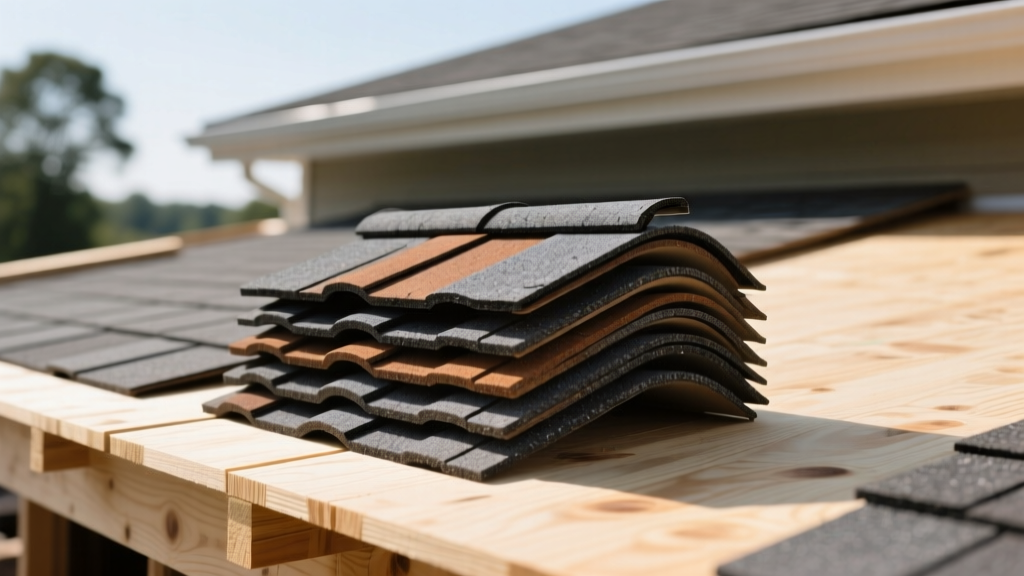
Warranty Implications on Material Purchasing
In 2026, manufacturers like GAF, Owens Corning, and CertainTeed heavily incentivize the purchase of their 'Complete Roofing Systems.' If you mix and match your roofing shingles material—for example, using GAF Timberline shingles with a generic brand of synthetic underlayment and off-brand ridge caps—you will only qualify for the standard limited material warranty (usually 10 years of non-prorated coverage, followed by prorated depreciation).
However, if you purchase the entire system from a single manufacturer (shingles, specific underlayment, leak barrier, starter strips, and ridge caps) and have it installed by a factory-certified contractor, you unlock enhanced warranties like the GAF Golden Pledge or Owens Corning Platinum Protection. These upgraded warranties provide 50 years of non-prorated material coverage and include coverage for workmanship errors and tear-off costs if a defect occurs. The material cost to upgrade to a full system is typically only $15 to $25 more per square, making it one of the highest-ROI material decisions you can make.
Calculating Your Total Material Budget: A Real-World Example
To understand how these costs compile, consider a standard 2,200 sq. ft. home with a moderately complex hip roof (requiring 22 squares of base area, plus a 15% waste factor = 25.3 squares total). We will use mid-grade architectural shingles.
- Base Shingles (26 squares): 26 x $150 = $3,900
- Synthetic Underlayment (26 squares): 26 x $15 = $390
- Ice & Water Shield (4 squares for eaves/valleys): 4 x $90 = $360
- Starter Strips & Ridge Caps: $450
- Drip Edge, Flashing, and Nails: $350
- Tear-Off Disposal Bags & Dump Fees: $400
Total Material & Accessory Cost: $5,850 (Approx. $2.65 per sq. ft. of actual roof area). Note that this strictly covers the physical materials and disposal. According to Angi's 2026 roofing cost data, professional labor, insurance, and overhead will typically add an additional $3.50 to $5.50 per square foot to the final project invoice.
Final Sourcing Strategies
Never purchase your roofing shingles material from big-box retail stores unless it is for a minor patch job. Pro-desks at dedicated building supply lumber yards (like ABC Supply, Beacon Building Products, or local specialized distributors) offer tiered contractor pricing that is 15% to 25% lower than retail shelf prices. Even if you are a homeowner acting as your own general contractor, setting up a cash account with a local roofing distributor and ordering a 'drop' (where the materials are crane-lifted directly onto your roof deck via a boom truck) will save you hundreds in manual labor and prevent damage to your property from dragging pallets across the lawn.
Written by
David NakamuraDavid Nakamura is a licensed architect (AIA) and construction technology writer focused on sustainable building methods, mass timber engineering, and high-performance building envelopes. He holds a Master of Architecture from the University of Washington and is a certified Passive House Consultant (CPHC). David spent eight years at the Seattle firm Mithun, where he led the design of three LEED Platinum projects, before founding his own practice specializing in net-zero residential design. He serves on the editorial advisory board of GreenBuilder Magazine and has authored peer-reviewed papers on cross-laminated timber (CLT) connections for the Journal of Structural Engineering. In his spare time, David teaches woodworking at Pratt Fine Arts Center and kayaks the Puget Sound.
More from David Nakamura
View all
Construction Cost
Labor Cost to Build a Deck Per Sq Ft: 2026 Installation Guide
Discover the exact labor cost to build a deck per sq ft in 2026. This installation guide breaks down contractor rates, complexity factors, and hidden fees.
Aug 4, 2026

Construction Cost
How Much Does It Cost to Build a 3 Bedroom House? Financing Guide
Learn exactly how much it costs to build a 3 bedroom house and explore 2026 financing options, construction loan types, and budget frameworks for your build.
Aug 4, 2026

Construction Cost
Cost to Build a Tennis Court: 2026 Guide
How much does it cost to build a tennis court in 2026? Breakdowns for asphalt, concrete, and synthetic surfaces plus fencing and lighting.
Jul 30, 2026