The Selection Framework for Choosing a Tiki Hut Roof Material
Compare natural vs. synthetic tiki hut roof material options. Use our selection framework to evaluate fire ratings, lifespan, and cost for your build.
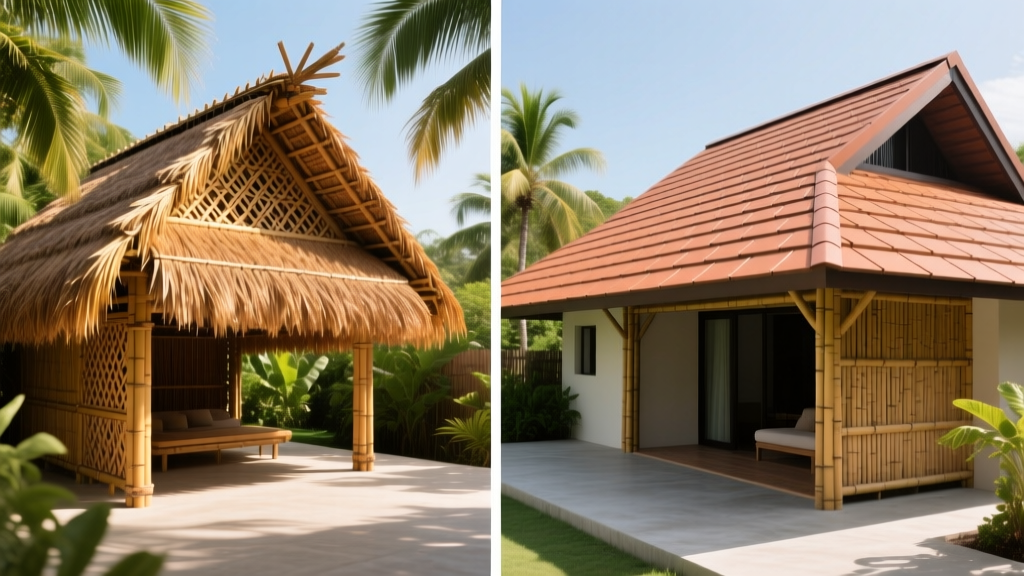
The Core Decision Matrix: Natural vs. Synthetic Thatch
Selecting the correct tiki hut roof material requires balancing aesthetic authenticity against structural longevity and local building codes. The market is strictly divided into two categories: harvested organic thatch and engineered synthetic polymers. The wrong choice leads to premature rot, code violations, or excessive maintenance costs.
Before evaluating specific products, review the baseline performance matrix below to understand the fundamental trade-offs between organic and engineered options.
| Material Category | Expected Lifespan | Fire Rating | Avg. Installed Cost (per sq. ft.) | Minimum Roof Pitch |
|---|---|---|---|---|
| African Cape Reed | 15–20 years | Class B (Untreated) | $4.50 – $7.00 | 45° (12:12) |
| Mexican Palapa (Palm) | 3–6 years | Unrated / High Risk | $2.50 – $4.50 | 35° (8:12) |
| Alang-Alang (Wild Grass) | 4–8 years | Unrated / High Risk | $3.00 – $5.00 | 40° (10:12) |
| HDPE Synthetic Thatch | 20–25+ years | Class A (ASTM E108) | $6.50 – $10.00 | 22° (5:12) |
| PVC / Aluminum Faux Thatch | 25+ years | Class A | $8.00 – $14.00 | 15° (4:12) |
Evaluating Natural Tiki Hut Roof Material Options
Natural thatch relies on the tight packing of dried botanical elements to shed water via capillary action and gravity. The material must be harvested at specific times of the year to ensure low moisture content and high structural integrity.
African Cape Reed (Thamnochortus insignis)
Cape Reed is the premium standard for natural thatching. Harvested in South Africa, the reeds are bound into dense bundles and installed using a specialized thatching technique.
- Installation Specifics: Requires horizontal timber battens spaced exactly 12 inches on center. The reed is secured with stainless steel wire or synthetic thatching twine, never galvanized nails, which rust and snap under tension.
- Failure Mode: If the roof pitch drops below 45 degrees, water penetrates the 8-inch thick reed layer, causing the underlying timber battens to rot from the inside out.
Mexican Palapa (Sabal mexicana)
Often used in budget-friendly residential builds and temporary resort structures, Mexican Palapa utilizes dried Sabal palm fronds.
- Installation Specifics: Fronds are tied directly to the rafters or purlins. The ridge cap requires hand-woven palm matting or a specialized terra-cotta ridge piece to prevent wind uplift.
- Failure Mode: High susceptibility to mold and insect infestation in humid climates. In regions with heavy snowfall or sustained winds over 40 mph, the brittle fronds fracture and detach rapidly.
Synthetic Alternatives: When Code and Climate Dictate the Choice
Engineered thatch is manufactured to replicate the chaotic, multi-layered texture of natural palm or reed while eliminating biological vulnerabilities. These materials are extruded or molded from petroleum-based polymers or stamped from lightweight metals.
High-Density Polyethylene (HDPE) Synthetic Thatch
Products like Palmex or茅草 (Maocao) utilize HDPE infused with UV stabilizers (typically carbon black or titanium dioxide additives) to prevent photodegradation.
- Fire Compliance: Premium HDPE thatch is manufactured with intumescent fire retardants, allowing it to achieve a Class A fire rating per ASTM E108 standard test methods. This is mandatory for commercial hospitality builds and many residential HOAs.
- Installation Specifics: Installed over solid decking (OSB or plywood) covered with a synthetic roofing underlayment. The panels interlock and are blind-nailed using 1.5-inch stainless steel ring-shank nails.
PVC and Aluminum Faux Thatch
For extreme environments—such as coastal properties exposed to salt spray or regions with strict International Building Code (IBC) Chapter 15 wind-uplift requirements—rigid PVC or powder-coated aluminum thatch panels are utilized. These systems feature integrated locking flanges and can withstand Category 3 hurricane wind loads when properly fastened to engineered trusses.
The 4-Step Selection Framework
Use this sequential framework to narrow down your tiki hut roof material based on site-specific constraints.
Check local municipal codes regarding combustible roof coverings. Many jurisdictions in California and wildfire-prone areas strictly prohibit untreated natural thatch. If natural thatch is permitted, verify if the NFPA 1 Fire Code requires a fire-retardant spray treatment, which must be reapplied every 2 to 3 years.
Measure the planned roof pitch. If your architectural design features a low-slope roof (under 30 degrees), natural thatch is physically incapable of shedding water effectively. You must pivot to an HDPE or PVC synthetic system, which can function on pitches as low as 15 degrees when paired with a sealed underlayment.
In coastal or high-wind zones, natural palapa requires heavy netting or wire mesh tied over the entire roof surface to prevent wind stripping, which ruins the aesthetic. Synthetic panels, conversely, are tested for specific uplift pressures (e.g., -90 psf) and can be engineered to meet local windstorm certifications without visible netting.
While Mexican Palapa has a low initial capital expenditure ($3/sq. ft.), a 20-year lifecycle requires 4 to 5 complete roof replacements. HDPE synthetic thatch costs roughly $8/sq. ft. installed but requires zero maintenance and zero replacements over the same 20-year period, yielding a 40% lower total cost of ownership.
Installation Edge Cases and Common Failure Modes
Regardless of the material selected, the majority of tiki hut roof failures occur at the ridge cap and the eaves.
- The Ridge Cap Vulnerability: The apex of the roof experiences the highest wind uplift and the most direct UV exposure. For natural reed, the ridge must be capped with a flexible, hand-bent aluminum or copper flashing hidden beneath a decorative layer of bound reed. For synthetic systems, use the manufacturer's proprietary molded ridge cap; attempting to bend standard field panels over the ridge will cause the polymer to crease, crack, and void the warranty.
- Eave Thickness and Drip Edge: Natural thatch relies on a thick, shaggy eave (often 8 to 12 inches thick) to force water to drip clear of the supporting posts. If the eave is cut too short, water tracks back along the underside of the thatch and rots the fascia. Synthetic systems require a specialized metal drip edge installed beneath the starter course to route water into the gutters.
- Underlayment Traps: A critical error in synthetic thatch installation is using a non-breathable underlayment (like traditional asphalt felt) over solid decking. In high-humidity climates, this traps condensation against the wood deck, causing structural rot. Always use a high-performance, breathable synthetic roofing underlayment (e.g., Tyvek Protec or GAF FeltBuster) to allow moisture vapor to escape.
Frequently Asked Questions
Can I install a tiki hut roof over an existing shingled roof?
You can install synthetic thatch panels directly over existing asphalt shingles, provided the underlying roof deck is structurally sound and you use furring strips to create a ventilation gap. Natural thatch cannot be installed over shingles; it requires an open batten system to allow airflow through the reed bundles to prevent mold.
Does synthetic thatch fade in direct sunlight?
High-quality HDPE thatch utilizes solid-through coloring with UV inhibitors, meaning it will not peel or flake. However, expect a 5% to 8% color shift (lightening) over the first 10 years of intense, direct UV exposure. Lower-end PVC alternatives may chalk or become brittle after 5 to 7 years in equatorial climates.
Written by
Priya KapoorPriya Kapoor is a real estate market analyst and construction economics researcher with expertise in housing affordability, development feasibility, and infrastructure investment. She holds a Master of Regional Planning from Cornell University and previously worked as a senior analyst at CBRE's Investment Properties group, where she modeled returns for $4B in mixed-use development pipelines. Priya now runs an independent research practice advising developers, municipalities, and REITs on construction cost forecasting and market timing. She publishes the quarterly "BuildMat Market Pulse" report tracking material price indices across 12 commodity categories. Based in Austin, TX, Priya serves on the board of Habitat for Humanity Austin and is a marathon runner.
More from Priya Kapoor
View all
Construction Cost
Cost to Build a 1600 Sq Ft Home in 2026: Full Breakdown
Accurate 2026 cost to build a 1600 sq ft home—material, labor, and regional pricing breakdowns included. Plan your budget with real-time estimates.
Aug 11, 2026

Wood & Lumber
Name the Types of Wood for Pressure Treatment and Preservation
Learn how to name the types of wood best suited for pressure treatment. Compare species treatability, chemical retention levels, and 2026 preservation costs.
Aug 4, 2026

Stone & Masonry
Stone Veneer Suppliers Lindenhurst: 2026 Cost Analysis
Analyze 2026 stone veneer costs in Lindenhurst, NY. Compare local supplier pricing, delivery fees, and Suffolk County installation labor rates.
Aug 4, 2026