Metal House Roofing Materials: 2026 Cost & Buyer Guide
Explore metal house roofing materials with our 2026 guide. Compare standing seam, corrugated, and stone-coated steel costs, gauges, and coatings.

The Shift Toward Metal in Residential Architecture
Once reserved primarily for agricultural and commercial applications, metal roofing has captured a significant share of the residential market. Homeowners and builders are increasingly specifying metal house roofing materials due to their exceptional lifespan, fire resistance, and energy efficiency. According to the Metal Construction Association, a properly installed metal roof can easily exceed 50 years of service life, effectively outlasting two to three generations of traditional asphalt shingles. However, navigating the metallurgy, panel profiles, and coating technologies requires a precise understanding of the material science involved. This guide breaks down the technical specifications, real-world costs, and installation variables you need to evaluate in 2026.
- Average Lifespan: 40 to 70+ years (depending on substrate and coating)
- Wind Uplift Resistance: Up to 140 mph (ASTM E1592 tested)
- Energy Savings: 10% to 25% reduction in cooling costs via high-albedo reflective coatings
- Weight: 1.0 to 1.5 lbs per square foot (significantly lighter than concrete tile at 9.0 lbs/sq ft)
Decoding Panel Profiles: Form and Function
The term 'metal roofing' encompasses several distinct panel profiles, each with unique structural behaviors, fastening methods, and aesthetic outcomes. Choosing the right profile is the first critical decision in your specification process.
1. Standing Seam (Concealed Fastener)
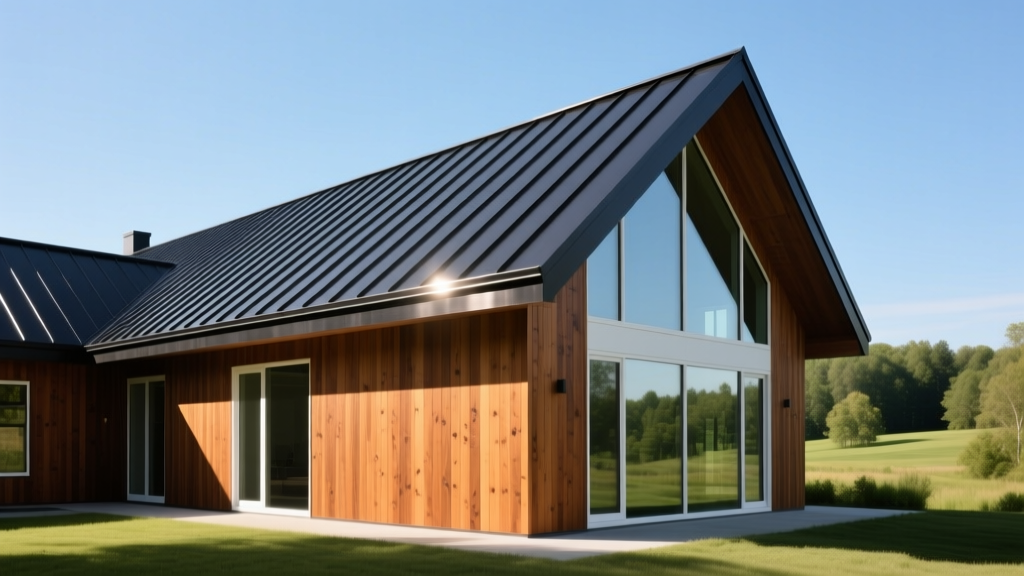
Standing seam systems represent the premium tier of residential metal roofing. The panels feature vertical legs with a flat space between them, and the fastening clips are hidden beneath the interlocking seams. This concealed fastener design is crucial because it allows for thermal expansion and contraction. Metal panels can expand up to 1/2 inch per 10 feet of length during extreme temperature swings; concealed sliding clips accommodate this movement without stressing the metal or tearing the fastener holes. Standing seam is available in 'snap-lock' (easier installation, suitable for pitches 3:12 and above) and 'mechanical seaming' (requires a specialized seaming tool, mandatory for low-slope roofs down to 1/4:12).
2. Corrugated and R-Panel (Exposed Fastener)
Exposed fastener panels are screwed directly through the metal face into the roof decking, utilizing neoprene or EPDM sealing washers to prevent water intrusion. While highly cost-effective and structurally robust, these systems are inherently more vulnerable to leaks over time. The thermal cycling of the roof causes the metal to expand and contract, which can eventually cause the screws to back out or the rubber washers to degrade, requiring periodic maintenance and screw replacement every 15 to 20 years.
3. Stone-Coated Steel
For homeowners who require the durability of steel but prefer the traditional aesthetics of asphalt, wood shake, or clay tile, stone-coated steel is the optimal bridge. These panels consist of a Galvalume steel core coated with an acrylic primer, embedded with naturally colored stone granules, and finished with an overglaze. They interlock laterally and offer superior impact resistance (Class 4 UL 2218) against severe hail.
Metallurgy and Coatings: The Science of Rust Prevention
The longevity of metal house roofing materials is dictated entirely by the substrate (the base metal) and the protective coatings applied to it. Specifying the wrong metallurgy for your specific climate is the most common cause of premature roof failure.
| Substrate Type | Composition & Coating | Best Application | Relative Cost |
|---|---|---|---|
| Galvalume® Steel | AZ55 coating (55% Aluminum, 43.4% Zinc, 1.6% Silicon) | Standard residential; excellent cut-edge protection via galvanic sacrifice. | Baseline ($) |
| Galvanized Steel | G90 coating (100% Zinc) | Forming and stamping (stone-coated tiles); less cut-edge protection than Galvalume. | Baseline ($) |
| Aluminum | No metallic coating required; naturally forms an aluminum oxide layer. | Coastal and marine environments (salt spray will destroy steel rapidly). | Premium ($$$) |
| Zinc / Copper | Pure alloy metals; develops a self-healing patina over time. | Historic restorations, architectural accents, ultra-premium estates. | Ultra-Premium ($$$$$) |
Paint Systems: PVDF vs. SMP
Once the substrate is selected, the color coating must withstand intense UV degradation. The industry standard for premium standing seam is PVDF (Polyvinylidene Fluoride), commonly known by the trade name Kynar 500® or Hylar 5000®. PVDF resins are highly resistant to UV fading and chalking, retaining their color integrity for 30 to 40 years. Conversely, SMP (Silicone Modified Polyester) coatings are typically used on exposed fastener corrugated panels. SMP offers excellent hardness and abrasion resistance but will chalk and fade noticeably faster than PVDF under high-UV exposure.
2026 Pricing Matrix: Material and Installed Costs
When budgeting for metal house roofing materials, contractors and homeowners must look beyond the raw material cost. The complexity of the roof geometry (valleys, dormers, pitch), tear-off requirements, and regional labor rates heavily influence the final price. Below is a realistic breakdown of 2026 market rates per square foot (1 square = 100 sq ft).
| Roofing System | Material Only (per sq ft) | Fully Installed (per sq ft) | Expected Lifespan |
|---|---|---|---|
| Corrugated / R-Panel (26-ga) | $3.50 - $5.50 | $8.00 - $12.00 | 30 - 45 Years |
| Snap-Lock Standing Seam (24-ga) | $6.00 - $9.00 | $14.00 - $19.00 | 50+ Years |
| Mechanical Lock Standing Seam | $8.00 - $12.00 | $18.00 - $26.00 | 60+ Years |
| Stone-Coated Steel | $7.50 - $11.00 | $16.00 - $24.00 | 40 - 50 Years |
Note: Tear-off and disposal of existing asphalt shingles typically adds $1.50 to $2.50 per square foot to the total project cost. Upgrading to high-temp synthetic underlayment adds approximately $0.75 per square foot.
Critical Installation Variables and Failure Modes
Even the highest-grade metal house roofing materials will fail if installed incorrectly. The National Roofing Contractors Association (NRCA) emphasizes that metal roofing requires specialized knowledge distinct from asphalt or single-ply systems. Be aware of these common failure modes:
1. Oil Canning
Oil canning refers to the visible, stress-induced wrinkling or rippling in the flat areas of metal panels. It is not a structural defect, but it is a severe aesthetic flaw. It is caused by over-driving fasteners, inadequate spacing for thermal expansion, or using coils with residual manufacturing stress. Prevention: Specify 'low-relief' or 'stiffening bead' panels, and ensure installers use tension-controlled screw guns or proper seaming techniques to avoid introducing torsional stress during installation.
2. Galvanic Corrosion
When two dissimilar metals come into contact in the presence of an electrolyte (rainwater or condensation), the less noble metal will corrode rapidly. For example, using copper flashings or untreated steel nails near Galvalume panels will cause the zinc/aluminum coating to dissolve, leading to catastrophic rust. Prevention: Always use compatible metals. Use aluminum or stainless steel flashings with steel panels, and isolate dissimilar metals using heavy-duty butyl tape or EPDM separators.
3. Underlayment Degradation
Metal roofs can reach surface temperatures exceeding 180°F (82°C) in direct summer sunlight. Standard asphalt-based peel-and-stick membranes will melt, bleed onto the metal underside, and fail. Prevention: Mandate the use of high-temperature synthetic underlayment or specialized high-temp self-adhered membranes (rated for 240°F+) in eaves, valleys, and around penetrations.
Energy Efficiency and Cool Roof Technology
Metal is inherently highly reflective, making it an ideal candidate for 'cool roof' technology. According to the U.S. Department of Energy, cool roofs can reduce peak cooling demand by 10% to 15%. Modern PVDF paint systems are formulated with specialized cool-weather pigments that reflect infrared (IR) radiation, even in dark colors like charcoal or bronze. When specifying metal house roofing materials for hot climates, request the manufacturer's Solar Reflectance Index (SRI) data sheet; an SRI of 50 or higher is typically required to qualify for regional energy rebates and LEED certification points.
Climate-Specific Decision Framework
Coastal / Marine (Within 1 mile of saltwater): You must specify Aluminum panels. Salt spray will penetrate the cut edges of steel panels and cause rapid oxidation, regardless of the paint warranty. Aluminum naturally resists saltwater corrosion.
Heavy Snow / Alpine Regions: Specify a Mechanical Lock Standing Seam in a 24-gauge or 22-gauge thickness. The continuous interlocking seam prevents wind-driven snow from infiltrating the roof deck. Pair this with snow guards to prevent dangerous, sudden snow avalanches off the slippery metal surface.
High-UV / Desert Climates: Mandate PVDF (Kynar 500) coatings. SMP coatings will chalk and fade within 10 years under intense desert sun. Choose lighter colors to maximize IR reflectance and reduce HVAC loads.
Frequently Asked Questions
Will a metal roof make my house louder during rainstorms?
No. When installed over a solid roof deck with proper synthetic underlayment and attic insulation, a metal roof is no louder than an asphalt shingle roof. In fact, the mass of the decking and insulation absorbs the acoustic impact.
Does metal roofing attract lightning?
This is a persistent myth. Lightning is attracted to the highest point in an area, not specifically to conductive materials. If a metal roof is struck, it safely disperses the electrical charge across the large surface area and into the ground, and because it is non-combustible, it will not catch fire like wood shakes or asphalt.
Can I install metal roofing over existing shingles?
While some local building codes allow installing a metal roof over one layer of existing asphalt shingles (using battens to create an air gap), the best practice is a complete tear-off. This allows the contractor to inspect the wood decking for rot, replace compromised sections, and install a continuous, high-temp water barrier directly against the substrate.
Written by
Sarah WhitfieldSarah Whitfield is a chartered quantity surveyor (MRICS) and construction cost analyst with 15 years of experience in material pricing, procurement strategy, and project budgeting. She earned her degree in Construction Management from the University of Reading (UK) and has worked on projects ranging from $2M custom homes to $180M mixed-use developments across North America and Europe. Sarah currently leads cost estimating for BuildMat Insight, maintaining a proprietary database of 4,000+ material price points updated quarterly. She is a frequent contributor to RSMeans cost data panels and has presented at the International Cost Engineering Council (ICEC) congress. Based in Denver, CO, Sarah is an avid trail runner and volunteer mentor for Women in Construction.
More from Sarah Whitfield
View all
Wood & Lumber
What Are the Different Types of Wood? A Builder's Guide
Compare structural softwoods, finish hardwoods, and engineered lumber. Analyze Janka ratings, MOE values, and 2026 pricing for construction.
Aug 4, 2026

Walls & Panels
Steel Framing vs Wood Framing: Corrosion and Moisture Defense
Compare steel framing vs wood framing for moisture resistance. Learn about galvanized coatings, condensation risks, and corrosion protection strategies.
Jul 21, 2026

Stone & Masonry
How to Cut Stone Veneer: Wet Saw vs Grinder Comparison
Compare the best tools for cutting stone veneer. We review wet saws, angle grinders, and chop saws to help you achieve clean, chip-free cuts.
Jul 21, 2026