Torch On Roofing Material Lifespan and Durability Guide
Discover the true lifespan of torch on roofing material. Explore SBS vs APP durability, failure modes, and maintenance tactics for flat roofs.

The Chemistry of Torch On Roofing Material Durability
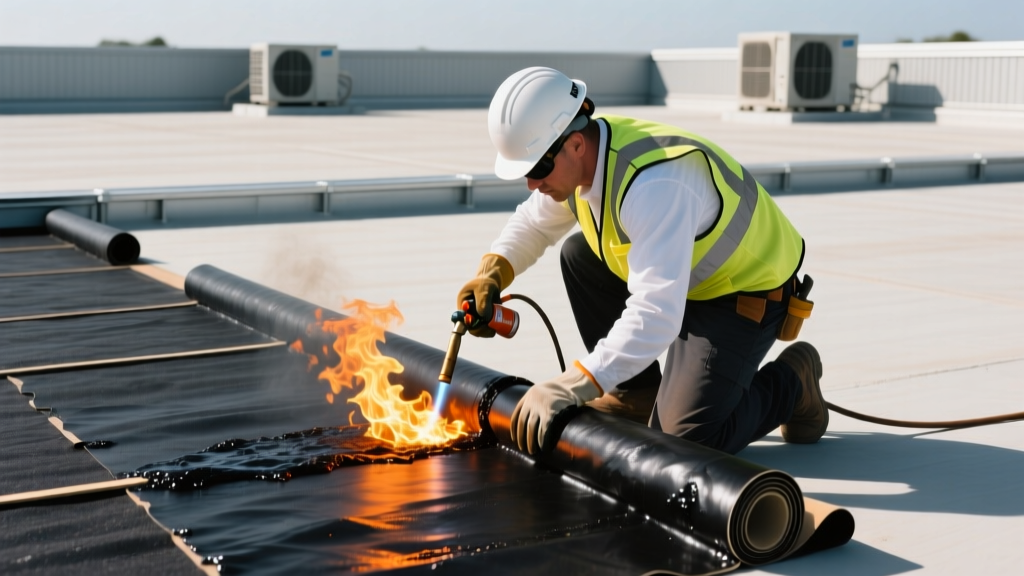
Modified bitumen, universally recognized in the commercial sector as torch on roofing material, derives its exceptional lifespan from polymer-modified asphalt. Unlike traditional built-up roofing (BUR) which relies on alternating layers of fiberglass and hot asphalt, torch-applied systems integrate elastomeric or plastomeric polymers directly into the asphalt matrix. This chemical alteration fundamentally changes how the membrane reacts to thermal shock, UV degradation, and structural movement.
SBS (Styrene-Butadiene-Styrene) Modifiers
SBS-modified membranes incorporate synthetic rubber, granting the asphalt elastic properties. When subjected to sub-zero temperatures, SBS retains its flexibility, preventing the micro-cracking that plagues standard asphalt. According to the Asphalt Roofing Manufacturers Association (ARMA), SBS systems can elongate up to 1,500% before failure, making them the premier choice for regions with extreme freeze-thaw cycles. The torch application melts the SBS-enriched asphalt, creating a monolithic, rubberized seal.
APP (Atactic Polypropylene) Modifiers
APP modifiers introduce plastic polymers to the asphalt, resulting in a more rigid, highly UV-resistant membrane. While APP lacks the extreme cold-weather flexibility of SBS, it boasts a higher softening point. This makes APP torch on roofing material highly durable in southern climates where roof surface temperatures can exceed 160°F (71°C) in direct sunlight. APP flows more smoothly under a torch, allowing for faster installation on large commercial footprints.
Lifespan Data: What to Expect in the Field
The longevity of a torch-applied system is not a single fixed number; it scales directly with the system configuration, surface protection, and substrate stability. A standard single-ply application will fail prematurely, while a fully reinforced two-ply system with a granular cap sheet represents the industry gold standard.
| System Configuration | Surface Type | Expected Lifespan | Primary Vulnerability |
|---|---|---|---|
| Single-Ply (Cap Sheet Only) | Smooth / Sanded | 8 - 12 Years | UV degradation, puncture |
| Two-Ply (Base + Cap) | Smooth + Aluminum Coating | 12 - 15 Years | Coating delamination |
| Two-Ply (Base + Cap) | Ceramic Granular Cap | 20 - 25 Years | Seam failure, blistering |
| Reinforced Two-Ply + Coating | Granular + Silicone Topcoat | 25 - 30+ Years | Ponding water at drains |
Primary Failure Modes and Edge Cases
When torch on roofing material fails before its 20-year mark, the culprit is rarely the membrane itself. Premature degradation almost always stems from installation errors or substrate anomalies.
The Seam Bleed-Out Metric
The most common point of failure in any torch-applied system is the side lap. Installers must heat the release film until it scorches, allowing the modified asphalt to melt and fuse. The industry standard requires a continuous 'bleed-out'—a bead of melted asphalt squeezing out of the seam edge. This bead must be exactly 1/4 inch to 3/8 inch wide.
- Under-torched (No bleed-out): Results in a cold seam. Water will infiltrate the capillary space between the base and cap sheets, leading to inter-ply blistering and delamination within 3 to 5 years.
- Over-torched (Excessive bleed-out): Burns off the crucial polymer modifiers, leaving behind brittle, unmodified asphalt that will crack under thermal movement.
Substrate Moisture and Blistering
Torch on roofing material is highly impermeable. If applied over a damp substrate (like wet polyisocyanation insulation or moisture-laden concrete decks), the heat from the torch turns the trapped moisture into steam. This steam expands, creating massive blisters between the insulation and the base sheet. While small blisters (under 2 inches) rarely affect waterproofing, large blisters will eventually fracture the cap sheet under foot traffic.
Comparative Matrix: Torch On vs. Single-Ply Membranes
Facility managers frequently weigh modified bitumen against single-ply alternatives like TPO (Thermoplastic Polyolefin) and EPDM (Ethylene Propylene Diene Monomer). Each material handles environmental stress differently.
Torch On Mod-Bit
Puncture Resistance: Excellent (multi-ply, thick asphalt)
Ponding Water: Highly resistant
Seam Strength: Fused, monolithic (strongest)
Foot Traffic: Superior durability
TPO (Single-Ply)
Puncture Resistance: Moderate (vulnerable to sharp tools)
Ponding Water: Good, but seams degrade over time
Seam Strength: Heat-welded (strong, but prone to peeling)
Foot Traffic: Requires walkway pads
EPDM (Single-Ply)
Puncture Resistance: Low to Moderate
Ponding Water: Excellent (vulcanized rubber)
Seam Strength: Adhesive/Tape (weakest link in the system)
Foot Traffic: Highly vulnerable to tears
Prescriptive Maintenance Framework
To push a granular cap torch on roofing material past the 20-year threshold, facility managers must implement a rigid maintenance protocol. Relying on reactive repairs guarantees a shortened lifecycle.
- Bi-Annual Seam Inspections (Spring/Fall): Use a blunt probe to test side and end laps. Any seam that yields to moderate pressure requires immediate re-torching or application of a compatible mastic and fabric reinforcement.
- Granule Loss Monitoring: The ceramic granules protect the asphalt from UV rays. If you notice excessive granule accumulation in the gutters or bald spots on the roof surface, apply an aluminum roof coating or a silicone elastomeric topcoat to restore UV protection.
- Drain and Scupper Clearance: While mod-bit handles ponding water better than TPO, standing water accelerates the breakdown of the asphalt matrix at the seams. Ensure all drains are fitted with domed strainers and cleared of debris quarterly.
- Penetration Flashing Checks: 90% of leaks occur at penetrations (HVAC units, pipes). Inspect the metal flanges and the pitch pans. Re-seal any cracking mastic with a two-part polyurethane sealant specifically formulated for modified bitumen.
Sourcing and Installation Specifications
When specifying torch on roofing material for a 2026 commercial project, demand polymer-modified sheets that meet ASTM D6164 (for SBS) or ASTM D6222 (for APP). Leading manufacturers like SOPREMA (Elastophene line) and IKO provide proprietary base sheets with built-in venting channels, which allow trapped moisture to escape to roof vents rather than forming blisters. Always pair these with a heavyweight, polyester-reinforced cap sheet featuring a minimum 3.5 mm thickness to ensure maximum puncture resistance and long-term durability.
Written by
James ThorntonJames Thornton is a construction industry veteran with 25 years of hands-on experience in wood framing, lumber grading, and residential building codes. He started as a framing carpenter in rural Oregon, earned his ICC Residential Building Inspector certification, and eventually became a senior plan reviewer for the City of Portland Bureau of Development Services. James holds a B.S. in Wood Science & Technology from Oregon State University and is a certified lumber grader through the West Coast Lumber Inspection Bureau (WCLIB). He has inspected over 3,000 residential construction sites and authored the city's internal guide on advanced framing techniques (2x6 at 24" O.C.). James lives in Bend, OR, where he builds custom timber-frame cabins and competes in lumberjack sports.
More from James Thornton
View all
Insulation
Best Home Insulation Materials: Complete 2026 Guide
Compare top home insulation materials for 2026. Find R-values, installed costs per square foot, and best uses for fiberglass, spray foam, and mineral wool.
Aug 4, 2026

Sustainable Building
Certify Your Green Building Material for LEED and WELL
Step-by-step guide to certifying a green building material for LEED v5 and WELL v2. Master EPDs, HPDs, and VOC limits for 2026 project specifications.
Aug 4, 2026

Stone & Masonry
Veneer Stacked Stone Panels: Interior Design & Style Showcase
Discover how veneer stacked stone panels transform interiors. Explore modern design profiles, material pairings, and technical installation specs.
Aug 4, 2026