Selecting Building Code-Compliant Decking Materials for Fire Zones
Navigate WUI codes with our selection framework for building code-compliant decking materials in fire zones. Compare PVC, hardwood, and aluminum options.
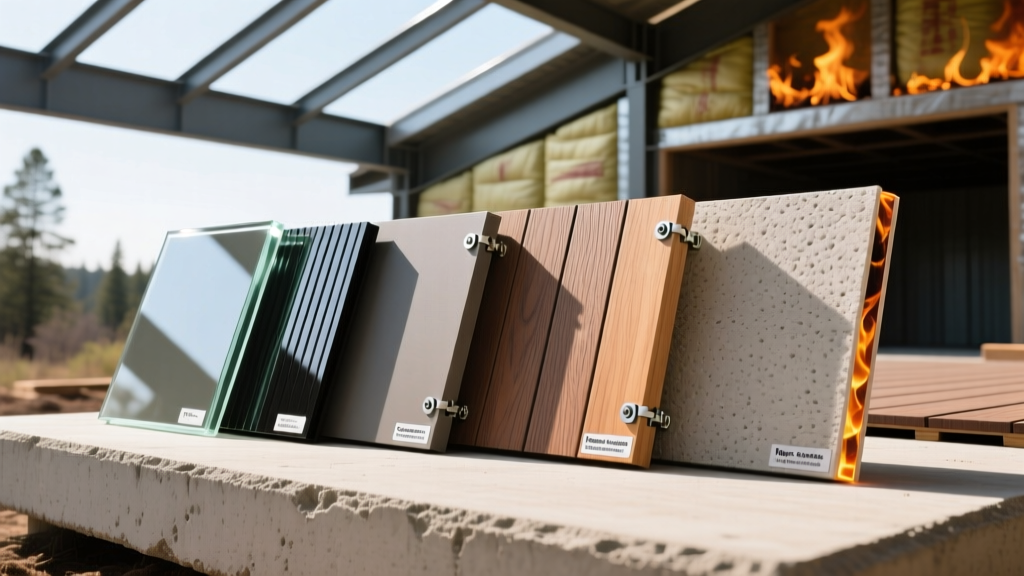
The WUI Code Reality: Why Standard Decking Fails
When sourcing building code-compliant decking materials for fire zones, contractors and homeowners must navigate a complex matrix of Wildland-Urban Interface (WUI) regulations. Standard wood-plastic composites (WPC) and untreated softwoods routinely fail in high-severity fire zones. During a wildfire, wind-blown embers can travel over a mile, lodging in deck gaps, igniting substructures, and ultimately compromising the primary residence. According to the NFPA's Home Ignition Zone guidelines, the deck is one of the most vulnerable attachment points on a structure. Embers accumulate against joists, fascia boards, and deck boards, turning a standard composite deck into a sustained ignition source that bypasses exterior wall defenses.
Compliance is not optional. In jurisdictions enforcing the International Wildland-Urban Interface Code (IWUIC) or California's Chapter 7A, decking assemblies must pass rigorous ignition-resistance and flame-spread testing. The ICC's IWUIC standards mandate that exterior decks in designated hazard zones utilize non-combustible materials, heavy timber, or specific ignition-resistant materials approved by the local authority having jurisdiction (AHJ).
The 4-Step Selection Framework for Fire Zone Decking
To ensure structural survivability and code compliance, use this sequential framework before specifying materials.
Step 1: Verify Local WUI Designation and AHJ Requirements
Fire zones are not uniform. A property might sit in a State Responsibility Area (SRA) or a Local Responsibility Area (LRA) with varying severity classifications (Moderate, High, Very High). In California, materials must appear on the CAL FIRE Office of the State Fire Marshal (OSFM) WUI Products Listing. If a specific composite or PVC profile is not explicitly listed by the manufacturer's exact model number, the building inspector will reject it, regardless of its general ASTM E84 Class A rating.
Step 2: Filter by Flame Spread Index (FSI) and Material Chemistry
ASTM E84 tests surface burning characteristics. For strict WUI compliance, you need a Class A rating (FSI 0-25). However, the chemical makeup dictates how the material reacts to sustained ember exposure:
- Cellular PVC: Contains chlorine, which acts as a natural fire retardant. High-density PVC boards self-extinguish once the ignition source is removed.
- Capped Composites: Contain wood flour. Even with a polymer cap, if an ember breaches the cap at a cut end or scratch, the wood fibers inside will smolder indefinitely.
- Hardwoods: Dense tropical hardwoods (like Ipe) have an FSI comparable to concrete due to their tight cellular structure and lack of resin pockets.
Step 3: Evaluate Substructure and Fastener Vulnerabilities
A Class A deck board is useless if the joists underneath are combustible pine. WUI codes require the substructure to be non-combustible, fire-retardant treated (FRT), or heavy timber (minimum 3-inch nominal thickness). Furthermore, standard galvanized fasteners can fail under extreme heat; specify stainless steel or specialized structural screws rated for high-thermal environments.
Step 4: Design for Ember Intrusion and Gap Sizing
Code-compliant decking is as much about installation geometry as material science. WUI codes strictly regulate the gap between deck boards. While standard decks use 1/4-inch to 3/16-inch gaps for drainage, WUI zones often mandate a maximum 1/8-inch gap to prevent embers from falling through and accumulating on the substructure or dry vegetation below.
Material Comparison Matrix: What Actually Passes Code?
The following matrix evaluates top-tier materials that consistently achieve WUI compliance for high-severity fire zones. Pricing reflects Q1 2026 market averages for material only (excluding substructure and labor).
| Material / Brand Model | Fire Rating / FSI | Material Cost (per sq. ft.) | WUI Compliance Status | Primary Edge Case / Risk |
|---|---|---|---|---|
| AZEK Landmark Premium PVC | Class A (FSI < 25) | $12.50 - $14.00 | Approved (CAL FIRE Listed) | Thermal expansion requires strict 1/8" gap management. |
| Fiberon Promenade PVC | Class A (FSI < 25) | $11.00 - $13.00 | Approved (CAL FIRE Listed) | Lighter color profiles show ash/soot staining post-fire. |
| Ipe (Tabebuia spp.) Hardwood | Class A Equivalent | $14.00 - $18.00 | Approved (Heavy Timber/Density) | Requires specialized hidden fasteners; pre-drilling mandatory. |
| Wahoo Decks Nexan Aluminum | Non-Combustible | $18.00 - $22.00 | Approved (Zero Flame Spread) | High surface heat retention in direct, unshaded summer sun. |
| Standard Capped WPC (Generic) | Class B/C (FSI 76+) | $8.00 - $11.00 | Rejected in High/Very High Zones | Wood-flour core smolders; melts under sustained radiant heat. |
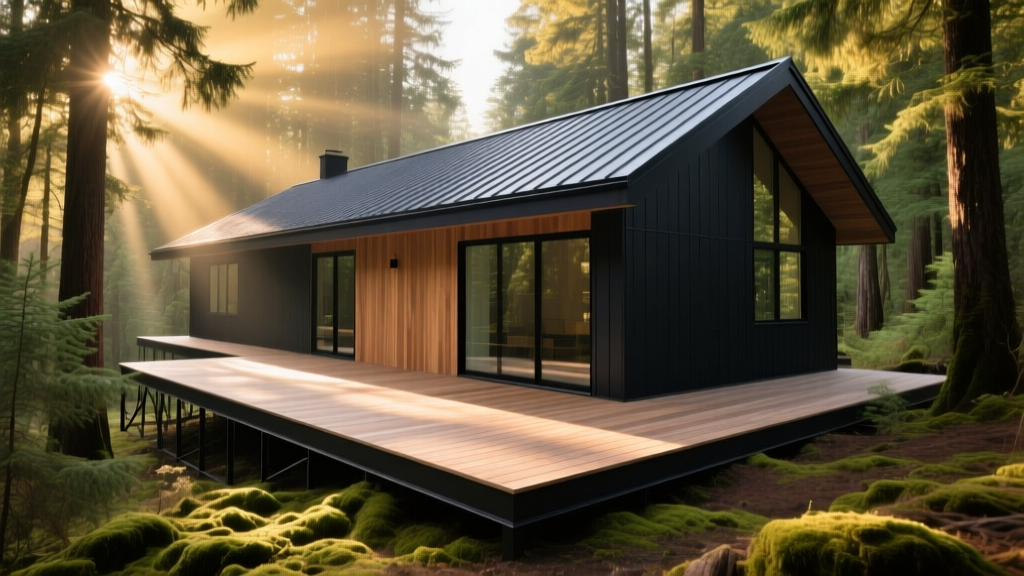
Hidden Failure Points: Substructures, Skirting, and Enclosures
The most common reason a deck fails a WUI inspection is not the decking board itself, but the ancillary components. Inspectors look for three specific failure points:
Many contractors assume Fire-Retardant Treated (FRT) plywood or dimensional lumber is a safe, cost-effective substructure for WUI zones. However, exterior-grade FRT wood relies on chemical salts that can leach out over time due to rain and humidity, drastically reducing its fire resistance after 5 to 10 years. For guaranteed, long-term WUI compliance, specify galvanized steel joists, aluminum framing (like Wahoo or Nexan), or minimum 3x12 heavy timber beams.
Under-Deck Skirting and Ventilation
If your deck is elevated, the space underneath must be enclosed or cleared of all combustible vegetation. If you use skirting to enclose the deck, WUI codes require ventilation to prevent moisture rot, but that ventilation must be protected. You must install corrosion-resistant wire mesh with a maximum aperture of 1/8 inch. Standard 1/4-inch hardware cloth will allow embers to blow into the under-deck cavity, igniting stored items or the substructure.
Fascia and Rim Joist Protection
The rim joist is highly vulnerable to radiant heat from burning vegetation below. If using a PVC or aluminum deck board, the rim joist must be protected by a non-combustible flashing or a minimum 1-inch thick fire-retardant treated wood overlay. Leaving a standard pressure-treated rim joist exposed is an automatic code violation in Very High Fire Hazard Severity Zones (VHFHSZ).
If local codes permit a specific capped composite board that has achieved a Class A rating via specialized end-capping, every single field cut made by the installer must be sealed. Use a manufacturer-approved, fire-rated epoxy or polyurethane end-sealant. An unsealed cut end exposes the combustible wood-flour core, voiding the material's WUI listing and creating a direct pathway for ember ignition.
Actionable Purchasing and Specification Checklist
Before finalizing your material order, run the project specifications through this compliance checklist to prevent job-site rejections:
- Pull the OSFM Listing: Do not accept a manufacturer's general marketing claim of 'Fire Rated.' Download the specific CAL FIRE WUI listing document and verify the exact SKU and profile name matches your invoice.
- Specify the Substructure: Write 'Non-combustible steel/aluminum framing OR minimum 3-inch nominal heavy timber' into the structural plans. Delete any references to standard 2x8 or 2x10 pressure-treated joists unless protected by an approved fire-resistive membrane.
- Order 1/8-Inch Mesh: Add 1/8-inch stainless steel or copper wire mesh to the bill of materials for all soffit vents, under-deck skirting ventilation, and gutter guards.
- Calculate Thermal Expansion: PVC and Aluminum expand and contract significantly. If the AHJ mandates a maximum 1/8-inch gap for ember resistance, you must use hidden fastener systems specifically engineered for zero-tolerance thermal movement, or the boards will buckle in summer or gap to 1/4-inch in winter, triggering a code violation.
- Verify Fastener Ratings: Ensure all structural screws and hidden clips are rated for the specific galvanic corrosion potential of the chosen decking (especially critical when pairing PVC with aluminum or steel joists).
Selecting the right materials for wildfire-prone areas requires moving beyond basic aesthetics and treating the deck as a critical defensive perimeter. By prioritizing cellular PVC, dense hardwoods, or non-combustible aluminum, and rigorously detailing the substructure and gap tolerances, you ensure the assembly will withstand both the inspector's clipboard and the reality of a wind-driven ember storm.
Written by
James ThorntonJames Thornton is a construction industry veteran with 25 years of hands-on experience in wood framing, lumber grading, and residential building codes. He started as a framing carpenter in rural Oregon, earned his ICC Residential Building Inspector certification, and eventually became a senior plan reviewer for the City of Portland Bureau of Development Services. James holds a B.S. in Wood Science & Technology from Oregon State University and is a certified lumber grader through the West Coast Lumber Inspection Bureau (WCLIB). He has inspected over 3,000 residential construction sites and authored the city's internal guide on advanced framing techniques (2x6 at 24" O.C.). James lives in Bend, OR, where he builds custom timber-frame cabins and competes in lumberjack sports.
More from James Thornton
View all
Insulation
Best Home Insulation Materials: Complete 2026 Guide
Compare top home insulation materials for 2026. Find R-values, installed costs per square foot, and best uses for fiberglass, spray foam, and mineral wool.
Aug 4, 2026

Sustainable Building
Certify Your Green Building Material for LEED and WELL
Step-by-step guide to certifying a green building material for LEED v5 and WELL v2. Master EPDs, HPDs, and VOC limits for 2026 project specifications.
Aug 4, 2026

Stone & Masonry
Veneer Stacked Stone Panels: Interior Design & Style Showcase
Discover how veneer stacked stone panels transform interiors. Explore modern design profiles, material pairings, and technical installation specs.
Aug 4, 2026