Best Waterproof Decking Material: 2026 Selection Guide
Compare the best waterproof decking materials for 2026. Analyze PVC, capped composite, and aluminum costs, failure modes, and installation specs.
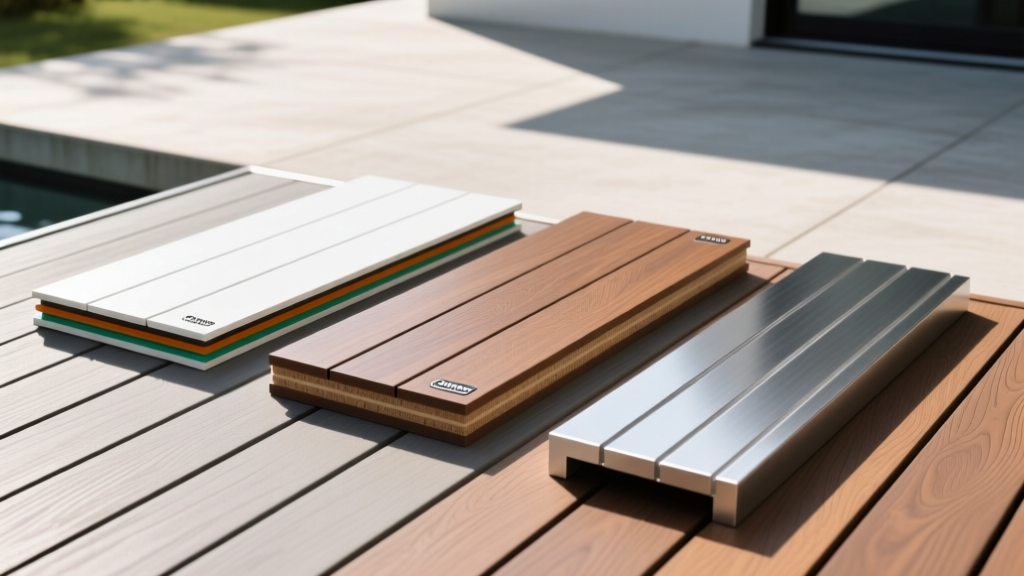
The Imperative of True Waterproofing in Decking
When evaluating the best waterproof decking material, builders and homeowners must distinguish between 'water-resistant' and 'truly waterproof.' Traditional wood and early-generation composites absorb moisture, leading to warping, mold proliferation, and eventual structural decay. According to the EPA's guidelines on moisture control, prolonged exposure to trapped moisture is the primary catalyst for biological growth and structural degradation in exterior building envelopes. In 2026, the market has shifted decisively toward impermeable synthetic and metallic decking solutions that eliminate water ingress at the board level.
Material Breakdown: PVC, Capped Composite, and Aluminum
Selecting the right material requires understanding the molecular composition and water-management mechanics of each option. Here is a deep dive into the top-tier waterproof decking categories available today.
1. Cellular PVC (Polyvinyl Chloride)
Cellular PVC is the gold standard for absolute water impermeability. Unlike composites, PVC contains zero wood flour or organic fibers. Premium lines like AZEK Vintage and Wolf Serenity utilize a dense, closed-cell core wrapped in a hard polymer cap. Because there is no organic material to feed mold or absorb water, PVC boards can be submerged indefinitely without swelling or degrading.
- Water Permeability: 0% (Completely impermeable)
- Best Application: Ground-level decks, docks, and high-humidity coastal environments.
- Installation Edge Case: PVC has a high coefficient of thermal expansion. It expands and contracts at a rate of approximately 1/16 inch per 10°F per 10 feet. Installers must use specific hidden fastener clips that allow for longitudinal movement and leave precise 1/8-inch gaps at butt joints.
2. 4-Sided Capped Wood-Plastic Composite (WPC)
Modern capped composites, such as Trex Transcend Lineage and TimberTech Advanced PVC, blend recycled wood fibers with high-density polyethylene (HDPE). The 'cap' is a proprietary polymer shell that shields the core. For true waterproofing, you must specify a 4-sided cap. Early 3-sided composites left the bottom exposed, allowing moisture to wick up from the joists, causing the boards to cup over time.
- Water Permeability: <1% (Highly resistant, but cut ends require sealing)
- Best Application: Elevated residential decks where a natural wood aesthetic is desired.
- Installation Edge Case: Every time a board is cross-cut, the wood-flour core is exposed. You must apply a compatible end-sealant or install color-matched PVC end-caps to prevent capillary water absorption at the cut ends.
3. Marine-Grade Extruded Aluminum
Aluminum decking systems like AridDek and Wahoo Decks represent the pinnacle of structural waterproofing. These are not solid planks; they are engineered extrusions with interlocking edges that create a watertight seal, channeling rainwater away from the space below. Aluminum is naturally immune to rot, rust (when properly powder-coated), and insect damage.
- Water Permeability: 0% (Functions as a roof system for the space below)
- Best Application: Multi-story homes, balconies, and decks covering habitable lower-level spaces.
- Installation Edge Case: Aluminum is highly conductive and can become slippery when wet if the extrusion lacks an integrated grit-strip or knurled texture. Always specify slip-resistant profiles for wet climates.
2026 Cost & Performance Matrix
The following matrix reflects current 2026 material costs (excluding substructure and labor) and performance metrics for premium-grade waterproof decking.
| Material Type | Avg. Cost (per sq. ft.) | Waterproof Rating | Thermal Movement | Expected Lifespan |
|---|---|---|---|---|
| Cellular PVC | $9.50 - $14.00 | 100% Impermeable | High (Requires floating clips) | 30 - 50 Years |
| 4-Sided Capped WPC | $7.50 - $11.50 | 99% (Ends must seal) | Moderate (Standard spacing) | 25 - 35 Years |
| Interlocking Aluminum | $13.00 - $18.50 | 100% (Drainage system) | Negligible | 50+ Years |
| Modified Wood (e.g., Kebony) | $8.50 - $12.00 | Water-Resistant (Not proof) | Low (Similar to hardwood) | 25 - 30 Years |
Critical Failure Modes and Installation Edge Cases
Even the best waterproof decking material will fail if installed incorrectly. The US Forest Service Forest Products Laboratory notes that moisture trapping between impermeable surfaces and organic substructures accelerates decay fungi. Here are the most common failure modes and how to prevent them:
Fastener Corrosion in Marine Environments
Waterproof decking is often paired with substandard fasteners. In coastal or high-moisture zones, standard galvanized screws will corrode, leaving rust stains on the deck surface and compromising structural integrity. Always specify 305 or 316-grade stainless steel hidden fastener clips and structural screws. The initial 15% premium on stainless steel hardware prevents catastrophic substructure failure.
Inadequate Cross-Ventilation
Composite and PVC boards require airflow beneath the deck to dissipate heat and evaporate ambient moisture. If a deck is built less than 12 inches from the ground, or if the perimeter is fully enclosed with skirting without installing ventilation grilles, the trapped heat and humidity will cause the boards to warp and the substructure to mold. Maintain a minimum of 18 inches of clearance from the soil to the bottom of the joists for enclosed perimeters.
'Waterproofing a deck is a system, not just a surface material. The board sheds the water, but the flashing, tape, and drainage plane manage the water that gets through the gaps.' — Senior Building Envelope Inspector, NAHB Guidelines.
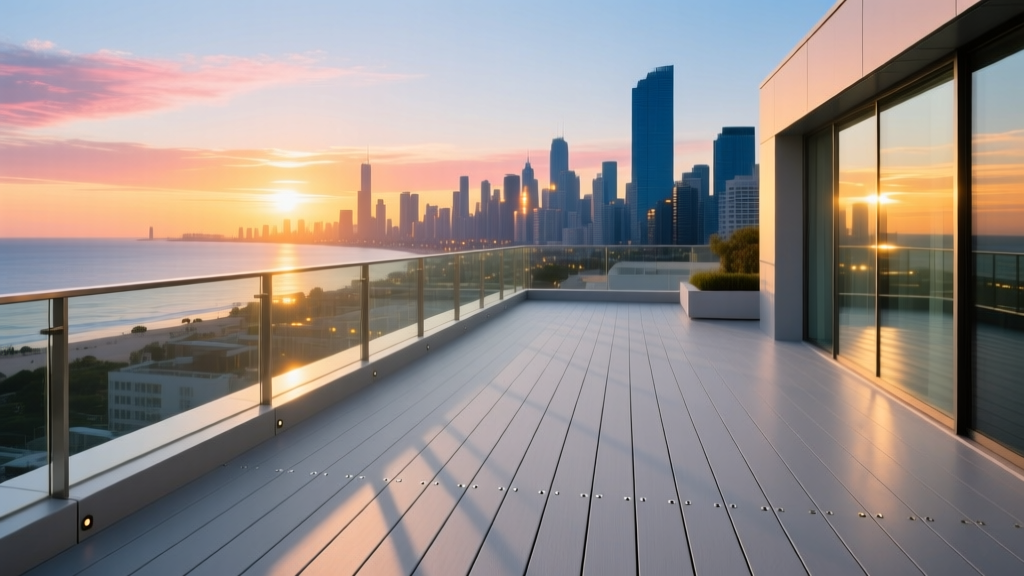
Decision Framework: Which Material Fits Your Project?
Use this practical framework to select the optimal material based on your specific project constraints:
- Choose Cellular PVC if: The deck is at or near grade, located in a saltwater coastal zone, or the client demands zero maintenance and absolute resistance to mold and staining. Budget allows for $10+ per sq. ft. for materials.
- Choose 4-Sided Capped Composite if: The project is an elevated residential deck where a realistic wood-grain aesthetic is paramount, and the budget is constrained to the $8-$11 range. Ensure the contractor is meticulous about sealing cut ends.
- Choose Interlocking Aluminum if: The deck is on a second story and the space below must remain completely dry (e.g., covering a patio or outdoor kitchen). The budget supports a premium $15+ per sq. ft. investment for a lifetime structural solution.
Moisture Management Beyond the Deck Board
To maximize the lifespan of your waterproof decking investment, integrate these substructure protections:
- Joist Tape: Apply butyl flashing tape to all horizontal joist surfaces. This prevents water from pooling on the joist tops and halts rot.
- Post Bases: Use elevated, powder-coated steel post bases to keep the bottom of structural wood posts at least 1 inch above the concrete footing, preventing capillary wicking from the slab.
- Crushed Stone Base: For ground-level decks, excavate 3 inches of soil beneath the deck footprint and fill with 3/4-inch crushed gravel. This suppresses vegetation and allows rapid drainage, reducing ambient humidity under the deck.
By pairing the best waterproof decking material with a rigorously protected substructure, you ensure a durable, safe, and visually pristine outdoor space that will easily outlast its warranty period.
Written by
James ThorntonJames Thornton is a construction industry veteran with 25 years of hands-on experience in wood framing, lumber grading, and residential building codes. He started as a framing carpenter in rural Oregon, earned his ICC Residential Building Inspector certification, and eventually became a senior plan reviewer for the City of Portland Bureau of Development Services. James holds a B.S. in Wood Science & Technology from Oregon State University and is a certified lumber grader through the West Coast Lumber Inspection Bureau (WCLIB). He has inspected over 3,000 residential construction sites and authored the city's internal guide on advanced framing techniques (2x6 at 24" O.C.). James lives in Bend, OR, where he builds custom timber-frame cabins and competes in lumberjack sports.
More from James Thornton
View all
Insulation
Best Home Insulation Materials: Complete 2026 Guide
Compare top home insulation materials for 2026. Find R-values, installed costs per square foot, and best uses for fiberglass, spray foam, and mineral wool.
Aug 4, 2026

Sustainable Building
Certify Your Green Building Material for LEED and WELL
Step-by-step guide to certifying a green building material for LEED v5 and WELL v2. Master EPDs, HPDs, and VOC limits for 2026 project specifications.
Aug 4, 2026

Stone & Masonry
Veneer Stacked Stone Panels: Interior Design & Style Showcase
Discover how veneer stacked stone panels transform interiors. Explore modern design profiles, material pairings, and technical installation specs.
Aug 4, 2026